
MLA Format Example for Students: Essay Template & Checklist
Learn MLA 9 paper formatting with a student-friendly essay example, heading and citation guidance, a copy-ready template, and a checklist.
Teaching students to write strong essays takes structure, modelling, and consistent practice. This collection on teaching essay writing provides step-by-step strategies teachers can use to help students plan, organize, draft, and revise with confidence.
Inside this category, you’ll find paragraph frameworks like PEEL, thesis-building supports, outlining routines, revision checklists, exemplars, and scaffolds that make academic writing clearer for students at every level. These resources are especially useful for middle school and Grade 9 English classrooms.
If your goal is helping students move from “I don’t know what to write” to structured, confident responses, these essay-writing strategies make the process manageable and repeatable.

Learn MLA 9 paper formatting with a student-friendly essay example, heading and citation guidance, a copy-ready template, and a checklist.
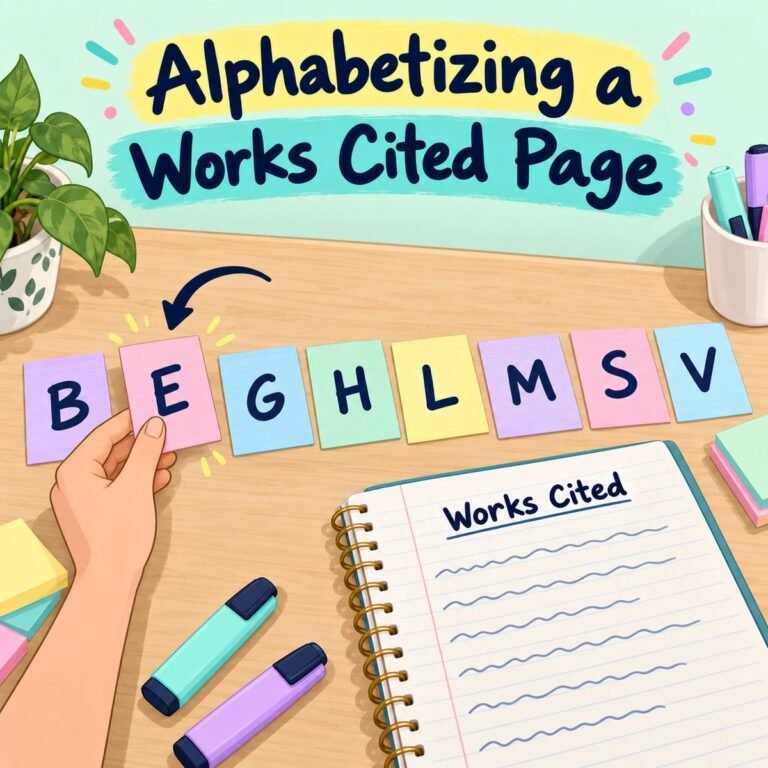
A student can format every entry correctly and still hand in a Works Cited page that is hard to use, because the entries are out of order. When a reader sees (Golding 42) in an essay, they turn to the last page and look among the G’s. If the list is in the order the…

Teach point, evidence, explanation, and link with a free PEEL paragraph worksheet, model answers, sentence starters, and differentiation tips.

opinion essay self-assessment: A final draft should show that students have made thoughtful decisions about their writing. In this opinion essay self-assessment lesson, students examine their thesis, body paragraphs, use of evidence, MLA citations, and feedback from peers, then make targeted revisions before submission. LESSON AT A GLANCE Grades: 8–10 | Time: 55–70…

peer editing for opinion essays: Peer editing is most useful when students respond as readers rather than acting as proofreaders who simply circle mistakes. This guided peer-editing lesson helps students notice whether a claim is clear, whether evidence fits the reasons, and where explanations or transitions need improvement. LESSON AT A GLANCE Grades: 8–10 …

evaluating web sources for opinion essays: Students can locate a website in seconds, but that does not mean the information is reliable or useful for their argument. This lesson teaches a repeatable source-evaluation routine and gives students practice comparing claims, evidence, authorship, and relevance before they use online material in an opinion essay. LESSON AT…

MLA citations lesson: Students need to understand why citations matter before they can use them correctly. A student MLA format example helps learners see where in-text citations and Works Cited belong in a finished essay. This MLA citations lesson gives early secondary writers guided practice with in-text attribution and Works Cited entries, helping them distinguish…

MLA formatting for opinion essays: MLA formatting gives students a consistent way to present academic work. Rather than handing students a checklist and hoping they can set everything up, this lesson walks them through an MLA-style document while they make the changes themselves. LESSON AT A GLANCE Grades: 8–10 | Time: 55–60 minutes…

opinion essay conclusion: A strong opinion essay conclusion should do more than repeat the thesis word for word. Students need to show how their reasons fit together and explain why the argument matters. In this lesson, students compare weak and effective endings, revise a model, and draft a conclusion that connects back to their own…

PEEL paragraphs for opinion essays — Students often find evidence quickly but struggle to explain what it proves. Teaching PEEL paragraphs gives them a useful sequence for developing their reasoning without reducing writing to fill-in-the-blank sentences. This lesson includes a model paragraph, guided rehearsal, and independent drafting. LESSON AT A GLANCE Grades: 8–10 |…