
Rick Wormeli Standards-Based Grading: A Teacher’s Guide
If you’ve ever averaged a student’s grades over a semester and felt like the final number didn’t actually reflect what that student learned, you’re not alone. Rick Wormeli standards-based grading tackles that exact problem head-on. Wormeli, a veteran educator and one of the most influential voices in assessment reform, argues that traditional grading systems often punish students for struggling early rather than rewarding them for eventual mastery. His work has pushed thousands of teachers to rethink what a grade should actually represent.
Here at The Cautiously Optimistic Teacher, we build resources that help educators teach more effectively and assess more honestly, and Wormeli’s philosophy fits right into that mission. Whether you’re already experimenting with standards-based grading or you’re just starting to question the zero-to-100 scale, understanding his framework gives you a concrete foundation to build on.
This guide breaks down Wormeli’s core arguments, walks through how his approach works in practice, and points you toward his most useful books and videos. By the end, you’ll have a clear picture of his methodology, and enough to decide whether it belongs in your classroom. Let’s get into what makes his take on grading different.
Who Rick Wormeli is and why educators cite him
Rick Wormeli spent over 35 years in the classroom, primarily teaching middle school in the Fairfax County Public Schools in Virginia. He became one of the first middle school teachers in the country to earn National Board Certification, which gave him immediate credibility when he started writing and speaking about assessment reform. Teachers listen to him because his arguments don’t come from a university lab; they come from the actual experience of grading real students in real classrooms, year after year.
His career as a teacher and author
Wormeli turned his classroom experience into a body of work that now shapes professional development conversations across the country. His book Fair Isn’t Always Equal, first published in 2006 and updated in a revised second edition in 2018, became a go-to reference for teachers wrestling with grading reform. It lays out a direct case for standards-based assessment and explains why allowing retakes, removing zeros, and separating academic performance from behavior produces more accurate grades. That book alone placed his name on reading lists in teacher preparation programs and school district PD sessions across the United States.
When a veteran teacher with decades of classroom experience argues that the traditional gradebook is broken, it is worth pausing to understand why.
He also wrote Day One and Beyond, Differentiation: From Planning to Practice, and several other titles. His books consistently earn a spot among the most recommended professional reads for middle and high school educators because they are direct, practical, and grounded in what actually happens inside schools, not what looks good in theory.
Why his name keeps coming up
Rick Wormeli standards-based grading conversations appear in school board meetings, department planning sessions, and teacher forums because his arguments are hard to dismiss. He does not just point out that traditional grading is flawed; he shows you exactly what to change and gives clear reasons for each shift. His videos, particularly those released through AMLE and Stenhouse Publishers on YouTube, have been watched hundreds of thousands of times, which reflects the genuine demand teachers have for this conversation.
You don’t have to agree with every position he takes, but understanding his framework gives you a sharper lens for examining your own grading decisions. His work pushes you to ask one clear question: does this grade actually reflect what my student knows right now?
What standards-based grading means in Wormeli’s terms
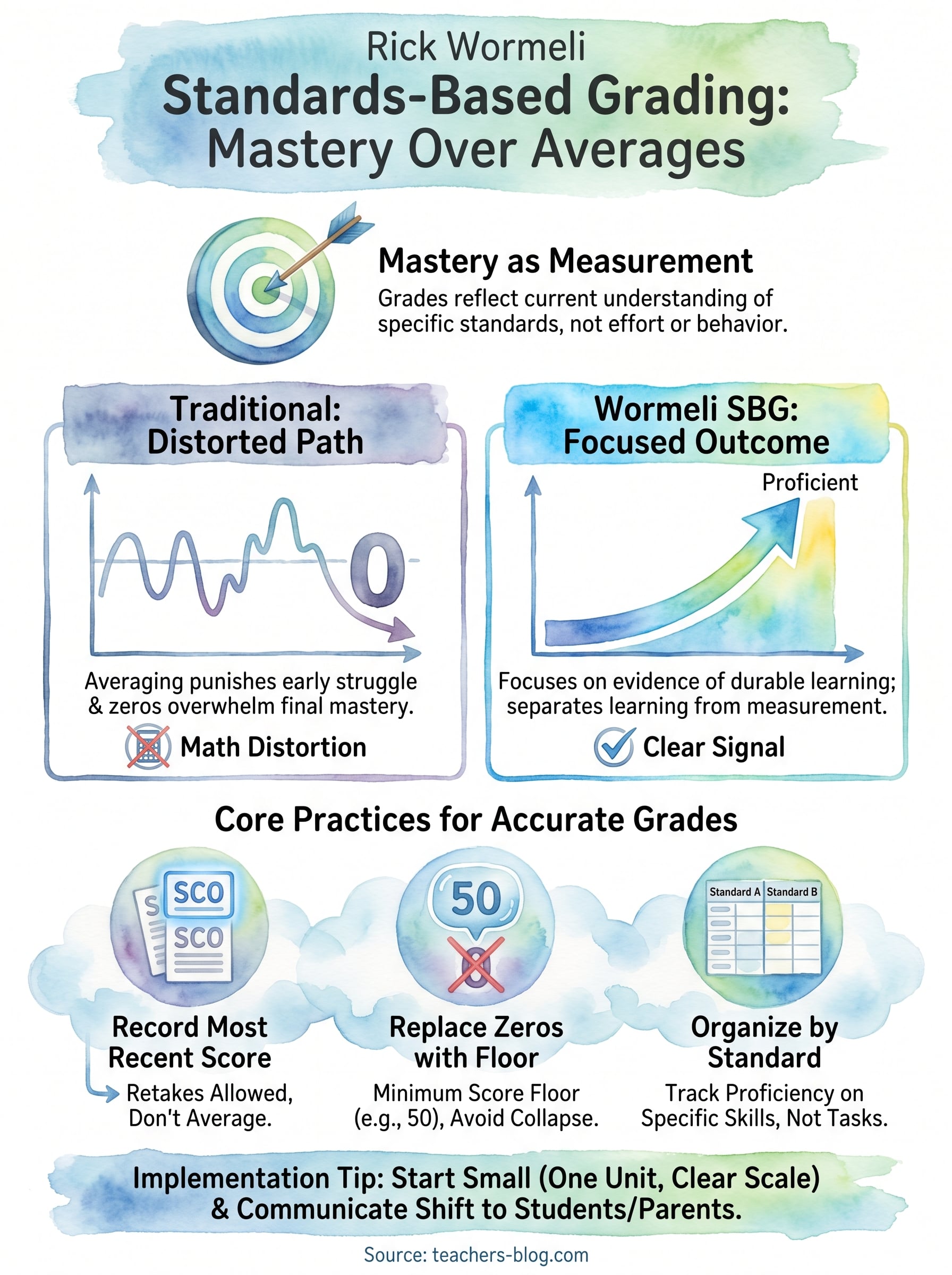
In Wormeli’s framework, standards-based grading means that every grade you assign reflects a student’s current level of mastery on a specific learning standard, nothing more. The grade does not factor in when the student learned it, how many attempts it took, or whether they turned in work on time. You are measuring what students know and can do against a clearly defined target, and that target stays fixed regardless of the timeline each student follows to reach it.
Mastery as the measurement unit
Wormeli defines mastery as demonstrating consistent understanding of a skill or concept at a level that holds up across multiple contexts and tasks. A student who memorizes facts for a test and then forgets them has not demonstrated mastery in his view. You are looking for evidence of durable learning, not a performance that disappears after the assessment ends.
This distinction changes what you look for when you grade. Instead of tallying points across a full semester, you ask one focused question: can this student apply this standard reliably right now? That shift in focus is what separates his approach from traditional point accumulation systems.
Separating academic performance from behavior
One of the clearest markers of rick wormeli standards-based grading is the strict separation between academic achievement and conduct. Late penalties, participation points, and effort scores all belong outside the grade in his system. Mixing them in corrupts the data your gradebook is supposed to give you.
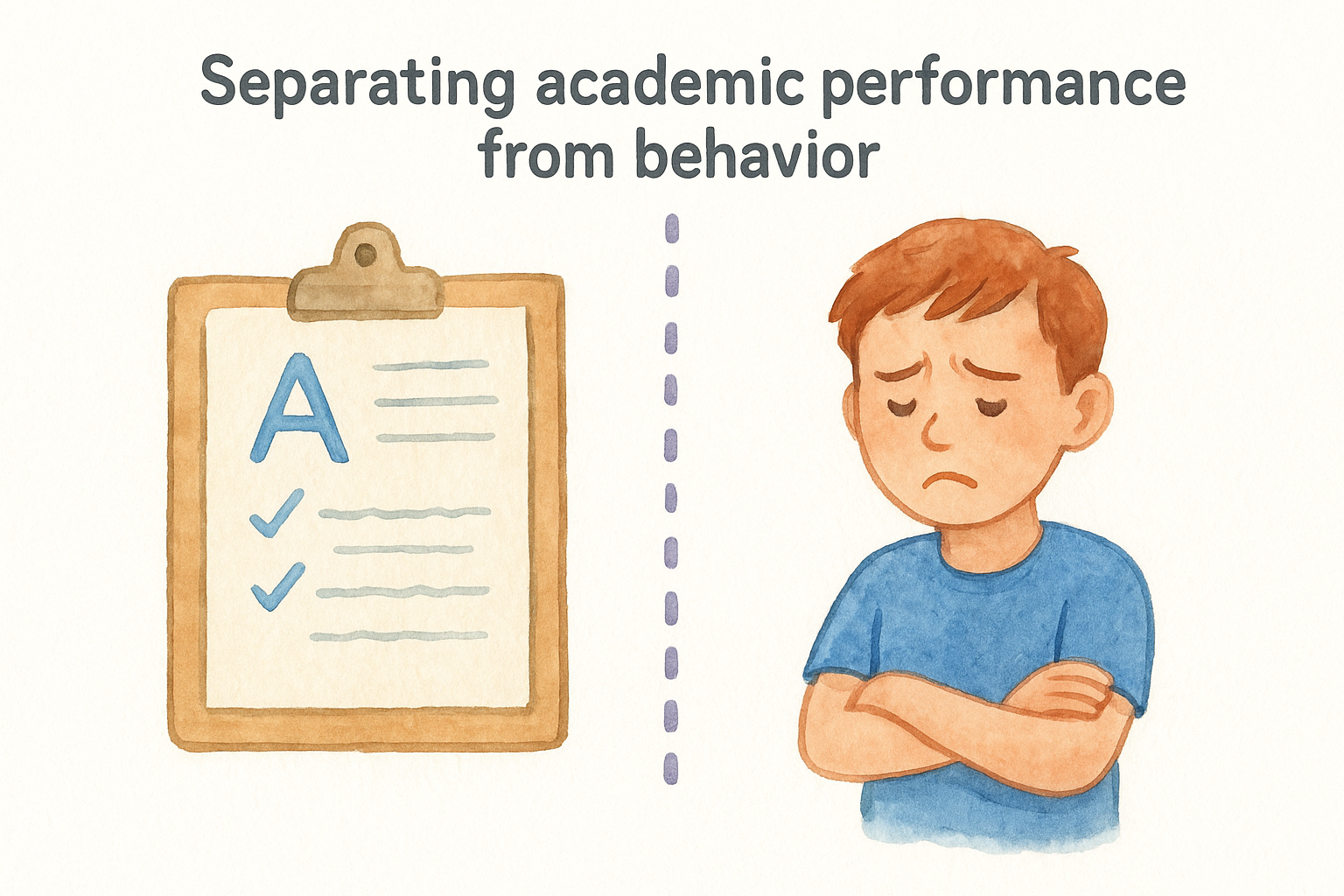
When behavior and academics share the same grade, the number stops being a reliable indicator of what a student actually learned.
Your gradebook should communicate what students know, not how cooperative they were during the learning process.
Why Wormeli argues traditional grades distort learning
Traditional grading systems carry assumptions about fairness that Wormeli challenges directly. When you record a 50 on a quiz from week two and average it with a 95 from week eight, the final number tells you almost nothing accurate about what that student knows. The grade becomes a mathematical artifact of timing, not a clear signal of learning.
The damage zeros cause
A single zero in a traditional gradebook can mathematically overwhelm a student’s semester average, even when that student later demonstrates strong understanding. Wormeli points out that on a standard 100-point scale, a zero is not equivalent to a failing score; it is an outlier so extreme that no amount of subsequent performance can fully compensate for it.
That structural flaw punishes students for struggling at the start rather than reflecting what they eventually learned. Your gradebook ends up documenting the difficulty of the learning process instead of the outcome of it, which is the one thing it is supposed to measure.
Averaging punishes the learning process
Rick wormeli standards based grading separates the learning phase from the measurement phase because you should not penalize students for being in the middle of learning. When you average early attempts alongside later ones, you record the stumbling, not the skill.
A student who scores 40, 60, 80, and then 95 on successive attempts has clearly mastered the material, but the averaged number gives everyone a distorted picture of what that student can actually do.
Core practices he recommends for accurate grades
Wormeli’s framework isn’t just a philosophy; it comes with concrete, classroom-ready practices that change how you collect and record evidence of learning. Each practice targets a specific flaw in traditional grading and replaces it with something that produces more accurate information.
Allow retakes and record the most recent score
One of the most recognized elements of rick wormeli standards based grading is the retake policy. Wormeli argues that when a student demonstrates stronger understanding on a second or third attempt, the most recent and most consistent score should replace the earlier one. You are measuring mastery, not the date a student finally reached it.
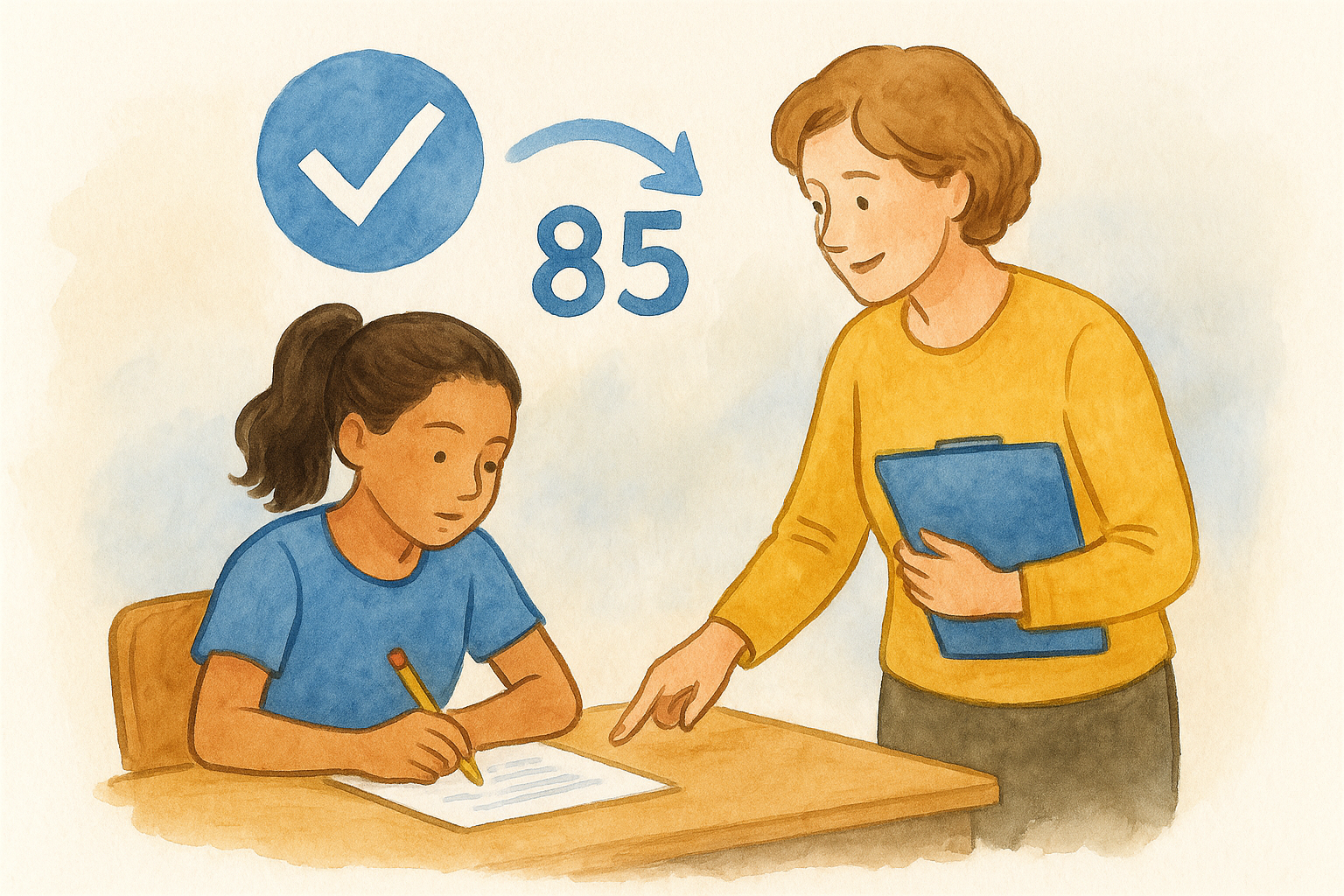
Replacing the old score with the new one is not a favor to the student; it is the accurate thing to do.
Students learn at different paces, and penalizing them for where they started undermines the entire purpose of a mastery-based system. If the goal is to know what a student can do right now, earlier attempts become irrelevant data once better evidence exists.
Replace zeros and organize grades by standard
Wormeli recommends setting a minimum score floor, typically 50 on a 100-point scale, instead of recording zeros. A zero carries disproportionate mathematical weight and can collapse a semester average even when a student later proves strong understanding of the material. Removing that distortion keeps your gradebook honest.
Beyond zeros, your gradebook should track proficiency on specific learning standards rather than assignment completion. When every entry connects to a clear learning target, you can immediately see which standards each student has mastered and which still need direct attention.
How to start using his approach in your classroom
You don’t need to redesign your entire gradebook overnight. The most practical way to begin with rick wormeli standards based grading is to pick one unit, identify two or three specific learning standards, and track student performance on those standards only. That small experiment gives you real data on how the approach works without requiring a complete overhaul of your current system.
Start with one unit and a clear proficiency scale
Building a simple proficiency scale for each standard before the unit begins is the clearest starting point. A four-level scale works well: below basic, approaching, proficient, and advanced. When you score student work, you mark where they land on that scale rather than assigning a point total. That single shift forces you to look at what the student actually demonstrated, not how many questions they answered correctly.
Communicate the shift to students and parents
Transparency with students matters before you change anything. Tell them directly that you are tracking mastery on specific skills and that earlier attempts will not drag down their final standing. Many students carry anxiety about early failure, and explaining that demonstrated growth is what counts reduces that pressure significantly.
The shift works best when students understand the system before you apply it, not after the first grade lands.
Parents need the same explanation before grades arrive. A brief note home that outlines what each proficiency level means and how you will report progress prevents confusion when report cards look different from what families expect.
Next steps for your gradebook
Rick Wormeli standards-based grading gives you a clear, honest way to measure what your students actually know. The next step is straightforward: pick one standard in your next unit and track it separately from your existing gradebook. That single experiment builds real evidence for what works in your specific classroom context, without asking you to abandon every system you currently have in place.
From there, you can expand gradually, adding more standards, refining your proficiency scale, and adjusting your retake policy as you gain confidence. Sharing what you learn with colleagues multiplies the impact, because grading reform works best when a whole department moves in the same direction together.
Your gradebook should tell the truth about what each student knows, and Wormeli’s framework gives you the structure to make that happen. If you want more resources, strategies, and practical tools designed for educators working to teach more effectively, visit The Cautiously Optimistic Teacher for support built by teachers, for teachers.