5 ReadWriteThink Lesson Plans For Middle & High School ELA
ReadWriteThink.org has been a go-to source for ELA teachers who need quality, standards-aligned resources without spending hours building everything from scratch. Their readwritethink lesson plans are peer-reviewed, free, and designed by actual educators, which is exactly why they’ve earned a loyal following among middle and high school English teachers.
But here’s the thing: the site hosts hundreds of lessons, and not all of them hit the same. Some are genuinely excellent. Others feel dated or too narrow to justify the class time. At The Cautiously Optimistic Teacher, we spend a lot of time sorting through resources like these so you don’t have to, finding what actually works and pairing it with practical strategies you can adapt to your own classroom.
In this article, I’ve pulled together five ReadWriteThink lesson plans worth your attention for middle and high school ELA. Each one includes a quick breakdown of what it covers, what grade levels it fits, and how you might tweak it to make it your own.
1. Teaching Plot Structure Through Short Stories
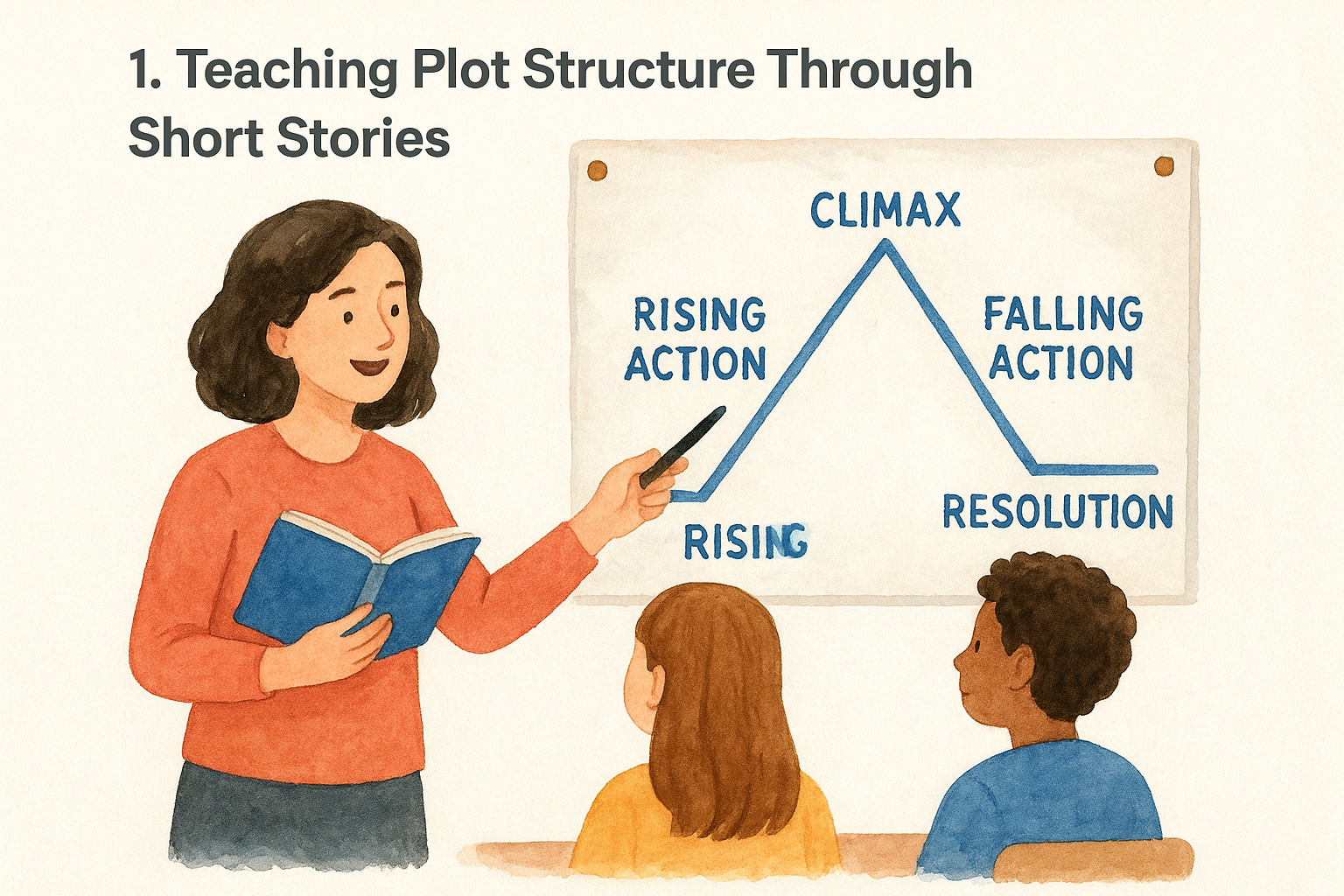
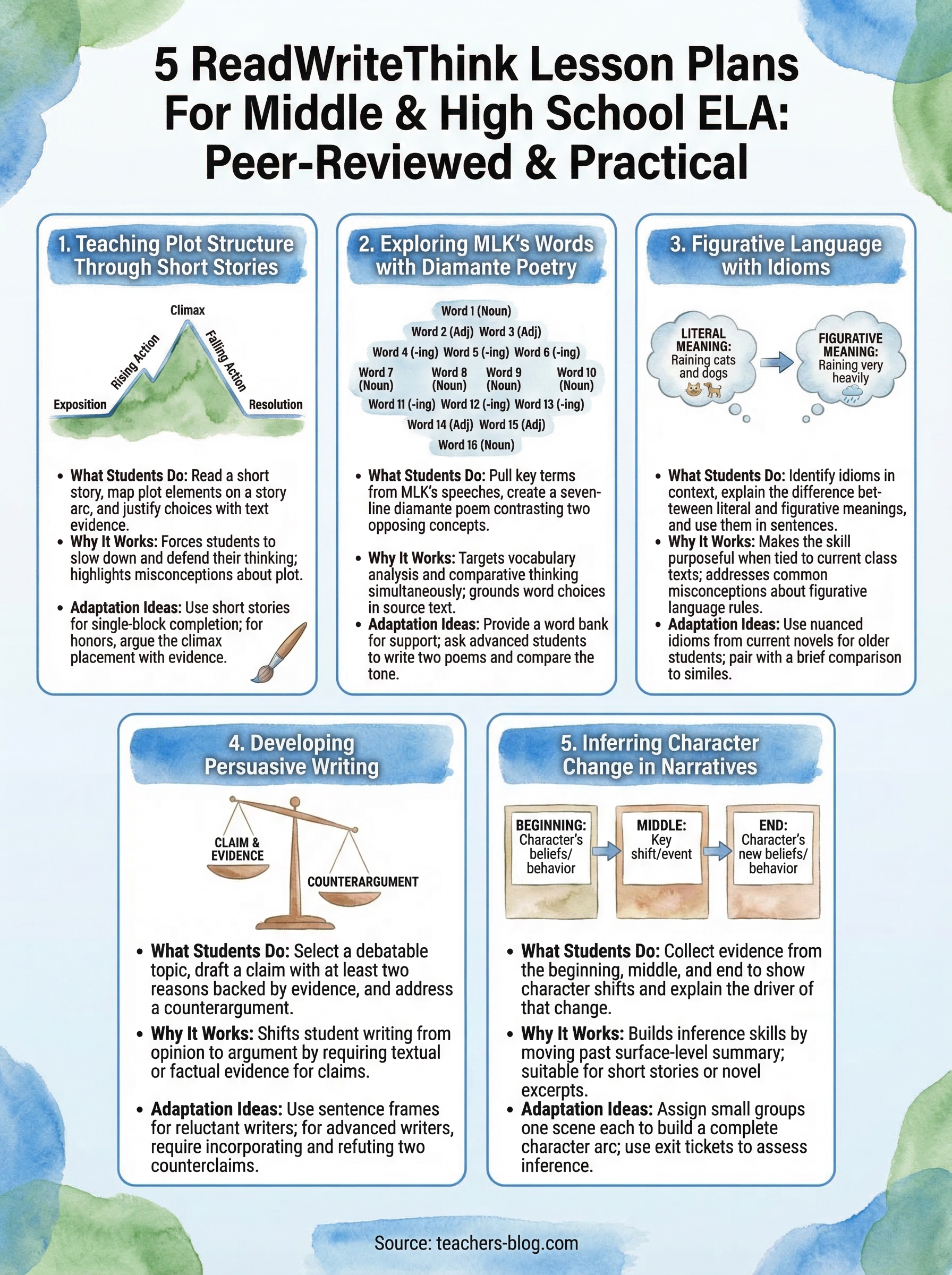
This ReadWriteThink lesson uses short fiction to walk students through the five elements of plot structure: exposition, rising action, climax, falling action, and resolution. It targets grades 6 through 10 and pairs well with almost any short story already in your curriculum.
What Students Will Do
Students read a short story, then map each plot element onto a graphic organizer or story arc diagram. They identify key events, label where they fall in the structure, and justify their choices with evidence from the text. The lesson also pushes students to explain why certain events matter to the overall shape of the story.
Why It Works in Secondary ELA
Plot structure is foundational, and students often think they understand it until you ask them to apply it precisely. This lesson forces them to slow down and defend their thinking, which surfaces misconceptions fast.
Teaching plot through short stories gives you a complete narrative arc in one sitting, which makes it far easier for students to see the whole structure at once.
How to Run It in 1 to 2 Class Periods
Use day one to read and annotate the story together. On day two, students complete the story arc organizer independently or in pairs, then compare choices in a brief whole-class discussion. You can compress this into a single block period if your students already have some familiarity with the terms.
Ways to Level It Up for Honors and Support
For honors students, ask them to argue whether the climax is where the author places it or somewhere else, using evidence. For students who need support, pre-label two or three plot points on the organizer so they have anchors to work from.
Quick Checks for Understanding and Grading Ideas
A simple exit ticket asking students to name one event from each stage works well here. For a grade, score the organizer on accuracy, use of textual evidence, and explanation quality rather than completion alone.
2. Exploring MLK’s Words with Diamante Poetry
This lesson from ReadWriteThink pairs MLK’s speeches with the diamante poetry format, pushing students to wrestle with contrasting ideas while building vocabulary. It runs well in grades 6 through 10.
What Students Will Do
Students pull key terms and phrases from MLK’s speeches, then complete a seven-line diamante poem built around two opposing concepts, such as justice and oppression.
They label each word by part of speech as they write, which reinforces grammar in context without a separate drill.
Skills This Lesson Naturally Targets
This lesson targets vocabulary analysis and comparative thinking at the same time.
Both skills transfer directly into close reading and argument writing, so you get more mileage from a single lesson than most readwritethink lesson plans at this level offer.
How to Set Up Strong Mentor Texts and Models
Anchor your model poem to MLK’s actual language so students see a direct connection between the source text and the poetic format before they write independently.
A model grounded in the text keeps student word choices purposeful rather than arbitrary.
Differentiation Ideas for Mixed Readiness Levels
Adjust the task based on readiness level so every student works at the right level of challenge without needing a separate lesson.
- Struggling students: Provide a word bank pulled from MLK’s speeches.
- Advanced students: Write two poems and compare the tonal difference in a short written response.
Extension Options That Still Feel Purposeful
Students can apply the diamante structure to a current social justice topic, then write a brief paragraph tying their poem back to MLK’s core message.
That paragraph becomes a low-stakes writing sample you can use to assess both textual understanding and analytical voice.
3. Figurative Language with Idioms
This ReadWriteThink lesson targets figurative language by guiding students through common idioms and the gap between their literal and intended meanings. It fits grades 6 through 10 and slots naturally into any reading or vocabulary unit.
What Students Will Do
Students identify idioms in context, then explain the difference between each phrase’s literal and figurative meaning in their own words. They also practice using idioms correctly in original sentences to show real comprehension.
How to Make It Age-Appropriate for Grades 6 to 10
Older students need more nuanced idioms pulled directly from texts your class is already reading rather than generic examples.
Tying idioms to your current novel or article makes the skill feel purposeful rather than disconnected.
Common Misconceptions to Plan for
Many students assume all figurative language follows the same rules, which creates confusion when idioms resist simple decoding. Plan a brief comparison between idioms and similes at the start so students understand why the distinction matters.
Practice Structures That Keep It Rigorous
Pair students to sort a set of idioms by tone or theme, then require a written justification for each grouping to add accountability.
Assessment Options Beyond a Worksheet
Ask students to locate one idiom in their independent reading and write two to three sentences explaining its effect on meaning or mood.
4. Developing Persuasive Writing
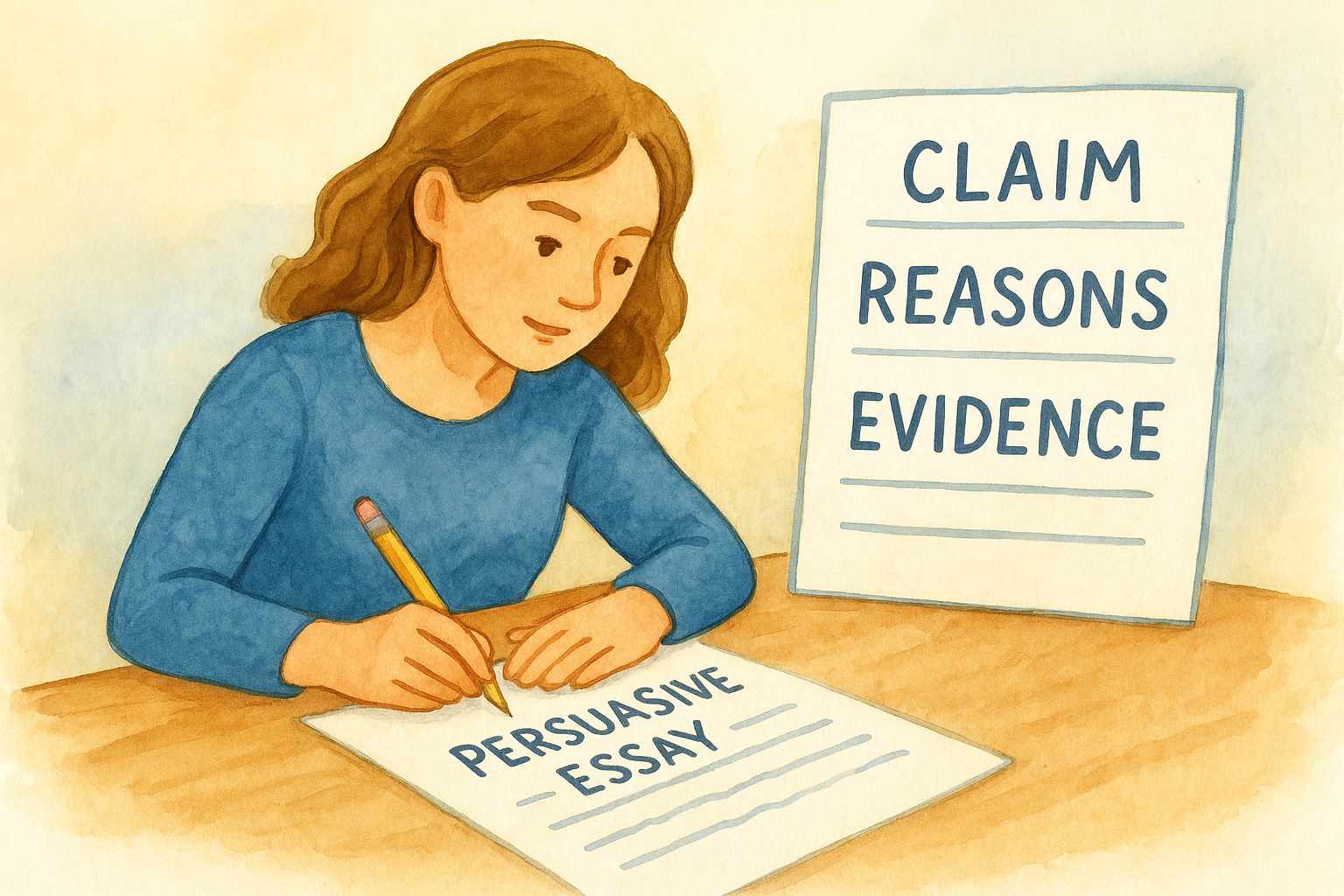
This ReadWriteThink lesson introduces students to persuasive writing fundamentals through structured practice with claims, reasons, and evidence. It targets grades 6 through 10 and fits naturally inside a longer argument writing unit.
What Students Will Do
Students select a debatable topic, draft a claim, and support it with at least two reasons backed by evidence. They also address a counterargument, which is where most students need the most coaching.
How to Shift It from Opinion to Argument
Push students beyond "I think" statements by requiring textual or factual evidence for every reason they list.
Once students see that a claim without evidence is just an assertion, their writing gets more specific fast.
Mini-Lessons to Plug In Without Reteaching Everything
Target one skill at a time, such as signal words or counterargument framing, without rebuilding the whole lesson from scratch. A ten-minute focused mini-lesson before drafting keeps momentum going.
Differentiation for Reluctant Writers and Advanced Writers
Give reluctant writers a sentence frame for each paragraph section. Ask advanced writers to incorporate two counterclaims and refute both with source-based evidence.
Rubric Categories to Keep Feedback Focused
Score students on claim clarity, evidence quality, and counterargument handling. These three categories give targeted feedback without overwhelming students with vague comments.
5. Inferring Character Change in Narratives
This ReadWriteThink lesson builds inference skills by asking students to track how a character shifts over the course of a narrative, which makes it one of the most useful readwritethink lesson plans you can add to a fiction unit in grades 6 through 10.
What Students Will Do
Students collect textual evidence from the beginning, middle, and end of a story to show how a character’s beliefs or behavior changes. They then write a short response explaining what drives that shift.
Text Types That Work Best in Middle and High School
Short stories and novel excerpts give students a manageable amount of text while still showing clear character development across multiple scenes.
Question Stems That Push Deeper Thinking
Use stems like "What does this action reveal" and "How does the character’s attitude shift between these two moments" to move your students past surface-level summary.
Specific question stems guide students toward evidence-based reasoning rather than vague retelling.
Small-Group and Whole-Class Discussion Moves
Assign small groups one scene each, then share findings whole-class to build a complete character arc together.
Exit Tickets and Short Writing Prompts to Assess Inference
Ask students to identify one piece of evidence and explain what it reveals about the character’s internal change in three to four sentences.
Plan Your Next Lesson
These five readwritethink lesson plans give you a strong foundation across core ELA skills, including plot structure, figurative language, argument writing, and character inference. Each lesson comes with built-in flexibility, which means you can adapt the structure to fit your current unit rather than treating it as a fixed script. The real value is in choosing the lesson that connects directly to what your students are already reading or writing.
Picking one lesson and mapping it onto your existing curriculum is the most efficient place to start. That connection makes the skill feel purposeful and relevant for students rather than like a standalone activity dropped into the middle of the year. If you want more practical strategies, tools, and classroom resources built specifically for middle and high school educators, visit The Cautiously Optimistic Teacher for ideas you can put to work right away.