7 Project Based Learning Best Practices For Any Classroom
You’ve probably seen project-based learning go one of two ways: students deeply engaged in meaningful work that sticks with them long after the unit ends, or total chaos with glitter glue everywhere and zero learning to show for it. The difference almost always comes down to how the project is designed and managed, not whether PBL itself "works." If you’re searching for project based learning best practices, you’re already past the hype and ready for the practical stuff.
At The Cautiously Optimistic Teacher, we build resources that help educators move from theory to execution without burning out in the process. PBL fits squarely into that mission, it’s one of the most powerful approaches for boosting engagement and deepening understanding, but only when it’s structured with intention. Too loose, and students flounder. Too rigid, and you’ve just built a worksheet with extra steps.
This article breaks down seven best practices you can apply to any classroom, any subject, and any grade level. Each one is grounded in what actually works when real teachers run real projects, from crafting a driving question to building in reflection. Whether you’re launching your first project or refining your tenth, these strategies will help you design PBL experiences that hold up from start to finish.
1. Use AI to plan and differentiate your PBL
AI doesn’t replace your judgment as a teacher, but it can dramatically cut the time you spend on planning, scaffolding, and differentiating, which are three tasks that make or break a project. When you treat AI as a planning partner rather than a shortcut, it becomes one of the most practical project based learning best practices you can add to your workflow.
What this best practice solves in real classrooms
PBL planning is front-heavy. You need to align standards, design tasks, anticipate learning gaps, and prepare multiple entry points for diverse learners, all before the project even starts. AI helps you do that groundwork faster so you spend your energy on facilitation, not preparation overload.
How to use AI across the PBL timeline
You can use AI at every stage, not just at the beginning. A few high-value applications include:
- Drafting differentiated task instructions for multiple reading levels
- Generating formative check-in questions tied to your standards
- Brainstorming driving questions and product options when you’re stuck
- Building scaffolded graphic organizers for research and writing phases
Where RankYak fits in without adding busywork
The Cautiously Optimistic Teacher’s AI tools, including the Differentiated Instruction Helper and Worksheet Maker, let you generate customized materials directly from your project content. You input your topic or text, and the tool outputs ready-to-use resources you can adjust rather than build from scratch.
The goal is to reduce the preparation burden so you can focus on what matters: coaching students through the actual work.
Guardrails for academic integrity and student thinking
AI should support student inquiry, not replace it. Set clear norms about when and how students can use AI tools, and make sure the thinking, analysis, and product always comes from them. Keep your project design focused on tasks that require original judgment.
Common mistakes to avoid when using AI for PBL
The biggest mistake is over-relying on AI-generated project structures without adapting them to your specific students and context. A generic project outline rarely accounts for your students’ prior knowledge, your school’s resources, or your community’s relevance, so always treat AI output as a starting draft, not a finished plan.
2. Start with standards and a driving question
A project without clear standards is just an activity. Every strong PBL unit anchors itself in specific learning goals and a central driving question that gives students a reason to care about the work from day one.
How to pick the right standards for the project
Choose two to four priority standards that genuinely require sustained investigation. Avoid packing in every standard you need to cover; pick the ones where deep inquiry produces better mastery than direct instruction alone.
How to write a driving question that holds attention
Your driving question should be open-ended, relevant, and slightly provocative. It needs to connect student curiosity to the content without having an obvious right answer. "Should our city prioritize green energy?" lands better than "What is renewable energy?"
A strong driving question makes students want to argue, investigate, and build, not just look something up.
How to set clear learning targets students can repeat
Translate your standards into student-friendly "I can" statements and post them where students see them daily. When students can articulate what they’re learning, they make better decisions during independent work.
Quick checks to confirm rigor and focus
Ask yourself: does the driving question require the standards, or could students answer it without them? If they can skip the content and still complete the project untouched by the learning goals, your alignment needs work.
Common driving question pitfalls
Avoid questions that are too broad ("How do we save the world?") or too narrow (answerable in one sentence). Both kill sustained inquiry and undermine the project based learning best practices that keep work rigorous.
3. Build an authentic product and audience
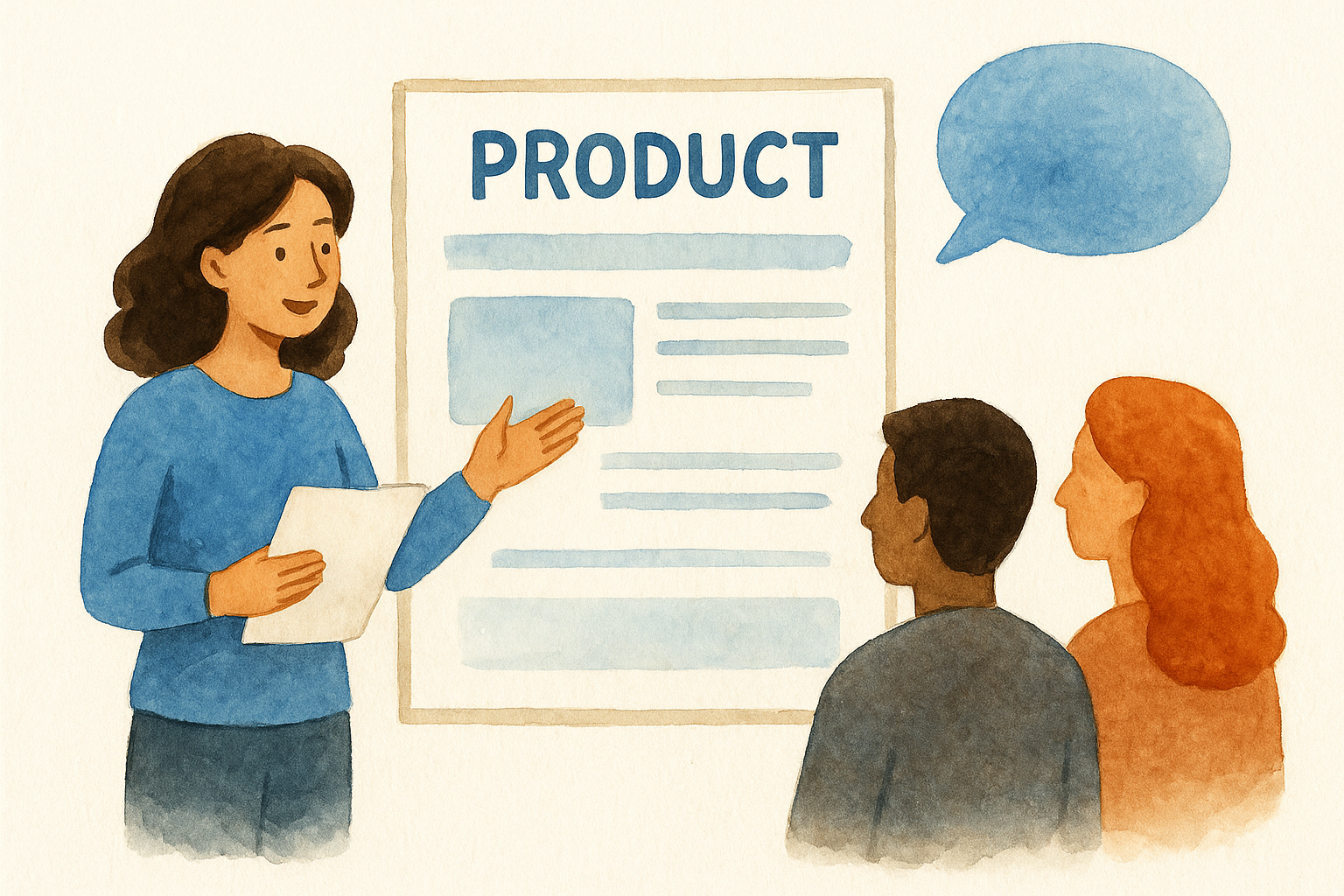
Students work harder when they know their work reaches someone beyond the teacher. One of the most overlooked project based learning best practices is designing a product and audience that make the work feel real and consequential, not just graded.
What "authentic" actually means in PBL
Authentic does not mean elaborate. It means the product reflects how knowledge gets used in the real world and the audience has a genuine reason to engage with it. A persuasive letter to a city council member is authentic. A poster that hangs in your hallway for a week is not.
When students know a real person will read, watch, or use their work, the quality of thinking visibly improves.
How to choose a product that proves learning
Pick a product that requires students to apply the standard, not just recall information. A research slide deck rarely shows deep thinking; a proposal, documentary, model, or structured argument typically does.
How to create a real audience when time is tight
You do not need a field trip or a community panel. Parents, administrators, local nonprofits, or even another class can serve as a meaningful audience with a single scheduled presentation or a short feedback form.
Ways to make the work public safely and simply
Post student work on a password-protected class site or school platform to keep it visible without exposing students publicly. A simple gallery walk with parents invited also works well.
Common authenticity traps that flatten the project
Avoid letting the product become decorative rather than demonstrative. If students spend more time on formatting than on the actual content and argument, the authenticity is gone and so is the learning.
4. Give students voice, choice, and clear roles
When students have genuine input into their projects, they invest more deeply in the work. One of the most effective project based learning best practices is building structured choice into your design so students feel ownership without losing direction.
What to offer choice on without losing control
Give students choices within limits: let them select their product format, research angle, or team partner from a defined set of options. This keeps the project manageable while giving students a real stake in the outcome.
How to set team roles that prevent "free riders"
Assign rotating roles (project manager, researcher, editor, presenter) with clear weekly responsibilities written down. When every student has a defined job, accountability becomes visible and easy to track.
Roles without responsibilities are just labels, so tie each role to specific, measurable tasks students submit.
How to structure decisions so all students contribute
Use consensus protocols like fist-to-five voting or structured turn-taking so no single student dominates group decisions. Build in moments where each student records their individual contribution to the team’s work.
How to support students who struggle with open-ended tasks
Provide decision-making scaffolds such as choice menus or planning templates that narrow the options without eliminating them. Students who struggle with ambiguity need tighter parameters, not fewer opportunities.
Red flags that choice has turned into confusion
Watch for students who cannot articulate their project goal or teams where one person controls all decisions. Both signal that your choice structure needs more guardrails before the work stalls.
5. Scaffold inquiry with milestones and mini-lessons
Without structure, PBL inquiry drifts. Breaking the project into clear phases and delivering targeted mini-lessons at each stage is one of the project based learning best practices that keeps students moving forward and prevents the mid-project stall that kills momentum.
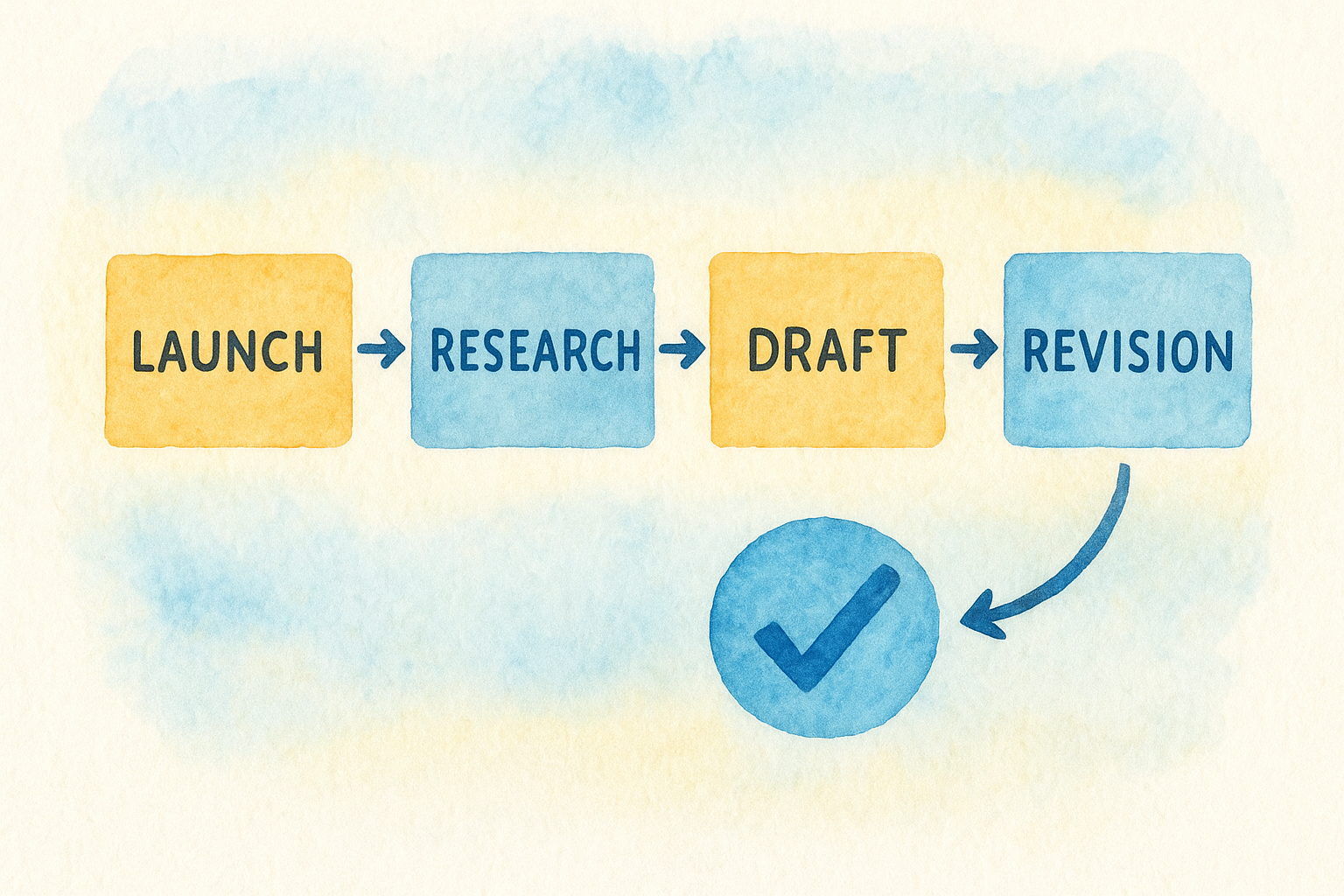
How to map the project into phases and checkpoints
Divide your project into three to five distinct phases (launch, research, draft, revision, presentation) and attach a checkpoint deliverable to each one. Checkpoints give you early warning when groups fall off track before deadline pressure hits.
Mini-lessons that support research, reading, and writing
Teach short, focused lessons of ten to fifteen minutes at the start of class when students need a specific skill. Target the skills your data shows they actually lack, such as evaluating sources, structuring arguments, or synthesizing notes, rather than covering everything upfront.
Timely mini-lessons land better than front-loaded instruction because students immediately apply what they just learned.
How to model quality with exemplars you create in class
Build exemplars with students in real time using a think-aloud, not from a previous year’s work. When students watch you make decisions and revise your thinking, they internalize the standard more deeply than when you hand them a finished example.
How to conference and coach without doing the work for them
Ask diagnostic questions ("What have you tried?" "What does your evidence show?") instead of giving answers. Your role is to surface student thinking, not fill in the gaps for them.
What to do when groups fall behind
Identify the specific bottleneck (missing research, unclear roles, off-task behavior) before you intervene. A targeted small-group session fixes the real problem faster than a whole-class reset.
6. Teach collaboration and manage teams on purpose
Collaboration is a skill you have to teach, not a trait students either have or don’t. One of the most consistent project based learning best practices is treating team management as deliberate instruction, not background noise.
How to form groups for learning, not just logistics
Group students intentionally based on complementary strengths, not just friendship or convenience. Mix students who lead with students who listen, and rotate groupings across projects so no one gets locked into the same dynamic.
Norms and routines that keep groups productive
Establish clear team norms on day one by having groups write their own working agreements. When students own the rules, they hold each other accountable more consistently than when you hand the norms down from above.
Norms only work if you revisit them regularly, so build in a brief weekly check-in where teams rate how well they’re living them.
Simple protocols for discussion, feedback, and conflict
Teach structured discussion protocols like numbered heads or round-robin so every voice gets heard. For conflict, give students a three-step resolution script (name the issue, state your need, agree on a next step) before they escalate to you.
How to monitor participation and intervene early
Circulate with a clipboard and a simple observation log so you catch both quiet students and dominant ones early. Brief, targeted check-ins beat waiting until the problem surfaces in the final product.
How to grade fairly with team and individual evidence
Combine a shared product score with an individual contribution log or reflection so grades reflect personal effort. This structure protects students who work hard from being pulled down by teammates who don’t contribute.
7. Assess process and product, then require revision
Assessment in PBL should capture how students worked and what they produced, not just the final grade. When you evaluate both dimensions, you get a much clearer picture of actual learning than a single rubric score gives you.
How to build a rubric that students actually use
Co-create your rubric with students during the launch phase so they understand the criteria before they start working. A rubric students help design becomes a working tool, not a surprise at the end.
Formative assessment ideas you can run weekly
Short exit tickets, progress check-ins, and one-minute updates give you data without eating class time. Track patterns across your whole class so you know which skills need a targeted mini-lesson before the next phase begins.
Peer feedback structures that improve work quality
Teach students to give feedback using a specific protocol such as "glow and grow" or a sentence stem frame. Structured peer feedback produces more useful, actionable responses than open-ended comments like "good job."
Peer feedback only improves work when students know exactly what to look for, so always anchor it to your rubric criteria.
How to run revision cycles without extending the calendar
Build one dedicated revision day into your project calendar before the final submission. Treat revision as a non-negotiable step, not an optional bonus for students who finish early.
What to do when the final products miss the mark
Use missing-mark projects as diagnostic data to identify where your scaffolding broke down. Applying these project based learning best practices consistently means you treat weak final products as feedback on your design, not just student failure.
Put it into practice
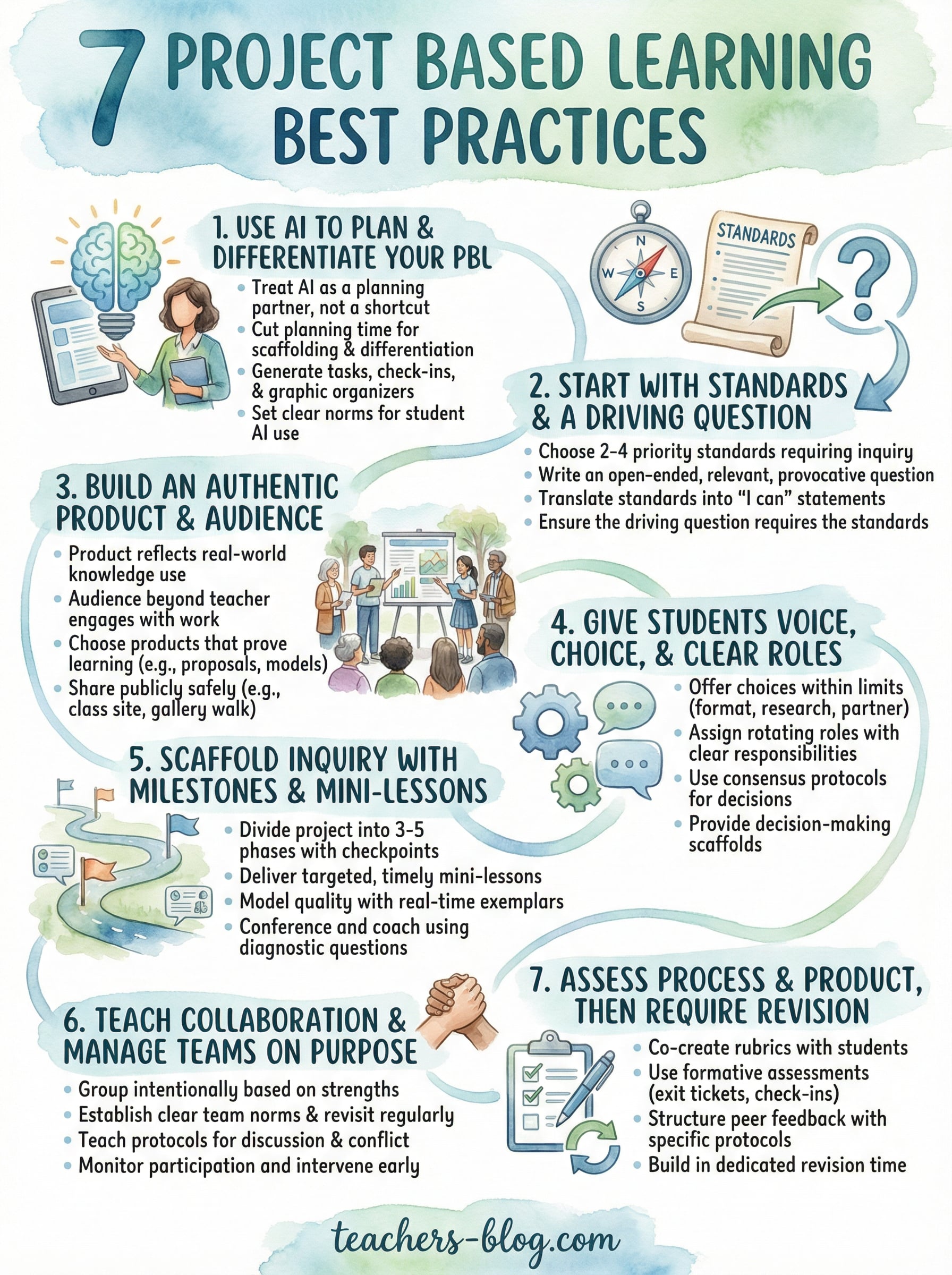
These seven project based learning best practices give you a complete framework to design and run projects that build real skills and keep student attention from launch to final presentation. Each practice reinforces the others: strong standards anchor your driving question, authentic audiences raise the quality of student work, and structured assessment closes the loop on everything in between.
You do not need to implement all seven at once. Start with the two or three practices that address your biggest current pain points, then build from there as you grow more confident. Strong PBL improves each time you run it because you understand your students and your own design decisions more clearly with every project cycle.
For more strategies, tools, and ready-to-use resources that support effective teaching, visit The Cautiously Optimistic Teacher where you will find AI-powered tools and differentiated materials built specifically for educators like you who want to teach with more impact and less preparation stress.