The Importance of Student Motivation: Why It Drives Learning
Every teacher has seen it: one student leans forward, eager to tackle a problem, while another stares out the window, mentally checked out. The difference between those two students often comes down to motivation. Understanding the importance of student motivation isn’t just an academic exercise, it’s the foundation of everything we do in the classroom. Without it, even the best lesson plans fall flat. With it, students surprise us (and themselves) with what they’re capable of achieving.
Motivation shapes how students process information, how long they persist through difficulty, and whether they walk away from a lesson feeling empowered or defeated. Research consistently shows that motivated students earn higher grades, retain more knowledge, and develop stronger critical thinking skills. But motivation isn’t a fixed trait. It shifts, stalls, and sometimes disappears entirely, which means teachers play a direct role in building and sustaining it.
That’s exactly why we built The Cautiously Optimistic Teacher around resources that help educators spark and maintain that drive, from our Brain Builders Workshop to practical classroom strategies rooted in growth mindset principles. This article breaks down what student motivation actually is, why it matters so much for learning outcomes, the psychology behind it, and concrete ways you can foster it in your own classroom. Whether you’re working with a room full of eager learners or trying to reach the student staring out that window, this guide is for you.
Why student motivation matters for learning
When you think about what separates students who thrive from those who struggle, motivation is almost always part of the answer. It is not simply about attitude or work ethic. Motivation drives the cognitive processes that determine how students receive, interpret, and store new information. A student who wants to learn something actively engages their working memory, makes connections to prior knowledge, and asks questions. A student who does not want to be there does none of that, no matter how clearly you present the material.
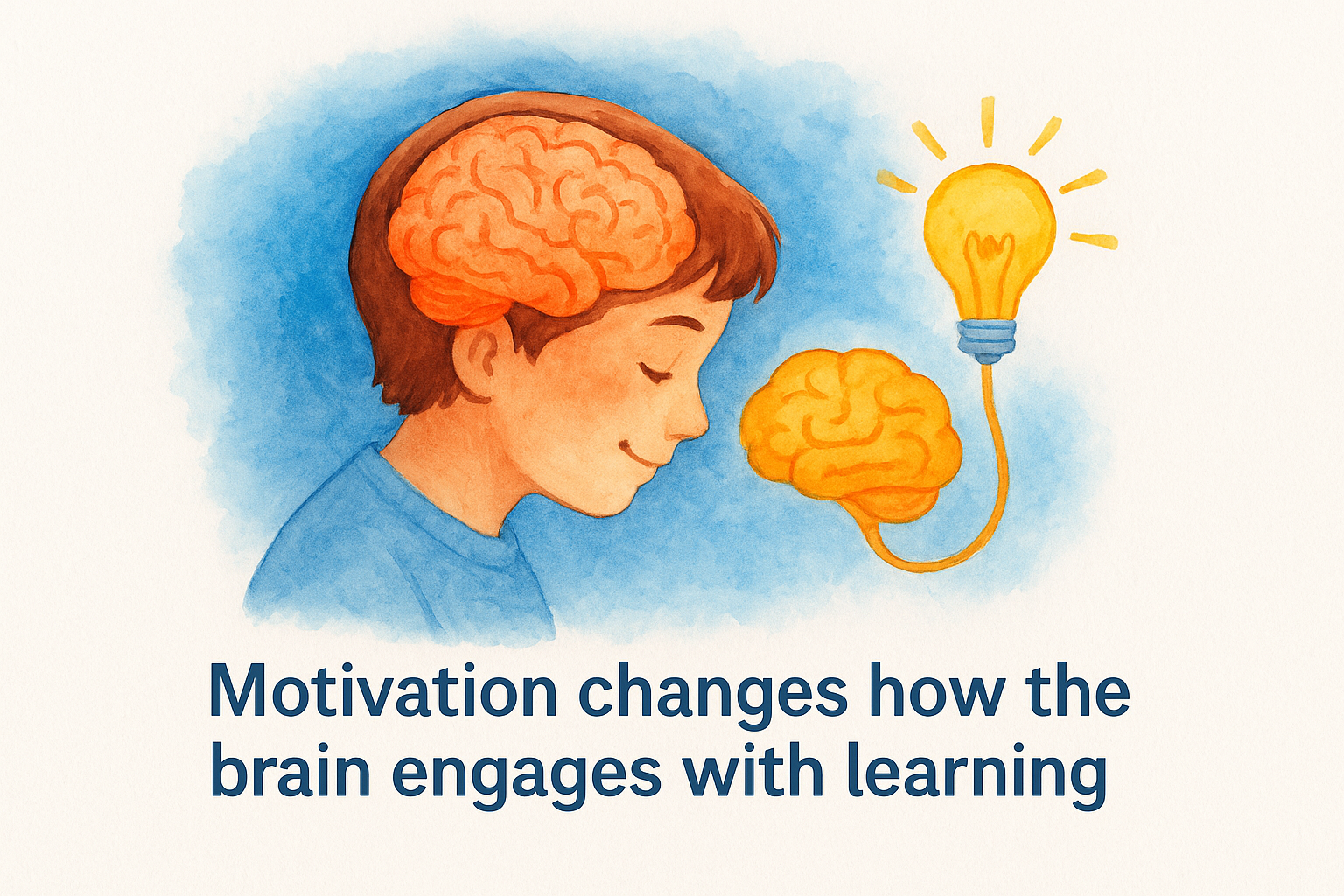
Motivation changes how the brain engages with learning
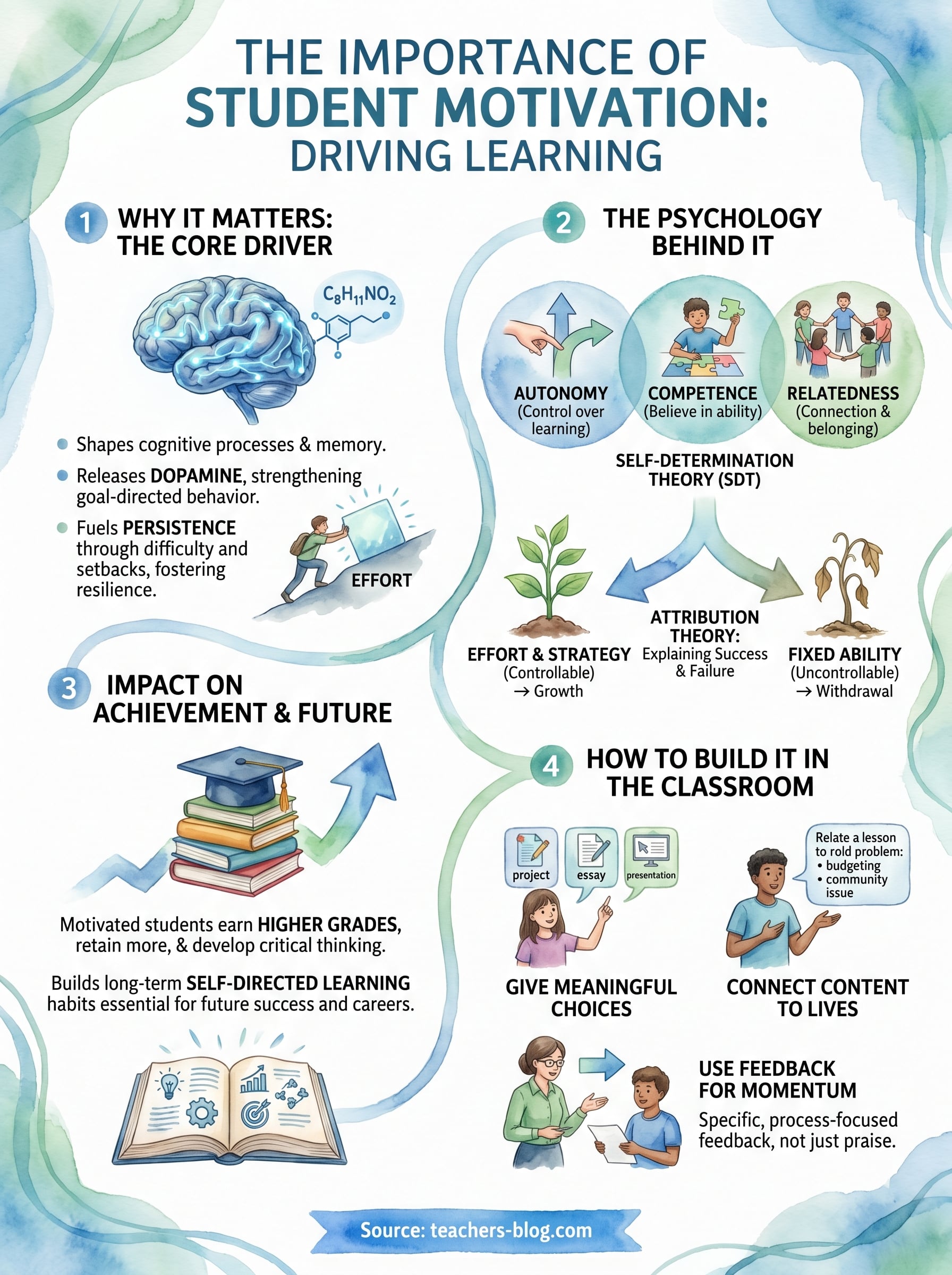
Neuroscience gives us a clear picture of why the importance of student motivation is so fundamental. When a student is genuinely motivated, the brain releases dopamine, a neurotransmitter that reinforces goal-directed behavior and strengthens memory consolidation. This means motivated students are not just more willing to learn. They are biologically better equipped to retain and apply what they learn. Research in educational psychology consistently supports the idea that motivation activates deeper processing strategies, so students move beyond memorization and actually understand the material.
Your lessons, no matter how well-designed, compete with distraction, fatigue, and social anxiety every single day. Motivation is what tips the scale in favor of learning. When students see a reason to engage, they push through confusion instead of shutting down. They ask for help instead of guessing. They try again after a wrong answer instead of giving up. These behaviors might look like resilience on the surface, but they all originate from motivation as their core driver.
Motivated students do not just work harder. They work smarter, because motivation directs their attention and shapes the strategies they choose to use.
Motivation determines whether students persist through difficulty
Learning is not comfortable. Students regularly encounter material that confuses them, tasks that feel too hard, and feedback that stings. Persistence through those moments is what separates students who grow from those who plateau. Motivation is the mechanism that keeps students moving forward when the work gets hard. When a student believes the effort is worth it, they tolerate frustration. When they do not believe that, they disengage the moment things get difficult, which is exactly when the most meaningful learning tends to happen.
Consider how this plays out in real time. Two students receive the same low score on a quiz. One reviews the feedback and tries again. The other stuffs the paper away and moves on. The difference is rarely about ability. It is almost always about whether the student is motivated enough to treat failure as information rather than as a final verdict. That gap in how students respond to challenge compounds over time and eventually looks like an achievement gap, even when it started as a motivation gap.
Why low motivation is harder to fix than it looks
Low motivation rarely announces itself clearly. Students who lack motivation often appear bored, defiant, or apathetic, and it is easy to misread those behaviors as laziness or deliberate disrespect. In reality, those students are usually responding to repeated experiences of failure, disconnection, or the feeling that school has nothing to offer them personally. That is why addressing motivation at the classroom level matters so much. By the time disengagement becomes visible, it has often been building for months or even years beneath the surface.
Once you understand what unmotivated behavior actually signals, you can respond more effectively. Rather than escalating consequences or lowering expectations, you can look for the underlying disconnect and work to close it. Every strategy you use to rebuild student motivation creates a ripple effect: students who re-engage academically also tend to show improvement in attendance, behavior, and self-confidence. Motivation is not a soft skill sitting at the edges of learning. It is the foundation that everything else rests on.
What student motivation is and what it is not
Most people use the word "motivation" loosely, treating it as a synonym for enthusiasm or a good attitude. That loose definition creates real problems in the classroom, because it leads teachers to misread their students. When you understand what motivation actually is, and what it clearly is not, you gain a sharper lens for diagnosing what is happening in your room and responding in ways that actually help.
Motivation is an internal drive to engage
At its core, motivation is the internal process that initiates, directs, and sustains behavior toward a goal. In an academic context, that goal might be passing an exam, understanding a concept, or finishing a task. Researchers typically distinguish between two types: intrinsic motivation, which comes from genuine interest or satisfaction in the activity itself, and extrinsic motivation, which is driven by external rewards like grades, praise, or avoiding punishment. Both types influence student behavior, but they do not produce the same quality of learning.
Intrinsic motivation tends to produce deeper engagement, stronger retention, and greater creativity. When a student reads a novel because they find it compelling, they process it differently than when they read it only to pass a quiz. You can use extrinsic motivators strategically, but if they become the primary driver, you end up with students who only work when a reward is visible. Recognizing this distinction is central to understanding the importance of student motivation and how to build the kind that actually lasts.
Extrinsic rewards can jump-start engagement, but intrinsic motivation is what keeps students learning when no one is watching.
What motivation is not
Motivation is not compliance. A student who quietly follows instructions, completes assignments on time, and never disrupts class might look highly motivated from the front of the room. But compliance and motivation are not the same thing. A compliant student may be doing just enough to avoid negative consequences, with no genuine investment in the learning itself. If you conflate the two, you risk overlooking students who are going through the motions while remaining completely disengaged from the content.
Students are also not simply motivated or unmotivated by fixed personality traits. Motivation shifts depending on the subject, the task, the classroom environment, and what is happening in a student’s life outside of school. That is genuinely good news, because it means you have real influence over the conditions that shape it. A student who appears disengaged in one class may be deeply invested in another, which tells you the capacity is there and the conditions are what need to change.
The psychology behind motivation in school
Understanding why students feel motivated or disengaged starts with looking at what psychological research actually tells us. Two major frameworks have shaped how educators and researchers think about the importance of student motivation: Self-Determination Theory and Attribution Theory. Together, they explain not just whether students want to learn, but why that desire appears, disappears, and changes depending on the conditions you create inside and outside your classroom. When you understand these frameworks, you stop guessing at what motivates your students and start making informed decisions about how to design learning experiences that actually work.
Self-Determination Theory and the three core needs
Self-Determination Theory, developed by psychologists Edward Deci and Richard Ryan, identifies three fundamental psychological needs that drive human motivation: autonomy, competence, and relatedness. When students experience all three in the classroom, intrinsic motivation grows. When even one is consistently missing, motivation drops and disengagement follows.
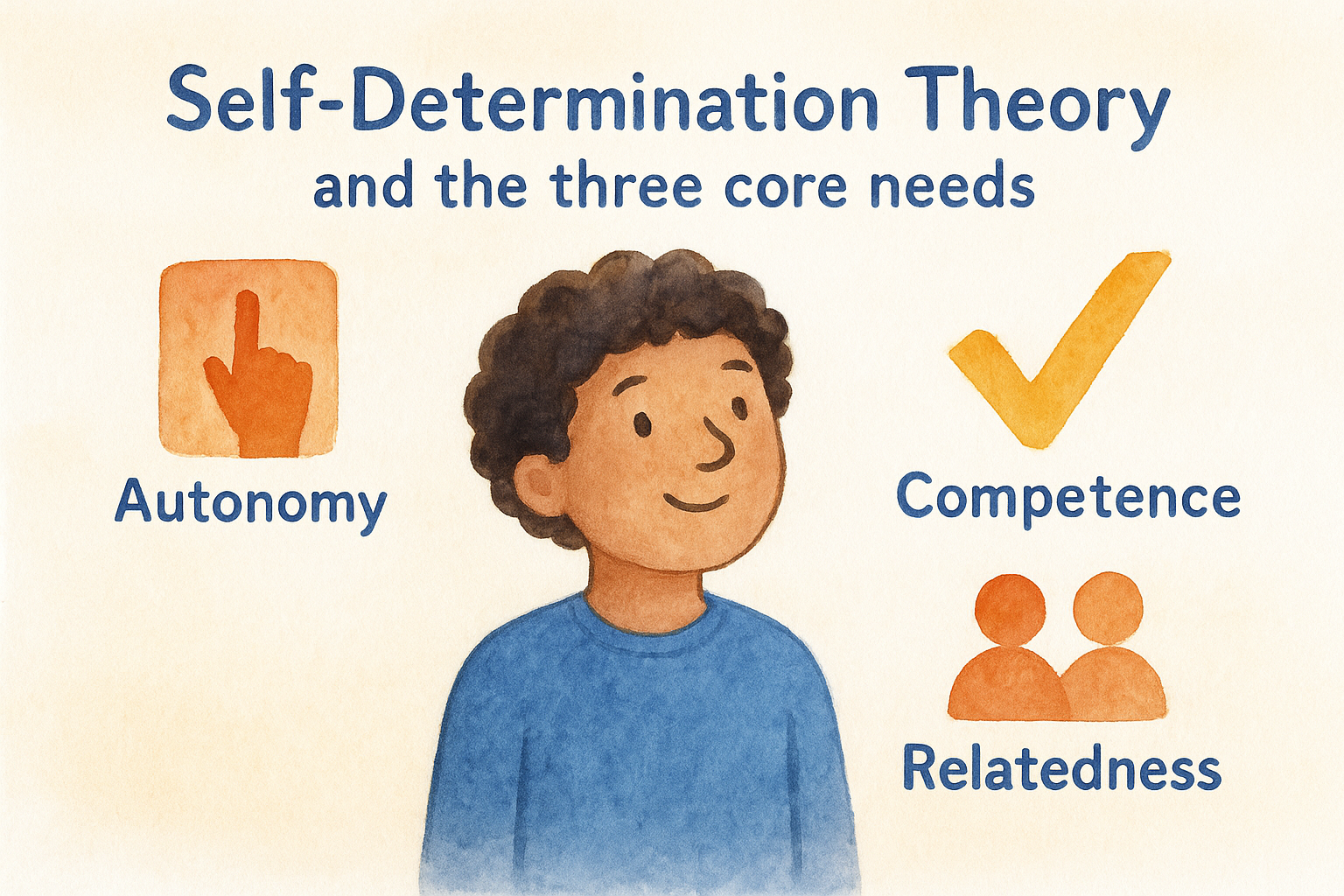
Autonomy means students feel they have some genuine control over their learning, not just a series of identical tasks assigned without context or choice. Competence means they believe they can succeed at the work, which is why tasks that are either too easy or too hard both undermine motivation in different ways. Relatedness means students feel connected to you and to their peers, because belonging is not a social bonus, it is a psychological prerequisite for genuine engagement. You can design the most carefully sequenced curriculum imaginable, but if students feel isolated, invisible, or incapable inside your classroom, the content will not reach them.
When students feel autonomous, competent, and genuinely connected, they stop asking "Do I have to do this?" and start asking "Can I keep going?"
How students explain success and failure
Attribution Theory adds another essential layer to this picture. How a student interprets the cause of their success or failure directly shapes every effort they make afterward. Students who attribute outcomes to effort and strategy (factors they can control) tend to persist and improve when they stumble. Students who attribute outcomes to luck or fixed ability tend to withdraw, because they believe the result was never really up to them in the first place.
This matters enormously for how you respond to student performance in real time. When you praise the process rather than the result, you reinforce an attributional pattern that supports continued effort. Telling a student "You broke that problem into steps and worked through each one" builds a different internal story than "You’re naturally good at this." The first teaches students that their choices and strategies drive outcomes. The second quietly suggests that ability is fixed and effort is secondary. These distinctions feel small in the moment, but they produce measurable differences in how students approach difficult work over time.
What motivated and unmotivated learning look like
Theory is useful, but recognizing motivation in practice is what actually changes what you do on Monday morning. The importance of student motivation becomes concrete when you can spot it, or its absence, in your students’ daily behavior. Knowing what both states look like gives you something immediately actionable: a clearer picture of who needs support, what kind, and when to step in before disengagement becomes a deeply rooted pattern.
What you see in a motivated learner
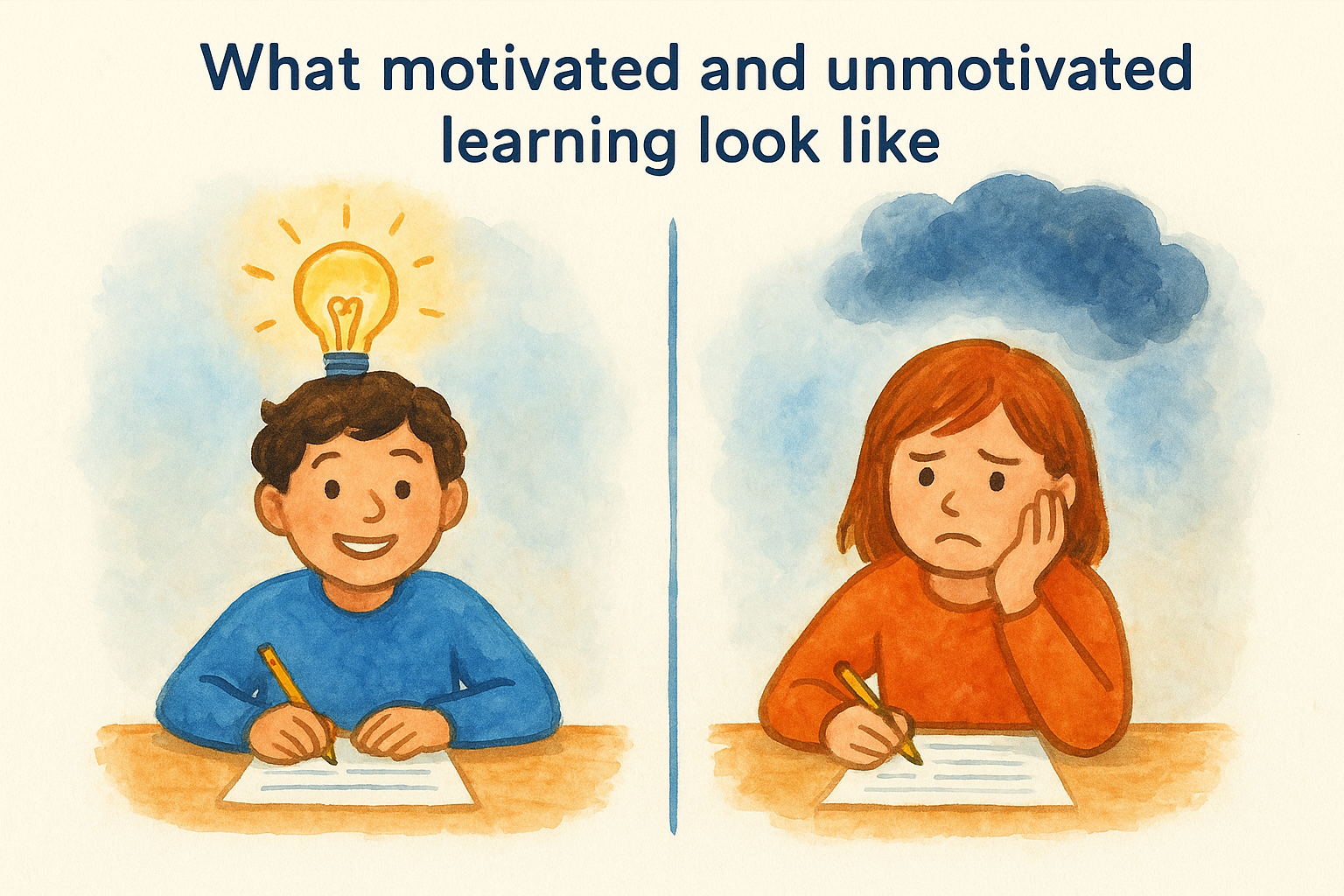
Motivated students are not always loud or outwardly enthusiastic. Motivation shows up in specific, observable behaviors that are easy to miss if you’re only watching for raised hands and big smiles. A motivated learner sustains attention when the task gets hard, returns to incomplete work without being prompted, and asks questions that go beyond the bare minimum required to finish an assignment. They also tend to make connections between what they learned last week and what they are working on today.
You will also notice that motivated students handle frustration differently than their disengaged peers. When they hit a wall, they slow down and try a different approach instead of waiting for you to rescue them or simply giving up. They treat confusion as a temporary and normal state rather than evidence that they cannot do the work. That shift in how a student interprets difficulty is one of the clearest signals that genuine motivation is present and functioning.
A motivated student does not need you to constantly push them forward. They push themselves because they believe the effort leads somewhere worth going.
What you see in an unmotivated learner
Unmotivated learning has a recognizable texture too. Students who lack motivation often produce just enough work to avoid consequences rather than enough to actually learn something. They complete assignments with minimal effort, skim rather than read closely, and copy processes without understanding the logic behind them. The work gets submitted, but the learning does not happen, and the gap widens quietly over time.
Behavioral signals are equally telling and frequently misread. Consistent off-task behavior, reluctance to start independent work, emotional flatness during activities that engage the rest of the class, and repeated requests to do anything other than the assigned task are all worth paying attention to. These behaviors often look like defiance or laziness, but they almost always signal disconnection from the content rather than a character flaw in the student. When you learn to read unmotivated behavior as information rather than a personal affront, you stop reacting to the symptom and start addressing the actual cause.
How motivation impacts achievement and long-term success
The link between motivation and academic performance is not theoretical. Decades of research confirm that motivated students consistently outperform their peers across grade levels, subjects, and assessment types. Understanding the importance of student motivation in this context shifts it from a feel-good concept into a measurable driver of real outcomes. When students are motivated, they invest more time in practice, seek out feedback, and take ownership of their learning in ways that translate directly into higher achievement on every measure you use to evaluate growth.
The connection between motivation and grades
Motivated students earn better grades not because they are smarter, but because they approach work differently. They study with intention rather than passivity, revisit material they do not understand, and treat mistakes as a signal to adjust their strategy rather than a reason to stop trying. Research in educational psychology consistently shows that students with higher intrinsic motivation demonstrate stronger academic outcomes, including higher test scores, better written work, and deeper conceptual understanding across subjects.
The effect compounds over time. A student who stays motivated through repeated difficulty builds both knowledge and the habit of effortful learning. By the time they reach high-stakes assessments, they have practiced thousands of small moments of choosing to engage rather than avoid. That accumulated practice shows up in their performance in ways that cannot be replicated through last-minute test prep or extra tutoring sessions alone.
Motivation does not just predict how students perform this semester. It shapes how they approach every challenge that follows.
What motivated students carry beyond graduation
The academic benefits of motivation do not stop when students leave your classroom. Students who develop intrinsic motivation in school tend to carry those self-directed learning habits into adulthood, which matters enormously in a workforce that increasingly rewards people who can teach themselves new skills, navigate ambiguity, and persist through setbacks without constant external supervision.
Employers consistently rank self-motivation and initiative among the most valuable traits they look for in new hires. These are not fixed personality traits that students either have or lack. They are patterns built over years of classroom experience, shaped by whether students learned to value the process of learning or only its visible outputs. When you prioritize motivation inside your classroom, you do more than improve this year’s grades. You help students build a relationship with learning itself that will serve them professionally and personally for the rest of their lives.
How to build student motivation in your classroom
Understanding the importance of student motivation is only half the equation. The other half is knowing what you can actually do starting this week to shift the conditions inside your classroom. Motivation is not something you wait for students to bring through the door. You create the environment that makes it possible, and the strategies below are concrete enough to use with your current curriculum and your current students.
Give students meaningful choices
Autonomy is one of the most reliable drivers of intrinsic motivation, but many classroom structures leave little room for it. You do not need to redesign your entire unit to change this. Offering real choices within a task, such as letting students pick which three of five questions to answer, choose their reading response format, or select a project topic from a curated list, signals that their preferences matter. That signal alone shifts how students relate to the work.
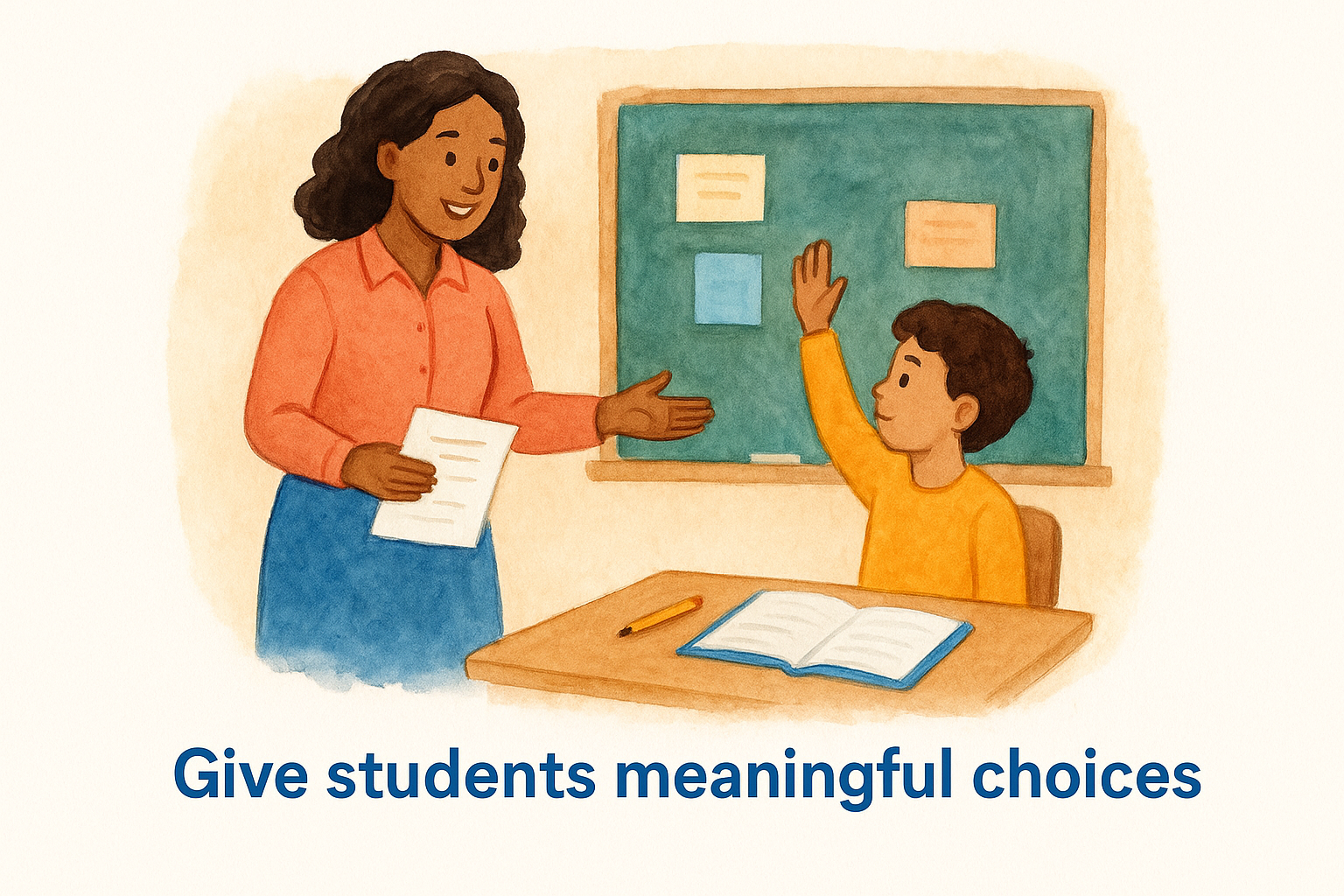
When students feel they have genuine ownership over some part of the learning, they tend to invest more effort in the outcome. Keep the academic standard fixed while giving students flexibility in how they reach it. That balance preserves rigor while building the autonomy that sustains motivation over time.
Connect content to student lives
Students engage more deeply when they can see a clear link between the content and their own world. This does not mean every lesson needs a personal connection, but it does mean asking yourself regularly how a concept connects to decisions students already make, problems they already face, or questions they already carry. A math lesson that uses real spending decisions lands differently than one built around abstract numbers with no context.
When students can answer "why does this matter to me?", they stop waiting for permission to care about the work.
You can also invite students to surface their own connections by building brief reflection moments into lessons. Asking "where have you seen this before?" or "how would this change a decision you make?" takes two minutes and dramatically increases the chance that the content sticks beyond the test.
Use feedback that builds momentum
Feedback is one of your most powerful tools for building motivation, and how you deliver it matters as much as what you say. Feedback that names specific strategies, such as "you organized your argument clearly and backed each point with evidence," builds a student’s understanding of what they did that worked. That understanding is something they can deliberately repeat, which is far more motivating than vague praise that gives them nothing to build on.
Aim to make your feedback timely, specific, and forward-looking. Tell students what they did well, what to adjust, and how to make that adjustment. That structure turns feedback into a roadmap rather than a verdict.
How to measure motivation without killing it
Measuring motivation is one of the trickier parts of understanding the importance of student motivation in practice. The moment you attach a grade or a formal evaluation to motivation itself, you risk turning it into a performance, which defeats the purpose entirely. What you are looking for is evidence of engagement, not compliance, and the tools you use to find that evidence need to be low-stakes enough that students actually respond honestly. The good news is that you already have access to more useful data than you might think.
Read behavior as your primary data source
Observable behavior gives you reliable, real-time information about student motivation without requiring any formal measurement at all. Pay attention to who asks follow-up questions when the lesson is over, who returns to a problem after getting it wrong, and who talks about classroom content in contexts where they did not have to. These are strong indicators of genuine motivation, and they show up every day if you know what to look for.
You can make this observation more systematic without making it feel evaluative. Keep a simple running log where you note specific behaviors by student across a week, such as who initiated a conversation about the content, who asked for feedback voluntarily, and who stayed on task during open work time. Over two or three weeks, patterns become clear and you have concrete evidence to guide your next instructional move.
Behavior does not lie the way self-reported surveys sometimes do. Watch what students do when no one is asking them to perform.
Give students low-stakes space to reflect
Self-reflection tools work well when the stakes are low enough that students say what they actually think. Exit tickets, brief weekly check-ins, and anonymous response forms can all surface useful information about how motivated students feel and why, without turning motivation into a graded category that changes how they respond.
Keep the prompts simple and specific. Asking "what felt hard today and why did you keep going?" or "what part of this topic do you actually want to know more about?" gives you far more useful data than a generic rating scale. Students respond more honestly when the question feels like a conversation rather than an evaluation.
Combine what students tell you with what you observe directly, and you get a fuller, more accurate picture of motivation in your room. Neither source alone is complete. Together, they help you identify which students are genuinely invested, which ones are performing engagement without feeling it, and where your next targeted effort should go.
A better way to end
The importance of student motivation comes down to one simple reality: you cannot separate the will to learn from the ability to learn. Every strategy, every lesson, every piece of feedback you give either builds student motivation or quietly erodes it. When you treat motivation as a condition you actively shape rather than a trait students either bring or do not, your entire approach to teaching shifts in ways that reach more students more consistently.
You do not need to overhaul everything at once. Start with one change, whether that is building in a real choice, adjusting how you deliver feedback, or reading behavior more deliberately, and watch what shifts. The resources at The Cautiously Optimistic Teacher are built exactly for this, giving you practical tools and strategies to turn what you now understand about motivation into what your students actually experience every day in your classroom.