
5 Classroom Strategies For Building Student Confidence Fast
You’ve seen it before, a student who knows the answer but won’t raise their hand. A writer with something to say who turns in a blank page. The problem isn’t ability. It’s confidence. And building student confidence isn’t some abstract, feel-good goal. It’s one of the most concrete things you can do to unlock participation, effort, and real academic growth.
The good news? You don’t need a semester-long initiative or a school-wide program to make it happen. Small, intentional shifts in how you structure your classroom can produce visible results in days, not months. That’s exactly the kind of practical, ready-to-use approach we focus on here at The Cautiously Optimistic Teacher.
Below, you’ll find five strategies that target student self-esteem right where it matters most, inside your classroom, during instruction. Each one is actionable, adaptable across grade levels, and designed to help even your most hesitant students start showing up differently.
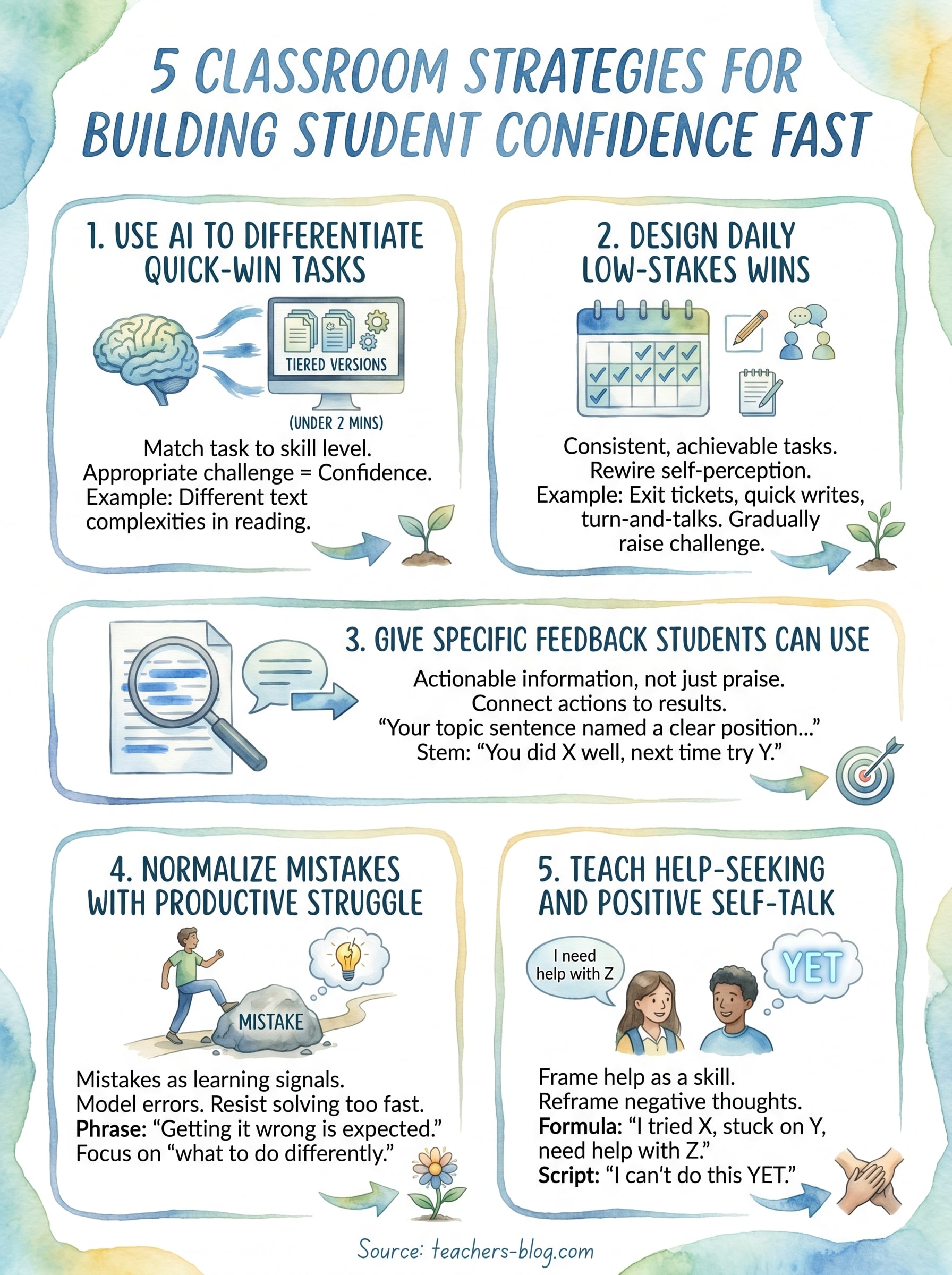
1. Use AI to Differentiate Quick-Win Tasks
When students complete a task they can actually succeed at, confidence follows. The challenge is that a single-level assignment leaves some students overwhelmed and others disengaged. AI removes that bottleneck by generating tiered versions of any task in under two minutes.
How This Strategy Builds Confidence Fast
Confidence grows when students feel appropriately challenged, not crushed. When you match the task to their current skill level, they stop associating effort with failure and start connecting it with progress.
When students experience early wins on meaningful tasks, they engage longer and attempt harder work with less resistance.
What to Set Up in Your Lesson Before Class
Before class, identify one core task from your lesson and decide on three levels: below, at, and above grade level. Feed that task into your AI tool with a prompt that specifies each level. You’ll have three ready-to-use versions in minutes, not a full planning period.
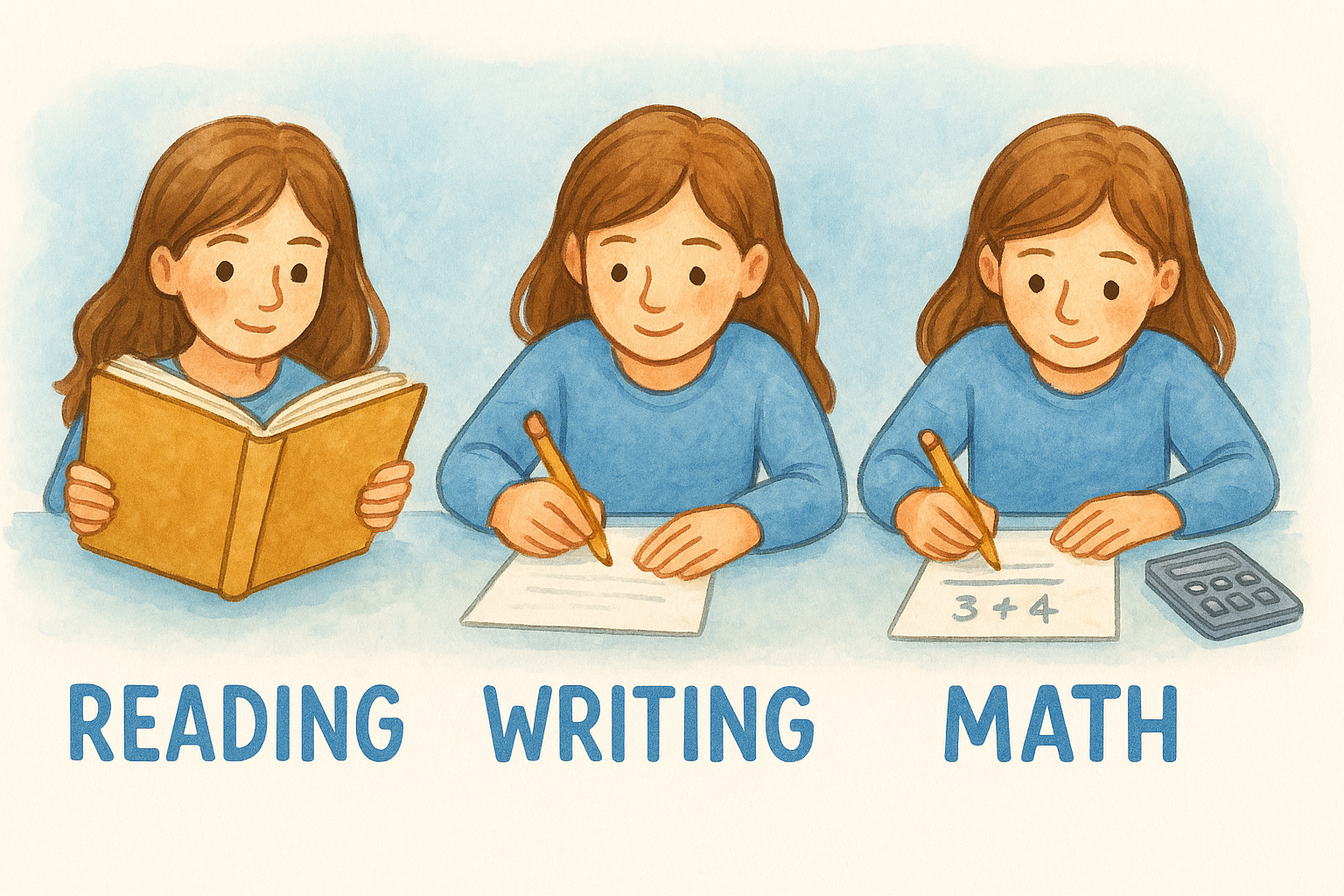
What It Looks Like in Reading, Writing, and Math
In reading, you might provide different text complexity levels for the same passage question. In writing, one group gets a sentence starter while another gets an open prompt. In math, scaffolded steps support struggling students while extension problems stretch advanced ones, all within the same lesson.
How to Use the RankYak Differentiated Instruction Helper
RankYak’s Differentiated Instruction Helper, available through The Cautiously Optimistic Teacher, lets you paste in your lesson objective and receive tiered tasks instantly. You enter your goal, select the grade level, and the tool produces differentiated options you can copy directly into your materials without reformatting.
Common Mistakes to Avoid
The biggest error is labeling the tiers in ways students can see. Words like "easy," "medium," and "hard" signal that you’ve sorted them by ability. Use neutral names or no labels at all so every student focuses on the work, not the comparison.
2. Design Daily Low-Stakes Wins
Daily low-stakes wins give students repeated proof that they can succeed, and that proof is the foundation of building student confidence over time. When success happens consistently, students start expecting it, which changes how they approach harder tasks.
How This Strategy Builds Confidence Fast
Small wins trigger momentum. When you build short, achievable tasks into every lesson, students arrive each day with a reason to engage rather than a reason to hide.
Consistent small successes rewire how students see themselves as learners.
Quick Formats That Work in Any Subject
Exit tickets, quick writes, and oral turn-and-talks all work well. These take less than five minutes and give every student a chance to succeed without pressure.
How to Raise the Challenge Without Crushing Effort
Increase difficulty gradually, one step at a time. If the task felt easy yesterday, add one new layer today. Students barely notice the shift, but their skill level climbs steadily.
What to Say When Students Get It Wrong
Say: "You’re close. What would happen if you tried this instead?" That phrasing keeps effort in focus without making wrong answers feel final.
Common Mistakes to Avoid
Avoid making every task competitive. Ranking students against each other turns a low-stakes moment into a high-stakes one fast.
3. Give Specific Feedback Students Can Use
Vague praise like "good job" doesn’t tell students what they actually did well, so it never builds lasting confidence. Specific feedback shows students exactly where their effort paid off, giving them a clear target to hit again.
How This Strategy Builds Confidence Fast
When students hear precise feedback, they connect specific actions to specific results. That connection makes building student confidence something repeatable, not something left to chance.
The Difference Between Praise and Useful Feedback
Praise says "great work." Useful feedback says "your topic sentence named a clear position, which made your argument easier to follow." One is a reaction; the other is actionable information.
Feedback that names what worked gives students a repeatable strategy, not just a good feeling.
Simple Feedback Stems That Work on the Spot
Start with "You did X well" and follow it with "next time, try Y." That structure honors effort while pointing clearly forward without any sting of criticism.
How to Build a Fast Feedback Loop for Quiet Students
Quiet students often wait to be noticed. Build in written feedback checkpoints or private response cards so they receive direct, personal input without needing to raise their hand.
Common Mistakes to Avoid
Avoid generic comments scattered across every paper. Five precise, targeted notes beat twenty vague ones every time.
4. Normalize Mistakes with Productive Struggle
Students avoid risks when they expect mistakes to cost them. Building student confidence means flipping that expectation so productive struggle becomes a normal signal of learning, not a warning sign of failure.
How to Set Norms That Make Risk-Taking Feel Safe
Name mistakes out loud from day one and model your own errors in front of the class. Walk through your correction process so students see how you handle confusion. When they watch you recover without panic, they learn that struggle is survivable.
A few phrases that help set this norm:
- "Getting it wrong the first time is expected here."
- "Show me your thinking, not just your answer."
Routines That Turn Mistakes Into Learning Fuel
Build a quick habit where students write one thing they got wrong and one thing they’d do differently. This moves focus off the error and onto the next move, which is exactly where confidence grows.
When you make error-review routine, mistakes stop feeling like endpoints and start feeling like checkpoints.
How to Coach the Middle of the Struggle
When a student is stuck, resist solving it for them. Ask: "What do you already know about this?" That question grounds them in what they have and gives them enough footing to keep moving forward.
Common Mistakes to Avoid
The most common mistake is jumping in too fast. Rescuing students before they’ve genuinely struggled signals that you doubt their ability to work through it themselves.
5. Teach Help-Seeking and Positive Self-Talk
Students who can’t ask for help and can’t manage their inner voice hit a wall fast. Building student confidence requires teaching both skills directly, since many students have never been shown how to do either well.
How This Strategy Builds Confidence Fast
When students learn to ask for support and reframe negative thoughts, they stop spiraling on hard tasks. That shift keeps them engaged longer and produces more consistent effort across your class.
How to Teach Students to Ask for Help Without Shame
Frame help-seeking as a skill, not a weakness. Teach a simple formula: "I tried X, I’m stuck on Y, I need help with Z." That structure gives students a clear way to advocate for themselves without feeling exposed.
Self-Talk Scripts Students Can Actually Remember
Give students two or three short phrases they can use when frustration hits, like "I can’t do this yet" or "What do I already know?" Keep scripts brief and specific so they actually stick.
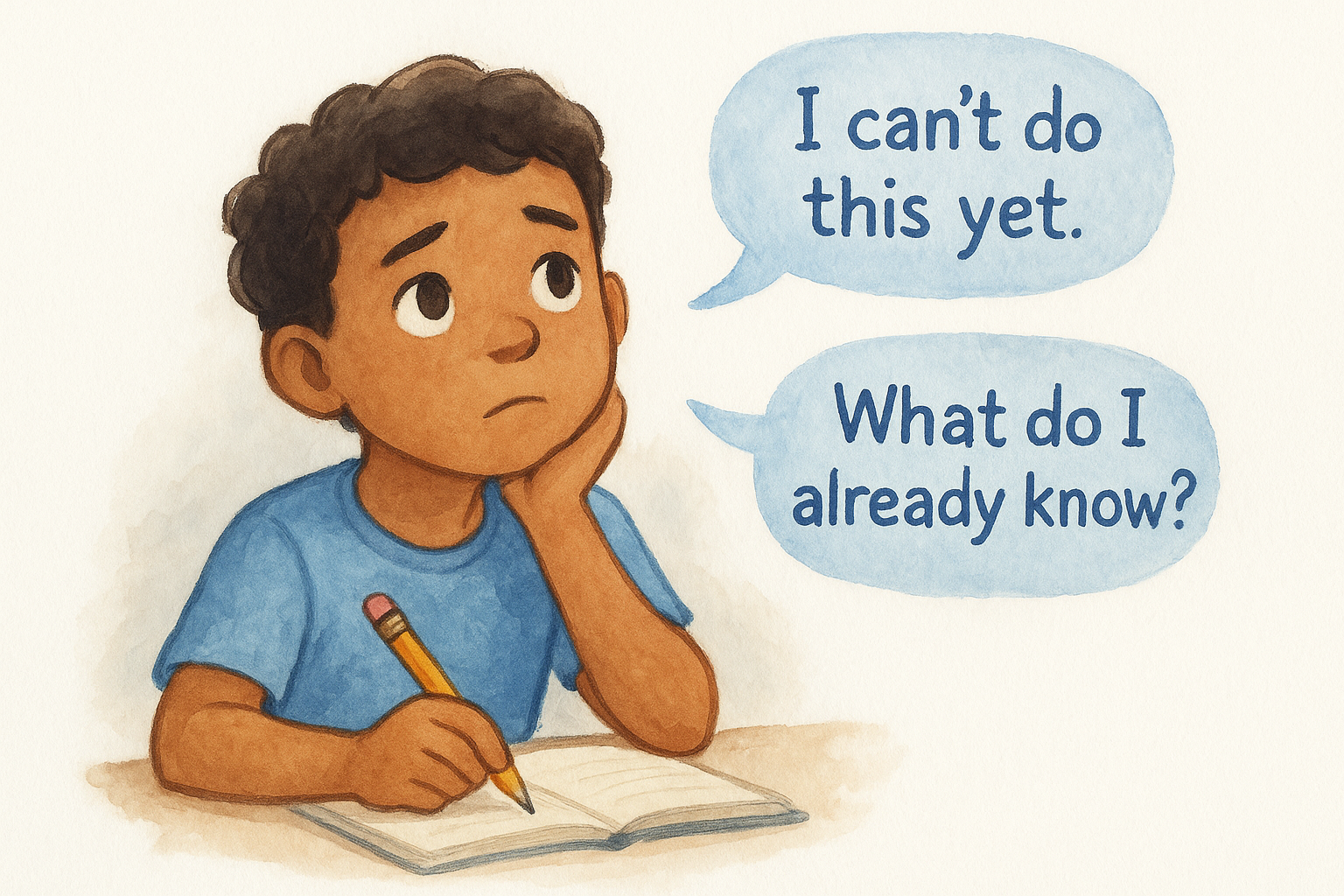
The word "yet" does more for student confidence than almost any other single adjustment you can make.
Class Structures That Make Support Feel Normal
Build in peer support partners or rotating check-in spots so asking for help becomes part of your daily routine, not an exception.
Common Mistakes to Avoid
Avoid praising students for never needing help. That standard teaches avoidance over learning, and it makes asking for support feel like failure.
Make Confidence the New Routine
None of these five strategies require a complete overhaul of how you teach. They require consistency and intentionality. When you layer differentiated tasks, low-stakes wins, specific feedback, productive struggle, and help-seeking into your daily routine, building student confidence stops being a separate goal and becomes a natural result of how your class runs.
Pick one strategy this week and run it every single day. Notice which students start showing up differently, then add another layer the following week. Small, repeated actions compound faster than you expect, and your students will feel the shift before they can fully name it.
If you want more practical strategies and ready-to-use classroom tools that make these habits easier to sustain, explore everything The Cautiously Optimistic Teacher has to offer. Your students are more capable than they currently believe, and your job is to build the daily conditions that prove it to them, one lesson at a time.