Consistent Classroom Management Without Rigidity
Consistency Without Rigidity in the Classroom
If there’s one word teachers hear constantly about classroom management, it’s this:
“Be consistent.”
And that advice is correct.
But it’s also incomplete.
Because consistency is powerful.
Rigidity is damaging.
And confusing the two creates unnecessary stress—for both teachers and students.
Let’s unpack the difference.
What Consistency Actually Means
Consistent classroom management does not mean:
Responding the exact same way to every situation
Applying consequences mechanically
Ignoring context
Refusing to adjust
Consistency means:
Expectations are predictable
Boundaries are clear
Responses are fair
Students understand what will happen next
Consistency is about predictability and trust.
Rigidity is about control and inflexibility.
Those are very different systems.
The Science Behind Consistency
From a neuroscience perspective, predictability lowers cognitive and emotional load.
When classrooms are consistent:
The stress response decreases
Executive function improves
Students use less mental energy scanning for threat
Behavioral self-regulation increases
Unpredictable environments activate vigilance. Predictable ones activate learning.
But here’s the nuance:
Overly rigid environments can also activate stress—especially for students who:
Experience trauma
Have neurodivergent profiles
Struggle with executive function
Need occasional flexibility to succeed
So the goal is not “never bend.”
The goal is:
Predictable structure + responsive judgment.
Why Rigidity Backfires
Rigid systems often sound like this:
“That’s the rule.”
“I don’t care what the reason is.”
“It’s always been this way.”
“If I make one exception, the whole class will fall apart.”
But here’s what actually happens when teachers operate rigidly:
Students focus on fairness instead of learning.
Power struggles increase.
Teacher stress increases.
Students with legitimate needs feel targeted.
Classroom relationships weaken.
Rigidity may look strong.
But relationally, it’s fragile.
What Consistency Without Rigidity Looks Like
Here’s the balance:
| Consistency | Rigidity |
|---|---|
| Clear expectations | Unquestioned rules |
| Calm follow-through | Emotional reactions |
| Context-aware decisions | One-size-fits-all responses |
| Private conversations when needed | Public enforcement always |
| Boundaries + humanity | Boundaries without empathy |
Consistency builds credibility.
Rigidity builds resistance.
The Key Distinction: Equal vs. Fair
One of the biggest misunderstandings in classroom management is this:
Equal treatment ≠ Fair treatment
Fair means:
The expectation stays the same.
The response may vary based on context.
Example:
Expectation: Work is submitted on time.
Consistent response: Late work requires follow-up.
Rigid response: Automatic zero, no conversation.
Flexible consistency:
Student A forgot → logical consequence + support
Student B had a documented crisis → adjusted timeline
Student C repeatedly avoids work → structured intervention
The boundary remains.
The teacher response adapts.
That’s professionalism—not weakness.
The 5 Principles of Consistent Classroom Management
1. Consistent Expectations
Students should know:
What behavior looks like
What happens when expectations aren’t met
How to repair mistakes
Clarity reduces conflict.
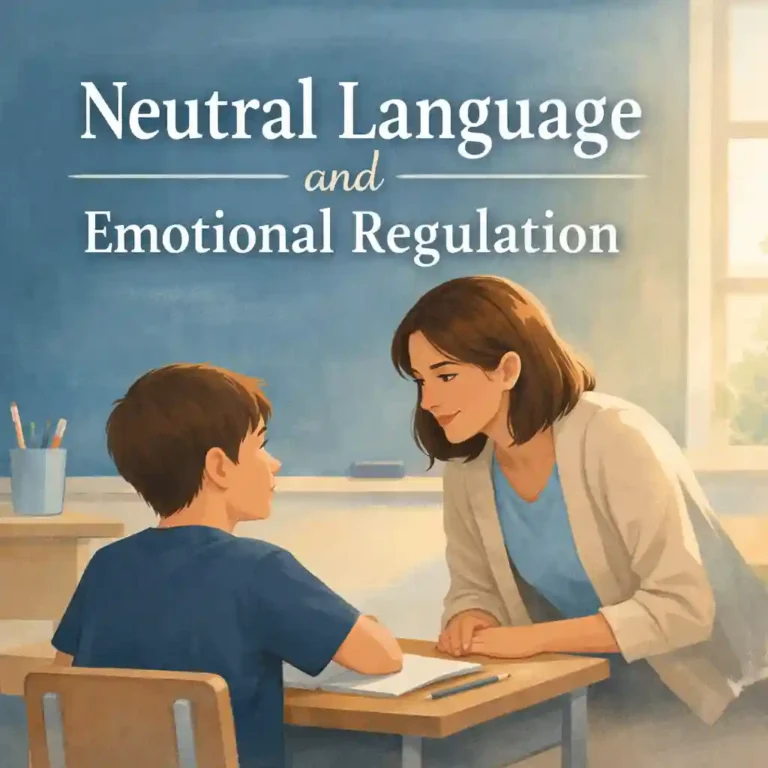
2. Consistent Tone
Your tone should not swing wildly based on mood.
Students should experience:
Calm
Neutral language
Emotional regulation
Consistency in tone builds safety.
3. Consistent Follow-Through
If you say you’ll:
Contact home
Check in tomorrow
Reteach a procedure
Then do it.
Follow-through builds authority more than volume ever will.
4. Flexible Consequences
Ask:
What skill is missing?
What support is needed?
What consequence teaches, not punishes?
Consequences should connect to behavior—not to teacher frustration.
5. Context-Aware Judgment
Consistency does not mean ignoring:
IEP accommodations
Trauma triggers
Cultural misunderstandings
Mental health realities
Professional judgment is part of consistency.
A Simple Classroom Test
If you’re unsure whether you’re being consistent or rigid, ask yourself:
Would I make the same decision tomorrow?
Can I explain this decision calmly to a parent or administrator?
Is this response about teaching—or about winning?
Does this action maintain dignity for the student?
Am I upholding a boundary while staying human?
If the answer is yes to most of those, you’re in the right zone.
A Practical Framework: The “Firm + Flexible” Model
Here’s a simple daily mental model:
Firm on expectations.
Flexible in response.
That means:
Expectations do not change.
Delivery and consequences can adjust based on need.
Students feel safest when:
The line is clear.
The adult is steady.
The adult is reasonable.
Common Fear: “If I’m Flexible, They’ll Take Advantage”
This fear is understandable.
But here’s what research and experience show:
Students exploit inconsistency.
They rarely exploit calm, structured flexibility.
When students trust that you:
Notice patterns
Track behavior
Follow through
Flexibility feels supportive—not weak.
Inconsistent teachers are manipulated.
Consistent teachers are respected.
Implementation Plan: How to Build Consistency Without Becoming Rigid
Step 1: Define 3 Non-Negotiables
Not 20 rules.
Three.
Example:
Respectful language
On-time start routine
Academic effort
These stay firm.
Step 2: Pre-Decide Common Responses
Write down:
What happens for minor disruption?
What happens for repeated behavior?
What happens for refusal?
When decisions are pre-made, emotions interfere less.
Step 3: Build a “Pause Before Response” Habit
Instead of reacting immediately:
Take a breath.
Lower your voice.
Slow your body language.
Calm is consistency.
Step 4: Separate the Student From the Behavior
Say:
“This behavior isn’t working.”
Not: “You’re being disrespectful.”
Consistency preserves dignity.
Step 5: Debrief Patterns, Not Incidents
When needed, say:
“I’m noticing this is happening repeatedly. Let’s solve it.”
Patterns require structure.
Single incidents require proportion.
The Long-Term Benefit
When teachers practice consistency without rigidity:
Classroom anxiety decreases
Teacher stress decreases
Students regulate more independently
Power struggles decrease
Relationships strengthen
Instructional time increases
You don’t need to control everything.
You need to be steady.
Reflection for Teachers
Think about one recent incident in your classroom.
Ask yourself:
Was my response consistent?
Was it rigid?
Did I maintain the boundary?
Did I maintain dignity?
What would “firm + flexible” have looked like?
Final Thought
Consistency is not about treating every student identically.
It’s about being predictably fair.
It’s about being steady enough that students know:
The rules won’t change based on mood.
The adult won’t escalate.
The adult won’t embarrass them.
The adult won’t ignore patterns either.
Consistency builds trust.
Rigidity builds walls.
In classroom management, trust always wins.
Next: De-escalation Strategies for the Classroom