10 Differentiated Classroom Activities That Work in Class
You’ve got 30 students in front of you, and at least a third of them aren’t connecting with the lesson. Some are bored. Some are lost. Some checked out ten minutes ago. The problem isn’t your content, it’s that one-size-fits-all instruction doesn’t actually fit anyone well. That’s exactly where differentiated classroom activities come in.
Differentiation doesn’t mean creating 30 individual lesson plans. It means building flexible activities that meet students where they are, whether they need more scaffolding, a different entry point, or a bigger challenge. The trick is finding activities that are practical enough to actually use on a Tuesday morning, not just impressive on paper. That’s what we focus on here at The Cautiously Optimistic Teacher: strategies that work in real classrooms, with real kids, on real budgets of time and energy.
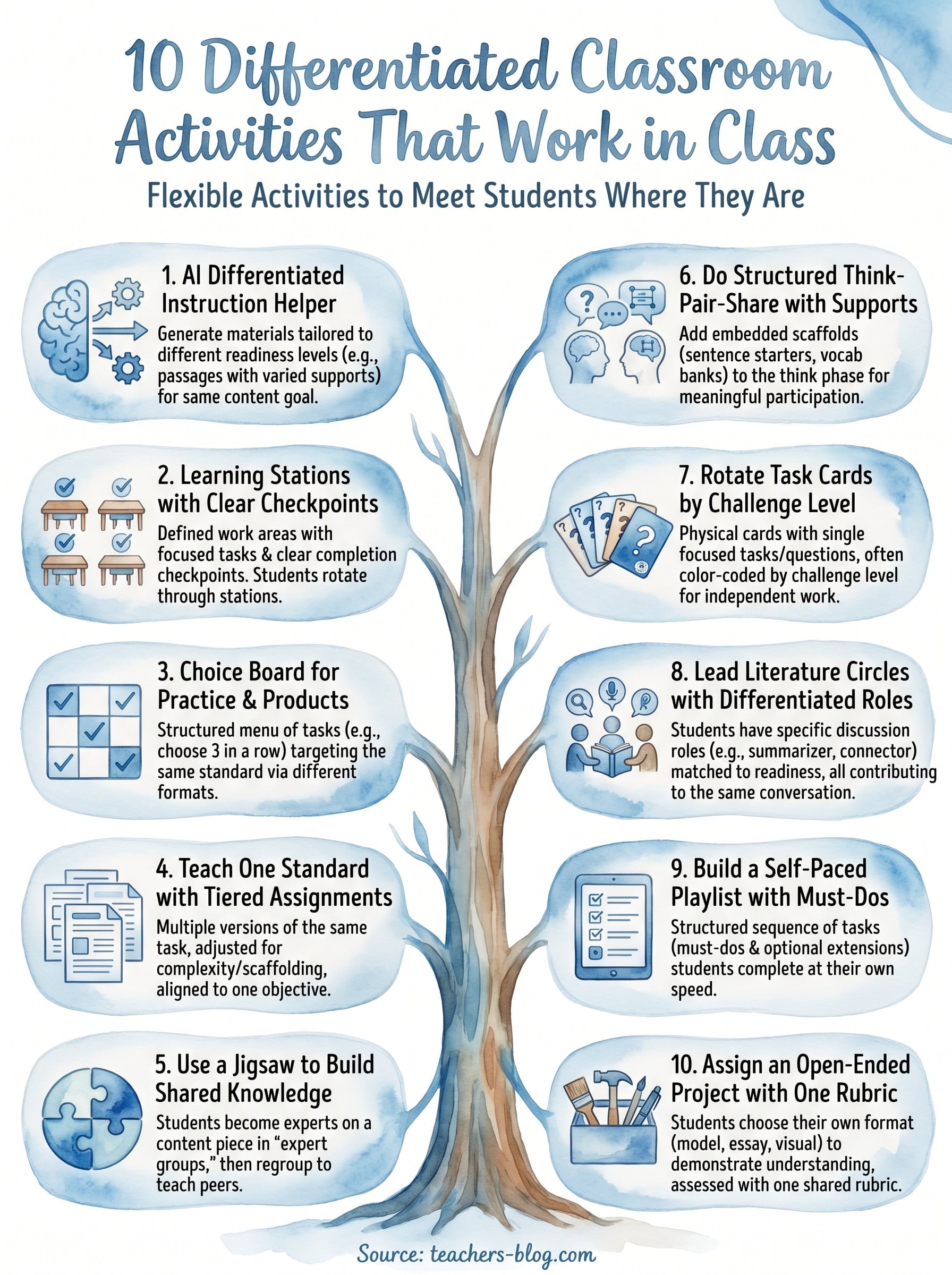
Below, you’ll find 10 activities you can adapt across subjects and grade levels. Each one includes clear steps and tips for adjusting difficulty, so you can start differentiating without overhauling your entire curriculum.
1. Use an AI differentiated instruction helper
AI tools have changed what’s actually possible when it comes to differentiated classroom activities. Instead of manually creating three versions of the same worksheet, you can use an AI differentiated instruction helper to generate materials tailored to different readiness levels in a fraction of the time. This is one of the most practical entry points for teachers who want to differentiate more consistently without running out of prep hours.
What students do
Students work through materials designed specifically for their level. One student might read a passage with vocabulary supports and sentence starters, while another works through a more complex version of the same text with open-ended analysis questions. The content goal stays the same for everyone. Only the path to get there changes.
How you set it up
You input your lesson objective and student readiness information into the AI tool, and it generates differentiated versions of your material based on the parameters you set. The Differentiated Instruction Helper on this site lets you specify readiness levels and learning needs, then produces ready-to-use resources. Before distributing anything, spend a few minutes reviewing and adjusting the output to make sure it fits your specific classroom context.
The biggest time savings comes from having a solid starting point you can edit, rather than building every version from scratch.
How you differentiate it
Differentiation here works across readiness, learning profile, or interest. For readiness, generate a foundational version with more scaffolding and an advanced version with fewer supports. For learning profile, ask the tool to present information in visual, written, or step-by-step formats. You can also pull in student interest data to personalize examples within the same activity, which increases buy-in without adding much extra work.
Where it fits in a lesson
This works well during independent practice or small group work, when students need to engage with content at their own pace. You can also use it for formative tasks after direct instruction, giving each student a version of the assignment that reflects where they currently are. It keeps everyone working on the same standard at the same time, just through different access points.
2. Run learning stations with clear checkpoints
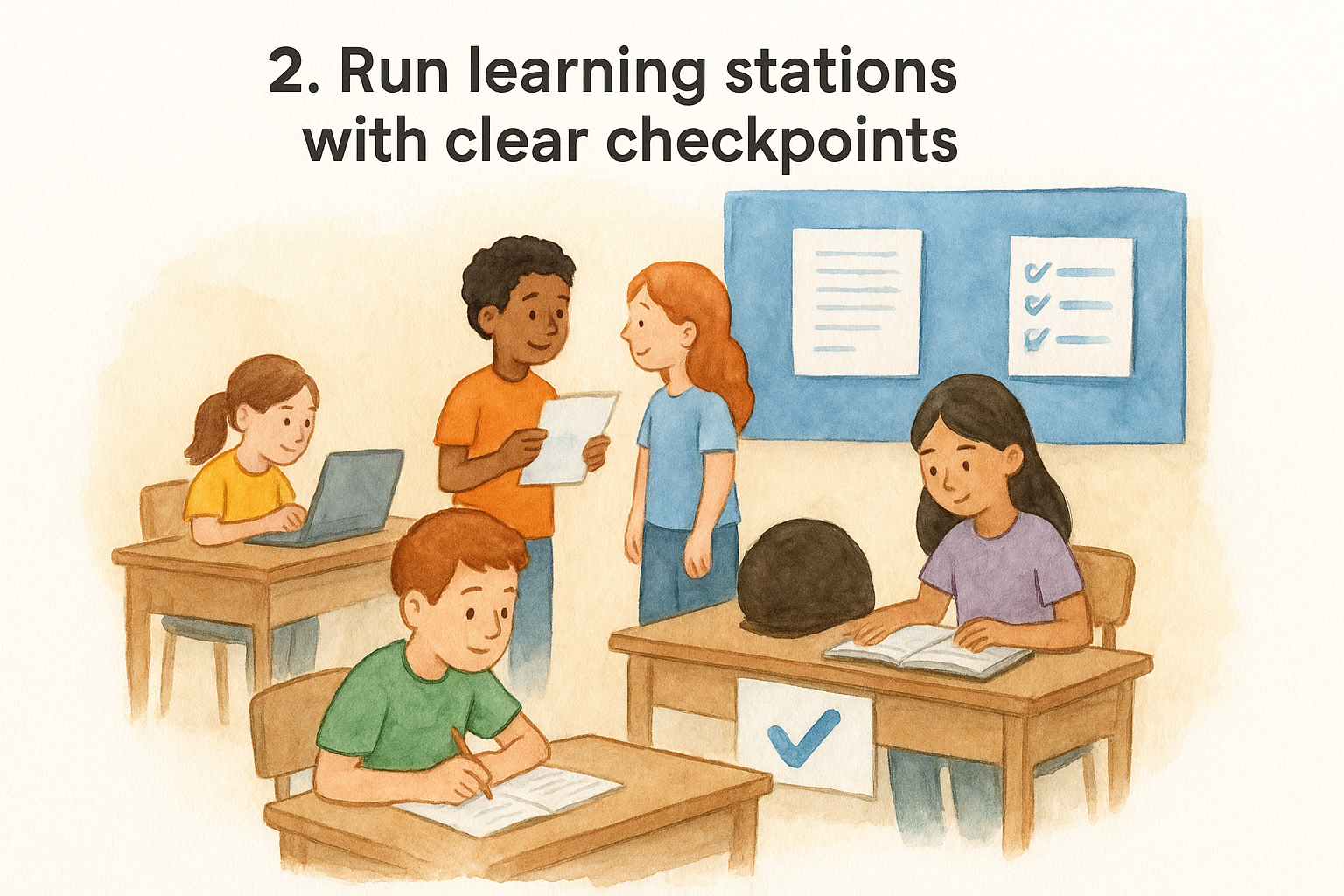
Learning stations are one of the most reliable differentiated classroom activities you can run, because they let you build structure into the room itself. Instead of managing multiple tasks from the front of the class, you set up defined work areas, each with a clear task and a checkpoint students must complete before they move on.
What students do
Students rotate through several stations, each targeting the same core standard through a different format. At one station they might read and annotate a short text. At another, they respond to a discussion prompt with a partner. A third might involve a hands-on task or a digital tool.
How you set it up
You build each station around a single, focused task that students can manage independently. Set each one up with:
- Printed directions they can reference without asking you
- All materials they need to complete the work
- A clear checkpoint, like a question to answer before rotating
Keep groups small, around four to five students, so the stations don’t get crowded or chaotic.
How you differentiate it
Assign students to stations strategically based on readiness or skill gaps. You can swap out one or two materials at a station without rebuilding the whole setup.
The station structure stays identical for everyone, but the materials inside can shift quietly based on what each group actually needs.
Where it fits in a lesson
Stations work best during practice or review, after you’ve introduced the core concept to the whole class. You can also run them near the end of a unit to consolidate understanding before a final assessment.
3. Use a choice board for practice and products
A choice board gives students a structured menu of tasks to choose from, all targeting the same learning objective. It’s one of those differentiated classroom activities that feels manageable for teachers and genuinely engaging for students, because autonomy goes a long way in a classroom.
What students do
Students select tasks from a grid, usually a 3×3 layout, and complete a set number of them, such as any three in a row. Each task addresses the same standard but through a different format, like drawing, writing, building, or presenting.
How you set it up
Create a simple grid with nine task options that vary by format, not complexity. Label each cell clearly and make sure every student has access to the materials required for every option. Keep directions short and specific so students can start working without needing constant clarification.
A choice board works best when every option is genuinely doable for everyone, not when some tasks are clearly harder than others.
How you differentiate it
You differentiate by intentionally designing tasks that address different learning profiles. One cell might ask students to write a paragraph, another to create a diagram, and another to record a short explanation. You can also add color-coded difficulty tiers if you want to guide certain students toward more scaffolded options without removing their sense of choice.
Where it fits in a lesson
Use a choice board during independent practice after your direct instruction wraps up. It also works well as a culminating task at the end of a unit when students need to demonstrate understanding in a meaningful way.
4. Teach one standard with tiered assignments
Tiered assignments are one of the most direct approaches to differentiated classroom activities. You design multiple versions of the same task, each aligned to the same standard but adjusted for complexity, so every student is working on the same concept at an appropriate level of challenge.
What students do
Students complete a version of the assignment matched to their current readiness level. The task looks similar across tiers, but one version might include sentence frames and a graphic organizer, while another asks students to work independently with minimal support.
How you set it up
Build two or three versions of the same task around one clear learning objective. Keep the core question or skill identical across all tiers, then adjust the amount of scaffolding, text complexity, or number of steps required. Label the versions discreetly so you can distribute them without drawing attention to who gets what.
The goal is to adjust the degree of difficulty, not the standard itself.
How you differentiate it
Differentiation works through task complexity and support level. The foundational tier might include worked examples or vocabulary definitions built in. Your advanced tier removes those supports and adds extension questions that push students to apply the concept in a new context.
Where it fits in a lesson
Tiered assignments slot naturally into independent practice after your whole-group instruction. They also work well as formative assessment tasks, giving you clear data on where each student stands before you move to the next concept.
5. Use a jigsaw to build shared background knowledge
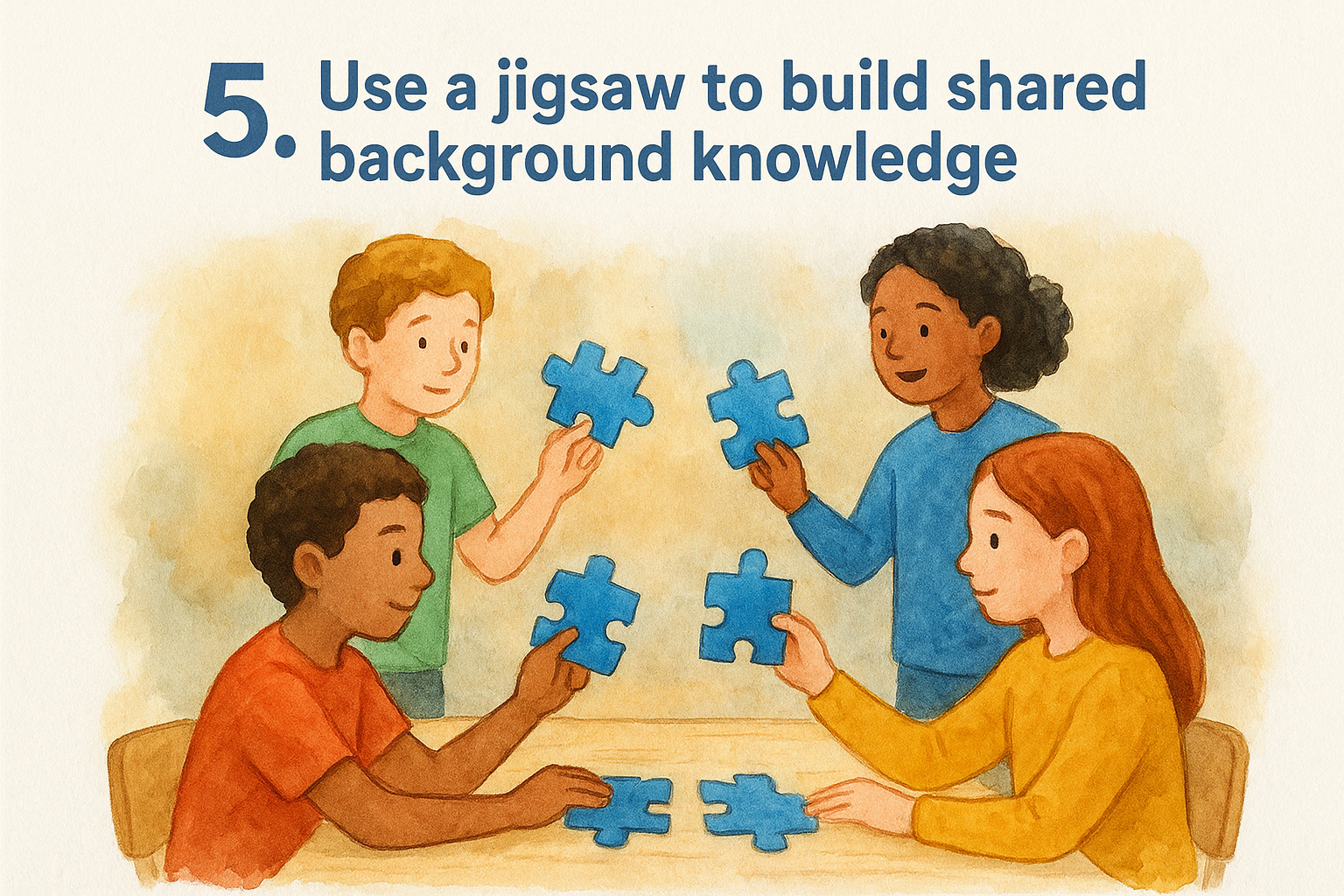
A jigsaw is one of those differentiated classroom activities that builds collaborative accountability into its structure. Students become the experts on one piece of the content and then teach their peers, which means everyone walks away with the full picture even though they only read part of it.
What students do
Students split into expert groups, each assigned a section of the material. They read, discuss, and prepare to teach their portion to others. Then they regroup so every new group includes one expert from each section, and the teaching begins.
How you set it up
Divide your source material into three or four equal chunks. Assign students to expert groups based on readiness, not random selection. Give each group a focused reading guide with two or three questions to anchor their discussion before they move to the teaching phase.
Structured reading guides keep expert groups on track and give every student something concrete to bring to their new group.
How you differentiate it
Assign text complexity by group. Your struggling readers get the same section of content but in a simplified or annotated version, while advanced students work with the full original text. The teaching phase stays identical for everyone, so no student is visibly working at a different level during the whole-class portion.
Where it fits in a lesson
Run a jigsaw during the introduction of a new unit when students need broad background knowledge fast. It also works well as a text-based review before an assessment.
6. Do structured think-pair-share with supports
Think-pair-share is already a common discussion move, but adding structured supports turns it into one of the more flexible differentiated classroom activities in your toolkit. When you build scaffolds directly into the routine, every student can participate meaningfully in the same conversation.
What students do
Students think independently about a question, then discuss their response with a partner before sharing with the class. The thinking phase gives quieter students time to process, and the pairing phase builds confidence before the higher-stakes whole-class share.
How you set it up
Prepare your question in advance and decide which support materials you’ll make available during the think phase. Post the question visibly, set a clear timer, and assign partners intentionally rather than letting students choose randomly. Keep pairings consistent for a few weeks so students build a comfortable working rhythm.
Strategic partner assignments let you quietly differentiate without making the structure feel complicated.
How you differentiate it
Give students who need more support a sentence starter or vocabulary bank during the think phase. Students who are ready for more challenge can respond to a follow-up prompt that pushes their thinking further. Neither group sees what the other is working from, so the activity feels unified even though the entry points differ.
Where it fits in a lesson
This strategy fits naturally at multiple points in a lesson: after you introduce a new concept, mid-lesson to check understanding, or at the close of class to consolidate what students have learned.
7. Rotate task cards by challenge level
Task cards give you a physical, low-prep way to build differentiation into independent or small-group work. Unlike a full worksheet, each card carries a single focused question or task, which makes it easier to design a set that spans multiple challenge levels without overwhelming students or yourself.
What students do
Students work through a set of task cards, answering questions or completing short tasks one card at a time. The format keeps them moving and focused, since finishing one card gives a natural stopping point before they pick up the next.
How you set it up
Sort your cards into two or three challenge levels before the activity starts. Color-code the backs so you can distribute the right set to each student or group quickly. Write clear, self-contained directions on every card so students can work without coming to you for clarification every few minutes.
Color-coding by level lets you manage distribution silently, so no student has to announce which set they’re working from.
How you differentiate it
These are one of the most flexible differentiated classroom activities because you control the complexity of each card independently. Your foundational set might include vocabulary support or worked examples, while the advanced set removes those scaffolds and adds application or evaluation questions.
Where it fits in a lesson
Task cards work well during guided practice or review, especially when you want students actively engaged rather than sitting through another static worksheet.
8. Lead literature circles with differentiated roles
Literature circles are a natural fit for differentiated classroom activities because the role structure does the differentiation work for you. Each student takes on a specific discussion role within their small group, so everyone contributes to the same conversation through a task matched to their readiness level.
What students do
Students meet in small groups to discuss a shared text, with each person responsible for a prepared role. Common roles include vocabulary tracker, discussion director, passage picker, and summarizer. Every role connects to the same text and learning goal, but each one demands a different type of thinking.
How you set it up
Prepare a role card for each position that outlines what students need to prepare before the session and what they contribute during it. Keep groups at four to five students so every role gets filled and no one sits without a clear job.
Role cards remove ambiguity and let students prepare independently before the group meets.
How you differentiate it
Assign roles based on student readiness. Students who need more support take roles with concrete, structured tasks like summarizing or tracking vocabulary. Students ready for more challenge take roles requiring synthesis and analysis, such as generating discussion questions or connecting themes across texts.
You can rotate roles across sessions so every student builds exposure to different thinking skills over time, rather than staying fixed in one lane all unit.
Where it fits in a lesson
Literature circles slot into reading units as a recurring discussion structure. Run them mid-unit to build comprehension or near the end of a unit to consolidate themes before a final assessment.
9. Build a self-paced playlist with must-dos
A self-paced playlist gives students a structured sequence of tasks they move through at their own speed. This is one of the more student-centered differentiated classroom activities because it builds independence into the workflow while keeping everyone accountable to the same learning goal.
What students do
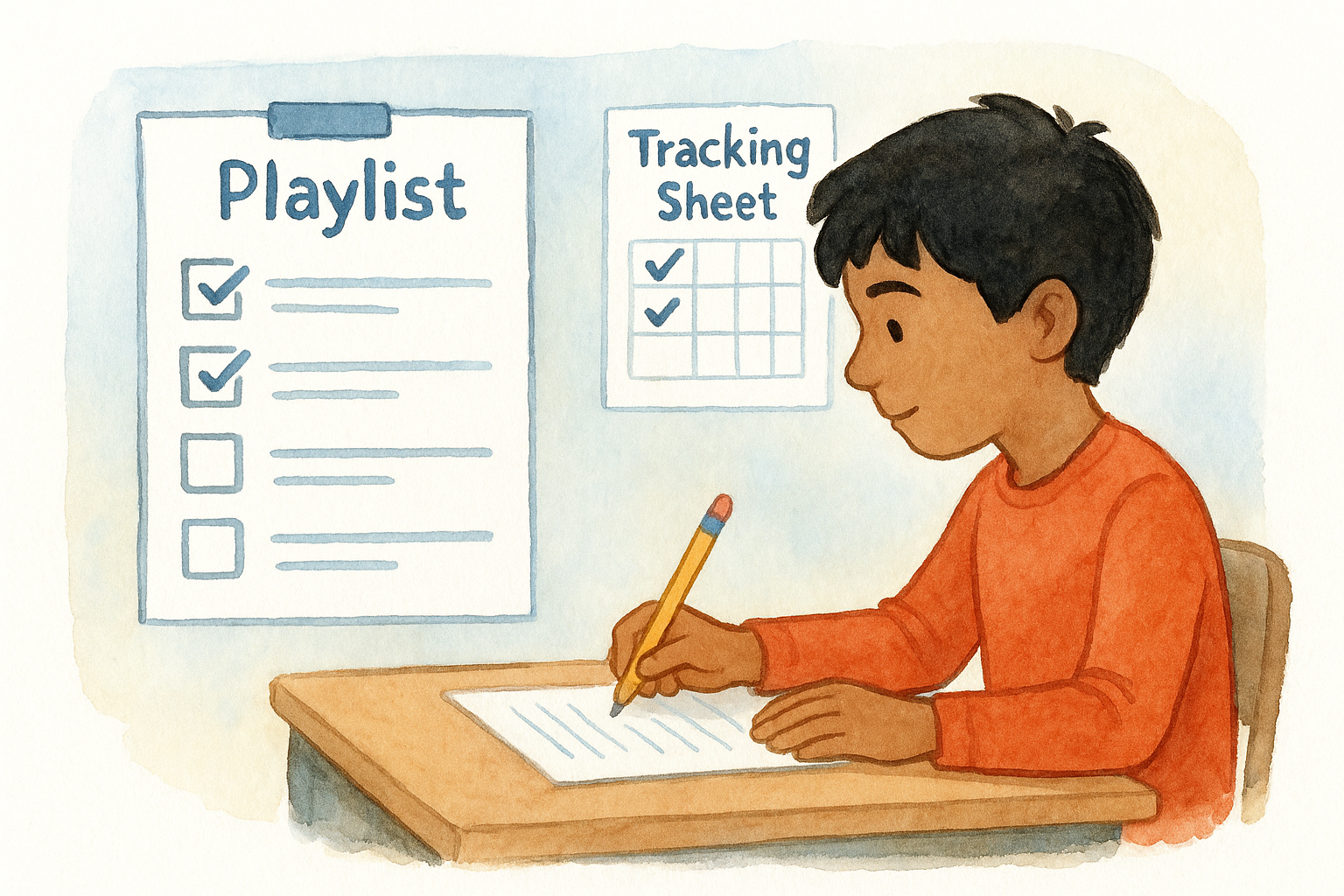
Students work through a playlist of tasks, completing required "must-do" items first and then moving on to optional extensions if they finish early. Each task is numbered and self-contained, so students always know what comes next without waiting for you to redirect them.
How you set it up
Build your playlist around one clear learning objective, then sequence tasks from foundational to more complex. Include a simple tracking sheet students use to check off completed items as they go. Keep the must-do list to three or four tasks so it stays achievable within a single class period.
A short must-do list with optional extensions keeps fast finishers productive without creating pressure for students who need more time.
How you differentiate it
Add optional challenge tasks at the end of the playlist for students who move through the required work quickly. You can also quietly provide some students with a modified version of one or two must-do tasks that includes additional scaffolding, without changing the visible structure of the playlist for the rest of the class.
Where it fits in a lesson
Playlists work best during independent work blocks or multi-day practice phases. Running one also reduces the number of times students interrupt your small group instruction with questions about what they should be doing next.
10. Assign an open-ended project with one rubric
An open-ended project paired with a single shared rubric is one of the quietest differentiated classroom activities you can run, because the differentiation happens through student choice rather than teacher-created versions. Every student works toward the same standard, but the path they take reflects their own strengths and interests.
What students do
Students choose their own format for demonstrating understanding of a concept, whether that means building a model, writing an essay, creating a visual, or producing a short presentation. The shared rubric applies to every format, so expectations stay consistent even though the final products look different from one another.
How you set it up
Share the rubric at the start of the project so students know exactly what success looks like before they begin. Give students a brief planning sheet to confirm their chosen format and outline their approach. This keeps the project structured and manageable rather than open in a way that creates confusion.
Reviewing the planning sheet early catches students who have chosen a format that won’t actually let them meet the rubric criteria.
How you differentiate it
Students self-differentiate through format and complexity. A student who needs more structure might choose a format with clear steps, like a poster or a written response. A student ready for more challenge might pursue a multimodal product that requires synthesizing information across several sources.
Where it fits in a lesson
This project works best as a culminating unit task after students have built enough background knowledge to make an independent format choice with confidence.
Wrap-up and next steps
These 10 activities give you a practical starting point for meeting students where they are without rebuilding every lesson from scratch. The key is choosing one or two strategies that fit your current unit and testing them with your actual students before adding more.
Differentiation doesn’t have to mean more work. When you use the right tools, differentiated classroom activities become part of your regular planning process rather than something you layer on top of it. Start small, adjust based on what you see in the room, and build from there.
If you want to cut down on prep time, the Differentiated Instruction Helper on this site generates ready-to-use materials tailored to your students’ readiness levels so you spend less time building multiple versions of the same task and more time actually teaching.