
5 Student-Centered Teaching Strategies for Your Classroom
You’ve probably felt it: a room full of students nodding along while you talk, then blanking the second you ask them to apply anything. That’s the sign your lesson is running on autopilot, with you doing most of the thinking. Student centered teaching strategies flip that dynamic by putting decisions, discussion, and problem-solving back in students’ hands, where the real learning happens.
If you’re searching for ways to make this shift without losing control of your classroom, you’re in the right place. This article breaks down five student centered learning strategies you can start using this week, no full curriculum overhaul required. Each one gives students more ownership over their work while keeping your instruction focused and manageable.
We’ll cover practical setups for small group discussions, choice-based assignments, and peer feedback structures that actually hold students accountable. You’ll also see how these approaches connect to differentiation, since a classroom built around student voice naturally makes room for different skill levels and interests. By the end, you’ll have concrete strategies ready to try tomorrow, not just theory to file away.
1. Personalize instruction with AI-powered differentiation
Differentiation has always been the promise every teacher training program makes and the thing almost no one has time to actually do. Writing three versions of the same lesson for a class of 30 students is a math problem that doesn’t work in a normal planning period. This is where AI-powered differentiation earns its place as one of the more practical student centered teaching strategies available right now, because it takes the grunt work out of tailoring content to individual needs, and it pairs well with the differentiation strategies that work in real classrooms.
How it works
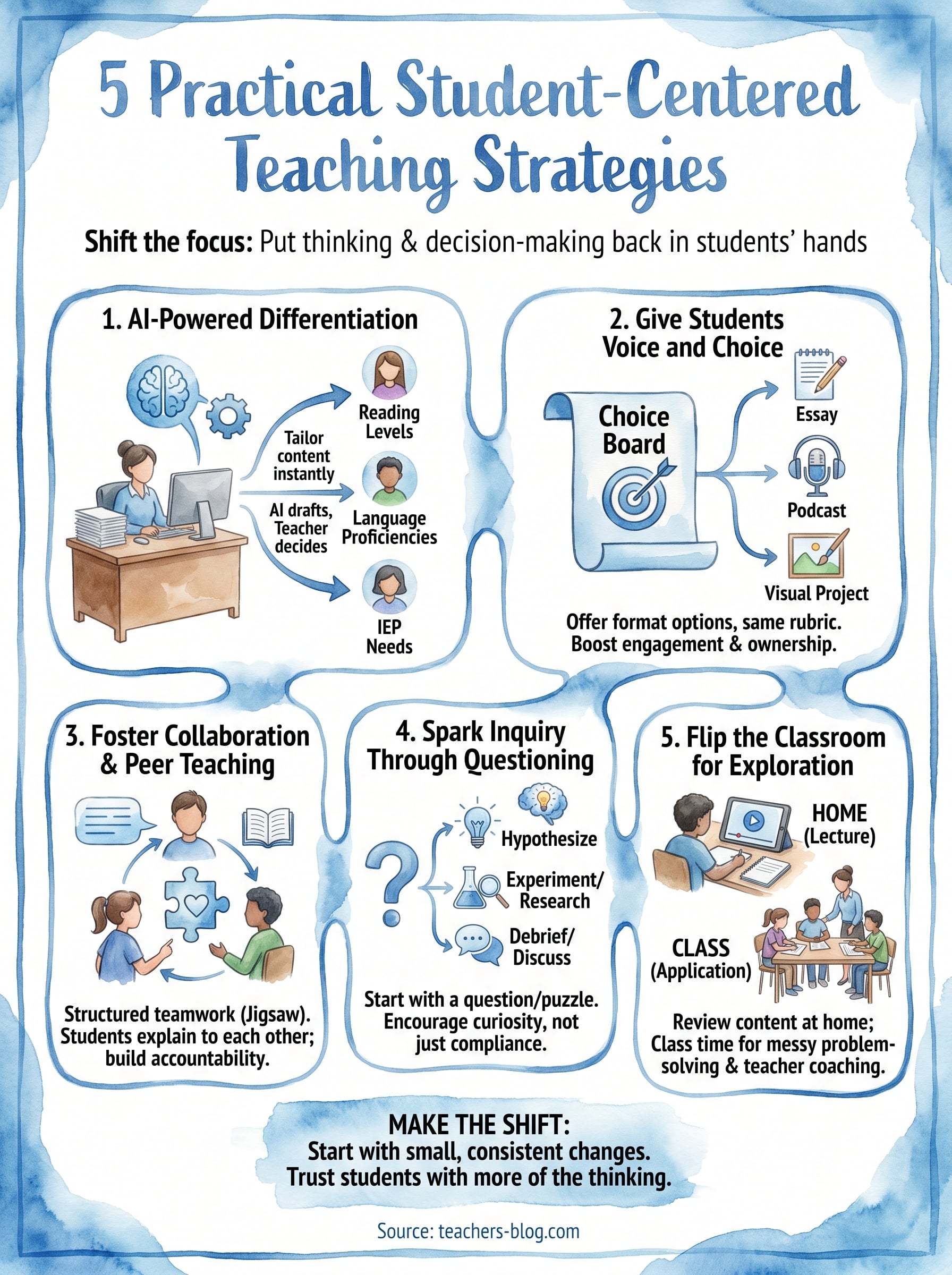
A tool like the Differentiated Instruction Helper uses AI to tailor lessons, taking your existing text and generating adjusted versions for different reading levels, language proficiencies, or learning needs in minutes instead of hours. You feed it your source material and a target group, and it hands back a modified version you can review and hand out. The AI does the heavy lifting; you stay in control of what actually reaches your students.
Differentiation stops being a burnout risk when a tool does the drafting and you do the deciding.
Who it’s for
This strategy suits any teacher managing a mixed-ability classroom, which is basically all of them. It’s especially useful if you teach students with IEPs, English language learners, or a wide academic range in one section, since manually rewriting content for each group usually gets skipped when the week gets busy.
How to get started in your classroom
Start small so the process feels manageable, not overwhelming:
- Pick one upcoming lesson with a text or worksheet you already use.
- Run it through the tool for two or three learner profiles in your class.
- Compare the outputs side by side and edit for tone or accuracy before printing.
- Track which version each student gets so you can adjust next time.
- Ask students for quick feedback on whether the material felt right for them.
Once you’ve done this a few times, building differentiated materials becomes a five-minute task instead of a weekend project.
2. Give students voice and choice
Students tune out when every assignment looks identical and every topic gets handed to them with zero input. Voice and choice fixes that by letting students pick how they show mastery, not just what grade they get for it. This is one of the simplest student centered teaching strategies to test because it doesn’t require new tools, just a shift in how you design assignments.
How it works
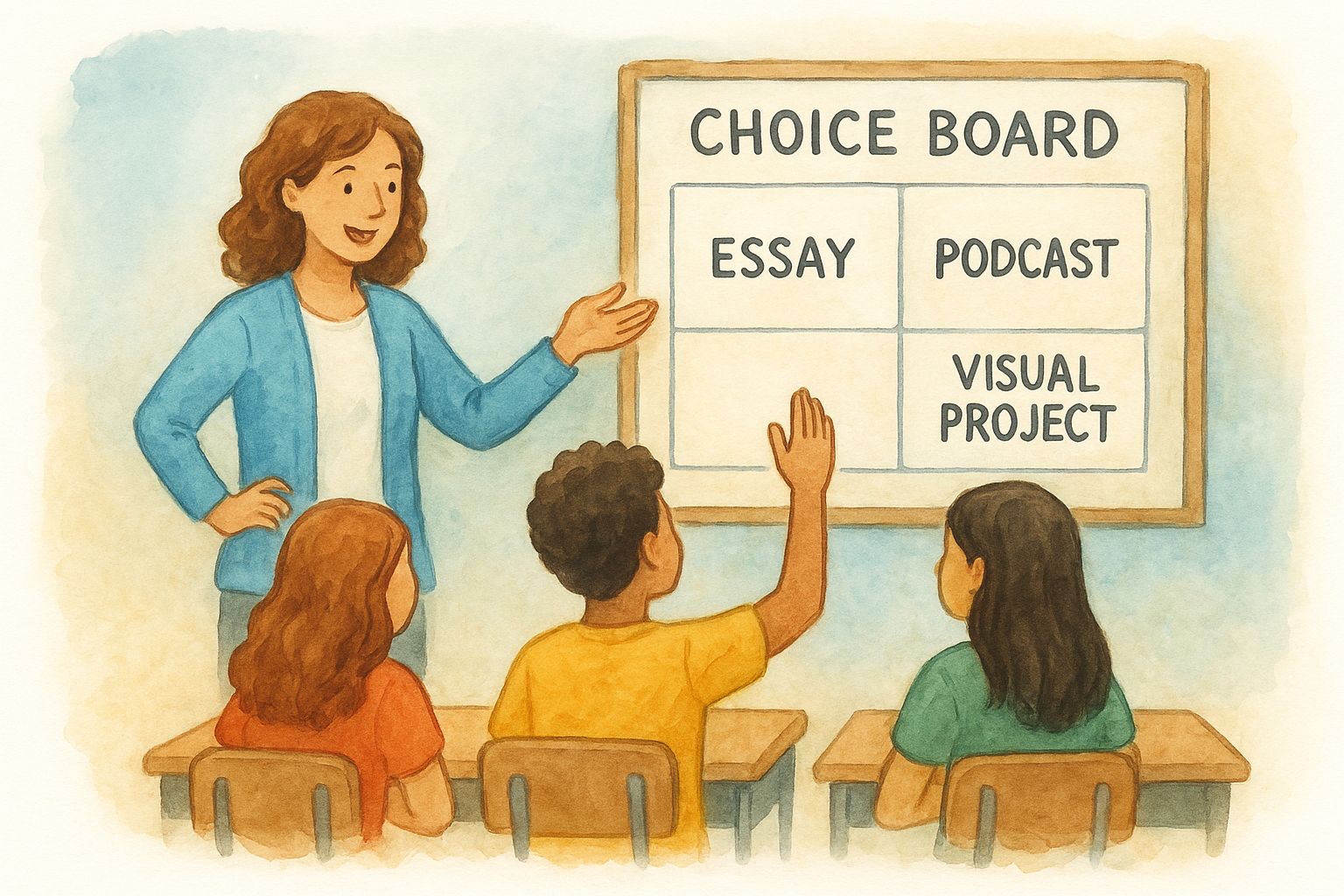
Give students two or three paths to the same learning target: a written essay, a recorded podcast, a visual project. You still grade against the same rubric, but students choose the format that fits their strengths. Choice boards work well here, letting kids pick tasks from a menu rather than completing one fixed worksheet, and there are real reasons student choice changes engagement.
When students choose the path, they stop asking why they have to do the work.
Who it’s for
This fits classrooms with a wide range of interests and skill sets, which describes most middle and high school rooms. It’s especially useful for reluctant writers or students who freeze up on traditional formats but thrive when given a different outlet.
How to get started in your classroom
Build a simple choice board for your next unit:
- List the learning target first.
- Offer three product options tied to that same target.
- Keep the rubric identical across all three.
- Let students submit their pick before the deadline, not after.
Start with one unit before rolling it out everywhere.
3. Foster collaboration through group work and peer teaching
Students remember what they explain far better than what they hear explained to them. Peer teaching taps into that by making students responsible for each other’s understanding, not just their own, and it works best inside techniques for structured teamwork. Among student centered teaching strategies, this one builds accountability fastest because kids can’t hide behind a quiet nod when a classmate is counting on them to get it right.
How it works
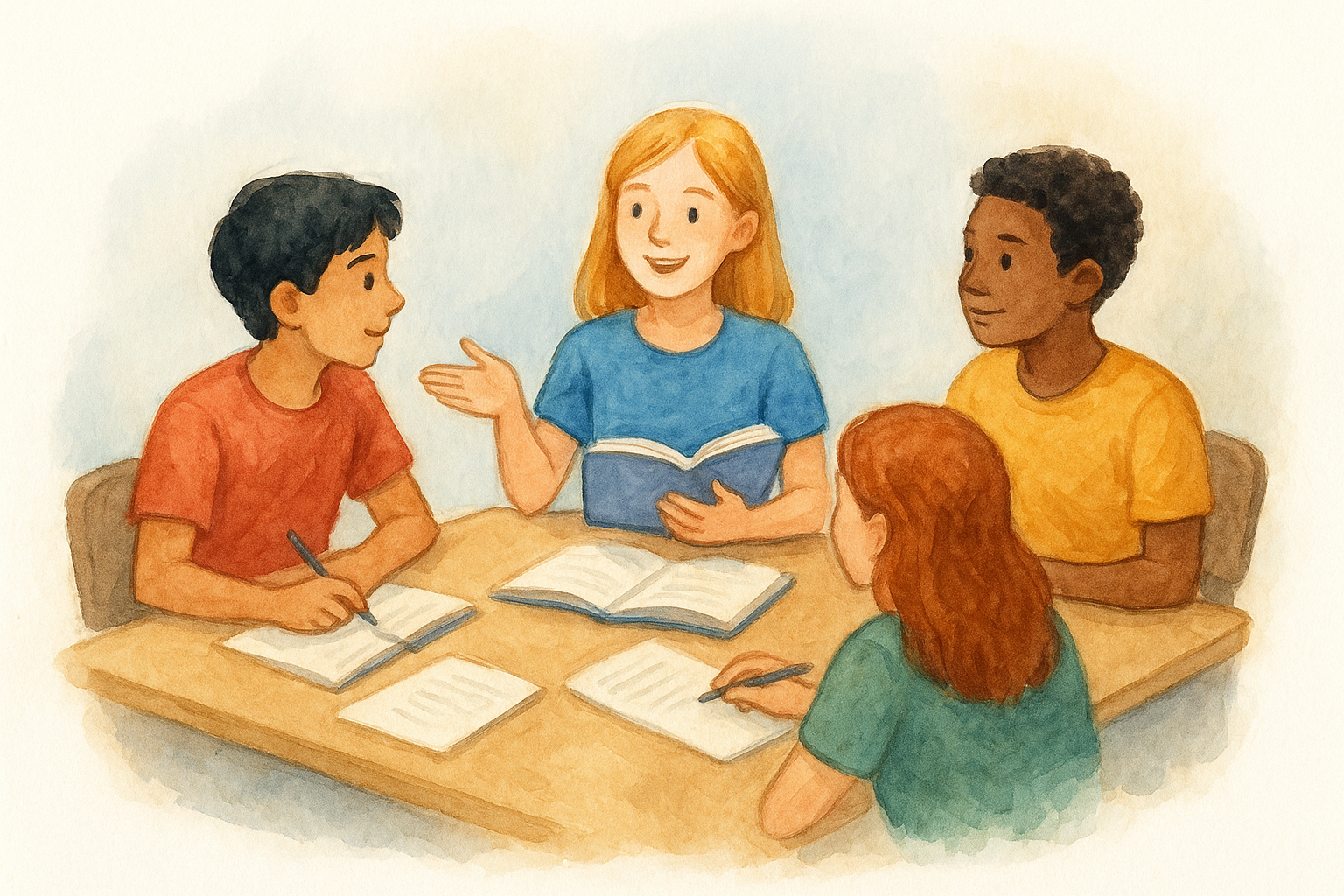
Group students in pairs or trios of mixed ability, then assign each member a piece of the material to master and teach back. Jigsaw activities work well here: every student researches one slice of a topic, then rotates to teach it to peers who studied something else, and it helps to see how to run a jigsaw step by step. Nobody gets to opt out of contributing.
Group work only teaches collaboration when every student owes the group something specific.
Who it’s for
This approach suits classes where a handful of students dominate discussion while others stay silent. It also helps students who learn better through talking things out than through reading or listening alone.
How to get started in your classroom
Try a structured version before going fully open-ended:
- Break your next reading or unit into four distinct chunks.
- Assign each small group one chunk to master.
- Give groups a fixed time limit to prepare their teach-back.
- Rotate students so everyone teaches and everyone learns from a peer.
Keep the first attempt short, then expand once students get the rhythm.
4. Spark inquiry through questioning and experimentation
Students stop thinking the moment you hand them the answer before they’ve asked the question. Inquiry-based learning flips that sequence by starting with a puzzle, a phenomenon, or an open-ended problem and letting students chase down the explanation themselves, and there are several types of inquiry learning to choose from. Of all the student centered teaching strategies on this list, this one does the most to build genuine curiosity instead of compliance.
How it works
Instead of opening with notes or a lecture, pose a question or show a phenomenon that doesn’t have an obvious answer. Students form hypotheses, test them through discussion, research, or a hands-on experiment, then revise their thinking based on what they find. Open-ended questioning matters more than the specific activity, since a question with only one right answer kills inquiry before it starts, which is why it pays to teach students the power of open-ended questions.
Curiosity survives longer in a classroom that starts with a question than one that starts with an answer.
Who it’s for
This suits science and social studies classrooms naturally, but works in any subject where students can investigate before you explain. It’s especially effective for students who disengage from lecture-heavy formats but light up when given something to figure out.
How to get started in your classroom
Try this sequence for your next unit opener:
- Pose a genuine question with no obvious single answer.
- Let students hypothesize in small groups before any instruction.
- Provide materials or sources for them to test their thinking.
- Debrief as a class, correcting misconceptions after the exploration, not before it.
5. Flip the classroom for student-led exploration
Lecture time eats the class period, leaving almost none for the messy work of applying what students just heard. Flipped classrooms solve that by moving the lecture home and bringing the practice, questions, and problem-solving into class where you’re actually there to help. Of the student centered teaching strategies here, this one changes the daily rhythm of your room the most.
How it works
Record a short video or assign a reading that covers the direct instruction piece, then have students review it before class on their own time. Class time gets reserved for hands-on application, discussion, and problems students would normally struggle through alone at home. You become a coach circulating the room instead of a lecturer at the front.
Flip the homework and the lecture, and class time turns into the part where students actually need you.
Who it’s for
This model fits classrooms with reliable access to devices or printed materials at home, since the pre-class content has to reach every student. It works especially well for math and science courses where in-class problem-solving benefits most from your direct support.
How to get started in your classroom
Ease into the format:
- Pick one unit and record a five-minute video covering the core concept.
- Assign it as homework with two or three check-for-understanding questions.
- Devote the full next class period to practice, not review.
- Circulate and troubleshoot instead of re-teaching from the front.
Making the shift in your own classroom
You don’t need to overhaul every lesson this semester to make your classroom more student centered. Pick one strategy from this list, run it for a single unit, and see how students respond before adding another. Small, consistent changes build momentum faster than a total redesign that burns you out by October.
What matters most is handing students real decisions, whether that’s choosing a project format, teaching a peer, or chasing down their own hypothesis. Student centered learning strategies work because they trust kids to do more of the thinking, and that trust pays off in engagement you can actually see in the room.
If you’re ready to try the AI-assisted differentiation approach from strategy one, see the best AI tools for teachers at The Cautiously Optimistic Teacher and start building your first differentiated lesson today.