Standards-Based Grading vs Traditional Grading: Differences
If you’ve ever averaged a student’s grades at the end of a semester and felt like the final number didn’t tell the full story, you’re not alone. The debate around standards-based grading vs traditional grading has picked up serious momentum in schools across the country, and for good reason. These two systems reflect fundamentally different beliefs about what grades should communicate, and that distinction matters more than most report cards let on.
Traditional grading bundles everything together: homework completion, test scores, participation, even extra credit. Standards-based grading strips all of that back and asks one question, did the student master the skill? Here at The Cautiously Optimistic Teacher, we spend a lot of time building resources that help educators teach more effectively and assess more meaningfully. This comparison sits right at the center of that work, because the grading system you use shapes how students learn, how parents understand progress, and how you plan instruction.
This article breaks down the key differences between these two approaches, covering philosophy, grading scales, feedback methods, and the practical impact on everything from student motivation to college admissions. Whether you’re exploring a shift at your school or just trying to make sense of the conversation, you’ll walk away with a clear picture of how each system works and what it means for your classroom.
Why grading systems matter for students and teachers
The grading system your school uses does more than assign letters or numbers at the end of a term. It sends a message to students about what learning actually means and tells teachers what to prioritize in their daily instruction. When a student receives a C, they rarely know whether that grade reflects a shaky understanding of one concept, inconsistent homework submission, or a rough week during midterms. The number or letter lands on the report card, and the actual learning story gets lost somewhere underneath it. That gap between what grades show and what students know is exactly what makes this conversation worth having.
A grade that bundles behavior, effort, and content mastery into a single letter gives students almost no useful information about where to focus their growth.
How grades shape student motivation
Students pay close attention to the signals grades send. When every assignment carries equal weight regardless of its connection to a specific learning target, students quickly learn to play the grading game rather than build genuine skills. A student who earns enough early points through homework completion can maintain a passing average even if they never grasp the core concept of the unit. That pattern works against the entire purpose of assessment.
Research on motivation consistently shows that students perform better when they understand exactly what they need to improve and believe that improvement is within reach. A grading system that obscures that connection tends to create anxiety rather than direction, and learned helplessness rather than effort.
How grades shape teacher planning
Your grading system also shapes the decisions you make in the classroom long before grades are due. When grades track mastery of specific learning standards, your data tells you which students need reteaching and which skills your whole class missed. That information directly changes how you plan your next lesson and where you spend your instructional time.
Traditional grades, by contrast, often leave you with a class average that blends many different factors into one number. You might know a student is struggling, but the grade alone won’t tell you whether the problem is missing assignments, a content gap, or a skill that needs more practice. Understanding the core distinction in standards based grading vs traditional grading helps you choose a system that makes your data actually useful.
What traditional grading measures and where it breaks down
Traditional grading takes everything that happens in your classroom and collapses it into a single number or letter. Homework completion, test scores, class participation, extra credit, and late penalties all feed into one final grade. On the surface, that feels comprehensive. In practice, it means you’re reporting a blend of behaviors, habits, and content knowledge without separating any of them, which makes that final grade difficult to interpret for students, parents, and even other teachers.
The hidden costs of averaging everything together
When you average a student’s grades across a full semester, early scores pull the final number in ways that no longer reflect what the student actually knows. A student who bombed three quizzes in September but genuinely mastered the material by December still carries those early scores into their final grade. That final number reflects a historical record of performance more than a current picture of learning, which is a critical flaw in the traditional model.
A grade built on averaged scores can permanently punish a student for struggling during the early stages of learning, even after that student has fully caught up.
This is where the comparison of standards based grading vs traditional grading becomes most urgent for teachers. Traditional grading also makes it harder to identify specific learning gaps. When a student earns a 72, that number tells you very little about which skills need attention. You’re left guessing, and so is the student, which slows down any targeted instructional response you might otherwise make.
How standards-based grading works in real classrooms
Standards-based grading replaces the averaged composite score with individual scores tied to specific learning targets. Instead of one final grade per subject, students receive separate ratings for each standard or skill your curriculum requires them to master. A common scale runs from 1 to 4, where a 4 means the student exceeded the standard and a 1 indicates they need significant support. This structure gives every grade a clear, interpretable meaning that a letter grade never provides.
What a standards-based gradebook looks like
Your gradebook in a standards-based system lists each skill or standard as its own row rather than each assignment. So instead of recording scores for assignments, you track specific skills like "identifies the main argument in a text" or "applies the Pythagorean theorem." When you compare standards based grading vs traditional grading side by side, this structural difference in the gradebook is often the first shift teachers notice.
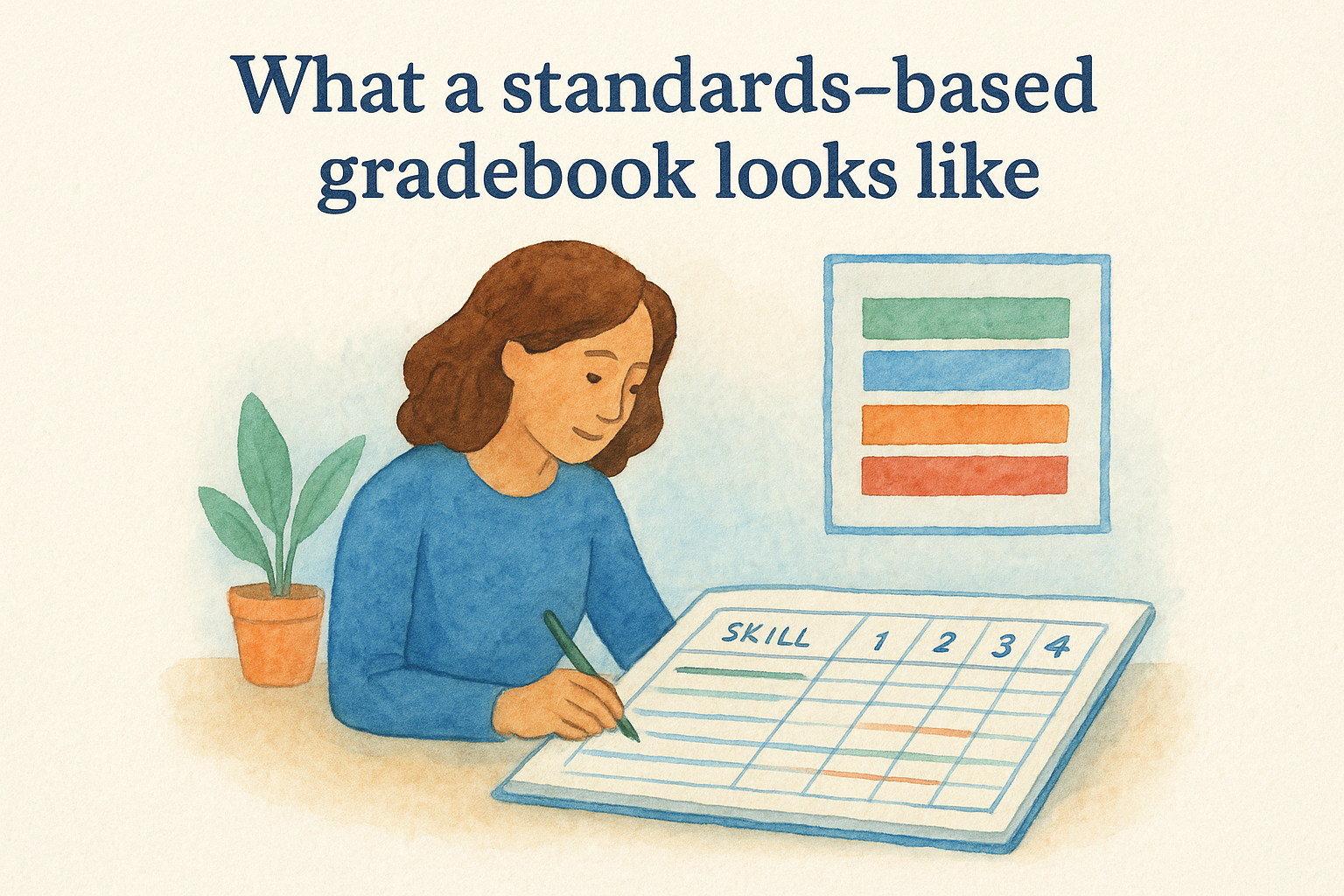
A gradebook organized by skill rather than assignment turns your data into a direct roadmap for re-teaching and intervention.
How retakes and reassessment fit in
Most standards-based systems allow students to reassess a skill after additional practice or instruction. That opportunity reflects the core belief of the model: what matters is whether a student eventually masters the standard, not when they first attempted it. Your most recent score replaces the earlier one, which means a student’s grade always reflects their current level of understanding rather than an average that includes early struggles. For you as a teacher, this approach also changes how you structure reteaching cycles and what you consider a successful unit.
Key differences at a glance: policy, scale, and feedback
When you put standards based grading vs traditional grading side by side, the contrast becomes immediately clear. These two systems differ not just in how they calculate scores, but in the policies that govern retakes, late work, and behavior, and the type of feedback students receive after each assessment.
Grading scale and scoring policy
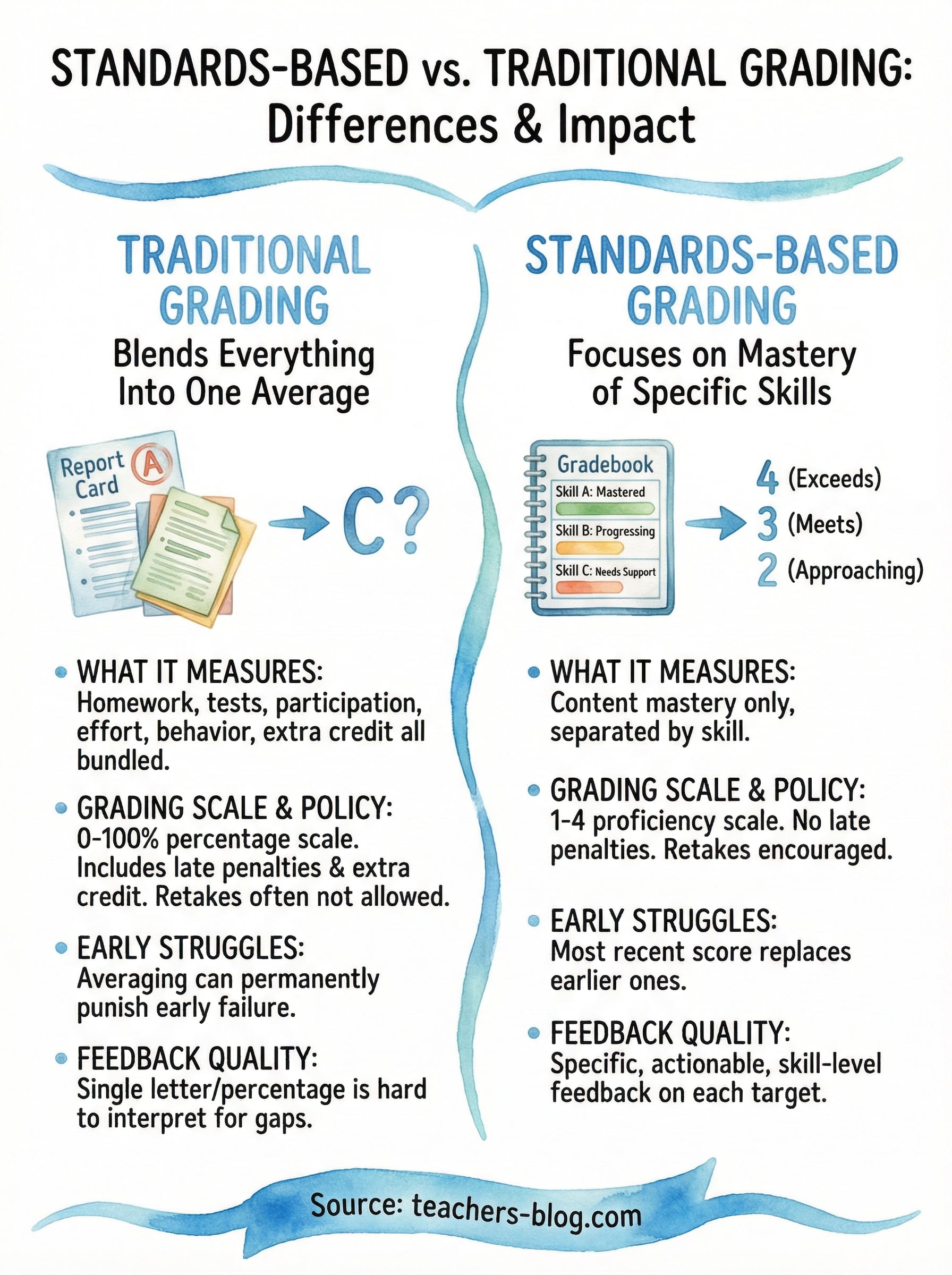
Traditional grading typically uses a 100-point percentage scale where everything from homework to tests feeds into one cumulative average. Standards-based grading replaces that with a smaller proficiency scale, most commonly 1 to 4, where each number carries a specific, defined meaning tied directly to a learning target. Late penalties and extra credit points have no place in a standards-based system because those factors have nothing to do with content mastery.
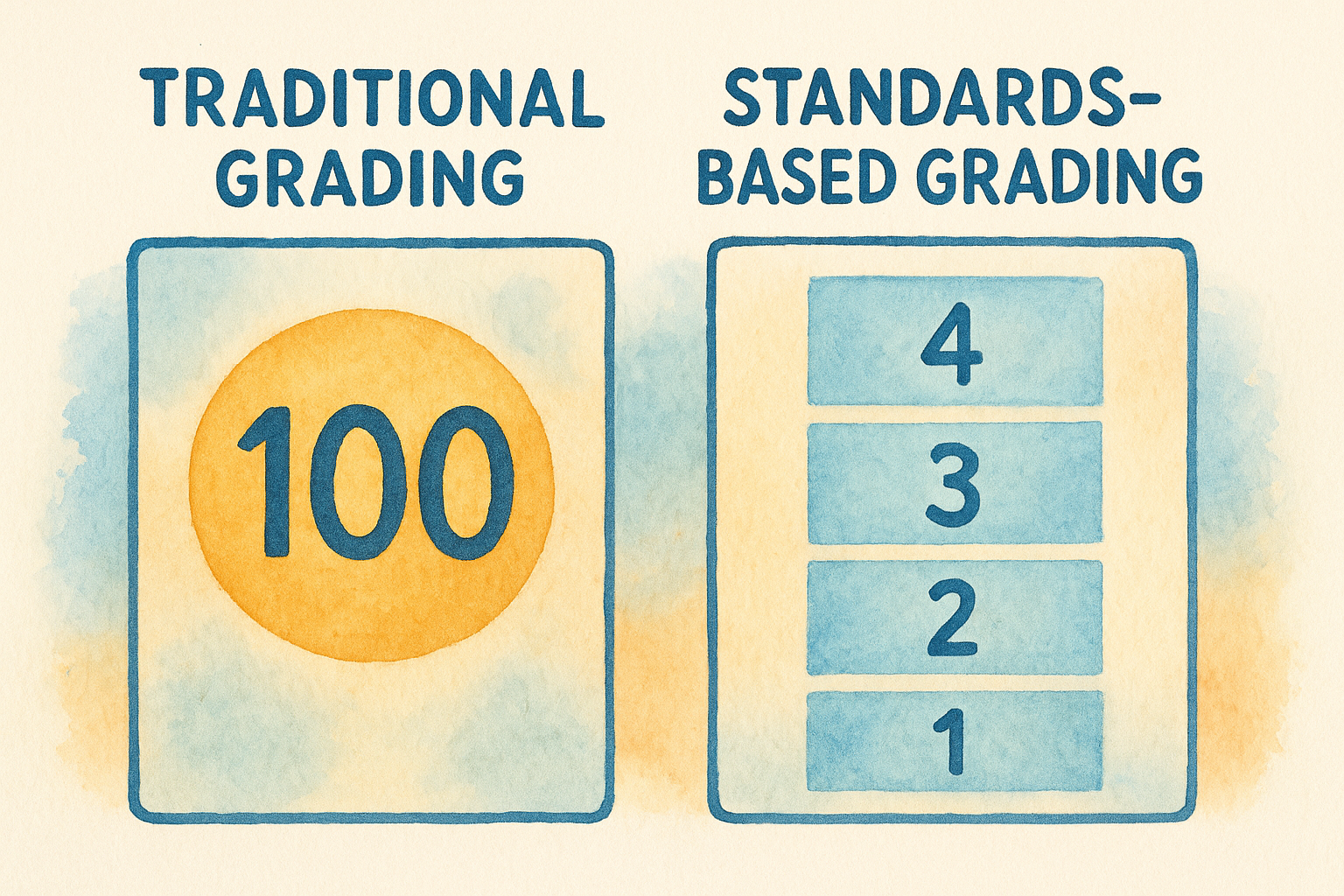
The scale you use to report grades directly signals what your school values: task completion and compliance, or demonstrated learning.
| Factor | Traditional Grading | Standards-Based Grading |
|---|---|---|
| Scale | 0-100 percentage | 1-4 proficiency levels |
| What’s included | Homework, tests, participation, behavior | Content mastery only |
| Retakes | Often not allowed | Typically encouraged |
| Late penalties | Common | Rarely applied |
Feedback quality and parent communication
Traditional grades give parents a single letter or percentage that blends many factors together, which makes it hard to pinpoint where a student needs support. Standards-based grades provide specific, skill-level feedback on each learning target, so parents and students know exactly which areas need attention and which ones are already solid.
How to switch to standards-based grading without chaos
Switching grading systems mid-career feels overwhelming, but most teachers who make the shift successfully do it in stages rather than all at once. The core tension in standards based grading vs traditional grading is not just philosophical; it’s also practical, because your school likely still requires you to convert proficiency scores into a traditional transcript grade at some point. Knowing that going in helps you plan around the constraints rather than fight them.
Start with one unit, not the whole year
Pick one upcoming unit and design it entirely around specific learning targets. Identify three to five skills students need to master, build your assessments around those skills, and score each skill separately using a 1-to-4 scale. This small-scale experiment gives you real data from your own classroom without requiring you to overhaul your entire gradebook at once. You’ll learn quickly which parts of the process feel manageable and which need adjustment before you go bigger.
Starting with one unit lets you troubleshoot the model on a small scale before it affects your entire grade book.
Bring parents along early
Parents who receive a standards-based report card without any prior explanation will flood your inbox with questions. Send a brief explanation home before the unit begins, describing what each score level means and how you’ll use the data to guide instruction. Clear, proactive communication prevents most of the confusion and resistance that derails transitions before they even get started. A simple one-page overview sent home at the beginning of the unit is usually enough to set the right expectations.
Next steps for your grading practice
The comparison between standards based grading vs traditional grading comes down to one core question: what do you want your grades to actually communicate? If you want them to reflect genuine mastery of specific skills, standards-based grading gives you the structure to make that happen. Start by identifying two or three learning targets in your next unit, score them separately, and notice how much more precise and actionable your feedback becomes for both students and parents.
You don’t need to overhaul everything overnight. Small, deliberate changes build the foundation for a grading practice that serves both you and your students far better than a single averaged number ever could. If you’re looking for more practical tools and strategies to strengthen your classroom work, explore the full range of resources at The Cautiously Optimistic Teacher to find support for every stage of your teaching career.