
Project Based Learning Explained: Steps, Examples, And Tips
Most teachers have seen it happen: you spend hours planning a lesson, deliver it well, and students still check out halfway through. The problem isn’t effort, it’s that traditional instruction often struggles to answer the one question every student quietly asks: "Why does this matter?" That’s exactly the gap that project based learning explained in practical terms can help you close. PBL flips the script by putting real-world problems at the center of instruction, giving students a reason to care about what they’re learning.
Here at The Cautiously Optimistic Teacher, we build resources that help educators teach smarter without burning out, and PBL fits that mission perfectly. When done right, it boosts engagement and deepens understanding while letting you step back from the "sage on the stage" role. But getting started can feel overwhelming if you’ve never structured a full project cycle before.
This article breaks down the core steps of project based learning, walks through concrete classroom examples, and shares tips to help you implement PBL without losing your mind (or your planning period). Whether you’re PBL-curious or looking to sharpen an approach you’ve already tried, you’ll walk away with a clear framework you can actually use.
What project-based learning is and is not
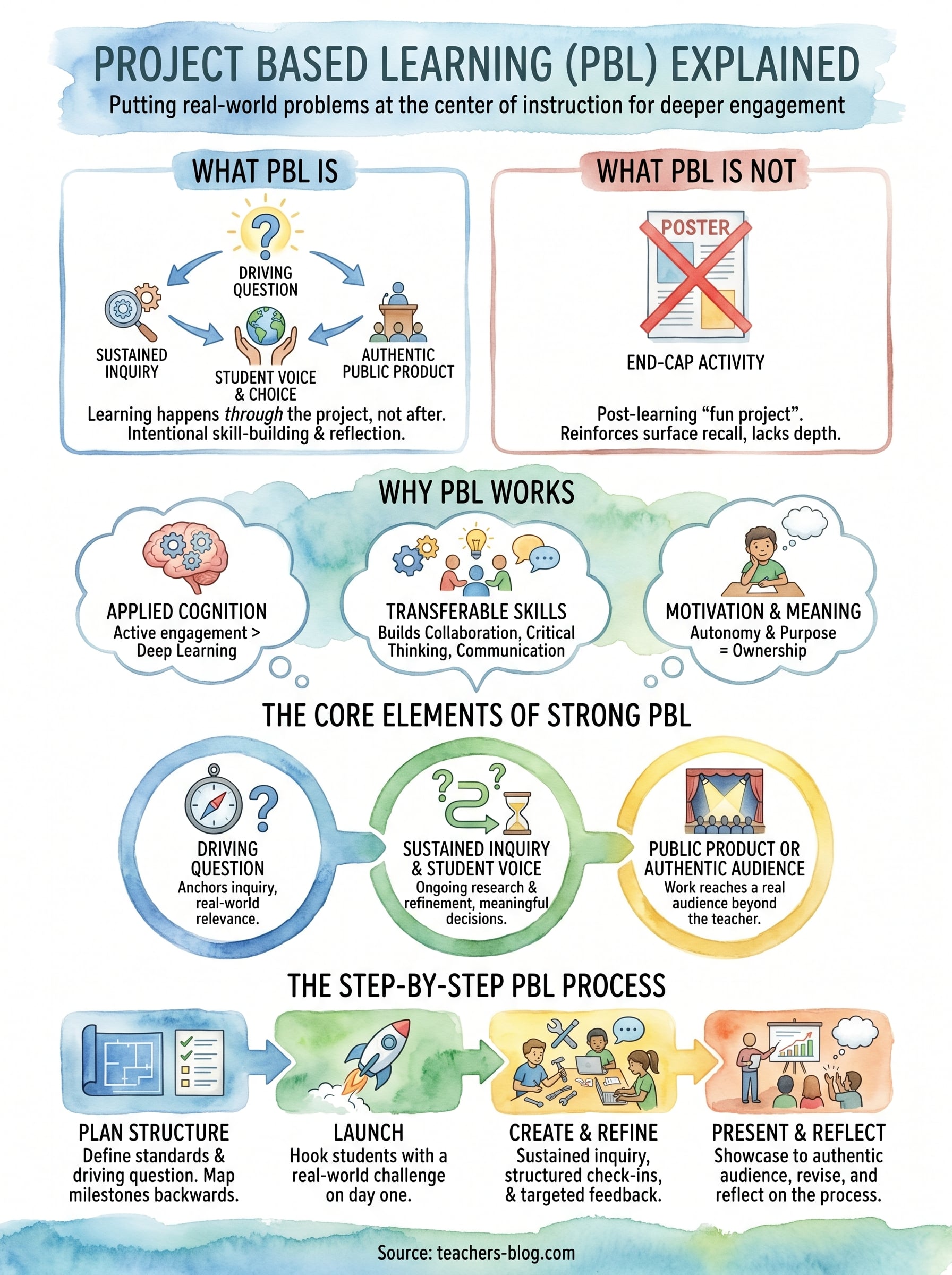
Before you can use PBL effectively, you need a clear definition, because the term gets misused constantly. Project based learning explained at its core is a teaching method where students learn by actively working on extended, real-world problems or challenges over a sustained period of time. The project isn’t something students complete after the learning is done; it’s the vehicle through which the learning actually happens.
PBL shifts the purpose of a project from demonstrating knowledge to actively building it.
What PBL actually is
PBL is a structured instructional approach built around a driving question that anchors student work across multiple days or weeks. Students investigate, collaborate, and produce a meaningful product or presentation that addresses a real audience or real problem. That authentic connection is what separates PBL from ordinary group work, because students aren’t just completing a task; they’re solving something that matters.
A strong PBL unit also includes deliberate skill-building throughout. Explicit instruction, checkpoints, and structured reflection all happen within the project cycle, making the learning intentional and visible rather than accidental. You’re not releasing students into a project and hoping for the best. You’re designing the experience from the start.
What PBL is not
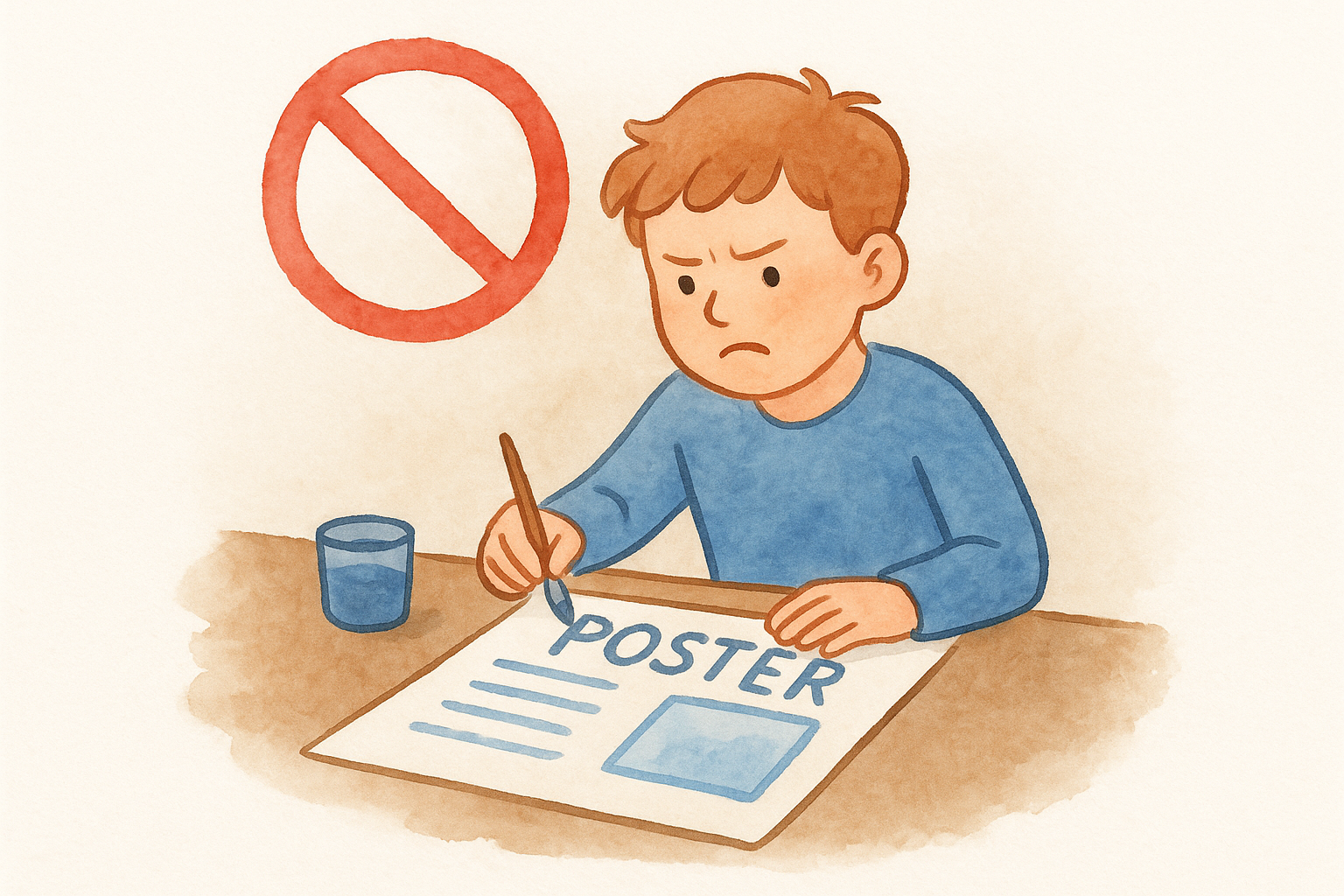
PBL is not a project you tack on at the end of a unit as a fun activity. Giving students a poster to make after finishing a chapter is activity-based learning, not project-based learning. The difference matters because end-cap projects reinforce surface-level recall, while true PBL builds deeper understanding through the process of inquiry itself.
Teachers sometimes avoid PBL because they assume it means handing over control entirely. That’s not how it works. You design the experience, set the constraints, and guide the inquiry throughout. Students get voice and choice, but they work inside a framework you build. Without that structure, you don’t get rigorous learning; you get chaos. Recognizing this distinction helps you stop blaming the method when a loosely designed project falls flat, and start redesigning the structure instead.
Why project-based learning works
PBL isn’t popular because it sounds fresh in professional development meetings. It works because it aligns with how the brain actually builds and retains knowledge. When students apply content to a real problem, they process it more deeply than when they passively receive information. That processing gap explains why students can ace a test on Tuesday and forget everything by Friday.
The more students use content to solve real problems, the more deeply they actually learn it.
Students learn by doing
Research consistently shows that active engagement strengthens memory and understanding. When students use knowledge to make decisions, solve problems, or create something for a real audience, they move beyond surface recall into genuine comprehension. Project based learning explained through this lens is applied cognition: you give students a reason to use what they know, and that use cements the learning in a way that passive note-taking rarely does.
You also build transferable skills simultaneously. Collaboration, critical thinking, and communication develop naturally when students work through complex, open-ended tasks rather than filling in answers on a worksheet.
Motivation follows meaning
Autonomy and authentic audience are two of the biggest drivers of student motivation, and PBL delivers both. Students who choose how to approach a problem and present results to a real audience feel a sense of ownership that traditional assignments rarely produce. That ownership turns effort from a requirement into a choice.
When students see a clear purpose behind their work, they engage without constant prompting. That internal drive is what keeps a PBL unit moving forward without you pushing from behind every day.
The core elements of strong PBL
Not every project qualifies as PBL, and that distinction matters when you’re designing instruction. Project based learning explained well always includes a set of non-negotiable components that separate rigorous, meaningful work from busy work. Understanding these elements helps you build units that actually deliver on the learning goals you set.
A driving question that anchors everything
The driving question is the spine of your entire PBL unit, and it needs to be open-ended and rooted in real-world relevance so students can see why their work matters beyond the classroom. A weak driving question produces scattered, unfocused work. A strong one gives every task a clear purpose that students can actually feel.
The driving question should be complex enough to sustain inquiry across multiple days without a single obvious answer.
Sustained inquiry and student voice
Sustained inquiry means students ask questions, gather information, and refine their thinking over time rather than finding answers in a single class period. This ongoing process builds critical thinking and problem-solving skills that a worksheet simply cannot replicate.
You also need to build in voice and choice, giving students meaningful decisions about how they approach the problem or present their findings. That autonomy is not optional; it’s what keeps students invested throughout a multi-week unit rather than just going through the motions.
A public product or authentic audience
Students need to know their work reaches a real audience beyond you as their teacher. Whether that’s a community panel, a school presentation, or a written proposal to a local organization, authentic purpose raises both the stakes and the quality of student output.
How to run a PBL unit step by step
Running a PBL unit feels more manageable when you break it into clear phases. Project based learning explained as a step-by-step process removes the ambiguity that keeps many teachers from trying it in the first place. Each phase builds on the last, so skipping steps creates gaps that show up in the final product.
Starting with the end in mind is the fastest way to design a PBL unit that holds together from launch to presentation.
Build the structure before students see anything
Before students see a single task, you need to lock in your standards and driving question. Identify what students must know and do by the end of the unit, then craft a meaningful driving question that forces them to use that content in a real context.
From there, map your checkpoints and milestones backwards from the final due date. Decide when students will gather information, when they’ll draft work, and when they’ll receive targeted feedback from peers or outside reviewers before they revise.
Launch, create, and present
Your launch event pulls students into the driving question on day one. A short video, a local problem, or a guest speaker can hook students fast and make the work feel immediately relevant. After the launch, students move into the inquiry and creation phase, where structured check-ins and mini-lessons keep the work on track without removing student ownership.
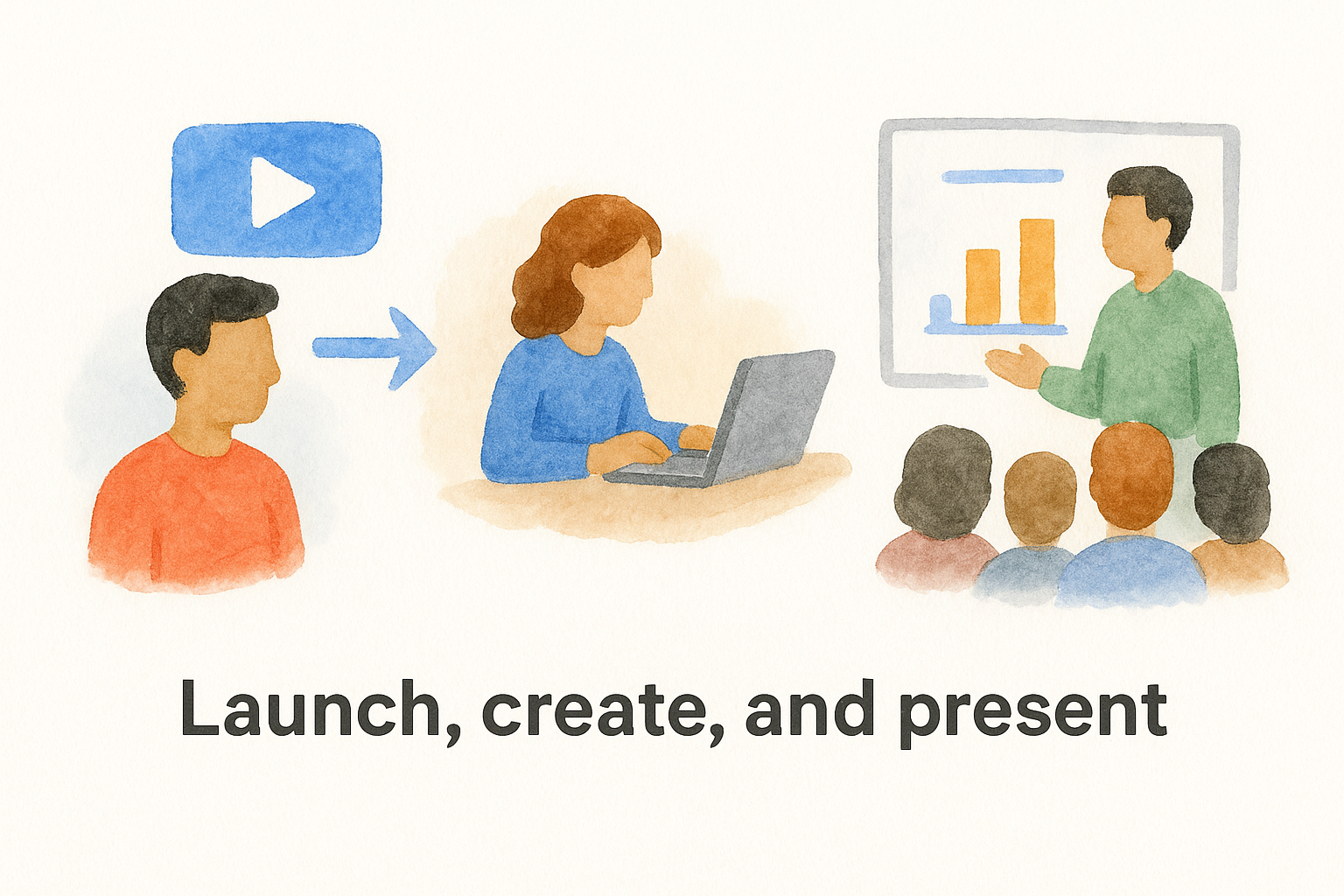
The unit closes with a presentation to an authentic audience, which raises both the stakes and the quality of student output. Plan the revision cycle before that presentation so students have real time to improve their work based on specific, actionable feedback.
Examples and ideas across grade levels
Project based learning explained through concrete examples makes the method far less abstract. Seeing what a strong PBL unit actually looks like at different grade levels helps you borrow ideas and adapt them to fit your students, your standards, and the time you have available.
The best PBL ideas come from pairing a real community need with a content standard students already have to master.
Elementary and middle school
Younger students respond well to local, visible problems they can actually touch or observe. A third-grade class might investigate water quality in their community, present findings to a local water board, and produce a short report recommending changes. A seventh-grade class could tackle a school redesign challenge, applying math concepts like area, budget, and scale while presenting blueprints to the principal as a real decision-maker.
Both examples give students a clear audience and a meaningful reason to use academic content beyond passing a test.
High school
Older students can handle broader, more complex driving questions that require sustained research and multiple content areas. An English and history team might run a joint unit where students analyze propaganda, then produce and present original media that addresses a current civic issue to a community panel.
A science class could design and pitch a local sustainability plan, pulling in data analysis, persuasive writing, and presentation skills all at once. These units work because the authentic stakes motivate students to produce work they are genuinely proud of rather than work they simply turn in.
Put project-based learning into action
You now have project based learning explained from definition to delivery, including the core elements, the step-by-step process, and real examples across grade levels. The most important move you can make next is to start small: pick one unit you already teach, identify a driving question that fits your standards, and build a simple project cycle around it. You don’t need a perfect first attempt; you need a real one.
Reflection and revision make PBL stronger over time. After your first unit, ask students what worked, what confused them, and what they would change. Their answers will sharpen your design faster than any theory. If you want practical tools and resources to support your classroom work, explore what The Cautiously Optimistic Teacher has to offer and find what fits your teaching style. Your students are ready for work that challenges them; give them the chance to rise to it.