9 Project Based Learning Benefits For Students In School
Most classroom lessons follow a predictable pattern: teach a concept, practice it, test it, move on. But when students work through real problems with real stakes, something shifts. They stop asking "when will I ever use this?" and start figuring out the answer themselves. That shift is exactly what makes project based learning benefits for students worth examining closely, and worth building your lessons around.
At The Cautiously Optimistic Teacher, we spend a lot of time thinking about what actually moves the needle for student engagement and long-term retention. Project-based learning (PBL) checks both of those boxes. It pushes students to collaborate, think critically, and produce work that matters beyond a grade in the gradebook. It also gives teachers a framework that naturally supports differentiation, something we care deeply about across our resources and tools.
This article breaks down nine specific benefits of PBL, from stronger academic outcomes to the development of skills students will carry well beyond your classroom. Whether you’re considering your first project-based unit or looking for evidence to support a shift you’ve already started, you’ll find what you need here.
1. Better differentiation for diverse learners
One of the most consistent complaints teachers have about traditional instruction is that it’s built for one type of learner. A single lecture, a single worksheet, a single test: it’s hard to hit a wide range of readiness levels, learning preferences, and interests with that model. Project-based learning flips that dynamic by creating space for students to demonstrate understanding in multiple ways, which naturally supports diverse learners across your entire class.
What students gain
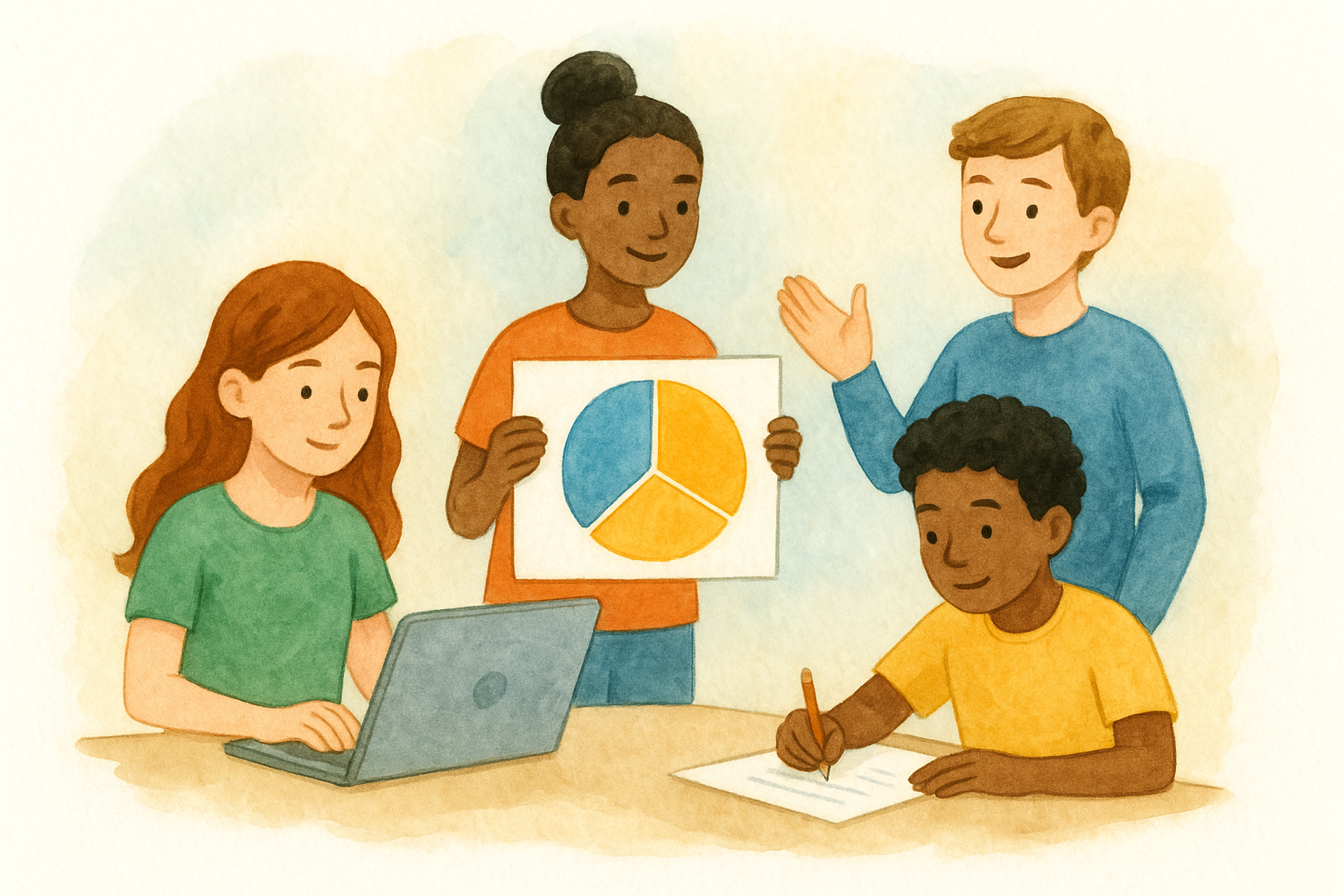
Students who struggle in traditional formats often find traction in PBL because they can contribute through strengths that a written test never captures. A student who reads below grade level might lead the visual design of a presentation, while a student with strong organizational skills manages the team’s timeline. Every student gets a meaningful role, and that participation builds both confidence and academic skill simultaneously.
When students see a real path to success, they stop opting out.
What it looks like in class
In a PBL classroom, you’ll see small groups working on different aspects of the same driving question. One group might be researching, another building a model, and a third preparing to present findings. Students aren’t all on the same page at the same time, and that’s intentional. The variation isn’t chaos; it’s structured flexibility that allows you to support individual needs without stopping the class to reteach.
Teacher moves that make it work
Your role in a PBL unit shifts from content deliverer to learning facilitator. That means building in choice at multiple points: choice of topic angle, format for the final product, or how students gather their research. You can also use flexible grouping, pairing students strategically by complementary strengths rather than readiness level alone. Scaffolded checkpoints help you catch gaps early without slowing down students who are ready to move forward.
How to assess and document growth
Traditional grades often miss the full range of skills PBL develops, so your assessment approach needs to match. Use rubrics that evaluate process alongside product, including things like collaboration quality, revision habits, and research strategies. Portfolios and progress journals give you documentation that shows growth over time, which is especially useful for IEP meetings or parent conferences. One of the clearest project based learning benefits for students with diverse needs is that assessment becomes a fuller picture, not just a final score.
2. Higher engagement and stronger attendance
Students check out when school feels disconnected from their lives. Project-based learning directly addresses that disconnect by giving students work that carries real purpose rather than just a grade. When the work matters, students show up, mentally and physically.
What students gain
In PBL environments, motivation climbs because students have a real audience for their work beyond the teacher. That sense of purpose drives consistent effort and attendance, since missing a class means falling behind on something the whole team is counting on.
When students feel like their presence matters to the group, skipping becomes a much harder choice.
What it looks like in class
You’ll notice students arriving with ideas already forming and asking to keep working past the bell. Group interdependence creates natural accountability, because when one student is absent, the whole team feels it. That dynamic turns attendance into motivation rather than a rule to follow.
Teacher moves that make it work
Build in public checkpoints where groups share progress with the class or an outside audience. These two moves, in particular, raise the personal stakes for every student:
- Set a real presentation date with an external audience (parents, a partner class, or a community member)
- Assign specific roles that make each student’s contribution visible to the group
How to assess and document growth
Track participation patterns and attendance data across your PBL units and compare them to traditional instruction periods. Simple exit reflections asking students what they’re most looking forward to tomorrow give you real-time engagement data, and they document one of the core project based learning benefits for students week to week.
3. Deeper understanding and longer retention
Students forget most of what they learn when the only goal is passing a test. Project-based learning changes that by requiring students to apply knowledge across multiple stages, which creates a fundamentally different relationship with the material.
What students gain
Working through a project means students engage with the same content repeatedly: while researching, while building, and while presenting. That layered exposure produces far stronger retention than cramming for a quiz. Students also gain:
- Conceptual frameworks that connect ideas rather than isolated facts
- Transferable understanding they can apply in future units and real situations
What it looks like in class
You’ll hear students explaining ideas in their own words and catching misconceptions during group work. Teaching a concept to a peer is one of the fastest ways to consolidate understanding, and PBL builds that in naturally.
The act of explaining, defending, and revising ideas is what moves information from short-term recall into long-term understanding.
Teacher moves that make it work
Build deliberate knowledge checkpoints into your project timeline so students revisit core concepts at multiple stages. This structures learning in a way that prevents the last-minute cramming that kills retention.
Require groups to explain their reasoning, not just their conclusions, at each check-in. That move forces deeper processing throughout the entire unit.
How to assess and document growth
Use pre- and post-project assessments to measure retention gains directly.
Comparing those scores gives you concrete evidence of one of the clearest project based learning benefits for students: content that genuinely sticks beyond the final submission.
4. Stronger critical thinking and problem-solving
Traditional instruction often hands students the answer pathway upfront. PBL removes that safety net, which means students must analyze information, evaluate options, and make decisions throughout the project. That friction is exactly what builds real critical thinking capacity.
What students gain
Students learn to identify what they don’t know and figure out how to find it. That process, repeated across a full project, builds a habit of questioning rather than accepting. They also develop tolerance for ambiguity, a skill that transfers directly into higher-level coursework and real-world situations.
The ability to sit with an unsolved problem and work through it systematically is one of the most transferable project based learning benefits for students.
What it looks like in class
You’ll see students debating approaches before committing to one and revising their process when something doesn’t work. Groups that hit a dead end in their research don’t wait for you to rescue them. Instead, they reframe the question and try a different angle.
Teacher moves that make it work
Push thinking further with targeted questions at each checkpoint rather than giving answers:
- "What evidence supports that choice?"
- "What would happen if you approached it differently?"
- "What assumptions are you making here?"
Socratic questioning keeps students doing the cognitive work rather than defaulting to you for direction.
How to assess and document growth
Use decision logs where students record major choices and their reasoning at each stage. Reviewing those logs shows you exactly how students’ thinking evolved across the project, which gives you far more useful data than a single test score ever could.
5. Real collaboration and teamwork skills
PBL forces students to actually negotiate, divide responsibilities, and work through disagreements in real time, building teamwork skills that no worksheet or group quiz can replicate.
What students gain
Working through a multi-week project teaches students that collaboration is a skill, not a personality trait. They learn to listen actively, manage conflict, and hold each other accountable, which are the exact behaviors that matter in every career path they might pursue.
The ability to work through disagreement without shutting down is one of the most lasting project based learning benefits for students, and it carries well into adulthood.
What it looks like in class
You’ll observe students redistributing tasks when a teammate falls behind and building timelines without prompting. Groups figure out fast that passive participation hurts everyone, so they develop natural accountability systems on their own.
Students also begin giving direct peer feedback rather than waiting for you to mediate, which signals real growth in how they understand shared responsibility.
Teacher moves that make it work
Rotate defined roles across units so every student builds a full range of collaboration skills. Use these two structures consistently:
- Assign roles like project manager, researcher, or presenter at the start of each unit
- Hold team check-ins focused on how groups are working together, not just what they’ve completed
How to assess and document growth
Use a peer evaluation rubric at the midpoint and end of each project. Those evaluations give you concrete documentation of collaboration growth across the unit.
Collect the rubrics in a portfolio so you have a running record across the year, which is especially useful during parent conferences.
6. Clearer communication in writing and speaking
PBL requires students to explain their work to real audiences, which builds communication skills that a standard essay prompt rarely develops on its own. When students know their audience goes beyond the teacher, they write with more clarity, precision, and purpose.
What students gain
Students practice both written and verbal communication across every phase of a PBL unit, from drafting research notes to presenting final findings. That repetition across multiple formats builds genuine fluency rather than surface-level compliance with a rubric.
Repeated practice across real communicative contexts is one of the most overlooked project based learning benefits for students.
What it looks like in class
You’ll see students revising their explanations based on peer questions and adjusting how they present information to different audiences. Groups rehearse presentations, critique each other’s word choices, and rewrite sections that don’t land clearly. That revision cycle sharpens communication faster than most direct instruction can.
Teacher moves that make it work
Build in two consistent structures to push communication quality throughout each unit:
- Require at least one presentation to an external audience, whether that’s a partner class, a parent panel, or a community member
- Run structured peer critique sessions with sentence stems so feedback stays specific rather than vague
How to assess and document growth
Use a communication rubric that separates written clarity, verbal delivery, and audience awareness into distinct criteria. Record short video presentations across units so students can track their own progress and you have concrete documentation ready for portfolio reviews or parent conferences.
7. More student ownership and motivation
When students have no say in their work, motivation quickly disappears. PBL shifts that dynamic by giving students genuine control over how they approach problems, which turns compliance into real investment in the outcome.
What students gain
Students who drive their own learning process develop intrinsic motivation rather than relying entirely on grades to stay engaged. That internal drive is one of the most durable project based learning benefits for students because it extends well beyond any single unit.
When students make real choices about their work, they invest in the outcome in a way that external pressure alone never produces.
What it looks like in class
You’ll see students generating their own questions, pushing the work further than the minimum requirement, and returning to a project with ideas they developed overnight. Self-directed behavior becomes the norm rather than the exception across the whole class.
Teacher moves that make it work
Give students meaningful input at key stages of the project, not just cosmetic choices. Two practical ways to do that:
- Let students choose the format of their final product from a defined set of options
- Involve them in setting their own goals at the start of each project phase
How to assess and document growth
Track student ownership through self-assessment reflections at each checkpoint. Ask students to rate their own initiative and explain what drove their decisions. Comparing those reflections across units shows you exactly how motivation and autonomy develop over time, giving you concrete documentation of real growth.
8. Real-world relevance and career connections
Students who can’t see the connection between school and real life disengage fast. Project-based learning closes that gap by anchoring work in genuine problems that professionals actually solve, which changes how students think about the purpose of what they’re learning.

What students gain
PBL gives students direct exposure to career pathways they might never encounter through a textbook. When a student designs a public health campaign or builds a working budget for a community proposal, they aren’t just practicing skills. They’re doing real work that mirrors what professionals produce every day.
That connection between classroom effort and real-world application is one of the most motivating project based learning benefits for students across every grade level.
What it looks like in class
You’ll see students researching actual careers tied to their project topic and referencing real-world examples to strengthen their work. Groups start asking questions that go beyond the assignment, because the work feels connected to something larger than a grade.
Teacher moves that make it work
Bring the real world into your classroom with two consistent moves:
- Invite a guest speaker or community professional to react to student work at the end of the project
- Frame your driving question around a real problem your local community or industry actually faces
How to assess and document growth
Ask students to write a career reflection at the end of each project, identifying which skills they used and where those skills appear in a job they’ve researched. That reflection gives you concrete documentation of how students are building meaningful connections between school and their futures.
9. Project management, resilience, and reflection
Running a multi-week project teaches students skills that no single assignment can replicate. Managing timelines, bouncing back from setbacks, and reflecting honestly on performance are habits that build gradually across a full PBL unit, and students leave each project more capable than when they started.
What students gain
Students develop practical project management skills by tracking deadlines, adjusting plans when something falls apart, and communicating progress to their team. That experience also builds resilience, because projects rarely go smoothly, and working through obstacles in a low-stakes classroom setting prepares students for the challenges they’ll face in every future context.
Learning to recover from a failed approach without quitting is one of the most transferable project based learning benefits for students.
What it looks like in class
You’ll see groups updating task boards and redistributing work when a teammate hits a wall. Students start treating setbacks as information rather than failure, which shifts how they approach difficult problems across your entire curriculum.
Teacher moves that make it work
Build structured reflection moments into every phase of the project, not just the end. Ask students to name one thing that didn’t work and what they changed because of it. That single question, repeated across checkpoints, develops reflective thinking faster than most direct instruction can.
How to assess and document growth
Use a reflection journal where students log challenges and their responses throughout the unit. Reviewing those entries at the end shows you exactly how students’ problem-solving and self-awareness grew across the project.
What to do next
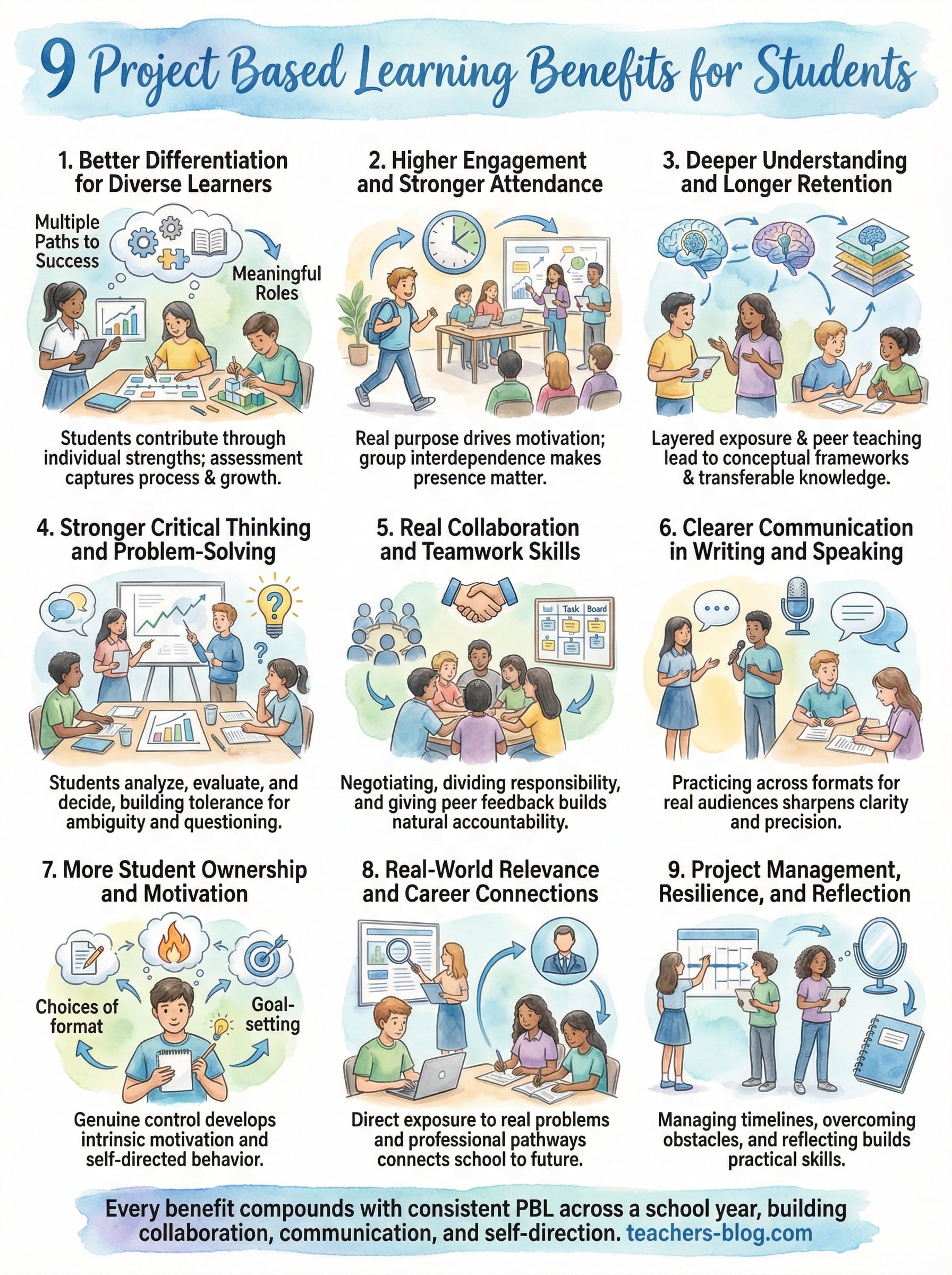
The nine project based learning benefits for students covered in this article aren’t theoretical. They show up in real classrooms when teachers build projects with clear driving questions, structured checkpoints, and meaningful audiences for student work. Every benefit on this list compounds when you run PBL consistently across a school year, so students get better at collaboration, communication, and self-direction with each new unit.
Your next step doesn’t have to be a full unit overhaul. Start by identifying one upcoming lesson where students could solve a real problem instead of answering a set of questions. Design a simple project around that problem, build in one public checkpoint, and watch how student engagement shifts.
For more practical strategies on differentiation, engagement, and classroom tools that support this kind of teaching, visit The Cautiously Optimistic Teacher. You’ll find resources built specifically for educators who want their students to do more than just pass the test.