5 Project Based Learning Assessment Tools Teachers Can Use
Project-based learning gets students building, creating, and problem-solving, but when it’s time to actually measure what they learned, things get tricky. A traditional test doesn’t cut it. You need project based learning assessment tools that capture the messy, nonlinear process students go through, not just the final product sitting on their desk. Without the right approach, you’re left guessing whether students hit the learning objectives or just made something that looks impressive.
Here at The Cautiously Optimistic Teacher, we build resources that help educators work smarter, from AI-powered differentiation tools to ready-to-use unit plans. Assessment in PBL is one of those areas where teachers consistently tell us they feel underprepared, so we put together this guide to fix that.
Below, you’ll find five practical assessment tools, including rubrics, portfolios, and peer evaluation methods, that you can start using in your next project cycle. Each one is broken down with clear steps so you can adapt it to your classroom and your students.
1. AI question generator for PBL checks and reflections
An AI question generator is one of the most underused project based learning assessment tools in a teacher’s kit. It saves you significant prep time and gives you targeted questions that check for real understanding at any stage of the project cycle, not just at the end.
What it is
An AI question generator takes source material or a prompt you provide and produces a set of questions tailored to whatever depth or skill level you specify. These tools can generate comprehension checks, critical thinking prompts, and structured reflection questions in seconds. You control the topic, the grade level, and the cognitive demand, which makes this tool far more flexible than pulling questions from a textbook.
How to use it in a PBL unit
Drop in the driving question or project brief and ask the AI to produce check-in questions for each phase: research, drafting, peer review, and final presentation. Use shorter sets of two to three questions at each milestone rather than one large assessment at the end. This approach keeps students thinking about their process as they go, rather than scrambling to recall everything after the fact.
Checking in with targeted questions at each phase gives you real evidence of where students are, not just where they ended up.
What to assess and how to score it
Focus your scoring on depth of explanation and evidence of thinking, not surface-level recall. A simple three-point scale works well: one point for a basic answer with no support, two points for partial reasoning, and three points for a clear answer backed by specific evidence from the project work itself. This keeps grading fast without sacrificing meaningful feedback.
Example prompts to generate in seconds
Paste one of these directly into your question generator to get started right away:
- "Generate five reflection questions for 8th graders after completing the research phase of a project on [topic]."
- "Create three critical thinking questions that ask students to connect their project findings to a real-world problem."
- "Write four self-assessment prompts that ask students to evaluate their collaboration and time management during a group project."
2. Rubrics for products and success skills
A rubric is one of the most dependable project based learning assessment tools available because it sets clear expectations before students start working. When you hand a rubric to students on day one, you remove the guesswork and give them a concrete roadmap for quality.
What it is
A rubric is a scoring guide that breaks a task into specific criteria and describes what different performance levels look like for each one. In PBL, a strong rubric covers both the final product and the process skills students use to get there, such as communication, collaboration, and revision.
How to use it in a PBL unit
Introduce the rubric at the launch of the project so students can reference it throughout. Walk through each criterion together and let students ask questions. Students self-correct more often when they know exactly what success looks like before they start building.
Sharing the rubric early shifts the responsibility for quality from you to the students.
What to assess and how to score it
Score both content knowledge and success skills separately. Use a four-point scale: four for exceeds standard, three for meets standard, two for approaching, and one for below. Keeping the two categories separate lets you give targeted feedback on the product and the behavior without conflating them.
Example criteria teachers can copy
Use these criteria as a starting point for your own rubric:
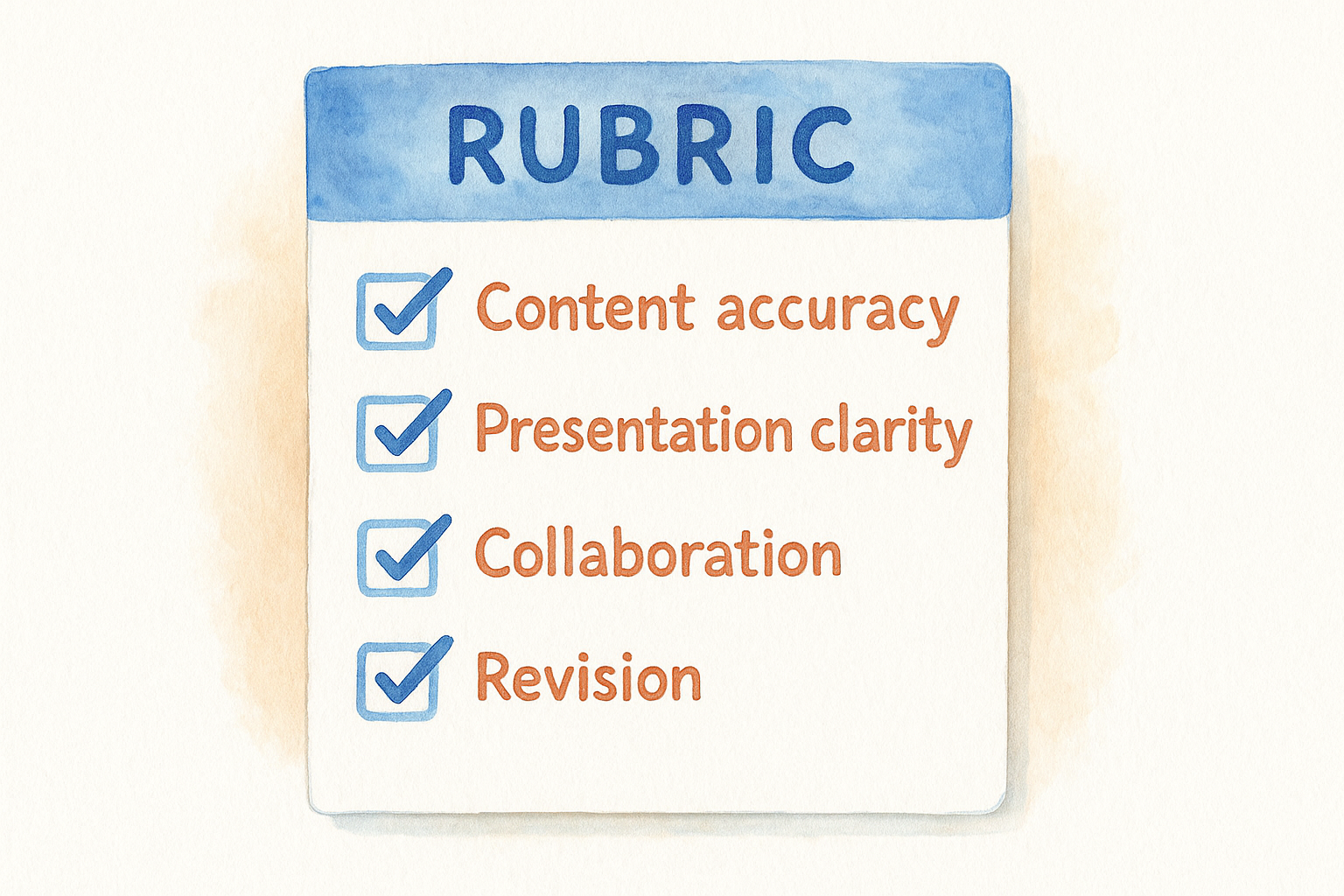
- Content accuracy: Information is correct, relevant, and well-supported
- Presentation clarity: Ideas are communicated clearly to the intended audience
- Collaboration: Student contributed consistently and supported teammates
- Revision: Student made meaningful changes based on feedback
3. Checklists for milestones and quality control
A checklist is a straightforward but powerful addition to your set of project based learning assessment tools. It keeps students on track between major deadlines and gives you a clear record of who completed each step and when.
What it is
Unlike a rubric, a checklist is a structured list of tasks or criteria that students mark off as they complete each one. It confirms completion and sequence rather than evaluating quality. It answers one simple question: did the student do what was required at each stage?
How to use it in a PBL unit
Hand students the checklist at the start of the project and tie each item to a specific phase or deadline. Ask students to self-check before submitting work for your review. This one step alone cuts down the number of incomplete submissions you receive significantly.
Requiring students to check off milestones before moving forward builds accountability directly into the project structure.
What to assess and how to score it
Score checklists as completion grades rather than performance grades. A simple binary system works well: complete or not complete. You can add a notes column where you record brief observations about what was submitted, which keeps quality feedback separate from your rubric score.
Example milestone checklist for a typical project
Use these items as a starting point:
- Research phase: Three credible sources documented
- Planning phase: Outline or storyboard submitted
- Draft phase: First draft completed and peer-reviewed
- Final phase: Presentation materials ready and rehearsed
4. Portfolios and evidence logs
Portfolios are one of the most revealing project based learning assessment tools you can build into a unit. They capture not just what students produced, but how their thinking evolved from the first week to the final presentation.
What it is
A portfolio is a curated collection of student work gathered across the full project cycle. An evidence log is a simpler version: a running document where students record what they did, what they created, and what they learned at each stage. Both formats give you a window into the process, not just the product.
How to use it in a PBL unit
Set up the portfolio or log structure before students start working so they build the habit of collecting evidence from day one. A shared digital folder or a physical binder works equally well. Require students to add to it at the end of each project phase.
Consistent documentation throughout the project gives you far more accurate data than a single final submission ever could.
What to assess and how to score it
Focus on growth over time rather than polished final entries. Look for evidence that students revised their thinking, responded to feedback, and made deliberate choices about their work. Score on a three-point scale: one for minimal documentation, two for consistent collection, and three for documented reflection and revision.
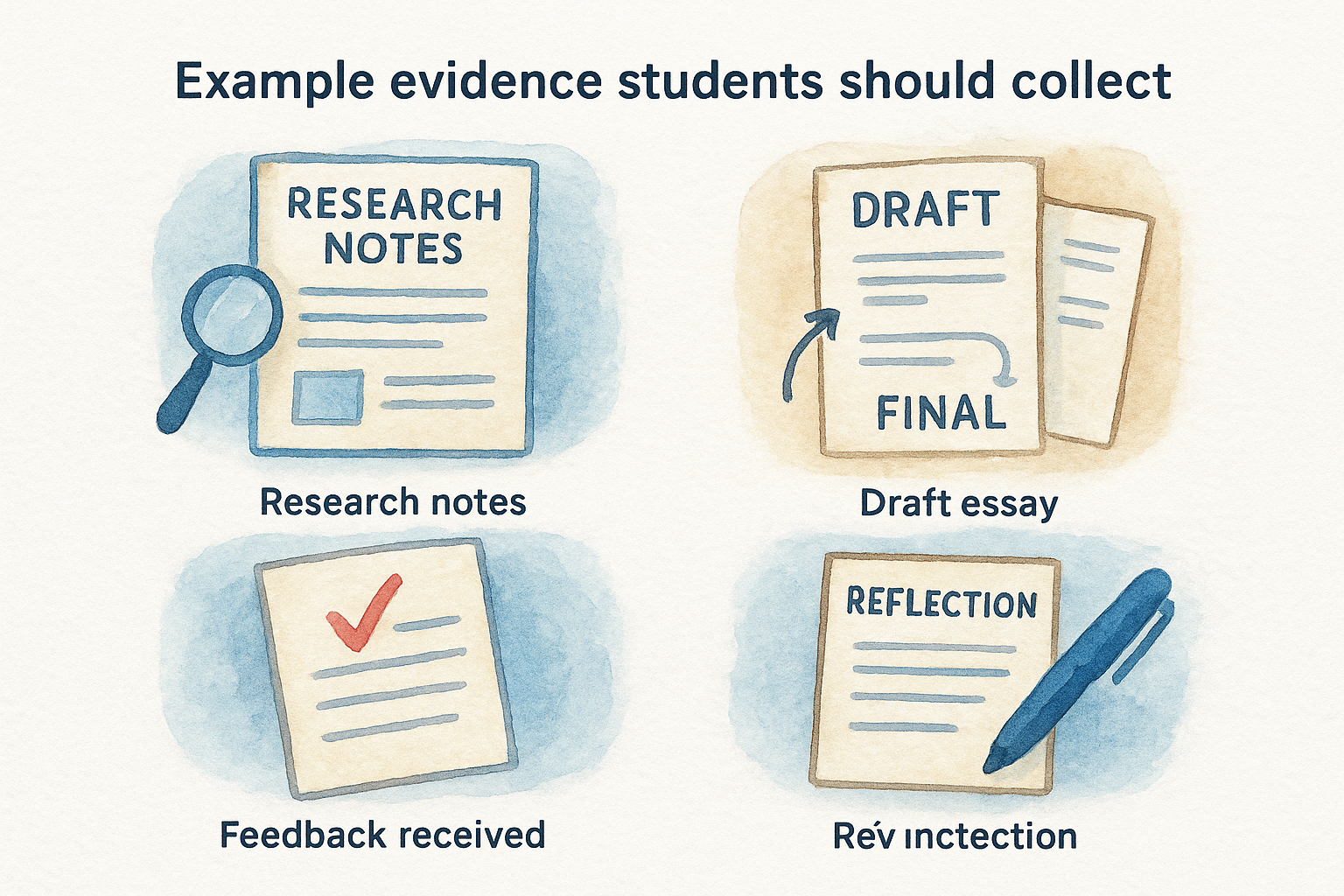
Example evidence students should collect
- Research notes with source citations from the inquiry phase
- First and final drafts showing revision history
- Feedback received from peers or the teacher and how the student responded
- A brief written reflection explaining one key decision made during the project
5. Peer and self assessment protocols
Peer and self assessment protocols belong in every set of project based learning assessment tools because they shift some of the evaluative work to students themselves. When students regularly reflect on their own performance and give structured feedback to teammates, they develop metacognitive habits that carry well beyond any single project.
What it is
A peer and self assessment protocol is a structured set of questions or rating scales that students complete about their own contributions and their teammates’ work. Rather than a casual thumbs-up or thumbs-down, these protocols ask students to cite specific evidence to support their ratings, which makes the feedback far more useful for both you and your students.
How to use it in a PBL unit
Build peer and self assessment into the project at two or three fixed points rather than only at the end. A mid-project check-in gives students time to actually adjust their behavior before the final grade is locked in.
Running peer assessment mid-project gives students the chance to course-correct while it still matters.
What to assess and how to score it
Score self assessments for honesty and specificity, not for how highly students rate themselves. Weight peer feedback as one component of a collaboration grade alongside your own observations to keep the scoring balanced and fair.
Example questions that improve team accountability
Use these prompts to structure peer and self assessment forms:
- "Describe one specific contribution you made this week and how it helped the team."
- "Rate your teammate’s follow-through on deadlines and explain your rating with an example."
- "What is one thing you would do differently in the next project phase?"
Next steps
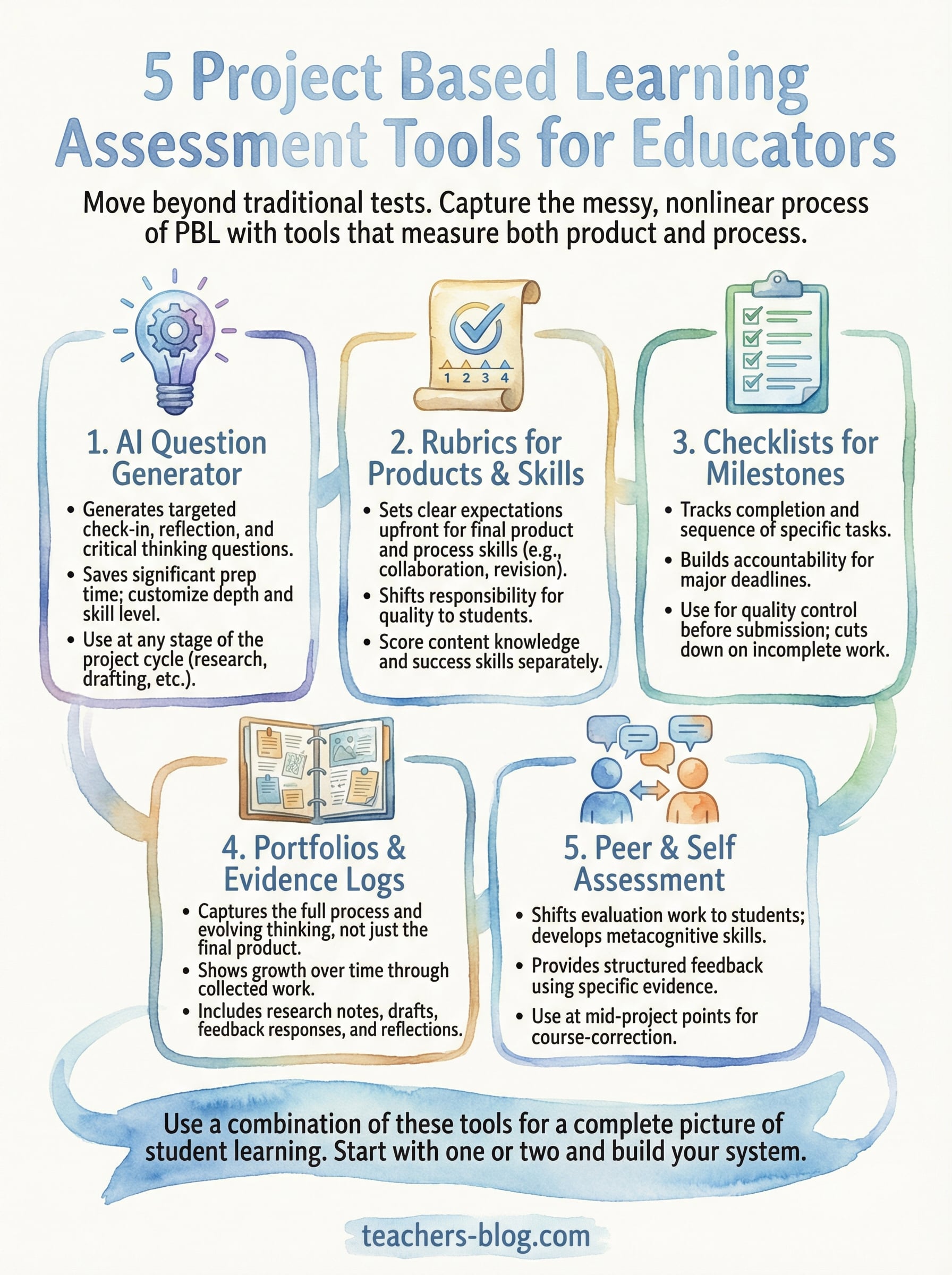
You now have five practical project based learning assessment tools you can bring into your next unit right away. Each one serves a different purpose: rubrics set expectations upfront, checklists track completion, portfolios document growth, peer protocols build accountability, and an AI question generator gives you targeted checks at every phase. Using two or three of these together gives you a far more complete picture of student learning than any single method on its own.
Start small if you’re new to this. Pick one tool from this list and test it in your next project cycle before layering in others. Pay attention to what the data tells you about student understanding and adjust from there. The goal is a system that works for your students and fits your workflow, not a perfect setup right out of the gate. Visit The Cautiously Optimistic Teacher for more resources that help you build that system efficiently.