Inclusive Curriculum Development: A Step-by-Step Guide
Every student who walks into your classroom brings a different background, ability level, and way of processing information. Inclusive curriculum development is how you meet all of them where they are, not by lowering the bar, but by building multiple paths to the same high expectations. It’s equal parts philosophy and practical design, and it matters more than most PD sessions will ever admit.
The problem? Most teachers agree with the idea but get stuck on execution. You want to be culturally responsive, apply Universal Design for Learning, and genuinely support students with disabilities, but turning those principles into actual lesson plans and unit structures takes guidance. That’s exactly what this guide is for, and it’s the kind of work we focus on here at The Cautiously Optimistic Teacher: giving educators concrete strategies they can use on Monday morning.
Below, you’ll find a step-by-step process for designing curriculum that reflects your students’ diversity without requiring you to reinvent every lesson from scratch. We’ll cover frameworks like UDL, assessment design, representation in materials, and differentiation techniques. Whether you’re revising an existing unit or building something new from the ground up, this guide will walk you through it.
What inclusive curriculum development means
Inclusive curriculum development is the process of designing, selecting, and structuring learning experiences so that every student can access, engage with, and demonstrate understanding of the content. It goes beyond adding a few accommodations at the last minute. Instead, inclusion gets built into the design itself, before a lesson ever reaches a single student.
Inclusion isn’t a modification you bolt on after the fact; it’s a design decision you make at the start.
The three pillars of inclusive curriculum
Three interconnected ideas drive this work: Universal Design for Learning (UDL), cultural responsiveness, and disability inclusion. UDL, grounded in research from CAST, gives you a framework for offering multiple means of engagement, representation, and expression so students can access learning in the way that works best for them. Cultural responsiveness means your materials, examples, and texts reflect the actual identities and lived experiences of your students. Disability inclusion ensures your content, assessments, and participation structures work for students with a wide range of physical, cognitive, and emotional needs.
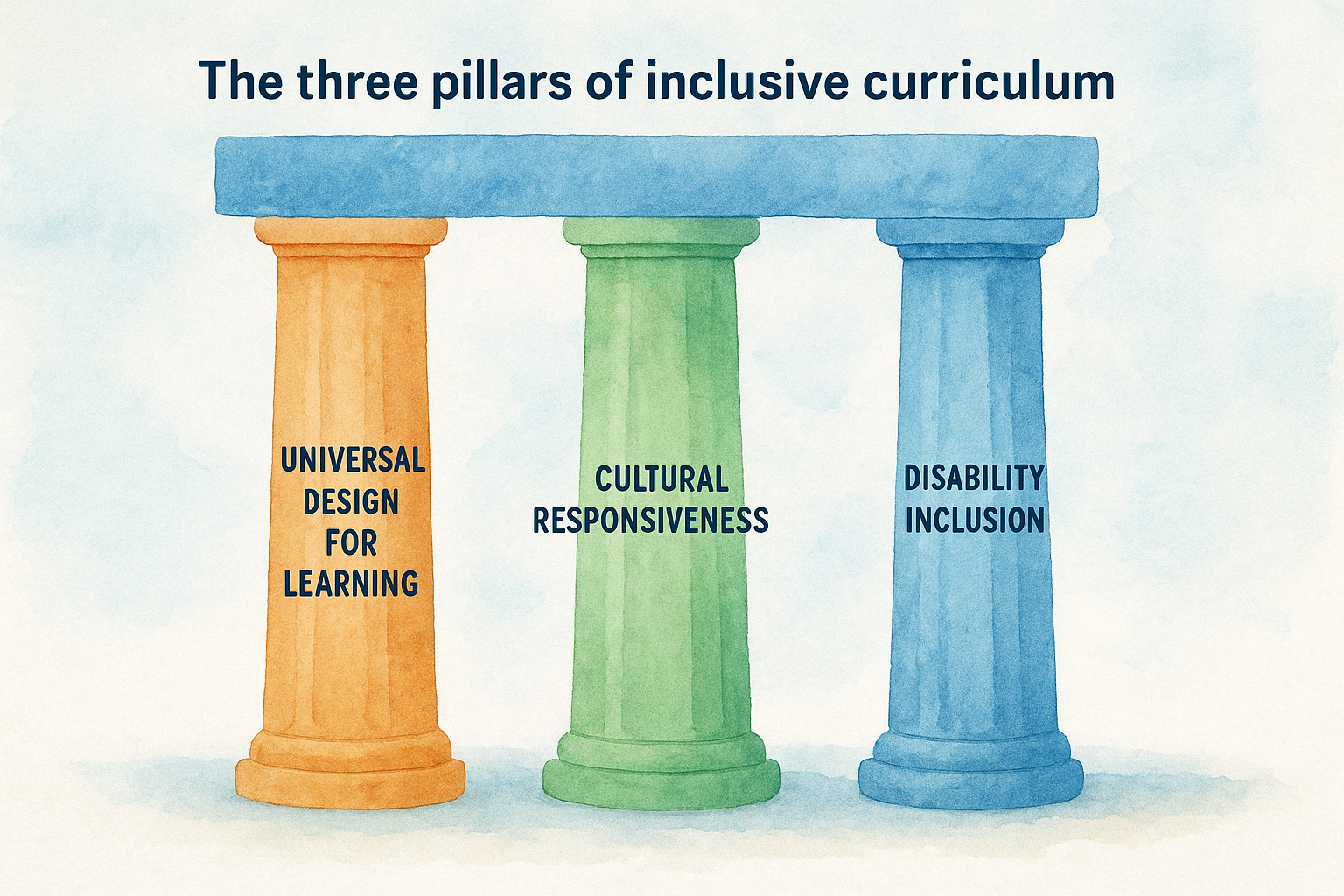
These pillars aren’t separate checklists you work through one at a time. They overlap, and when you address one, you often strengthen the others. A text written by an author from an underrepresented background might also use accessible language that benefits students with reading disabilities. A flexible assessment format designed for a student with anxiety might open up a stronger demonstration of learning for a student who thinks visually.
Keeping all three pillars in view helps you make design decisions with purpose rather than reacting to individual student needs after the fact. The steps ahead will show you exactly how to put this into practice across your planning, materials, and assessments.
Step 1. Audit your current curriculum for barriers
Before you build anything new, you need a clear picture of what your current materials and structures actually require from students. An honest audit reveals where your curriculum creates unnecessary obstacles for learners with disabilities, students from underrepresented backgrounds, or anyone who doesn’t fit the default mold that most curriculum was originally designed around.
What to look for in your audit
Pull out a recent unit and run it through these four questions for each lesson component:
- Access: Can every student physically and cognitively reach this content?
- Representation: Do the texts, examples, and visuals reflect a range of identities and cultures?
- Expression: Does this assessment only accept one format, like a written essay?
- Engagement: Is there a single path to participation, or multiple entry points?
Use a simple tracking sheet
A quick tracking table helps you spot patterns across a unit and prioritize what to fix first.
| Component | Barrier Identified | Students Affected | Priority |
|---|---|---|---|
| Reading text | Single reading level | ELL, struggling readers | High |
| Assessment | Essay format only | Students with writing disabilities | High |
| Examples used | Culturally narrow | Underrepresented groups | Medium |
What you document here becomes the direct roadmap for your inclusive curriculum development work going forward.
Step 2. Design with UDL and accessibility first
Once you know where your curriculum creates barriers, you can start building with Universal Design for Learning (UDL) as your foundation. UDL gives you a practical framework for making inclusive curriculum development intentional from the very first planning decision, rather than treating inclusion as a late patch you apply after the lesson is already built.
Designing for the edges of your class almost always benefits everyone in the middle.
Apply the three UDL principles to your planning
UDL’s three principles map directly to your lesson design decisions. For engagement, offer students choice in how they explore a topic, such as through video, independent reading, or a hands-on investigation. For representation, present content in at least two formats: written text paired with audio or visual diagrams. For action and expression, give students options beyond a single written product so they can demonstrate understanding in a way that genuinely fits them. Running through all three before you finalize a lesson is the fastest way to catch accessibility gaps early.
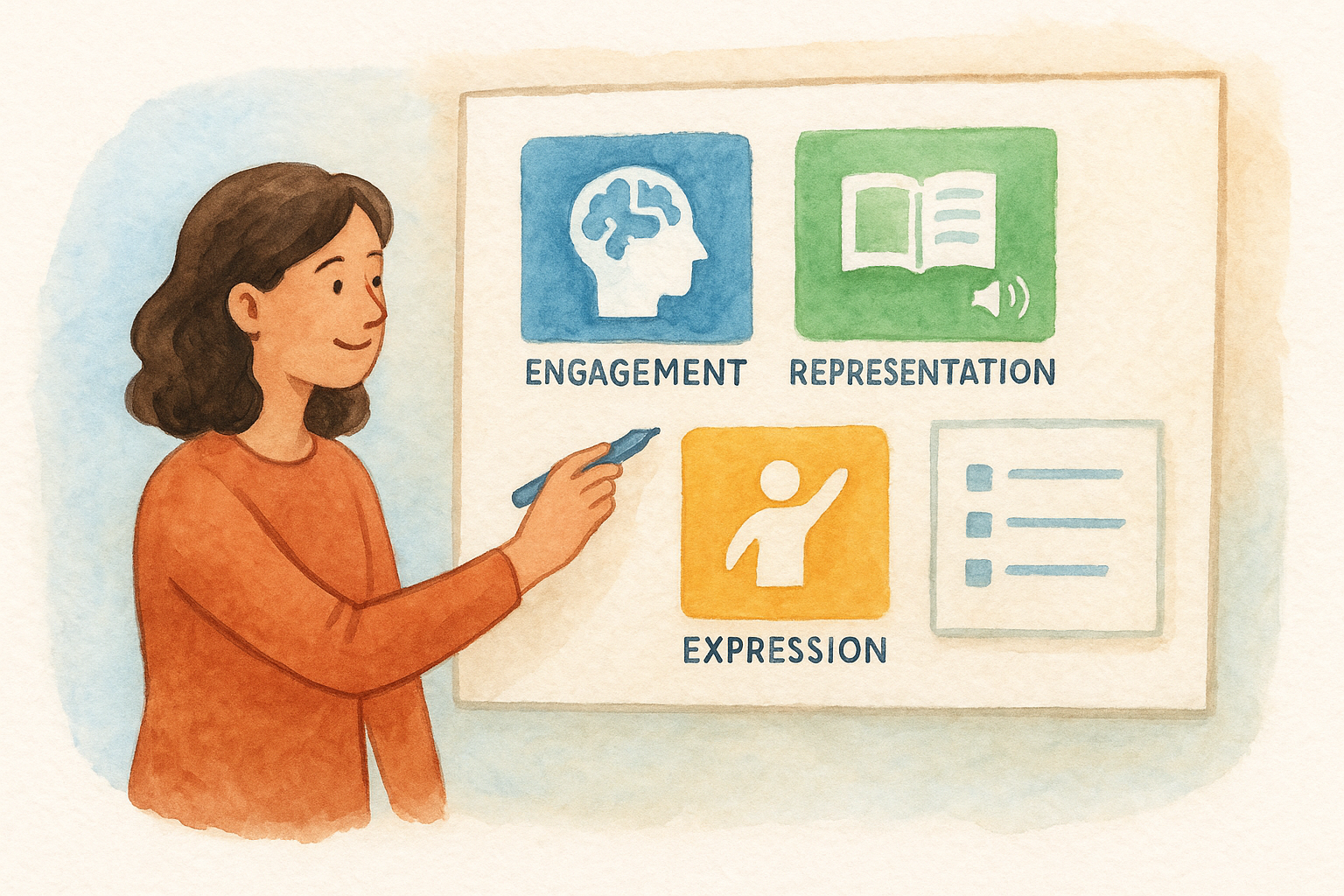
Use this quick planning check before you finalize any lesson:
| UDL Principle | Design Question | Example |
|---|---|---|
| Engagement | Does the task offer choice? | Pick from three project formats |
| Representation | Is content in multiple formats? | Video + reading + graphic organizer |
| Expression | Can students respond in different ways? | Written, oral, or visual output |
Step 3. Build representation and relevance
Your students need to see themselves in the curriculum, and they need to understand why the content matters to their actual lives. Representation and relevance are not decorative additions to your unit; they are structural decisions that directly affect student motivation, identity safety, and depth of engagement. This step is where inclusive curriculum development moves from framework to lived experience.
Diversify your texts and examples
Start by replacing or supplementing your anchor texts and worked examples with materials that reflect a broader range of authors, cultures, historical perspectives, and lived experiences. You do not need to throw out every existing resource. Adding one diverse paired text or a counternarrative example per unit shifts the experience meaningfully for students who have never seen their background reflected in school content.
A student who recognizes their culture in your materials is more likely to trust the learning environment enough to take risks.
Connect content to student lives
Ask students to apply concepts to contexts they already know. For example, if you teach argument writing, let students choose a topic tied to their community. Use this simple planning prompt to check relevance before you finalize each lesson:
| Lesson Component | Relevance Check Question |
|---|---|
| Topic or scenario | Could a student connect this to their own life? |
| Example used | Does it reflect more than one cultural context? |
| Choice offered | Can students bring in their own perspective? |
Step 4. Implement, assess, and iterate
Running your inclusive curriculum development work through a single cycle is not enough. The real gains come from [trying a revised unit, gathering feedback, and adjusting](https://teachers-blog.com/curriculum-development-process/) before the next time you teach it. Implementation without assessment just repeats the same patterns you already identified in Step 1.
The most useful data you collect is not from standardized tests; it comes from watching who disengages, who struggles to start, and who never participates at all.
Collect meaningful feedback
After each unit, give students a short reflection prompt tied directly to access and engagement. Three targeted questions cover the essentials:
| Question | What It Reveals |
|---|---|
| What helped you learn best in this unit? | Which formats and choices worked |
| Where did you feel stuck or left out? | Remaining barriers |
| What would you change? | Student-driven priorities |
Adjust one thing at a time
When you review that feedback, resist the urge to overhaul everything at once. Pick the single highest-priority barrier from your data, change it in the next version of the unit, and track whether engagement or outcomes shift. This focused approach keeps iteration manageable and shows you clearly what is actually driving the improvement.
Next steps for your classroom
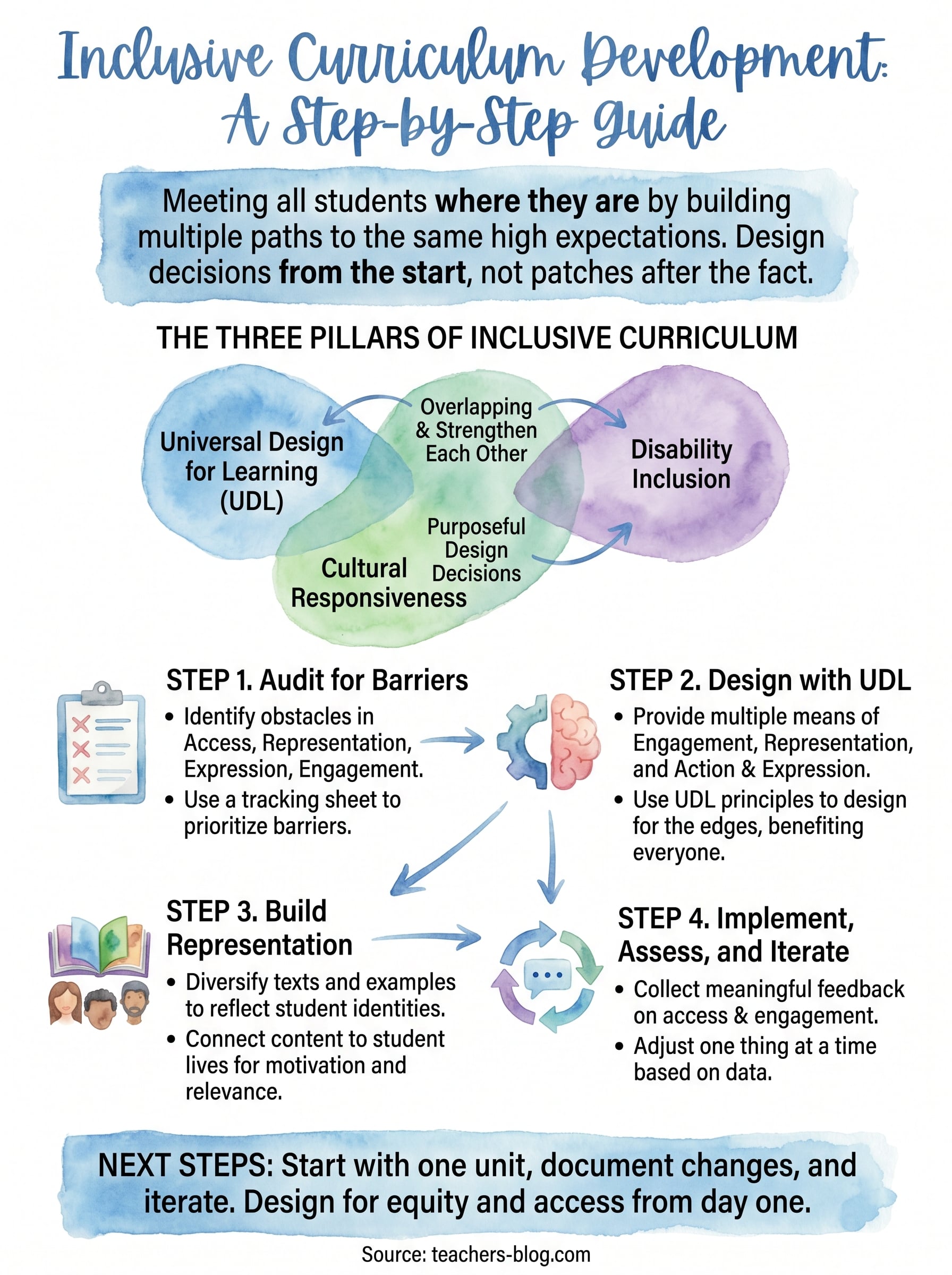
You now have a complete process for inclusive curriculum development: audit for barriers, design with UDL, build in representation, and iterate based on real feedback. The work does not have to happen all at once. Start with one unit, run it through the four steps, and let what you learn there guide your next revision.
Pick the unit you teach most often or the one where you already know students struggle most. That is your best starting point because you have the most context and the most to gain from improving it. Document what you change and why, so future revisions become faster and your own expertise grows alongside your curriculum.
For more tools, strategies, and ready-to-use resources that support this kind of teaching, visit The Cautiously Optimistic Teacher. You will find practical help for every stage of the planning process, from lesson design to differentiation to assessment.