How Stress, Emotion, and Cognition Affect Student Behavior
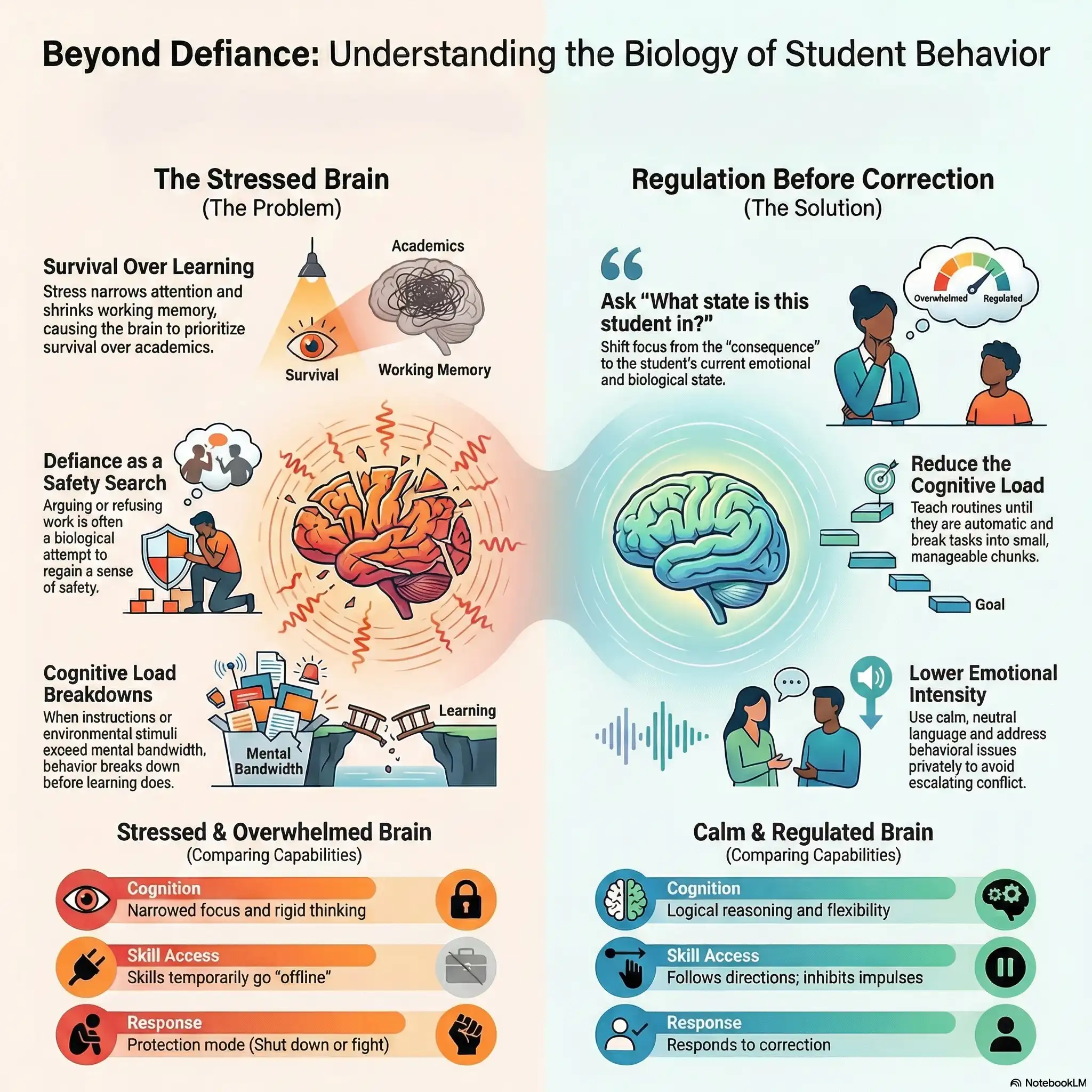
Let’s explore the physiological link between stress and student behavior. When students experience high levels of stress or emotional dysregulation, the brain’s “threat-response system” takes over, effectively taking the prefrontal cortex—the area responsible for logic, impulse control, and following directions—offline. This means that much of what we label as “defiance” is actually a biological survival mechanism rather than a moral choice. By understanding that behavior is an output of a student’s internal state, teachers can shift from reactive discipline to proactive regulation, reducing power struggles and preserving instructional time.
This is Lesson 1 of Module 2: The Science Behind Student Behavior | Full Course Outline
The “Stress Response” Comparison
| Feature | The Learning Brain (Regulated) | The Stressed Brain (Dysregulated) |
| Primary Driver | Logic and Social Connection | Survival and Self-Protection |
| Cognitive Ability | High; can process complex steps. | Low; working memory is severely limited. |
| Behavioral Output | Flexibility and cooperation. | Rigidity, “defiance,” or withdrawal. |
| Teacher’s Role | Instructor and Facilitator. | Co-regulator and Safety-provider. |
| Effective Response | Academic challenge and feedback. | Predictability, space, and calm tone. |
Introduction: Behavior Is Not a Moral Choice
When students are calm, regulated, and emotionally safe, they can:
Think flexibly
Follow directions
Inhibit impulses
Respond appropriately to correction
When students are stressed, dysregulated, or overwhelmed, those same skills temporarily go offline.
This isn’t a character flaw.
It’s biology.
Understanding the relationship between stress, emotion, and cognition allows teachers to manage classrooms more effectively—without escalating conflict or burning themselves out.
How Stress and Student Behavior are Linked in the Brain
Stress activates the brain’s threat-response system.
When this system is engaged:
Attention narrows
Working memory shrinks
Emotional reactions intensify
Logical reasoning weakens
In other words, the brain prioritizes survival over learning.
Classroom Reality
A stressed student may:
Talk back
Shut down
Refuse work
Appear defiant or disengaged
But what you’re often seeing is a brain in protection mode, not a student choosing misbehavior.
Emotion and Cognition Are Not Separate Systems
We often treat emotions as distractions from learning.
In reality, emotion drives cognition.
Strong emotions—positive or negative—directly affect:
Attention
Memory formation
Decision-making
Self-control
A student who feels embarrassed, anxious, or unsafe is using significant mental energy just to cope. That leaves less capacity for academic tasks or behavioral regulation.
Cognitive Load and Behavioral Breakdown
Every task in your classroom requires mental bandwidth.
Students must juggle:
Instructions
Social expectations
Academic content
Emotional responses
Environmental stimuli
When cognitive load exceeds capacity, behavior often breaks down before learning does.
This is why:
Transitions trigger disruptions – For a stressed student, the simple act of putting away a math folder and getting out a notebook involves multiple executive function steps that their brain may currently be unable to sequence.
Multi-step instructions fall apart – When working memory is overloaded, students may lose track of directions midway through a task, making it appear like they are ignoring instructions when they are actually struggling to hold all the steps in mind.
“Easy” tasks suddenly cause resistance – Tasks that seem simple to adults can feel overwhelming to a stressed brain, leading students to avoid starting work as a way to protect themselves from frustration or failure.
The issue isn’t willpower—it’s overload.
Why Stress and Student Behavior Often Look Like Defiance
Under stress, the brain seeks control.
This can appear as:
Arguing
Refusal
Power struggles
Rigid thinking
What we label as defiance is often a student trying to regain a sense of safety or autonomy.
Responding with increased control usually:
Escalates stress
Prolongs disruption
Damages relationships
The Reframe:
The Behavioral Reframe
To stay calm and effective, try shifting your internal narrative when a student disrupts:
What you see: A student yelling “I’m not doing this!” and throwing a pencil.
What is happening: The student’s amygdala is screaming “Unsafe!” or “Overwhelmed!” They are attempting to regain a sense of control over their environment.
Your move: Provide a calm, low-pressure choice or a “cool-down” routine rather than an immediate disciplinary ultimatum.
Responding with regulation and clarity reduces both behavior issues and instructional loss.
Implications of Stress and Student Behavior for Classroom Management
Understanding stress, emotion, and cognition leads to a different management approach:
Effective teachers focus on:
Predictability over punishment
Regulation before correction
Structure that reduces cognitive load
Language that lowers emotional intensity
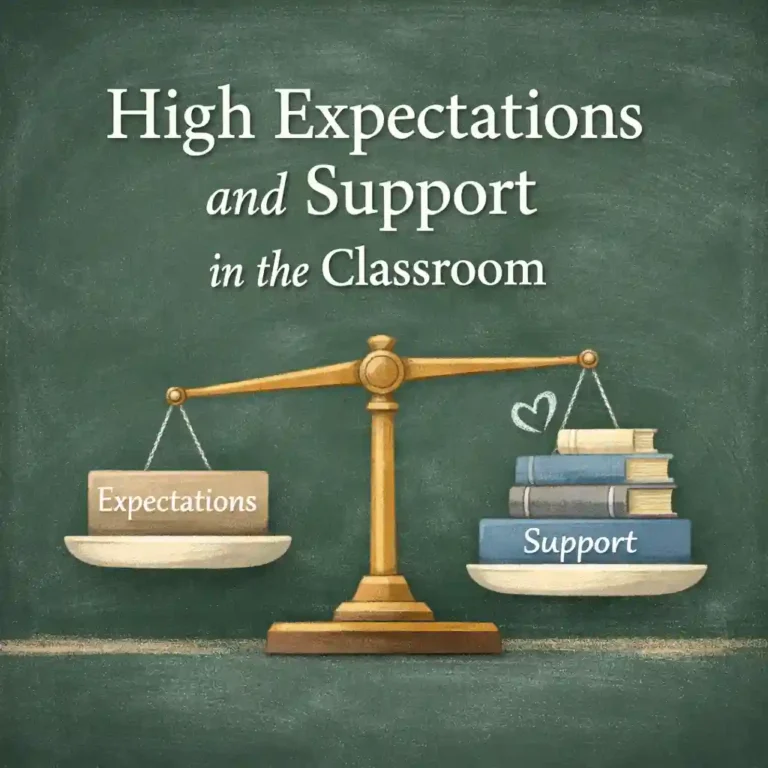
This doesn’t mean lowering expectations.
It means creating conditions where students can actually meet them.
Practical Takeaways for Teachers
You don’t need to be a neuroscientist to apply this.
Small shifts make a big difference:
Teach routines until they’re automatic
Use calm, neutral language during disruptions
Break tasks into cognitively manageable chunks
Normalize mistakes and confusion
Address behavior privately when possible
These strategies work because they reduce stress at the brain level, not because they enforce compliance.
Stress and Student Behavior FAQ
How does stress affect student behavior in the classroom? Stress activates the brain’s threat-response system, taking the prefrontal cortex offline. This reduces a student’s ability to use logic, follow multi-step directions, and control impulses, often resulting in behaviors that look like defiance.
What is the link between cognitive load and behavior? When the mental effort required for a task (cognitive load) exceeds a student’s capacity, the brain triggers a stress response. This often leads to behavioral breakdowns, especially during transitions or complex instructions.
How should teachers respond to stress-induced defiance? The most effective response is regulation before correction. Teachers should use calm, neutral language and provide the student with space or a predictable routine to lower their stress level before addressing the behavior.
Reflection
Think of a recent classroom disruption.
What signs of stress, emotional overload, or cognitive strain might have been present before the behavior occurred?
Continue the Classroom Management Course
In the next lesson, ***
Next Lesson: Executive Function and Self-Regulation in Students
Module 2 Progress:
How Stress, Emotion, and Cognition Affect Behavior
Back to Module 2 Overview
Return to Full Course Outline