What Is Culturally Responsive Classroom Management? A Guide
Every student brings a unique cultural background into your classroom, their experiences, values, and ways of learning. When your management strategies don’t acknowledge these differences, you risk creating disconnection and disengagement. Culturally responsive classroom management offers a framework that bridges this gap, helping you build an environment where all students feel seen and respected.
This approach goes beyond traditional behavior management. It requires you to examine your own cultural lens, understand how culture shapes student behavior, and adjust your practices accordingly. For educators committed to reaching every learner, which is exactly what we focus on here at The Cautiously Optimistic Teacher, this isn’t just a nice-to-have skill. It’s essential for effective teaching in today’s diverse schools.
In this guide, you’ll find a clear definition of culturally responsive classroom management, the core principles that drive it, and practical strategies you can implement right away. Whether you’re new to this concept or looking to deepen your existing practice, this article will give you the foundation you need to create a more inclusive, equitable classroom.
What culturally responsive classroom management is
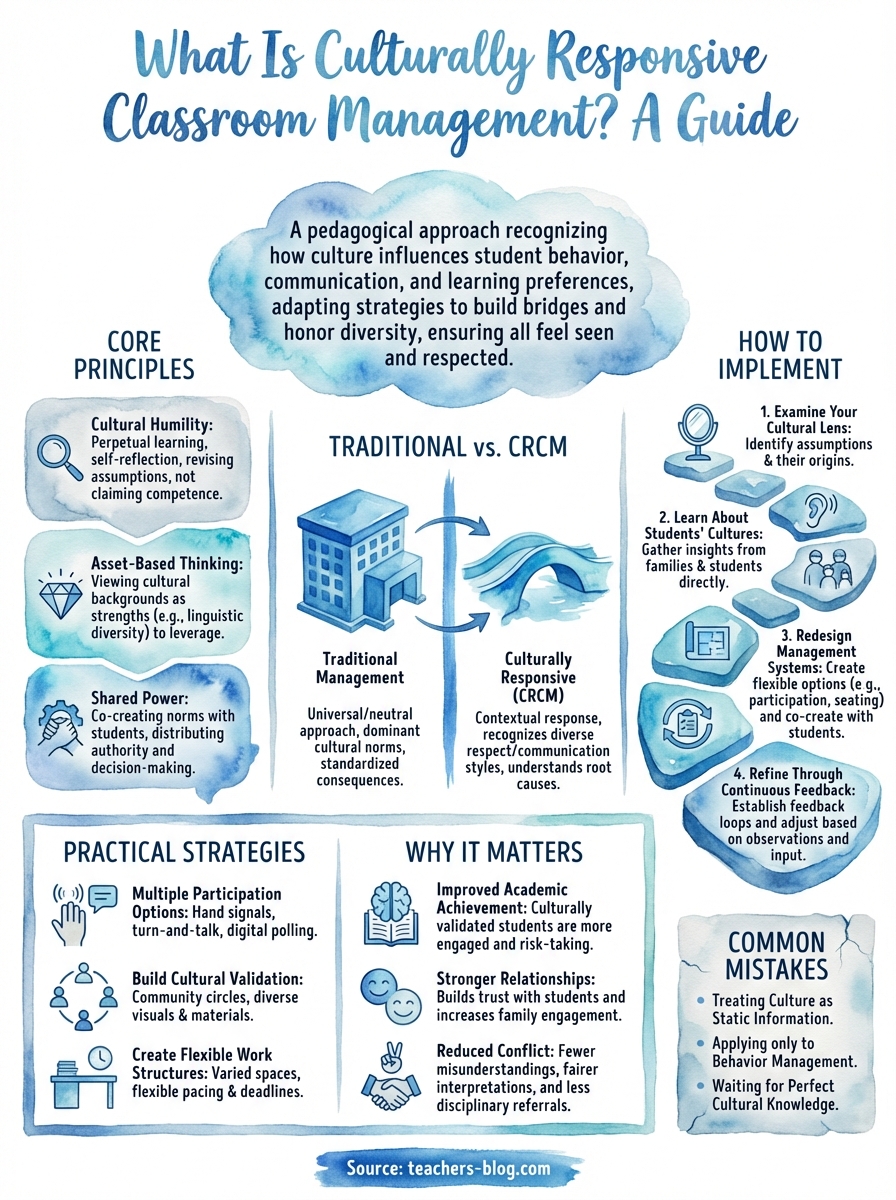
Culturally responsive classroom management is a pedagogical approach that recognizes how culture influences student behavior, communication styles, and learning preferences. You design your management strategies around this understanding rather than applying a one-size-fits-all system. This means you acknowledge cultural differences as strengths and adapt your expectations, responses, and structures to support diverse learners effectively.
The Core Definition
At its foundation, culturally responsive classroom management requires you to view student behavior through a cultural lens. When a student avoids eye contact during a correction, this might reflect cultural norms about respect rather than defiance. When students work collaboratively without asking permission, they might come from cultures that value communal learning over individual achievement. You recognize these patterns and adjust your interpretation accordingly.
This approach asks you to become a student of your students’ cultures. You learn about their communication styles, values, family structures, and social norms. Then you use this knowledge to create management systems that honor rather than conflict with their cultural backgrounds. The goal isn’t to lower standards but to establish expectations that all students can meet without abandoning their cultural identity.
"Culture shapes how students interpret authority, express emotions, seek help, and engage with peers. Effective management works with these patterns, not against them."
How It Differs from Traditional Management
Traditional classroom management often assumes a neutral, universal approach to behavior. You set rules, establish consequences, and expect students to adapt to your system regardless of their background. This model typically reflects dominant cultural norms around individual responsibility, direct communication, and specific ways of showing respect.
Culturally responsive classroom management flips this script. Instead of requiring students to leave their culture at the door, you build bridges between home culture and school culture. You maintain high behavioral expectations while recognizing that students might demonstrate respect differently based on their upbringing. A student who speaks passionately and directly isn’t necessarily being disrespectful. They might come from a culture where animated conversation signals engagement.
The shift also appears in how you handle conflicts. Rather than applying standardized consequences, you consider cultural context when responding to behavior. You ask yourself whether your interpretation matches the student’s intention. This doesn’t mean excusing inappropriate behavior. It means understanding the root causes before deciding on an appropriate response.
The Cultural Elements You Need to Consider
Several cultural dimensions directly impact classroom management. Communication styles vary widely across cultures. Some students learn to speak only when called upon, while others grow up in environments where overlapping conversation shows active participation. Your management approach needs to account for both without privileging one over the other.
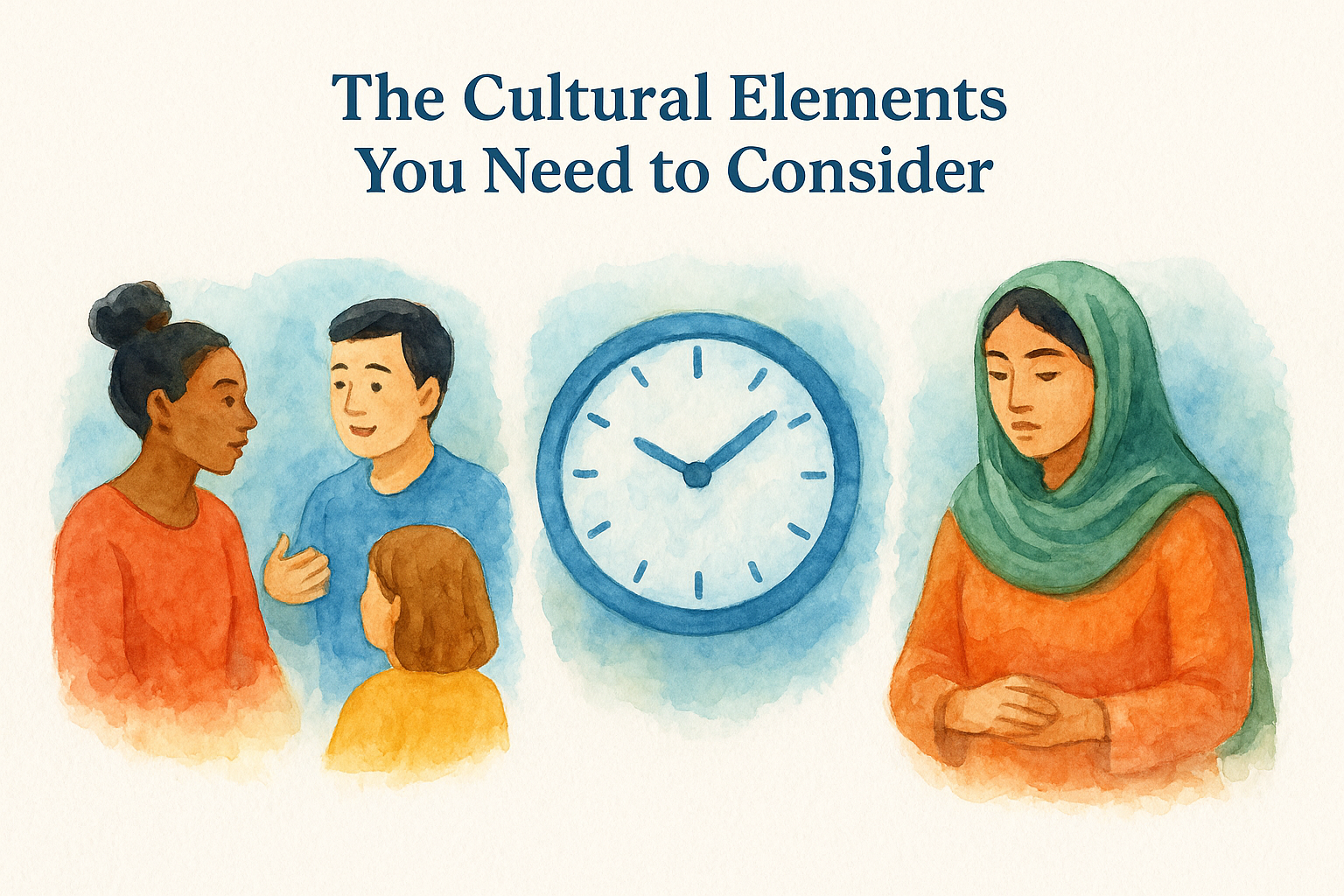
Concepts of time and urgency also differ culturally. Some cultures emphasize punctuality and strict schedules, while others take a more flexible approach to time. Students from the latter backgrounds might not view arriving a few minutes late as disrespectful or disruptive. You need clear expectations about time while understanding that students might require explicit teaching about school-based time norms rather than punishment.
Family roles and authority structures represent another crucial element. In some cultures, children never question adults or speak up in adult presence. These students might struggle with inquiry-based learning or peer feedback activities that require them to challenge ideas. Others come from homes where children participate equally in family discussions and expect to negotiate classroom rules. Your management system must create space for both types of learners to succeed.
Physical space preferences matter too. Personal space boundaries, appropriate touch, and comfortable proximity to others vary significantly across cultures. What feels like crowding to one student might feel isolating to another. You design your classroom layout and movement patterns with these differences in mind, creating options that respect various comfort levels.
Why culturally responsive classroom management matters
Your classroom management approach directly impacts whether students can access learning. When students spend energy navigating cultural mismatches between home and school, they have less capacity for academic work. Culturally responsive classroom management removes these barriers by creating an environment where students can focus on learning rather than code-switching or suppressing their cultural identity. This shift affects everything from daily engagement to long-term achievement outcomes.
The Achievement Connection
Students perform better academically when they feel culturally validated in your classroom. Research consistently shows that students from diverse backgrounds achieve at higher levels when teachers implement culturally responsive practices. You create conditions where students can fully participate without feeling they must choose between their cultural identity and school success. This psychological safety translates directly into academic risk-taking, deeper engagement, and sustained effort.
The achievement gap narrower in classrooms where teachers use culturally responsive classroom management. When you recognize cultural strengths rather than viewing differences as deficits, students develop stronger academic identities. They see themselves as capable learners who belong in educational spaces. Your expectations remain high, but your pathway to meeting those expectations honors diverse approaches and ways of demonstrating knowledge.
"Students cannot learn effectively in environments where they feel culturally invisible or misunderstood. Responsive management creates the foundation for academic success."
Beyond Behavior Management
This approach transforms your relationship with students and families. When you demonstrate cultural awareness through your management practices, families recognize that you value their child’s whole identity. Trust builds more quickly, and family engagement increases because parents see their cultural values reflected in your classroom. You gain partners in supporting student success rather than facing resistance or disengagement.
Your own teaching effectiveness improves as well. You spend less time on power struggles and conflicts that stem from cultural misunderstandings. Instead of repeatedly correcting behaviors you’ve misinterpreted, you address actual issues while recognizing cultural expressions as natural variations. This reduces disciplinary referrals, particularly for students from marginalized communities who face disproportionate consequences under traditional systems. Your classroom becomes more equitable not by lowering standards but by ensuring all students receive fair interpretation of their actions and appropriate support for meeting expectations. The result is a learning environment where both you and your students experience less stress and more genuine connection.
Key principles and mindsets behind CRCM
Your success with culturally responsive classroom management depends on foundational principles that guide your thinking and decision-making. These aren’t techniques you apply mechanically. They represent shifts in perspective that shape every interaction with students. When you internalize these principles, your management practices naturally become more responsive, equitable, and effective. You move from surface-level adjustments to deep transformation in how you understand and respond to student behavior.
Cultural Humility Over Cultural Competence
You can never fully master another culture, and claiming competence creates false confidence. Cultural humility recognizes that you remain a perpetual learner about your students’ backgrounds. This mindset keeps you open to new information and willing to revise your assumptions when evidence contradicts them. You ask questions rather than making assumptions based on limited cultural knowledge.
This principle requires ongoing self-reflection about your own cultural lens. You examine how your background shapes your expectations, values, and interpretations of behavior. When conflicts arise, you consider whether cultural differences rather than defiance drive the situation. Your students become your teachers in this process, helping you understand cultural nuances you might otherwise miss through observation and genuine curiosity.
"True cultural responsiveness begins with recognizing the limits of your own cultural knowledge and maintaining a stance of learning rather than knowing."
Asset-Based Thinking
Students bring cultural wealth into your classroom through their languages, traditions, family knowledge, and community connections. Asset-based thinking means you view these resources as strengths rather than barriers to overcome. You design management structures that leverage cultural assets instead of requiring students to set them aside. When students speak other languages, you recognize this as cognitive flexibility rather than a deficit requiring remediation.
This mindset also applies to behavior interpretation. A student who challenges ideas directly might come from a culture that values critical discourse rather than demonstrating disrespect. Students who prefer collaborative work reflect cultural values around collective achievement. You frame these differences as diverse approaches to learning rather than problems to fix.
Shared Power and Co-Construction
Culturally responsive classroom management distributes authority rather than concentrating it solely with you. You involve students in creating norms, establishing consequences, and solving classroom problems. This collaboration honors cultures where young people expect to participate in decision-making and helps all students develop agency. You maintain your role as the adult in charge while creating space for student voice and choice.
Shared power means you explain the reasoning behind expectations and remain open to student input about what works. When management strategies fail, you problem-solve with students rather than simply imposing new rules. This approach builds stronger relationships and increases student investment in maintaining a positive classroom environment.
How to implement CRCM step by step
Moving from theory to practice requires a structured approach. You can’t transform your classroom management overnight, but following clear steps helps you build momentum and avoid common pitfalls. This process begins with self-examination and extends through ongoing refinement as you deepen your understanding of students’ cultural backgrounds and needs.
Step 1: Examine Your Own Cultural Lens
You start by identifying your own cultural assumptions about appropriate behavior, respect, and learning. Write down your non-negotiables in classroom management, then ask yourself where each expectation originates. Many rules you consider universal actually reflect specific cultural values from your own background. Question whether students truly need to raise their hands before speaking or if that preference stems from your comfort level with orderly turn-taking.
This reflection continues throughout implementation. Notice when you feel frustrated or disrespected by student behaviors. Those moments often reveal cultural mismatches rather than defiance. Your emotional reactions become data points that help you recognize where your cultural expectations clash with student norms.
Step 2: Learn About Your Students’ Cultures
Gathering cultural knowledge happens through multiple channels. You conduct home visits or phone conversations with families to understand their values, communication styles, and expectations for their children. Ask open-ended questions about how children show respect at home, how families handle conflicts, and what behaviors warrant concern versus celebration. This information gives you context for interpreting classroom behaviors accurately.

Students themselves provide crucial insights. You create low-stakes opportunities for them to share cultural practices through community circles, personal narratives, or informal conversations. Pay attention to how students interact during unstructured time when they aren’t code-switching to meet school expectations. These observations reveal authentic communication patterns and social norms.
"Your students are the primary experts on their own cultural backgrounds. Create regular opportunities to learn directly from them rather than relying solely on generalized cultural information."
Step 3: Redesign Your Management Systems
Armed with cultural knowledge, you revise your classroom structures to honor diverse norms. This might mean creating options for students who need movement versus those who prefer stillness, or establishing multiple pathways for showing respect beyond traditional hand-raising. You examine your consequences to ensure they don’t inadvertently punish cultural differences like animated discussion or collaborative work styles.
Involve students in this redesign process. Present the management challenge you’re trying to solve and ask for their input on solutions that work across cultural backgrounds. Co-created systems gain stronger student buy-in and naturally incorporate culturally responsive elements because students design for their own needs.
Step 4: Refine Through Continuous Feedback
Implementation of culturally responsive classroom management requires ongoing adjustment. You establish feedback loops with students and families to assess whether your changes create a more inclusive environment. Monthly check-ins, anonymous surveys, or informal conversations help you identify persistent barriers and celebrate improvements. When conflicts arise, you treat them as learning opportunities rather than failures, adjusting your approach based on what each situation reveals about cultural dynamics in your classroom.
Practical strategies you can use tomorrow
You don’t need months of training to begin implementing culturally responsive classroom management. Small, intentional changes create immediate impact on your classroom climate. These strategies address common management challenges while honoring cultural differences in communication, behavior, and learning preferences. Start with one or two approaches that fit your current classroom needs, then expand as you gain confidence and observe student responses.
Offer Multiple Ways to Participate
Create participation options that work across different cultural communication styles. You might establish hand signals for agreement or questions alongside traditional hand-raising, giving students who feel uncomfortable speaking out loud alternative ways to contribute. Set up turn-and-talk protocols where students discuss with partners before sharing with the whole class, which supports cultures that value peer consultation before public speaking.
Implement response cards or digital polling that let students share ideas anonymously or in writing first. This approach accommodates students from cultures where speaking up in front of authority figures feels inappropriate. You maintain high engagement expectations while removing cultural barriers to participation that have nothing to do with student knowledge or interest.
Build Cultural Validation Into Daily Routines
Start class with community circles where students share personal stories, cultural traditions, or family wisdom related to your content. This practice normalizes cultural differences while building classroom relationships across diverse backgrounds. You learn about students’ lives outside school and gain cultural context that informs your management decisions throughout the day.
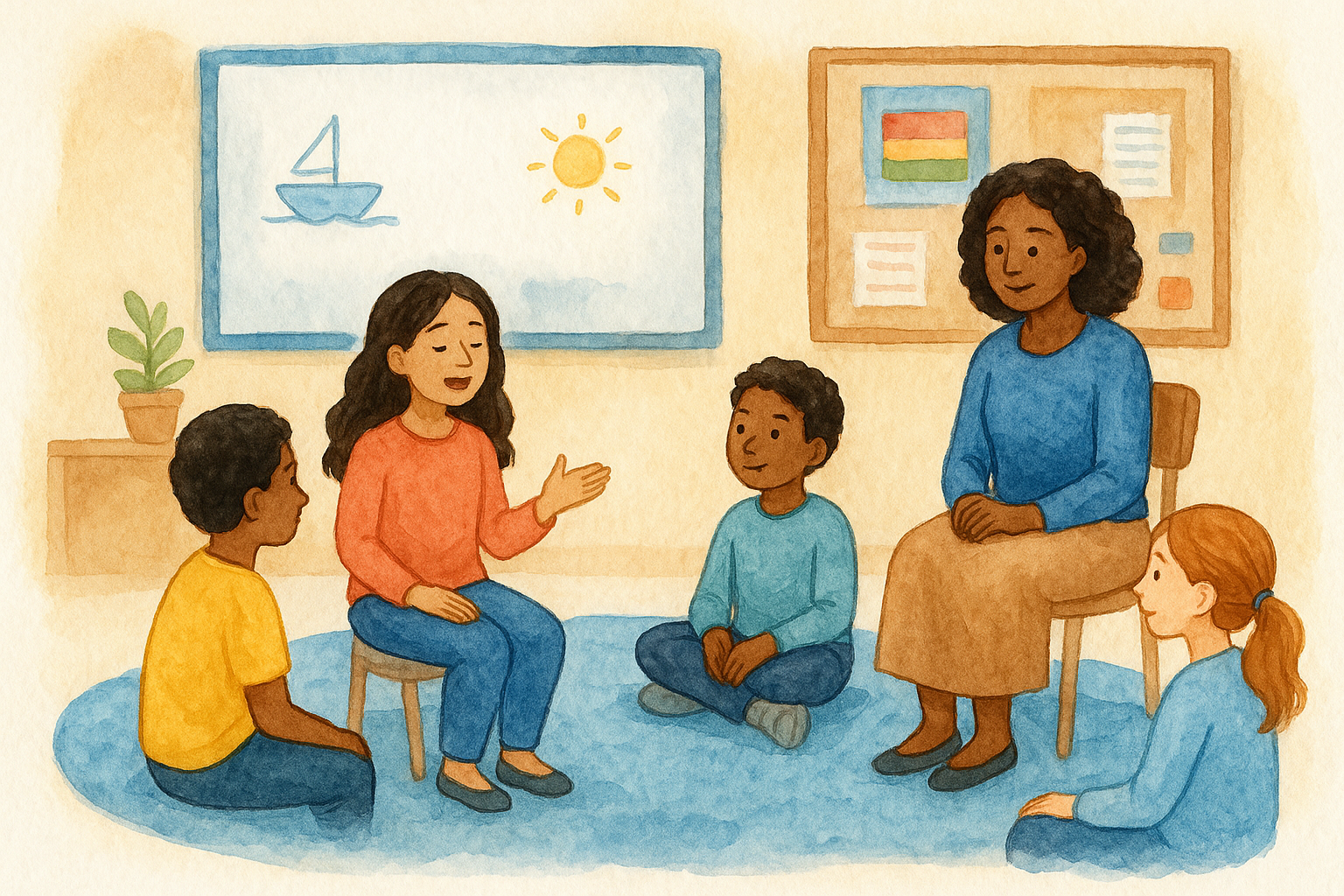
Display materials that reflect your students’ languages, traditions, and communities. When students see their cultural identity acknowledged in classroom visuals, procedures, and examples, they feel legitimate ownership of the learning space. This belonging reduces behavior issues that stem from feeling like outsiders in your classroom.
"The simplest yet most powerful strategy is making space for students to bring their authentic cultural selves into your classroom every single day."
Create Flexible Work Structures
Designate areas of your classroom for different work preferences. Set up quiet individual spaces, collaborative group zones, and standing or floor seating options that accommodate various cultural comfort levels with physical proximity and movement during learning. Students choose locations based on task requirements and personal needs rather than being forced into structures that conflict with their cultural norms.
Allow flexible pacing on assignments when possible. Some cultures emphasize product quality over speed, while others move quickly through tasks. Build in early finish options and extended work time so students can demonstrate learning without cultural time orientation creating artificial barriers to success.
Common mistakes and how to fix them
Even well-intentioned educators stumble when implementing culturally responsive classroom management. You might recognize cultural differences but still fall into patterns that undermine your efforts. These mistakes typically stem from incomplete understanding rather than bad intentions, and awareness of common pitfalls helps you course-correct quickly before they damage student relationships or classroom climate.
Treating Culture as Static Information
You read about a cultural group’s communication norms and then apply that knowledge uniformly to all students from that background. This mistake reduces students to cultural stereotypes rather than recognizing them as individuals whose cultural identity intersects with personality, family values, and personal experiences. A student from a culture known for indirect communication might actually prefer direct feedback based on their family’s specific practices or their own learning preferences.
Fix this by viewing cultural knowledge as a starting point for understanding, not a definitive guide. You observe individual students carefully and ask questions about their personal preferences rather than assuming you know how they’ll respond based on their background. When cultural information conflicts with what you see from a student, trust your direct observation and adjust your approach accordingly. This individualized attention honors both cultural identity and personal uniqueness.
"Cultural knowledge informs your understanding but never replaces the need to know each student as a complete person with individual needs and preferences."
Applying Cultural Responsiveness Only to Behavior Management
You incorporate cultural awareness into discipline decisions but ignore culture when designing instruction, assessment, or curriculum. This narrow focus limits the impact of culturally responsive classroom management because students need cultural validation throughout their learning experience, not just when addressing behavioral issues. Your lesson structures, success criteria, and learning activities must also reflect diverse cultural approaches to knowledge and achievement.
Expand your cultural responsiveness to encompass all classroom elements. Design assessments that allow students to demonstrate knowledge through varied formats that honor different cultural strengths. Structure collaborative work to accommodate both individualistic and collective cultural values. Include content that connects to students’ cultural backgrounds and lived experiences, making learning relevant across diverse perspectives.
Waiting for Perfect Cultural Knowledge Before Acting
You hesitate to implement changes because you fear making mistakes or offending students from cultures you don’t fully understand. This paralysis actually harms students more than imperfect attempts at cultural responsiveness because they continue experiencing a classroom that ignores their cultural identity. Students recognize genuine effort even when you stumble, and they appreciate teachers who try rather than those who avoid cultural conversations entirely.
Start implementing small changes immediately while continuing to learn. You acknowledge gaps in your cultural understanding directly with students, asking for their patience and input as you work to create a more inclusive environment. When you make mistakes, own them quickly, apologize genuinely, and adjust your approach based on feedback. This transparency models the cultural humility that strengthens relationships and builds trust with students and families.
Next steps
You now understand what culturally responsive classroom management looks like in practice and why it matters for student success across diverse backgrounds. The strategies in this guide give you concrete starting points for creating a more inclusive classroom where all students feel culturally validated and ready to learn. Start small with one or two approaches that address your most pressing management challenges, then build momentum as you gain confidence and observe positive changes.
Your growth as a culturally responsive educator continues through ongoing learning and reflection. Pay attention to student responses, seek feedback from families, and adjust your practices based on what you observe in your classroom. When you need additional resources for effective teaching strategies and classroom innovation, explore more practical tools and insights at The Cautiously Optimistic Teacher. Small, consistent changes compound over time, transforming your classroom into a space where every student can thrive.