CHAMPS Classroom Management: Framework, Steps, Examples
You’ve planned an incredible lesson. The materials are ready, the learning objectives are clear, and you’re genuinely excited to teach. Then chaos creeps in, students talking over instructions, unclear about what they should be doing during transitions. Sound familiar? CHAMPS classroom management offers a proactive solution that addresses these challenges before they derail your teaching.
CHAMPS is a framework built on clear expectations and consistent routines, giving students the structure they need to succeed. At The Cautiously Optimistic Teacher, we believe that effective classroom management isn’t about control, it’s about creating environments where learning can actually happen. That’s why tools like CHAMPS align perfectly with our mission to help educators work smarter, not harder.
This guide breaks down the CHAMPS framework step by step, with practical examples and implementation strategies you can use tomorrow. Whether you’re new to teaching or looking to refine your approach, you’ll find actionable insights to transform your classroom climate.
What CHAMPS is and what it is not
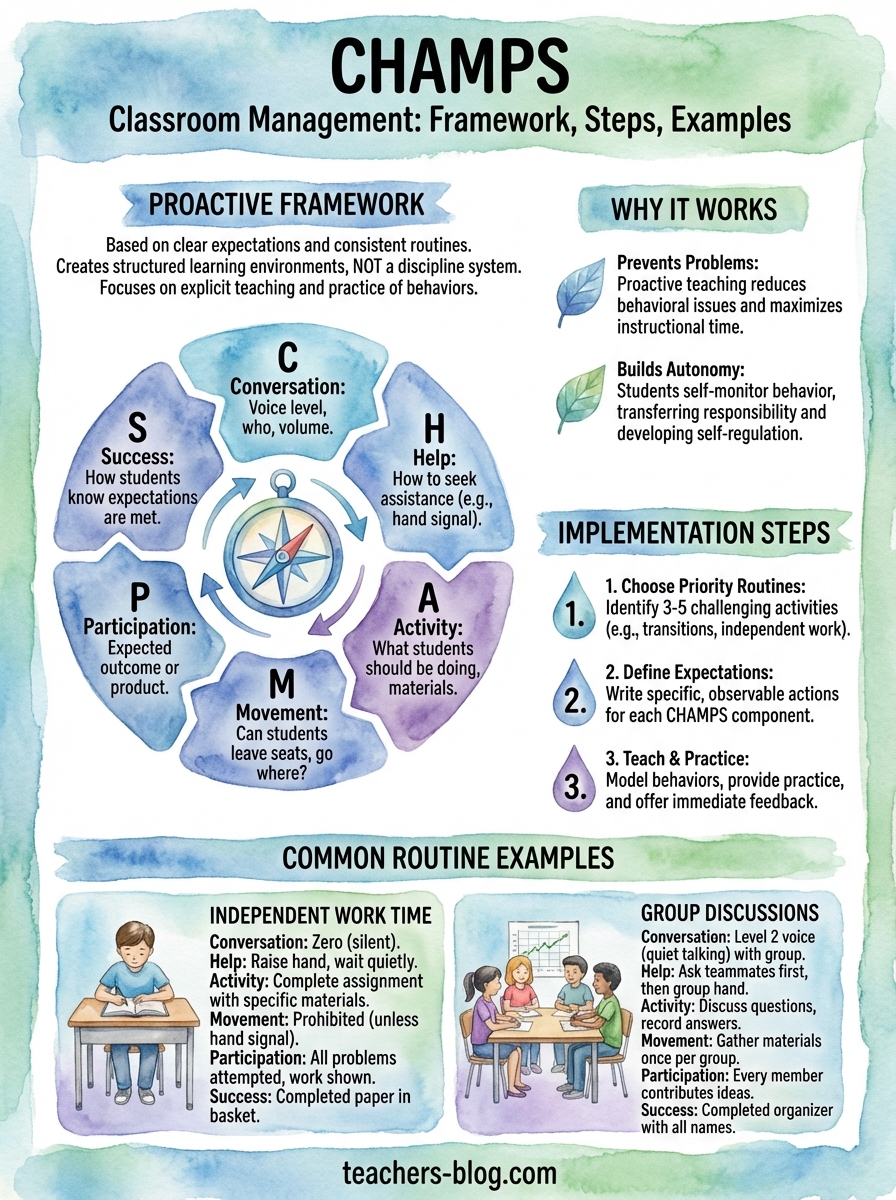
CHAMPS is a structured acronym that helps you define clear behavioral expectations for every classroom activity. Developed by Randy Sprick, it stands for Conversation, Help, Activity, Movement, Participation, and Success. Instead of assuming students know how to behave during independent work or group discussions, you explicitly teach and reinforce these expectations for each routine in your classroom. This proactive approach removes ambiguity and reduces behavioral issues before they start.
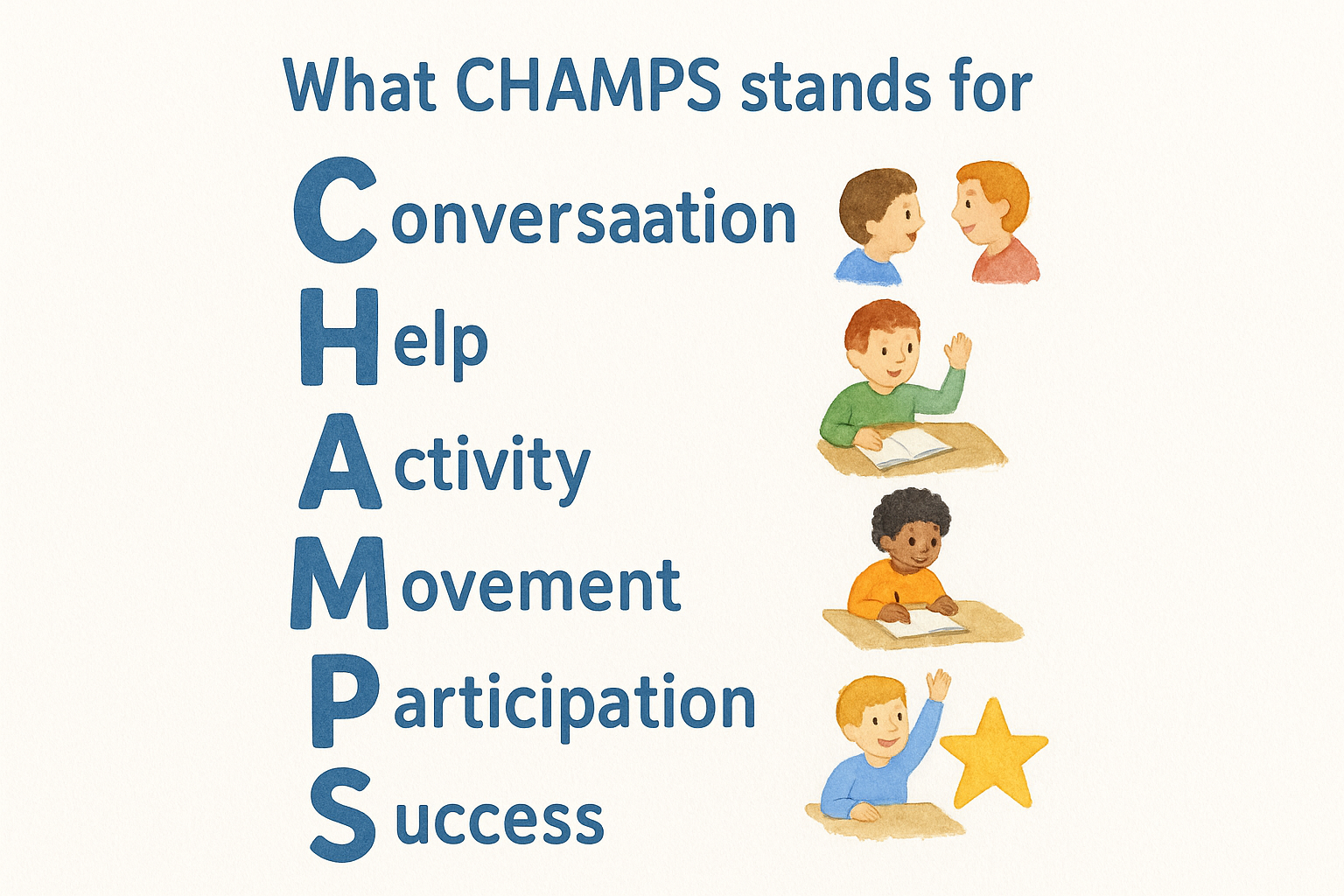
What CHAMPS stands for
Each letter in CHAMPS represents a specific dimension of student behavior you need to clarify. Conversation defines whether students can talk, to whom, and at what volume. Help explains how students should seek assistance without disrupting others. Activity specifies what students should be doing and with what materials. Movement outlines whether students can leave their seats and where they can go. Participation describes what the expected outcome or product looks like. Success clarifies how students will know they’ve met your expectations. When you define all six elements for activities like silent reading, group work, or transitions, students understand exactly what you expect from them.
"Clear expectations eliminate the guesswork that leads to off-task behavior."
What CHAMPS is not
CHAMPS classroom management is not a discipline system or a consequence hierarchy. You won’t find detention slips or reward charts built into the framework. It’s also not a one-time conversation you have on the first day of school. Instead, CHAMPS requires ongoing teaching, practice, and reinforcement of routines throughout the year. Many teachers mistakenly treat it as a poster you hang and forget. The framework only works when you actively use it to model behaviors, correct mistakes positively, and review expectations regularly. Think of CHAMPS as your instructional tool for behavior, not your punishment protocol.
Why CHAMPS works for classroom management
The framework succeeds because it transforms abstract behavioral expectations into concrete, teachable skills. Instead of telling students to "be respectful" or "stay on task," CHAMPS classroom management breaks these vague concepts into specific, observable actions students can actually perform. When you remove ambiguity about what good behavior looks like during each activity, you eliminate the guesswork that causes most disruptions. Students aren’t misbehaving because they’re defiant; they often just don’t know what you want them to do.
It prevents problems before they start
Reactive discipline strategies drain your energy and interrupt instruction. You spend time addressing behavior issues after they’ve already disrupted learning. CHAMPS flips this approach by teaching expectations proactively, just as you would teach academic content. When students know exactly how to transition between activities, seek help without interrupting, or work in groups productively, fewer behavior problems emerge in the first place. This proactive stance reduces your stress and maximizes instructional time.
"Prevention through clarity beats correction through consequences."
It builds student autonomy
Clear expectations help students monitor their own behavior without constant teacher reminders. Once you’ve taught the CHAMPS expectations for independent reading, students can self-assess whether they’re meeting the criteria. This transfers responsibility from you to them, developing the self-regulation skills they need for long-term success. You become a facilitator rather than a behavior enforcer.
How to implement CHAMPS step by step
Implementing CHAMPS classroom management requires intentional planning and systematic teaching rather than spontaneous corrections. You need to identify your most challenging transitions or activities first, then systematically define and teach expectations for each one. This structured approach prevents overwhelm and ensures students master one routine before you move to the next.
Choose your priority routines
Start by identifying three to five classroom activities that currently cause the most disruption or confusion. Common choices include independent work time, group discussions, transitions between subjects, and entering or exiting the classroom. Don’t attempt to create CHAMPS expectations for every activity on day one. You’ll overwhelm yourself and your students. Focus on routines that consume the most instructional time or generate the most behavioral issues.
Define expectations for each letter
Write out specific, observable behaviors for each CHAMPS component for your priority routines. For example, during independent reading, Conversation might be "silent, no talking," Help could be "raise hand and wait quietly," and Movement might be "stay seated unless getting a book." Make your expectations concrete enough that students can demonstrate them immediately.
"Vague expectations produce vague results."
Teach and practice with students
Explain each expectation explicitly, model what it looks like, and have students practice the routine multiple times. Provide immediate corrective feedback when students miss the mark, and acknowledge when they meet expectations successfully.
CHAMPS examples for common classroom routines
Seeing CHAMPS classroom management in action helps you understand how to apply the framework to your specific teaching context. The examples below show complete CHAMPS definitions for two routines that challenge most teachers. You can adapt these templates to match your classroom needs and grade level, changing expectations based on your students’ developmental abilities and your teaching style.
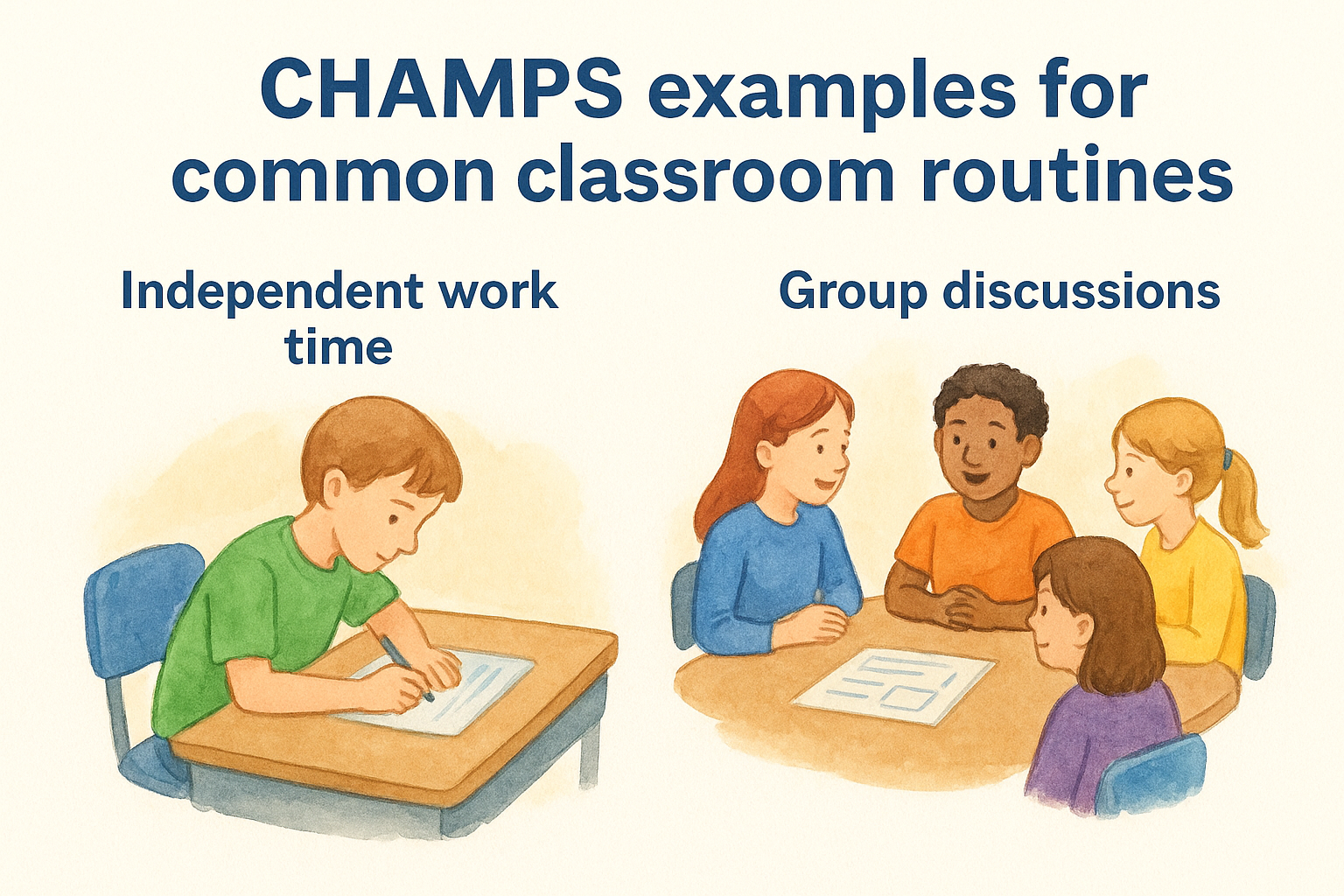
Independent work time
When students work silently on individual assignments, your CHAMPS expectations might look like this: Conversation is zero, students work in complete silence. Help comes from raising a hand and waiting quietly at their desk until you arrive. Activity involves completing the assigned worksheet using pencils and textbooks only. Movement is prohibited unless a student needs to sharpen a pencil, and they use the hand signal you’ve taught. Participation means all problems attempted with work shown for each one. Success looks like a completed paper in the basket before the timer ends.
"Specific expectations eliminate 90% of the ‘I didn’t know’ excuses."
Group discussions
During collaborative activities, expectations shift dramatically. Conversation happens at a level two voice (quiet talking) only with group members. Help first comes from teammates, then students raise a group hand. Activity requires discussing the provided questions and recording answers on the group sheet. Movement allows students to gather materials from the supply station once per group. Participation means every member contributes at least two ideas. Success involves a completed graphic organizer with all names listed.
FAQs, evidence, and practical materials to use
Teachers often ask how to access ready-made materials and whether CHAMPS classroom management has research support. You don’t need to create every expectation chart from scratch, and you should know the evidence base before investing significant time in implementation. This section points you toward official resources and validation studies that strengthen your confidence in the framework.
Where to find official resources
Randy Sprick’s original CHAMPS book provides complete implementation guidance with reproducible forms and templates. You can find it on Amazon along with companion materials like posters and planning sheets. Safe & Civil Schools, Sprick’s organization, offers additional printables and training videos that walk you through each component. Many districts purchase site licenses, so check whether your school already has access before buying materials individually.
"Quality implementation requires quality tools."
Research backing the approach
Multiple studies confirm that clearly defined expectations reduce classroom disruptions significantly. The What Works Clearinghouse recognizes CHAMPS as an evidence-based practice for improving classroom behavior. Research shows schools using the framework consistently report fewer office referrals and more instructional time. The proactive teaching approach aligns with positive behavior intervention frameworks recommended by behavioral scientists nationwide.
Next steps
You now have the complete framework to implement CHAMPS classroom management in your classroom. Start by selecting two or three routines that currently consume the most instructional time or generate frequent disruptions. Define specific expectations for each CHAMPS component, then teach these behaviors as deliberately as you would teach academic content. Practice and reinforcement make the difference between a posted chart and actual behavioral change.
Consistency matters more than perfection. When you notice students slipping from expectations, reteach rather than punish. Your proactive approach builds the structured environment students need to thrive academically and socially. The time you invest in clarifying expectations pays dividends through increased learning time and reduced stress.
Looking for more classroom management strategies to streamline your teaching? Explore our complete collection of tools and resources that help you work smarter. Your students deserve clear expectations, and you deserve a classroom where teaching can actually happen.