
Project Based Learning vs Problem Based Learning Explained
Both strategies put students at the center of learning. Both push kids to think critically, collaborate, and apply knowledge to real situations. So when it comes to project based learning vs problem based learning, why does the distinction matter? Because the two approaches, despite their overlapping initials and shared philosophy, ask students to do fundamentally different things, and choosing the right one can shape an entire unit.
Teachers often encounter these terms used interchangeably in PD sessions, curriculum guides, and education blogs. That’s a problem. When the definitions blur together, it becomes harder to plan with intention and pick the approach that actually fits your classroom goals. At The Cautiously Optimistic Teacher, we build resources that help educators make those decisions clearly, whether that’s a differentiated unit plan or an AI tool that adapts lessons to diverse learners.
This article breaks down both approaches side by side. You’ll get clear definitions, a look at how they differ in scope and duration, where they overlap, and practical examples you can picture in your own classroom. By the end, you’ll have what you need to decide which model works best for your students, or when to use both.
What each approach looks like
Before comparing project based learning vs problem based learning, you need a clear picture of what each one actually looks like in practice. Both models engage students in extended, meaningful work, but the starting point, the process, and the final outcome differ in ways that matter when you’re planning a unit.
Project-based learning
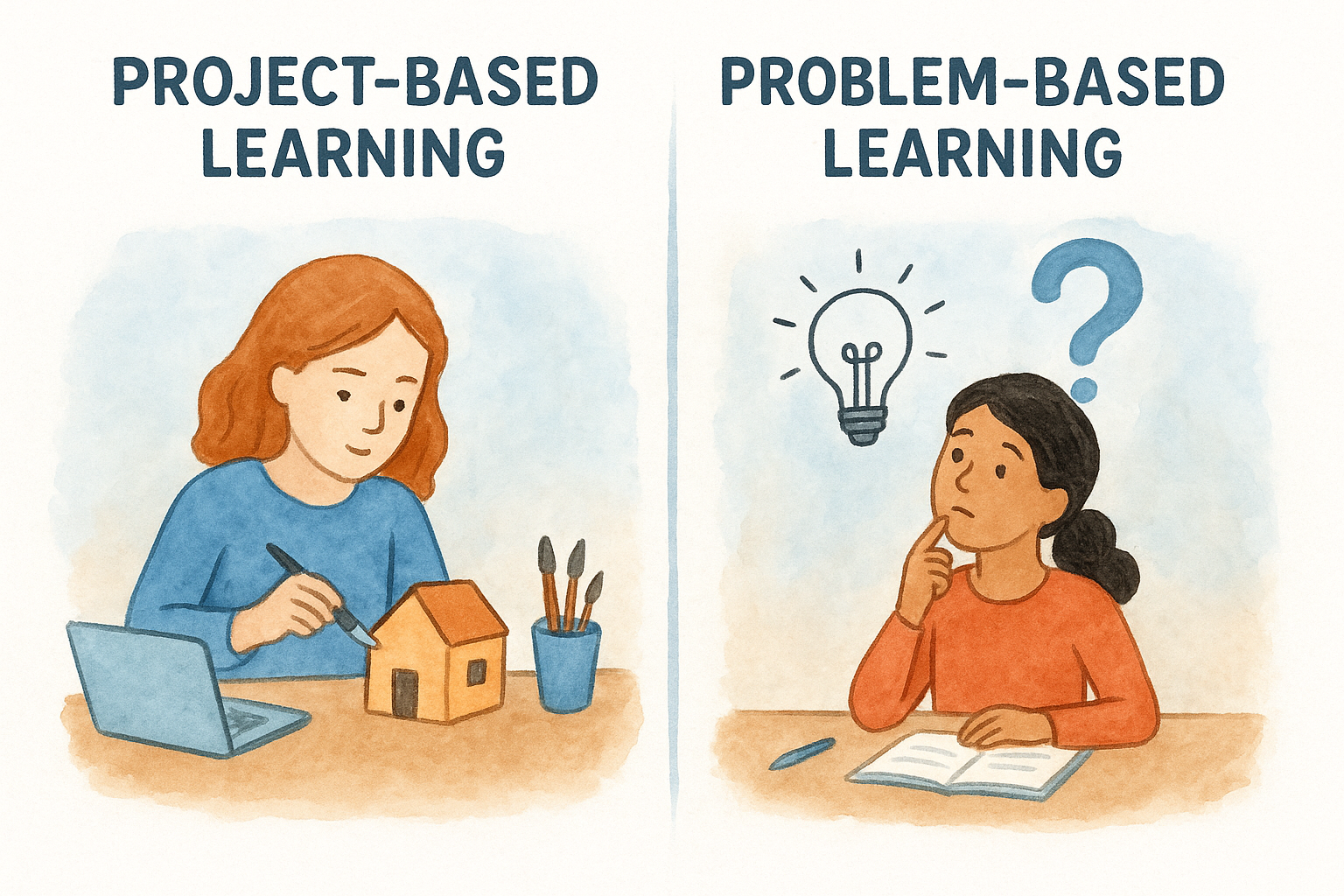
In project-based learning (PBL), students work toward creating a tangible, shareable product in response to a driving question. That product might be a documentary, a public exhibit, a designed prototype, or a written proposal presented to a real audience. The work unfolds over an extended period, often several weeks, and the project itself is the learning, not just a capstone at the end.
The product is not a reward for learning the content. It is the vehicle through which students learn it.
A typical project-based unit might ask students, "How can our city reduce food waste?" Students then research the issue, interview stakeholders, and build a campaign they present to a local organization. The driving question anchors the whole unit, and students build skills in writing, collaboration, and research along the way. The teacher acts as a coach, giving feedback at each stage of the process rather than delivering direct instruction at the front of the room.
Problem-based learning
Problem-based learning also starts with a compelling challenge, but the focus shifts from producing a product to working through a complex problem. Students receive an ill-structured scenario, meaning one without an obvious right answer, and they must investigate, discuss, and reason their way toward a solution. The process of thinking and reasoning is what the teacher assesses, not just a finished deliverable.
A classic example in a science class might involve presenting students with a medical case: a fictional patient with a set of symptoms that students must diagnose and treat. They don’t already know the answer. They use prior knowledge, consult resources, and collaborate with peers to build understanding together. In a social studies class, students might receive a historical conflict with incomplete information and then decide what policy a government should adopt. The scenario is designed to create productive confusion that pushes students to think at a deeper level.
Both approaches share the belief that students learn better by doing, but project-based learning tends to result in something built or made, while problem-based learning tends to result in a decision, recommendation, or reasoned argument. Knowing that distinction helps you choose which one fits the content you’re teaching and the skills you want your students to develop.
Key differences teachers should know
When you look at project based learning vs problem based learning side by side, the differences come down to three areas: how long the work runs, what students produce, and what you actually grade. Knowing these distinctions helps you match the right model to the right unit rather than defaulting to whichever one came up most recently in a PD session.
Scope and duration
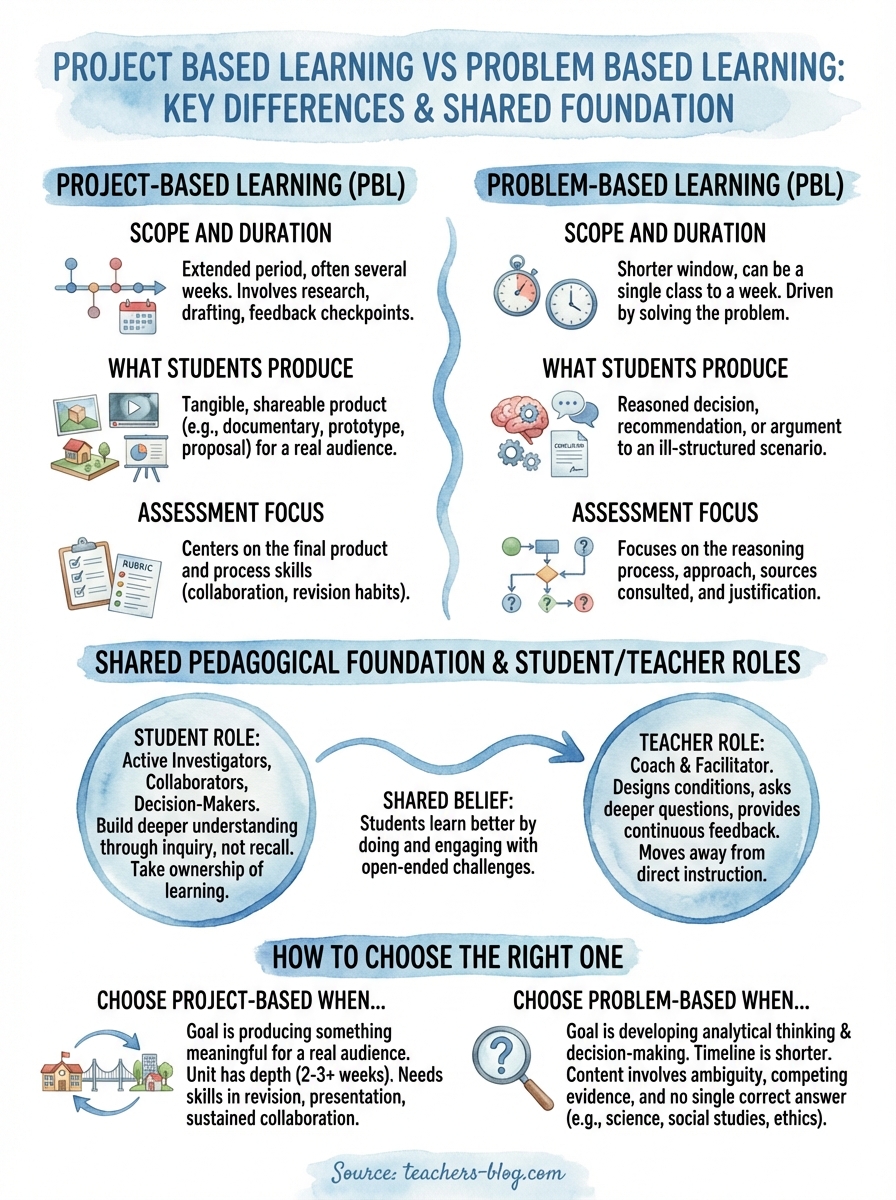
Project-based learning typically runs for several weeks. Students research, draft, revise, and build something substantial, so the timeline includes multiple feedback checkpoints along the way. The extended scope is not optional; it is what allows students to develop and apply skills at a level of depth that shorter tasks rarely reach.
Problem-based learning can work in a much shorter window. Some scenarios unfold over a single class period; others stretch across a week. The problem drives the pacing, and once students reach a reasoned conclusion, the work is complete. This makes problem-based learning easier to slot into an existing unit without redesigning your entire course structure.
Assessment focus
Project-based learning centers assessment on the final product. You evaluate the documentary, the proposal, or the presentation, along with the process skills students demonstrated during the work, such as revision habits and collaboration quality. Your rubric reflects both what students made and how they got there.
A problem-based rubric weights reasoning over results. What matters most is how students thought, not just what they concluded.
Problem-based learning shifts the focus to the reasoning process itself. You assess how students approached the problem, what sources they consulted, and how they justified their thinking, not just the final answer they landed on. That difference in assessment focus changes how you write your rubric from the start, so it is worth deciding which model you are using before you build any evaluation criteria.
Similarities and where they overlap
When teachers debate project based learning vs problem based learning, the conversation often focuses on what separates the two. But understanding where they overlap is just as valuable, because those shared elements tell you what both approaches demand from your students and from you before either one can succeed in your classroom.
Shared pedagogical foundation
Both models operate on the same core belief: students build deeper understanding when they engage with content actively rather than receive it passively. Neither approach works inside a lecture-and-test cycle. Both ask students to grapple with open-ended challenges, connect learning to real-world context, and construct meaning through inquiry rather than recall.
Both approaches treat the learning process as the point, not just a path to a grade.
Student roles and teacher roles
In both models, students take on an active role as investigators, collaborators, and decision-makers. They do not wait to be told what to think. They bring prior knowledge to bear on new situations, work alongside peers, and take ownership of their learning path in ways that traditional instruction rarely demands.
Your role as the teacher shifts in both cases. You move from front-of-room instructor to coach and facilitator. You design the conditions for learning, ask questions that push thinking deeper, and give feedback during the process rather than only at the end. That shift can feel unfamiliar at first, but it is what makes both approaches effective for developing independent thinkers who can handle complexity on their own.
Both models also share a need for structured setup and clear expectations. Students will not thrive in either framework if they do not understand the goal, the process, or how their work will be evaluated. The more clearly you communicate those pieces upfront, the more productive the learning experience becomes for everyone in the room.
How to choose the right one for your class
The choice between project based learning vs problem based learning comes down to three practical factors: your content goals, your available time, and your students’ readiness for extended independent work. Neither model is universally better. Each one fits certain situations more naturally than the other, and knowing those situations makes your planning faster and more confident.
When project-based learning fits better
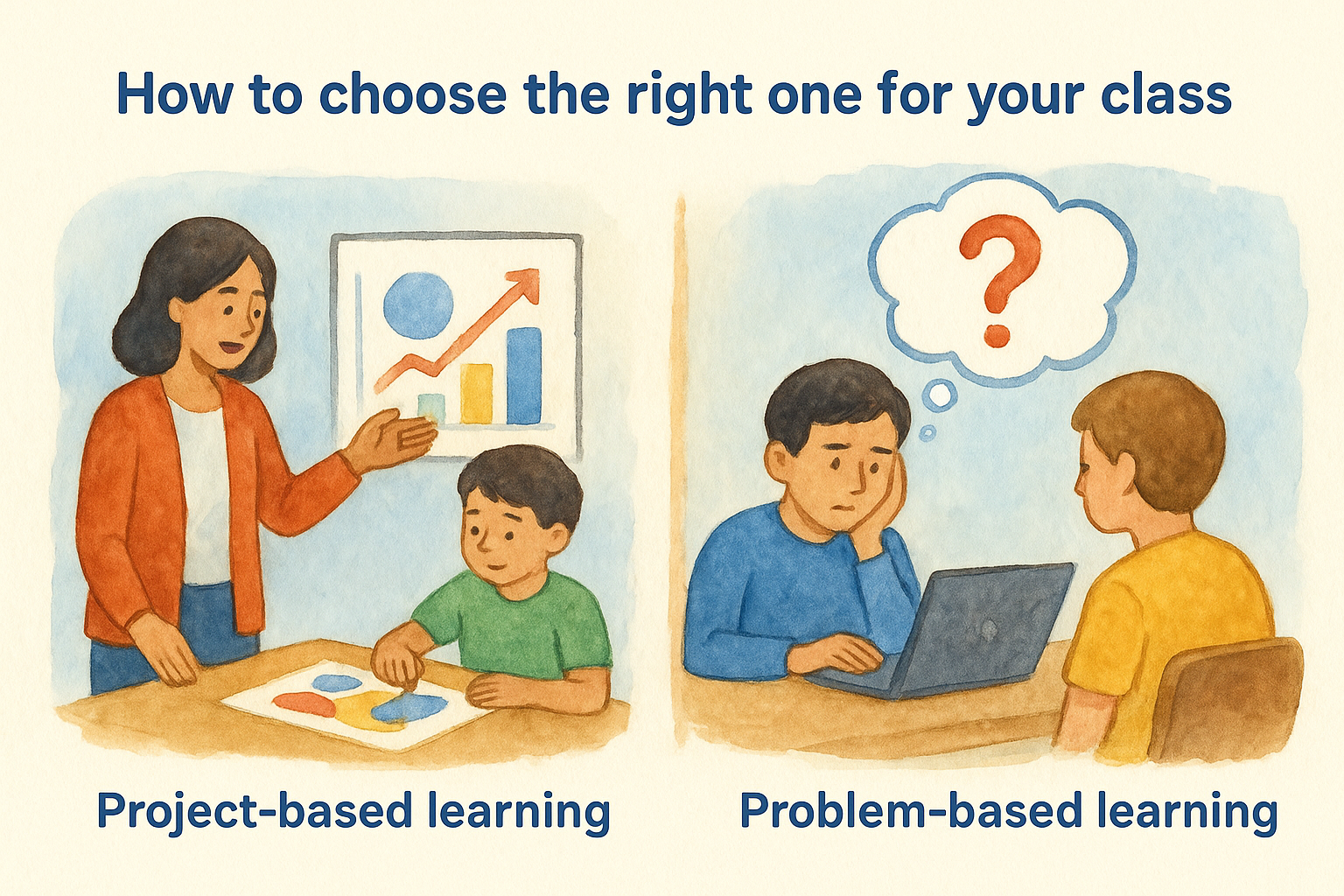
Choose project-based learning when you want students to produce something meaningful that connects to a real audience or community. This model works best when your unit has enough room to breathe, at least two to three weeks, and when your learning goals include skills like revision, presentation, and sustained collaboration. If your standards call for students to research, synthesize information, and communicate findings in a structured format, a project gives them the space to develop all of those skills in one cohesive experience.
If your unit needs both depth and a tangible outcome, project-based learning is the stronger fit.
It also tends to work well when you want to integrate multiple subjects or connect your course to community partners, local organizations, or authentic real-world contexts.
When problem-based learning fits better
Choose problem-based learning when your primary goal is developing analytical thinking and decision-making rather than producing a polished product. This model fits naturally into units where you want students to wrestle with ambiguity, weigh competing evidence, and justify a position or recommendation. It also works well when your timeline is shorter and you need a high-engagement activity that doesn’t require weeks of scaffolding.
Problem-based scenarios are particularly effective in science, social studies, ethics, and law-related contexts, where the content naturally involves competing interpretations and no single correct answer. If your students tend toward surface-level thinking, a well-designed problem scenario can push them to engage with complexity in a way that traditional assignments rarely do.
How to run project and problem based learning
Knowing the difference between project based learning vs problem based learning is a start, but knowing how to actually run each one in your classroom is what makes them work. Both models require intentional design before students ever see the task, and the steps you take in the planning phase determine how smoothly the learning unfolds once it begins.
Running a project-based unit
Start by building your driving question, one that is open-ended, connected to real-world stakes, and specific enough to give students clear direction. From there, map out the milestones your students need to hit: research, drafting, peer feedback, revision, and final presentation. Share that roadmap with students on day one so they understand the full arc of the work ahead of them.
The more clearly students see the path, the more confidently they move through each stage without needing constant redirection.
Check in at each milestone rather than waiting until the final product is due. Frequent feedback loops keep the work on track and give you insight into where individual students are struggling before those problems compound into something harder to address.
Running a problem-based scenario
Begin with a well-constructed ill-structured scenario, meaning a situation that has real complexity and no single correct answer. Medical cases, ethical dilemmas, historical policy decisions, and local community issues all work well. Present the scenario without giving students the solution framework; their job is to build that framework themselves through research and discussion.
Structure the class time so students move through three clear phases: defining what they already know, identifying what they need to find out, and synthesizing that information into a reasoned response. Keep your role in the background during this process. Ask clarifying questions when groups get stuck, but avoid steering them toward a particular answer. The productive struggle is the point, and interrupting it too early undercuts the depth of thinking you are working to build.
Final takeaway
The project based learning vs problem based learning debate does not have a universal winner. Both approaches give students a chance to think critically, collaborate, and engage with content that goes beyond surface-level recall. The right choice depends on what your unit needs: a sustained creative process with a tangible outcome, or a focused reasoning challenge that builds analytical thinking in a shorter window. Neither one works without deliberate planning, clear expectations, and consistent feedback throughout the process.
Start small if either model is new to you. Run a single problem-based scenario in your next unit, or redesign one existing project using a stronger driving question and real audience. Small steps build your confidence and give your students the structure they need to succeed. When you are ready to support that work with tools built for teachers, explore The Cautiously Optimistic Teacher for resources that make both approaches easier to plan and run.