Classroom Management Definition: Key Elements And Examples
You’ve planned a great lesson. Your materials are ready. Then the bell rings, and chaos takes over. Whether you’re a first-year teacher or a veteran educator, understanding the classroom management definition goes beyond simply “keeping kids quiet.” It’s the foundation that makes actual learning possible.
At The Cautiously Optimistic Teacher, we believe effective classroom management isn’t about control, it’s about creating conditions where students can thrive. When you get it right, you spend less time putting out fires and more time doing what you love: teaching.
This article breaks down what classroom management actually means, explores its essential components, and shares practical examples you can implement right away. By the end, you’ll have a clear framework for building a classroom environment that works for both you and your students.
Why classroom management matters
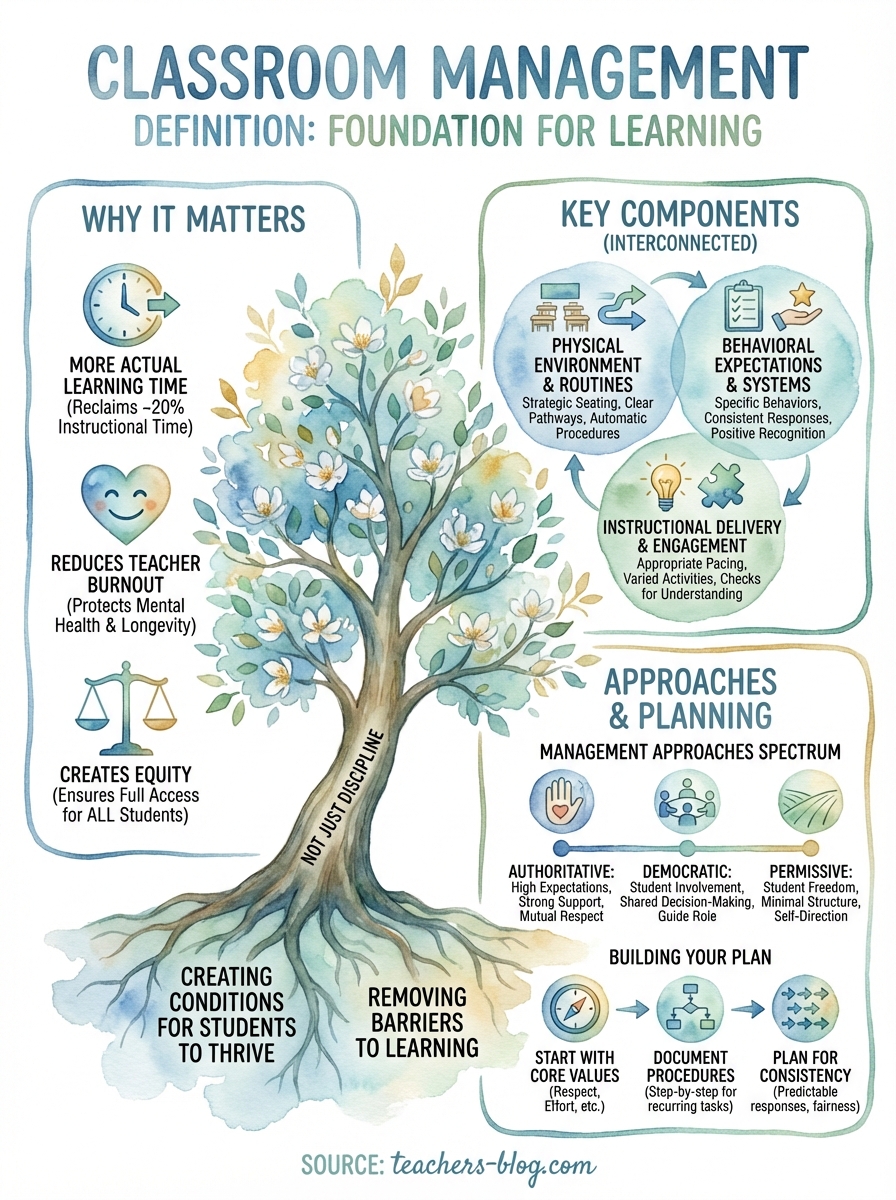
When you walk into a well-managed classroom, you notice the difference immediately. Students know what to do, transitions happen smoothly, and everyone can focus on learning. The classroom management definition extends beyond discipline to encompass the entire learning ecosystem you create. Without it, even your best lessons fall flat because students can’t access them.
Impact on student learning
Your classroom management directly determines how much actual learning happens each day. Research shows that teachers spend an average of 20% of instructional time managing behavior rather than teaching content. When you establish clear systems, you reclaim that time and give every student more opportunities to engage with material. Students who struggle academically need this structure most because they can’t afford to lose learning minutes to preventable disruptions.
Effective classroom management isn’t about discipline. It’s about removing barriers so learning can happen.
Beyond time, management affects cognitive load. Students in chaotic environments use mental energy monitoring their surroundings instead of processing new concepts. Your management decisions shape whether students can concentrate, participate, and retain what you teach. This becomes particularly critical during complex activities like group work or independent practice.
Teacher retention and burnout
Poor classroom management ranks as the top reason teachers leave the profession within their first five years. You can love your content and care deeply about students, but daily stress from unmanaged classrooms drains your energy and enthusiasm. When you spend evenings worrying about the next day’s behavior instead of planning engaging lessons, your career sustainability suffers.
Strong management systems protect your mental health and longevity in education. Teachers who develop effective practices report higher job satisfaction and lower stress levels. You deserve to finish your workday feeling accomplished rather than defeated, and solid management makes that possible.
Creating equity in the classroom
Your management approach determines which students get full access to learning. Inconsistent or reactive management often disadvantages students who need structure most, including those with ADHD, trauma histories, or limited school experience. When you build proactive systems, you create predictability that helps all learners succeed regardless of their background.
Management also influences which students receive your attention. Without clear systems, you spend disproportionate time addressing disruptions, which means quieter students who need help often go unnoticed. Equitable management ensures every student gets the support and instruction they deserve, not just the loudest ones.
What classroom management includes
The classroom management definition encompasses three interconnected dimensions that work together to create a productive learning space. You need to address physical organization, behavioral systems, and instructional design simultaneously because weakness in one area undermines the others. Understanding these components helps you build comprehensive strategies rather than reacting to individual problems as they arise.
Physical environment and routines
Your classroom’s physical setup either supports or sabotages learning. Strategic seating arrangements determine which students can focus and which get distracted, while clear pathways prevent unnecessary contact and movement conflicts. You control access to materials, visibility of instructional displays, and designated spaces for different activities.
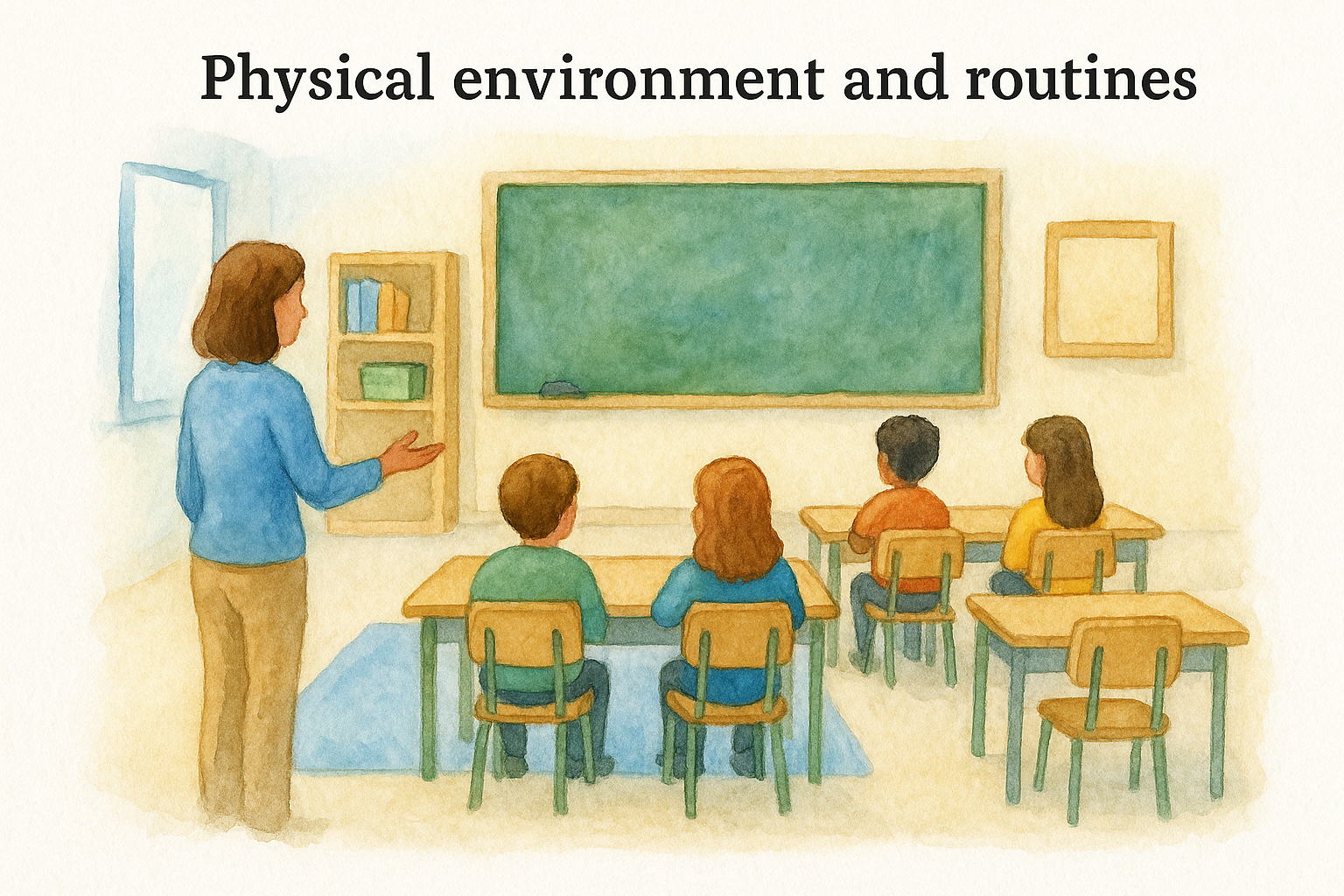
Routines transform recurring tasks into automatic behaviors. When you establish procedures for entering class, distributing materials, transitioning between activities, and submitting work, students spend cognitive energy on learning instead of figuring out logistics. These routines save 10-15 minutes daily that would otherwise vanish in confusion and questions.
Behavioral expectations and systems
Clear expectations define what success looks like in your classroom. You communicate specific behaviors rather than vague requests like “be respectful,” and you model these expectations through direct instruction. Your system includes both positive recognition for meeting standards and consistent responses when students fall short.
Strong behavioral systems prevent problems rather than just punishing them.
Instructional delivery and engagement
Your teaching methods serve as primary management tools. Lessons paced appropriately for your students, frequent checks for understanding, and varied activities reduce off-task behavior because students stay engaged. You differentiate instruction so both struggling and advanced learners find appropriate challenge levels, which eliminates frustration and boredom that typically trigger disruptions.
Classroom management examples by situation
The classroom management definition becomes concrete when you see how strategies apply to specific daily scenarios. You face dozens of micro-decisions each period, and your responses to these moments determine whether your classroom runs smoothly or descends into chaos. Looking at practical examples helps you develop instincts for handling common situations effectively.
Managing transitions
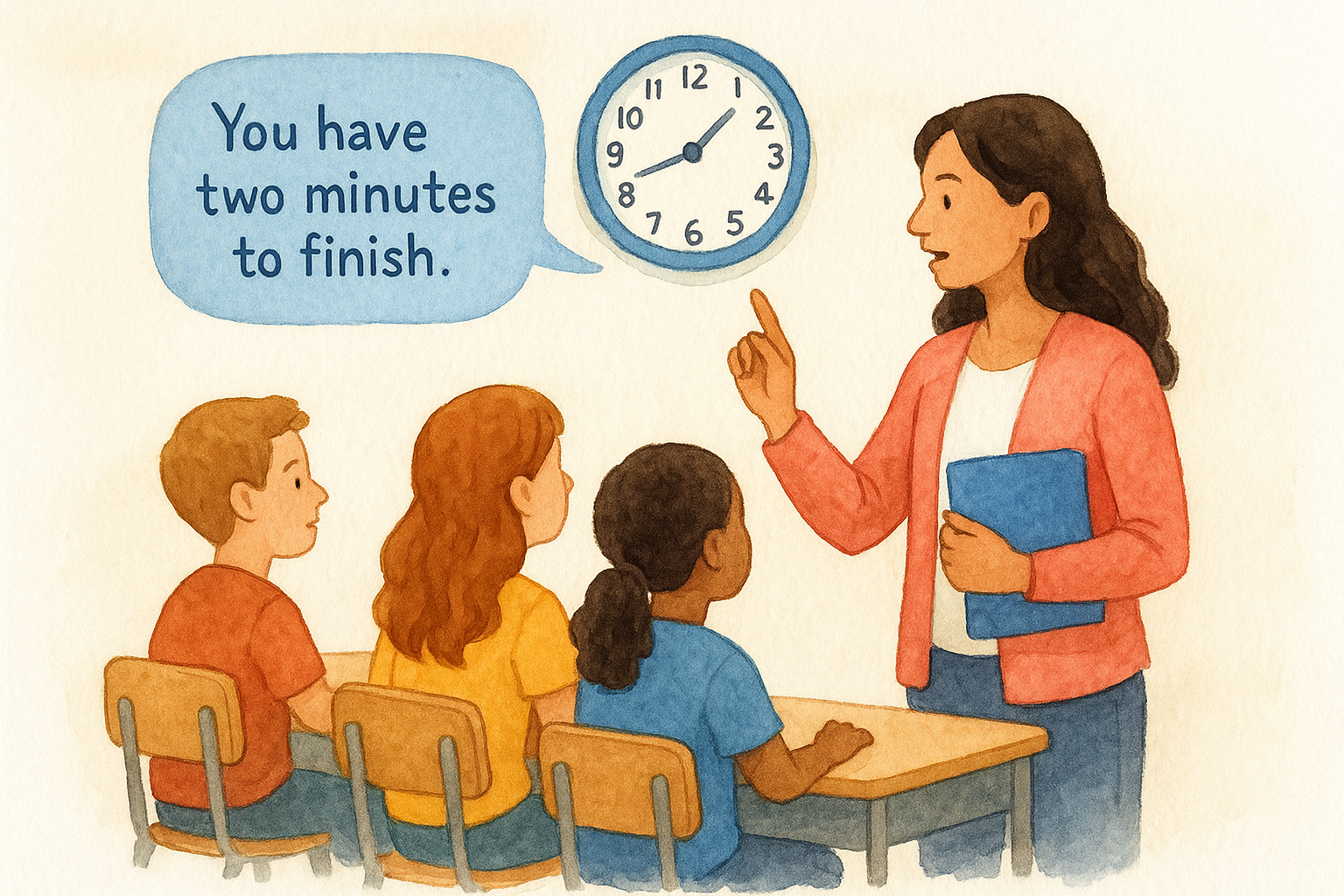
Transitions between activities create prime opportunities for disruption. You prevent problems by announcing changes with clear time warnings (“You have two minutes to finish”) and specifying exact expectations (“Close your laptops, push in your chairs, and line up silently”). Strong teachers use consistent audio or visual signals like a chime or countdown timer that students recognize immediately.
Smooth transitions happen when you plan them as carefully as your lesson content.
During passing periods, you position yourself at the door to greet students and scan for potential issues. This proactive presence stops hallway conflicts from entering your space.
Handling disruptions
When two students start talking during independent work, you address it through graduated responses rather than immediate consequences. First, you make eye contact and use a hand signal. If that fails, you move closer to their desks while continuing to teach. Your proximity often resolves the issue without verbal intervention that disrupts others.
For persistent problems, you speak privately with students during the next transition rather than creating a public confrontation. This approach maintains their dignity while addressing the behavior.
Supporting independent work
Students struggle with sustained focus during solo tasks without proper scaffolding. You break long assignments into smaller checkpoints with specific time limits, allowing students to request help at designated moments. Your strategic circulation pattern lets you monitor progress, answer questions quietly, and redirect students before frustration builds into disruption.
Types of classroom management approaches
The classroom management definition takes different forms depending on your philosophical stance and teaching context. You choose from several established approaches, each with distinct power dynamics, decision-making processes, and expectations for student behavior. Understanding these frameworks helps you select strategies that align with your values while meeting your students’ needs.
Authoritative approach
This approach balances high expectations with strong support systems. You set clear boundaries and enforce them consistently while explaining the reasoning behind rules. Students know exactly what you expect, and you provide resources and encouragement to help them meet those standards. Your classroom operates like a structured community where students have input but you maintain final authority.
The authoritative approach works because it combines structure with respect for student dignity.
Teachers using this model experience fewer disruptions because students understand both the rules and why they matter. You build mutual respect rather than relying on fear or blind compliance.
Democratic approach
Democratic classrooms involve students in creating rules and solving problems. You facilitate discussions where students propose expectations, negotiate conflicts, and take ownership of classroom culture. This approach develops student leadership and critical thinking because learners practice decision-making regularly. Your role shifts from rule-enforcer to guide who helps students navigate challenges collaboratively.
Permissive approach
Permissive management prioritizes student freedom and self-direction over external control. You provide minimal structure, allowing students to choose activities and manage their own behavior. This approach assumes students will naturally engage when given autonomy, which works well with highly motivated learners but struggles with students who need clear boundaries. You intervene only when safety becomes an issue.
How to build your classroom management plan
Building an effective management plan requires intentional design rather than reactive problem-solving. You need a written framework that guides your daily decisions and helps you respond consistently to recurring situations. The classroom management definition becomes actionable when you translate principles into specific procedures you can implement immediately.
Start with your core values
Your management plan must reflect what matters most to you as an educator. You identify three to five non-negotiable values like respect, effort, or responsibility that will anchor all your decisions. These values shape which behaviors you prioritize, how you recognize success, and where you invest your energy when problems arise.
Write explicit connections between each value and observable student behaviors. For example, if you value “respect,” you define what that looks like when students enter the room, participate in discussions, or disagree with peers.
Document procedures and routines
Create step-by-step instructions for every recurring activity in your classroom. You write procedures for morning routines, material distribution, group work transitions, emergency drills, and end-of-class cleanup. These documents serve as training materials for students and substitutes while keeping your expectations consistent across weeks.
Written procedures eliminate confusion and give students clear pathways to success.
Plan for consistency
Your plan includes decision trees for common discipline situations so you respond predictably rather than emotionally. You outline specific consequences for different infractions, ensuring fairness across all students. This consistency builds trust because students know exactly what to expect from you regardless of your mood or the situation’s timing.
Next steps for your classroom
Understanding the classroom management definition gives you the foundation, but implementation determines your results. You start by choosing one specific area to improve this week, whether that’s tightening your transition procedures, clarifying behavioral expectations, or redesigning your physical space. Small, consistent changes create bigger impact than trying to overhaul everything at once.
Document what works and what doesn’t as you experiment with different strategies. Your students will tell you through their behavior whether a system needs adjustment, and you should treat this feedback as valuable data rather than personal failure. The best classroom managers continuously refine their approach based on real classroom results.
Ready to take your teaching to the next level? The Cautiously Optimistic Teacher offers practical resources, AI-powered tools, and proven strategies to help you build the classroom environment you’ve been working toward. Your students deserve your best teaching, and that starts with strong management systems.