
Benefits Of Curriculum Design: 9 Ways It Improves Teaching
Most teachers have experienced the difference between walking into a class with a clear plan and walking in without one. That gut-level contrast scales up dramatically when you zoom out from a single lesson to an entire course. The benefits of curriculum design go far beyond having a nice binder on your shelf, they shape how students learn, how engaged they stay, and how effectively you can actually teach day after day.
At The Cautiously Optimistic Teacher, we build resources, unit plans, lesson templates, AI tools, that all rest on one assumption: good teaching starts with good design. Whether you’re structuring a literature unit or mapping out an essay writing sequence, the intentional choices you make at the curriculum level ripple into every classroom interaction. That’s not theory. It’s something we see reflected in the work teachers do with our materials every week.
This article breaks down nine specific ways that thoughtful curriculum design improves teaching. You’ll see how it strengthens instructional alignment, boosts student engagement, reduces daily planning stress, and gives you a framework that actually holds up when things get unpredictable. If you’ve been building lessons one at a time without a bigger structure underneath them, this is your case for changing that approach.
Why curriculum design matters in real classrooms
When teachers plan lessons in isolation, each class becomes a standalone event disconnected from what came before and what comes next. Students notice this, even if they can’t name it. They feel the absence of a logical thread, and their engagement drops as a result. Curriculum design creates that thread. It turns a collection of activities into a sequence that builds on itself, where each lesson reinforces prior knowledge and sets up the content that follows.
When there is no design, students feel it
Teachers who improvise regularly are not bad teachers. Many of them are experienced and skilled. But without a structured curriculum framework, even skilled instruction gets fragmented. Students who struggle with transitions between topics are often dealing with a design problem, not a comprehension problem. The confusion you see on their faces during review week is frequently a signal that the sequence never made sense to begin with, not that the content was too hard.
When curriculum lacks intentional sequencing, students spend more cognitive energy figuring out what they are supposed to be learning than actually learning it.
Design aligns what you teach with what you assess
One of the most practical benefits of curriculum design is alignment. When you build your assessments before you build your lessons, you ensure that every activity points toward the same outcome. This approach, often called backward design, prevents the common situation where a unit test covers things students were never explicitly taught. That kind of misalignment erodes student trust and wastes instructional time that you cannot get back.
Your pacing also becomes more intentional. Without a designed framework, it is easy to spend three days on a topic that needed one and then rush through something that needed three. A clear curriculum map keeps your priorities visible and prevents the drift that quietly derails well-intentioned units.
Structure reduces your daily cognitive load
Teaching already demands constant decision-making. When your curriculum is well-designed, you remove a layer of daily planning stress from the equation. You walk into class knowing not just what you are teaching today, but why today’s content matters within the larger sequence. That clarity changes how you present material. Good design frees up mental space for the responsive, in-the-moment teaching that actually requires human judgment and cannot be scripted in advance.
Nine benefits of curriculum design for teachers
The benefits of curriculum design show up across every layer of your work, from how you plan your week to how your students perform on assessments. Below are nine specific ways that intentional curriculum design improves teaching, each one grounded in what actually happens in classrooms.
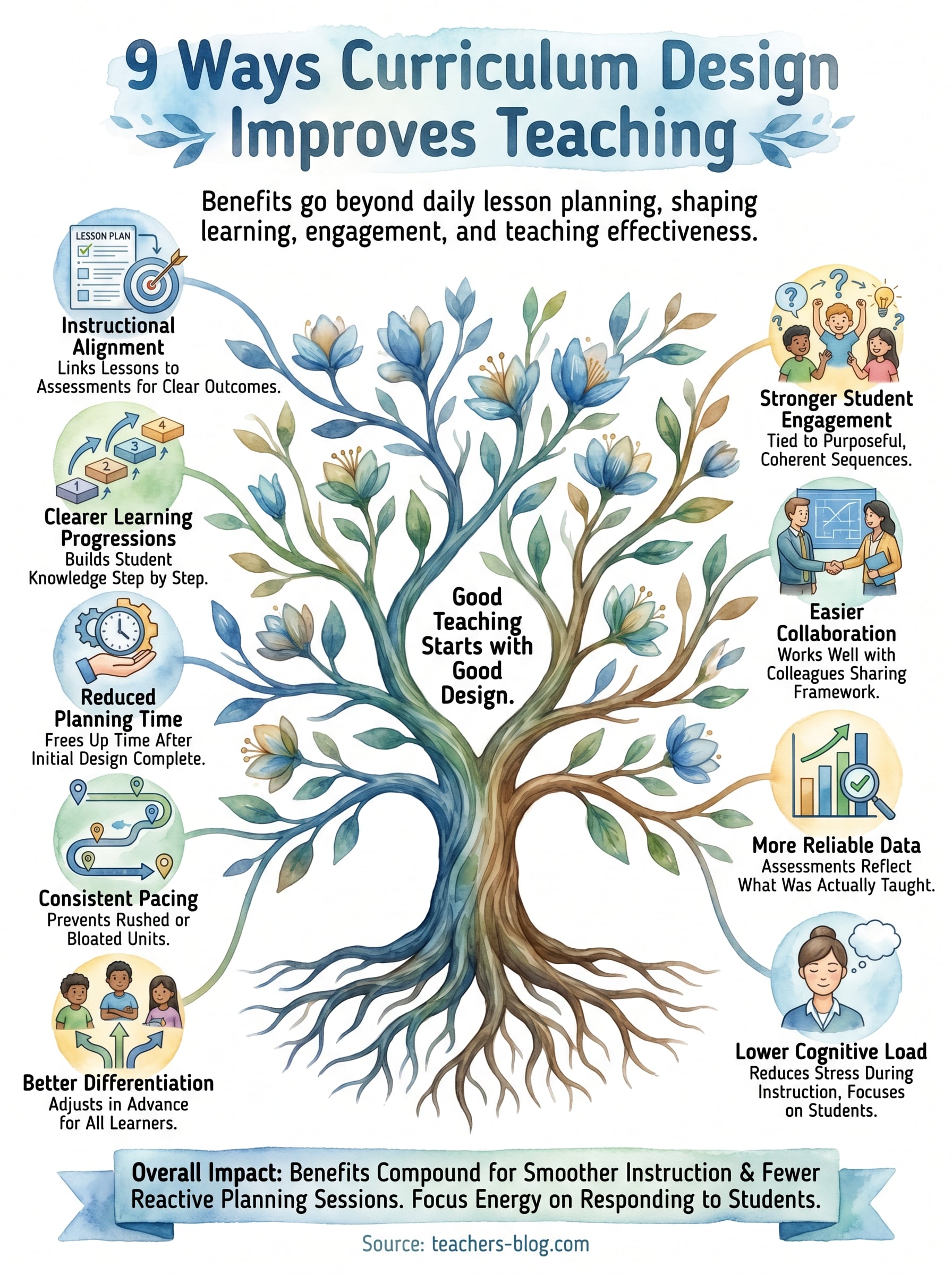
- Instructional alignment between lessons and assessments
- Clearer learning progressions that build student knowledge step by step
- Reduced planning time after the initial design is complete
- Consistent pacing that prevents rushed or bloated units
- Better differentiation because you can see the full scope and adjust in advance
- Stronger student engagement tied to coherent, purposeful sequences
- Easier collaboration with colleagues who share the same framework
- More reliable data from assessments that reflect what you actually taught
- Lower cognitive load during instruction so you can focus on student needs
A well-designed curriculum turns your energy toward responding to students, not scrambling to figure out what comes next.
Why these benefits compound over time
Most of these gains reinforce each other. When your alignment is strong, your assessment data becomes more useful. When your pacing is consistent, your differentiation gets easier to manage. Each improvement you make to your curriculum design creates conditions where the next improvement costs less effort and delivers more return. You are not just building one good unit; you are building a system that makes every unit better. Teachers who invest in curriculum design early in the year consistently report smoother instruction and fewer reactive planning sessions throughout the rest of the semester.
How to design a curriculum that delivers
Knowing the benefits of curriculum design is useful, but putting those benefits to work requires a clear, repeatable process. Most teachers who struggle with curriculum design don’t lack creativity; they lack a structured approach that produces coherent results across every unit they build. The good news is that strong curriculum design comes down to a few consistent steps you can apply right now.
Start with your end goals
Before you write a single lesson, identify what students should know and be able to do by the end of the unit. Backward design, developed by educators Grant Wiggins and Jay McTighe, asks you to define desired outcomes first, build your assessments second, and plan your instruction last. That order matters because it keeps every activity connected to a specific, measurable purpose rather than filling instructional time without direction.
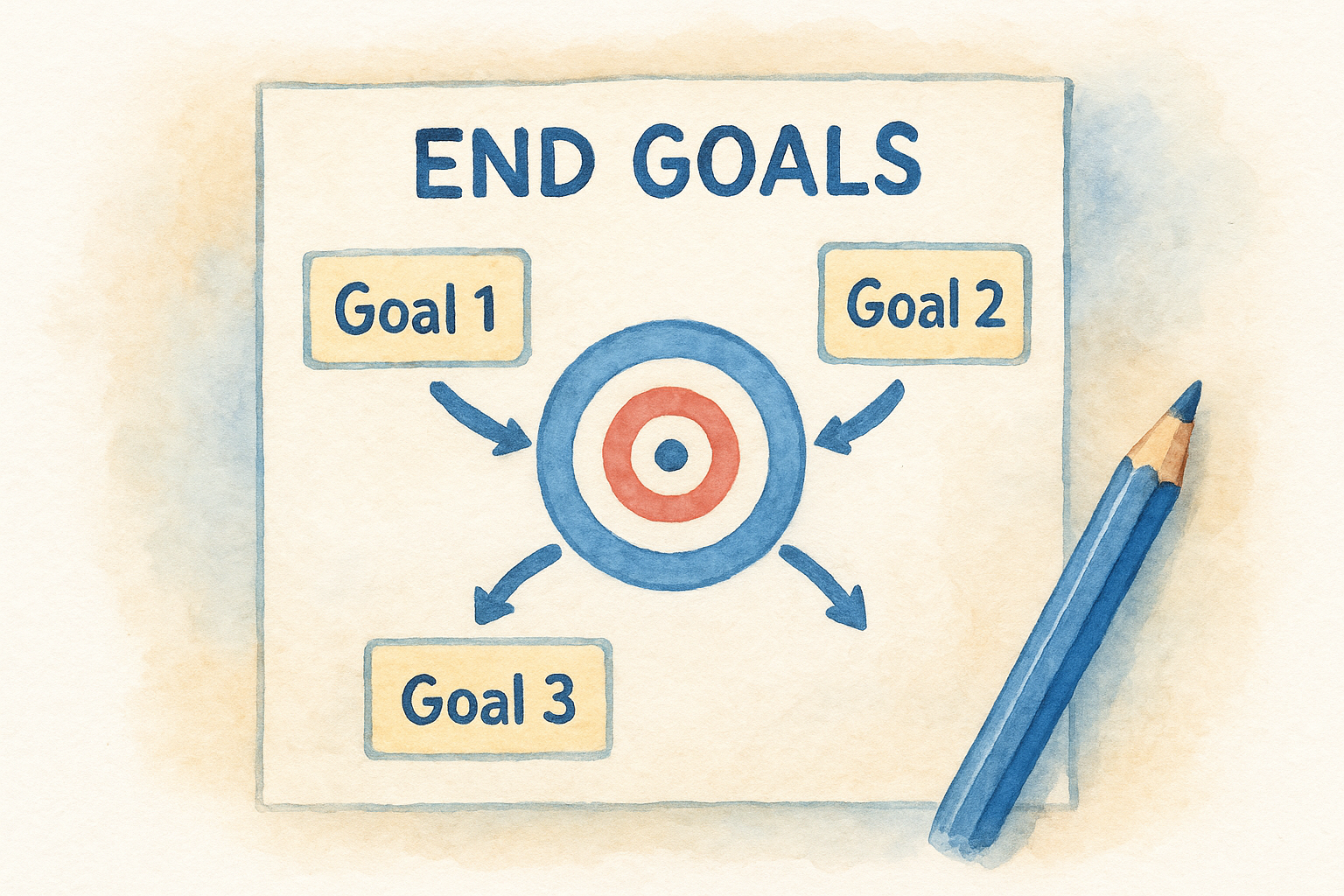
- Define 2 to 4 learning goals for the unit before anything else
- Write or select your summative assessment based on those goals
- Map your daily lessons backward from the assessment to day one
When your instruction is built backward from evidence of learning, every lesson has a clear reason to exist.
Build in flexibility from the start
A rigid curriculum breaks the moment something unpredictable happens, and unpredictable things always happen in real classrooms. Leave buffer days in your unit map and identify which lessons are load-bearing versus which ones can be condensed or cut without damaging the learning sequence. That intentional flexibility is not a sign of weak design; it is proof that your design was built to survive contact with reality.
Schedule one review checkpoint in the middle of your unit to assess whether the pace and sequence are working as intended. That checkpoint gives you real data to adjust from before the unit ends.
Common curriculum design mistakes to avoid
Even when teachers understand the benefits of curriculum design, certain patterns consistently undermine the work. Knowing what to avoid is just as valuable as knowing what to build. These mistakes are common enough that you have likely run into at least one of them already.
Designing lessons before defining outcomes
The single most damaging mistake is building activities before you know what learning they should produce. When you start with an interesting lesson idea instead of a learning goal, you end up with engaging classes that don’t connect to anything measurable. Students enjoy the activity but cannot transfer the skill because nothing was designed to build toward transfer in the first place. Write your outcomes before you write a single lesson plan.
The order in which you design your curriculum determines the quality of the learning it produces.
Treating your curriculum as finished
A completed curriculum map is not a static document. When you lock it in and refuse to revise it based on what you observe, you lose the feedback loop that makes curriculum valuable over time. Classrooms change, student needs shift, and content standards get updated. Build in a review cycle, whether that is once per semester or once per year, and treat revision as part of the design process rather than a sign that the original work failed.
Skipping collaborative input
Designing curriculum alone means you are working without a check on your blind spots. A colleague who teaches the same course can catch sequencing gaps, pacing problems, and assessment misalignments you will not see on your own. Even one review conversation before a unit launches is worth the time.
Curriculum design FAQs teachers ask
Teachers ask similar questions when they first start thinking seriously about the benefits of curriculum design. The answers below address the ones that come up most often.
What is the difference between curriculum design and lesson planning?
Lesson planning works at the level of a single class period. Curriculum design works at the level of an entire course or unit, defining the sequence, the outcomes, and the assessments before individual lessons exist. You need both, but curriculum design comes first because it gives every lesson plan its purpose and direction.
Lesson plans tell you what to do today; curriculum design tells you why today matters in the bigger picture.
How long does curriculum design actually take?
The initial build takes longer than a typical lesson plan, but the ongoing time cost drops significantly once your framework is in place. Most teachers report spending a few focused hours designing a solid unit framework, then much less time on each subsequent revision. Front-loading that design work pays off in reduced daily planning throughout the year.
Can I use AI tools to help with curriculum design?
Yes, and many teachers already do. AI tools can help you generate learning objectives, draft assessment questions, and create differentiated materials based on your existing unit goals. They work best when you have already defined your outcomes, because the tool needs that direction to produce useful output. Think of AI as a drafting assistant rather than a replacement for the design decisions that only you can make for your specific students.
A simple way to get started this week
You don’t need to redesign your entire course to start capturing the benefits of curriculum design. Pick one upcoming unit and spend 30 minutes writing two to four clear learning goals before you touch a single lesson plan. Then draft the summative assessment you would use to measure those goals. That two-step sequence shifts your design process from activity-first to outcome-first, and that shift is where most of the value lives.
From there, work backward and map your lessons to the assessment you already wrote. Each class period now has a reason to exist, and your planning decisions become faster because you have a filter to run them through. When you’re ready to dig deeper into tools and resources that support this kind of structured, intentional teaching, The Cautiously Optimistic Teacher has everything you need to build curriculum that actually holds up in the classroom.