
Standards Based Grading Proficiency Scales Explained
A student gets a 78% on a test. What does that actually tell you about what they know? Not much. That frustration is pushing more schools toward standards based grading proficiency scales, a system that ditches vague percentages in favor of clear descriptions of what students can actually do at each level of understanding.
Instead of reducing learning to a single letter grade, proficiency scales break mastery into observable, measurable steps. Whether your school uses a 1–4 scale, a 0–5 model, or something in between, the core logic stays the same: define what proficiency looks like, then assess students against that target rather than against each other or an arbitrary point total.
Here at The Cautiously Optimistic Teacher, we create resources that help educators teach more effectively and assess more meaningfully, from differentiated unit plans to AI-powered tools that save you time on the administrative side. This article breaks down how proficiency scales work, what the most common models look like, how they compare to traditional grading, and how to start implementing them in your own classroom.
What proficiency scales mean in standards-based grading
A proficiency scale is a structured description of student performance tied directly to a specific learning standard. Rather than measuring how many points a student earned, it measures where that student lands on a defined progression from beginning understanding to deep mastery. Every level on the scale has a written descriptor, so both you and your students know exactly what each score represents.
How scales connect to specific learning standards
In standards based grading proficiency scales, each scale is built around one standard, not a unit or a course. If your standard asks students to analyze how an author’s word choice shapes meaning, your scale describes what that analysis looks like at each performance level. Level 1 might mean a student can identify word choice with prompting, while Level 4 means the student independently explains how specific word choices affect tone, mood, and reader interpretation.
Tying each scale directly to a standard forces you to get specific about what mastery actually looks like before you ever grade a single assignment.
The difference between a score and a label
One thing that trips teachers up early on is treating scale levels like traditional number grades. A "3" on a proficiency scale does not mean 75%. It means the student met the standard as you defined it. The numbers are labels for descriptions, not points on a 100-point scale.
This distinction matters because it changes how you interpret and communicate results to students and families. A student who earns a 3 has demonstrated clear, consistent understanding of the target. That means something specific and actionable, not a vague sense of general performance that a letter grade would leave you guessing about.
Why proficiency scales make grades clearer and fairer
Traditional grades bundle together assignment completion, behavior, extra credit, and actual content knowledge into one number. That number tells you very little about what a student truly understands. Proficiency scales separate those elements, so every score communicates one specific thing: where the student stands on a defined learning target.
Grades that students can actually use
When a student gets a "C," that grade rarely tells them what to fix. A proficiency scale score gives them a specific level description they can read and act on. If they scored a 2, they know exactly what a 3 requires, and that clarity drives more targeted effort than a vague letter grade ever could.
Descriptive feedback tied to a scale level gives students a roadmap, not just a report card.
Fairness across different students
Standards based grading proficiency scales remove the inconsistency that comes from grading on a curve or factoring in effort. Every student’s score reflects the same defined criteria, so a 3 in one classroom carries the same meaning as a 3 in another. That consistency makes grading fairer for students and more transparent for families.
Common proficiency scales and what each level means
Schools use several different scale models, but most standards based grading proficiency scales share the same logic: each level describes a specific stage of mastery. Knowing the most common formats helps you choose one that fits your classroom and communicate it clearly to students and families.
The 1–4 scale
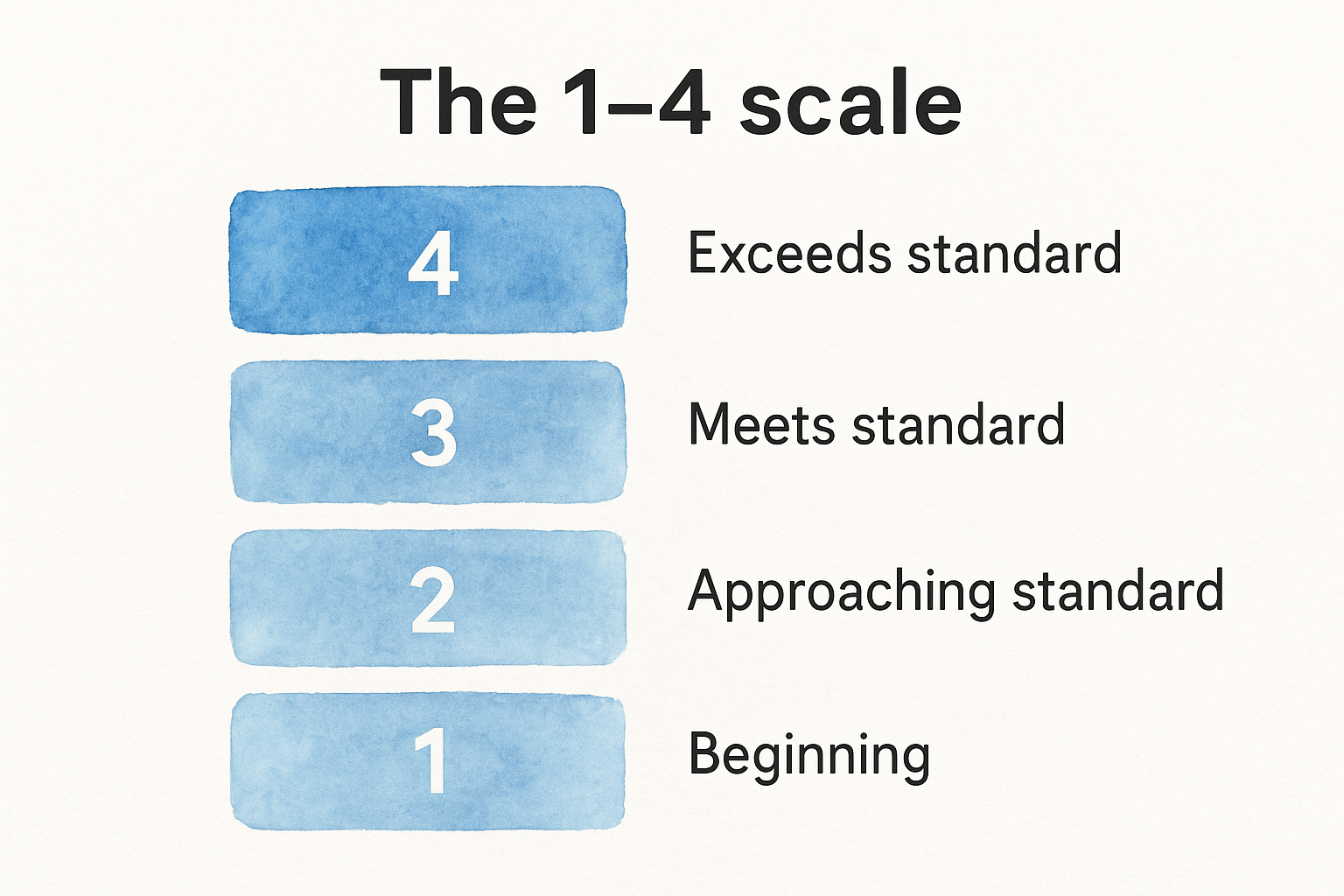
The 1–4 scale is the most widely used model in standards-based grading. Here is what each level typically means:
| Score | Label | What it means |
|---|---|---|
| 4 | Exceeds standard | Student extends understanding independently |
| 3 | Meets standard | Student demonstrates consistent mastery |
| 2 | Approaching standard | Student shows partial understanding |
| 1 | Beginning | Student needs significant support |
A score of 3 is the target, not a fallback; it means the student fully met the standard you defined.
The 0–5 scale
Some districts use a 0–5 model for more granularity. The extra levels let you separate students who are just beginning from those making clear, measurable progress and those pushing well beyond the standard. This range gives you more precision when a student sits between two levels, but it also demands sharper descriptor writing to prevent scores from feeling arbitrary.
How to build a proficiency scale for any standard
Building your scale starts with one clear question: what does it look like when a student fully meets this standard? That answer becomes your Level 3 descriptor, and everything else grows from there.
Start with the "meets standard" level first
Writing Level 3 first anchors the scale to the actual learning target. Once you define full mastery, describing what falls short (Level 2) or goes beyond (Level 4) becomes straightforward. This keeps your standards based grading proficiency scales focused on learning, not on sorting students.
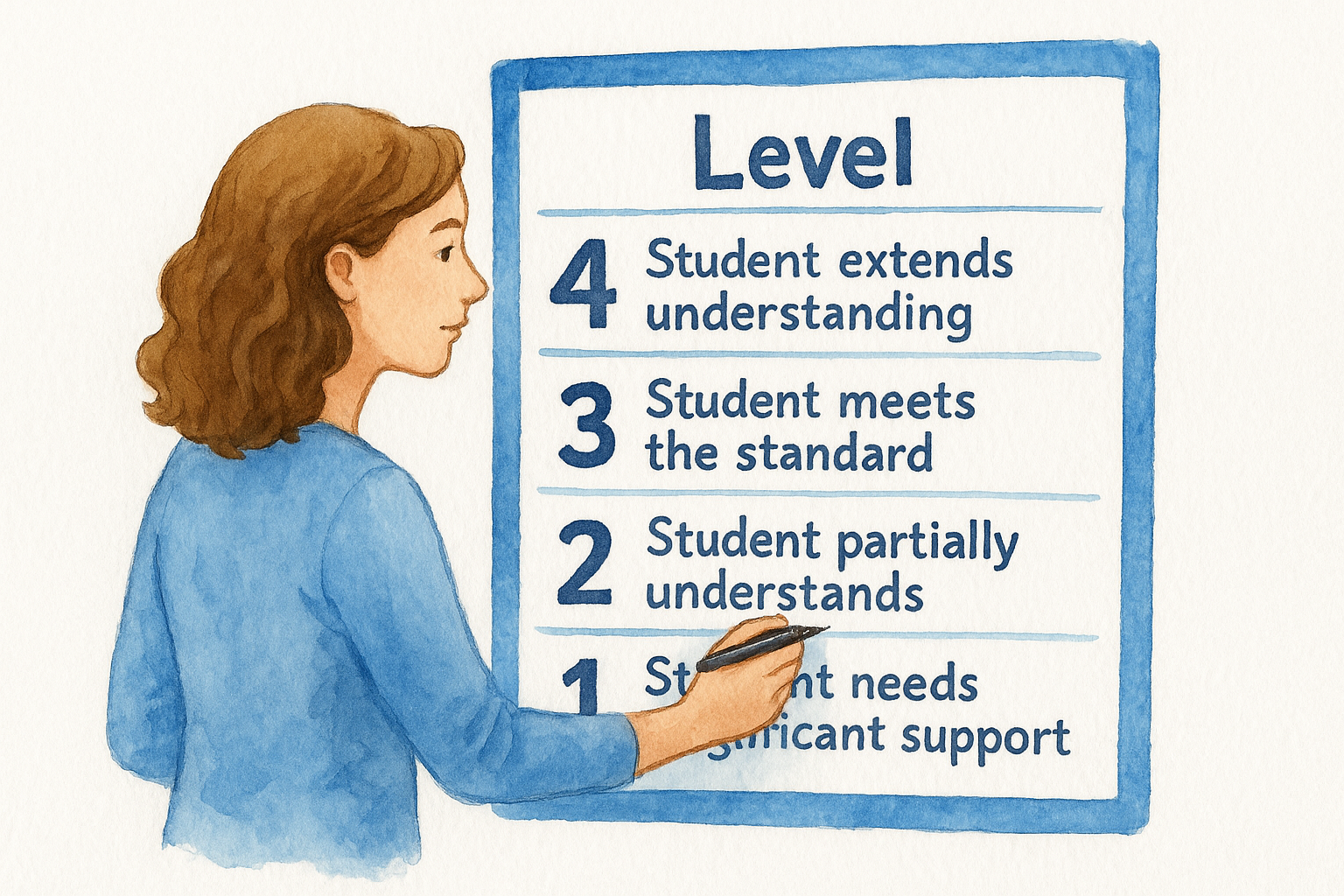
Define mastery before anything else; every other level on your scale depends on that anchor.
Build each level in this order:
- Level 3: Student independently demonstrates consistent mastery of the standard.
- Level 2: Student shows partial understanding or relies on prompting.
- Level 4: Student extends understanding beyond the standard on their own.
- Level 1: Student needs significant support to begin working with the standard.
Use student-facing language in your descriptors
Write each level using plain, specific language that describes observable actions. Swap "demonstrates understanding" for "identifies and explains two or more examples from the text with accurate details." That specificity turns each score into a concrete target.
Sharing the scale with students before the assessment sets clear expectations and gives them a roadmap for reaching the next level.
How to score, calculate, and report mastery
Scoring with standards based grading proficiency scales means you evaluate each assessment against your scale descriptor, not a point total. Look at the evidence the student produced and ask: which level description best matches what they showed? That single question replaces the math of adding up partial credit.
Scoring individual assessments
When an assignment targets one standard, assign one scale score. If it covers multiple standards, score each standard separately. This keeps your records clean and specific, so you always know which skill a student has mastered and which still needs work.
Calculating a final score
Most standards-based systems recommend using the most recent evidence rather than averaging all scores across a grading period. Averaging punishes early struggle, while prioritizing recent performance reflects actual growth. Some teachers use the mode (most frequent score) as a secondary check.
Recent performance matters more than early attempts because learning is not linear.
Reporting mastery to students and families
Share the scale descriptors alongside each score so families understand what the number means. A brief written note connecting the score to a specific descriptor turns a grade into clear, actionable feedback that both students and parents can use immediately.
Key takeaways and next steps
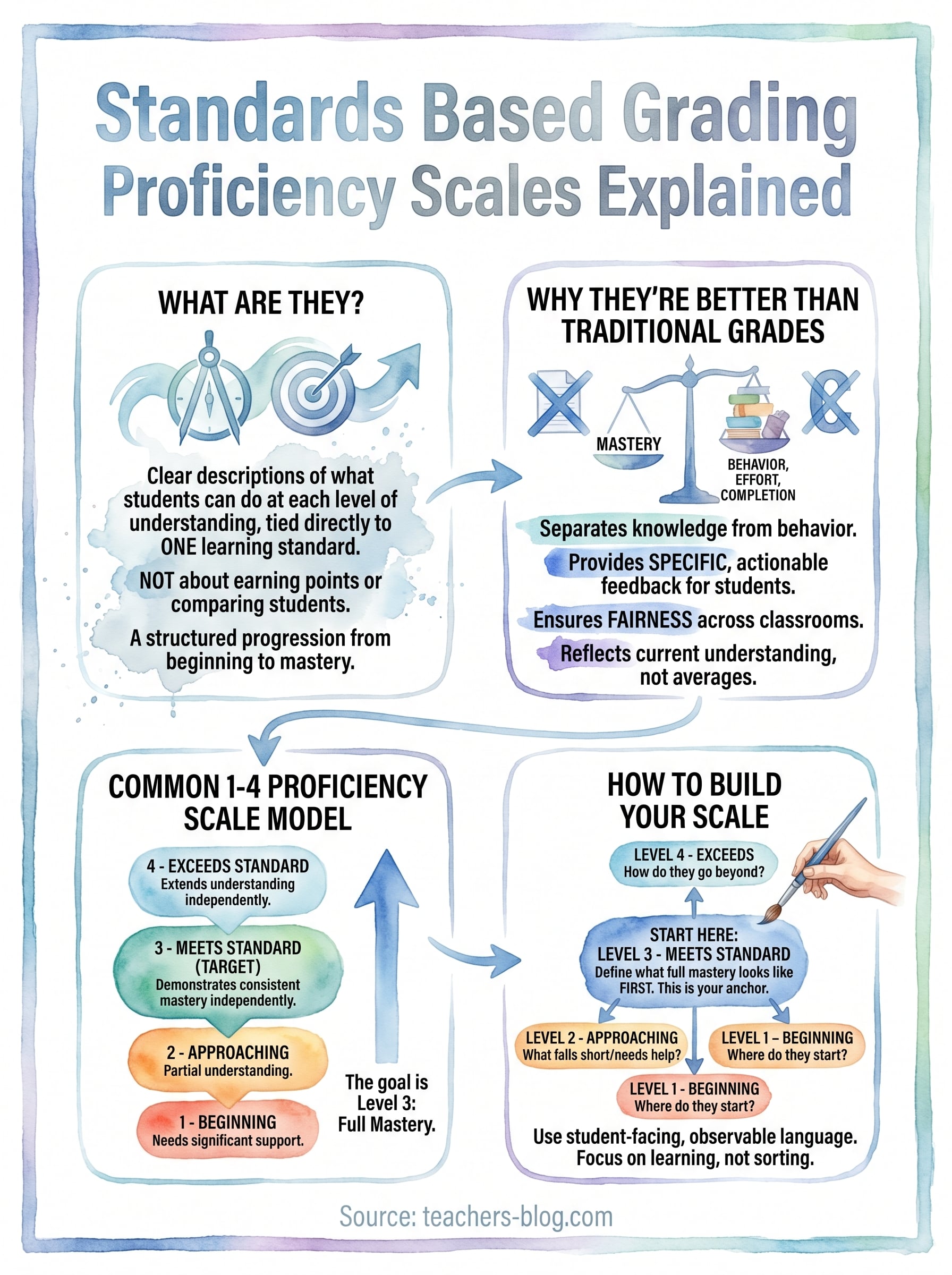
Standards based grading proficiency scales replace vague percentages with clear, level-specific descriptions of what students can actually do at each stage of learning. Every scale ties directly to one learning standard, uses observable language both you and your students can act on, and reports progress in a way that drives targeted improvement rather than guesswork about what a letter grade really means.
Starting small makes the transition manageable. Pick one standard from a current unit, write a four-level scale using the anchor-first method described in this article, and apply it to your next assessment. Once you see how much more useful the feedback becomes for your students, adding more scales to your grading practice feels natural.
Your students deserve grades that actually tell them something specific. If you want practical tools and teaching strategies to make your classroom more effective every day, visit The Cautiously Optimistic Teacher for ready-to-use resources built specifically for educators like you.