
Marzano Classroom Management Strategies: A Practical Guide
You’ve read the books, attended the PD sessions, and still have that one class period that makes you question every career choice you’ve ever made. Classroom management is the skill that holds everything else together, and Robert Marzano’s research gives us one of the most practical frameworks for getting it right. Marzano classroom management strategies break the process down into concrete, actionable components: rules and procedures, teacher-student relationships, disciplinary interventions, mental set, and student responsibility. No vague advice. No "just build rapport" without telling you how.
Here at The Cautiously Optimistic Teacher, we dig into research-backed approaches and turn them into something you can actually use on Monday morning. Marzano’s framework fits that mission perfectly because it’s built on meta-analysis of real classroom data, not theory alone. Whether you’re a first-year teacher trying to survive or a veteran looking to sharpen your management approach, this guide meets you where you are.
This article walks you through each of Marzano’s key components with clear explanations and practical applications. You’ll learn what each strategy looks like in practice, why it works according to the research, and how to adapt it to your own classroom. By the end, you’ll have a concrete action plan, not just a list of ideas you’ll forget by next week.
What Marzano classroom management strategies are
Robert Marzano developed his classroom management framework from a meta-analysis of over 100 studies spanning more than a century of classroom research. The result, published in works like Classroom Management That Works, is a data-driven system that identifies exactly which teacher behaviors have the greatest effect on student conduct and learning. This isn’t a personality-based approach where you either have natural authority or you don’t. Marzano classroom management strategies give you a replicable, evidence-backed structure that any teacher can learn and apply, regardless of subject area or experience level.
The research behind the framework
Marzano’s meta-analysis found that effective classroom management can improve student behavior outcomes by as much as 28 percentile points when teachers apply the right practices consistently. That kind of measurable impact comes from studying what actually works across thousands of real classrooms, not from single case studies or popular opinion. The framework treats management as a learnable skill, which means you can get better at it intentionally, the same way you develop stronger lesson planning or questioning techniques. That framing alone changes how you approach the work.
Marzano’s research identifies classroom management as having a stronger effect on student achievement than most instructional strategies, making it one of the highest-leverage areas you can invest in as a teacher.
The five key components
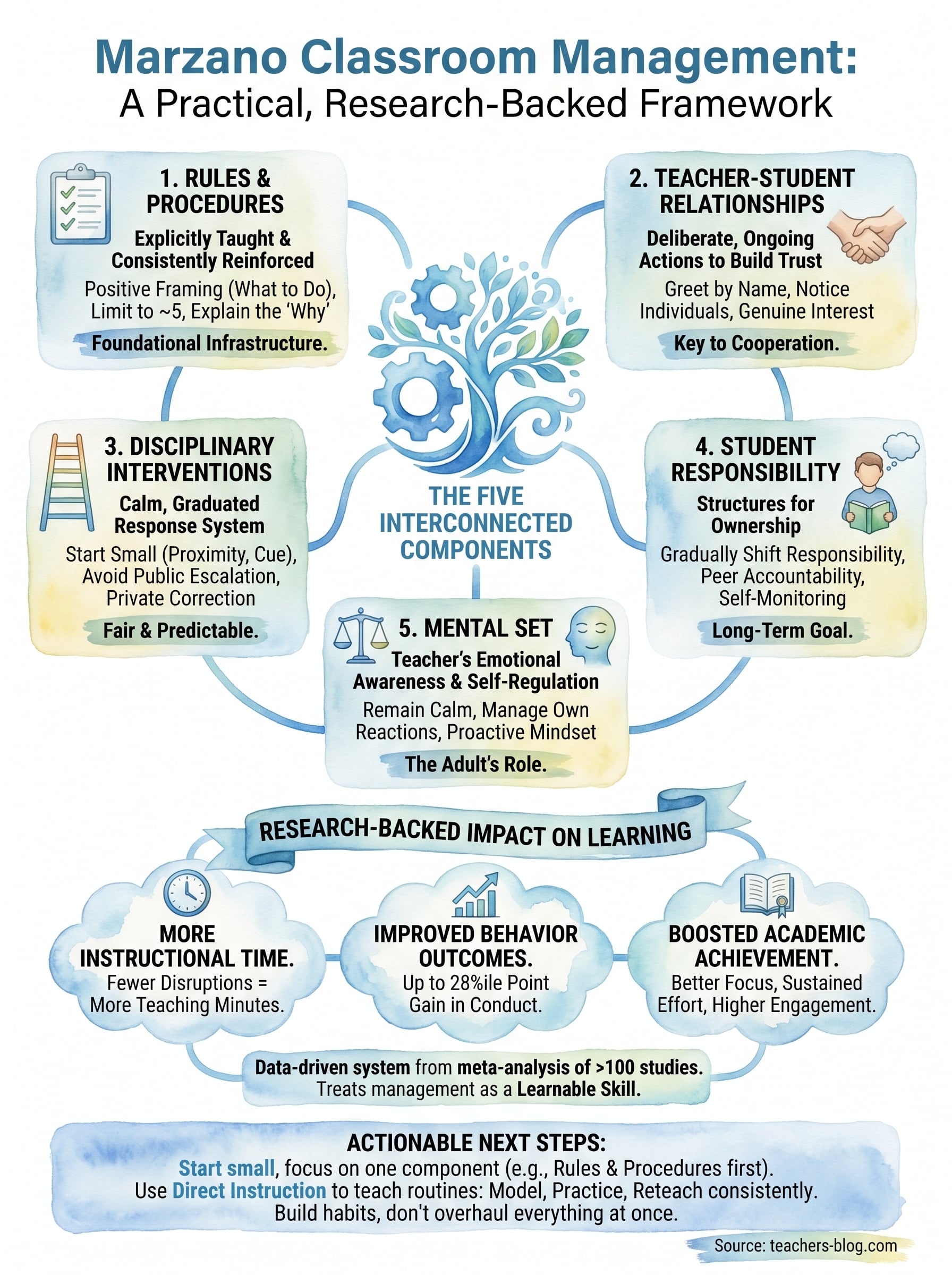
The framework organizes teacher action into five interconnected areas, each targeting a specific dimension of the classroom environment. Seeing these as a connected system, rather than separate fixes, is central to understanding why the approach works.
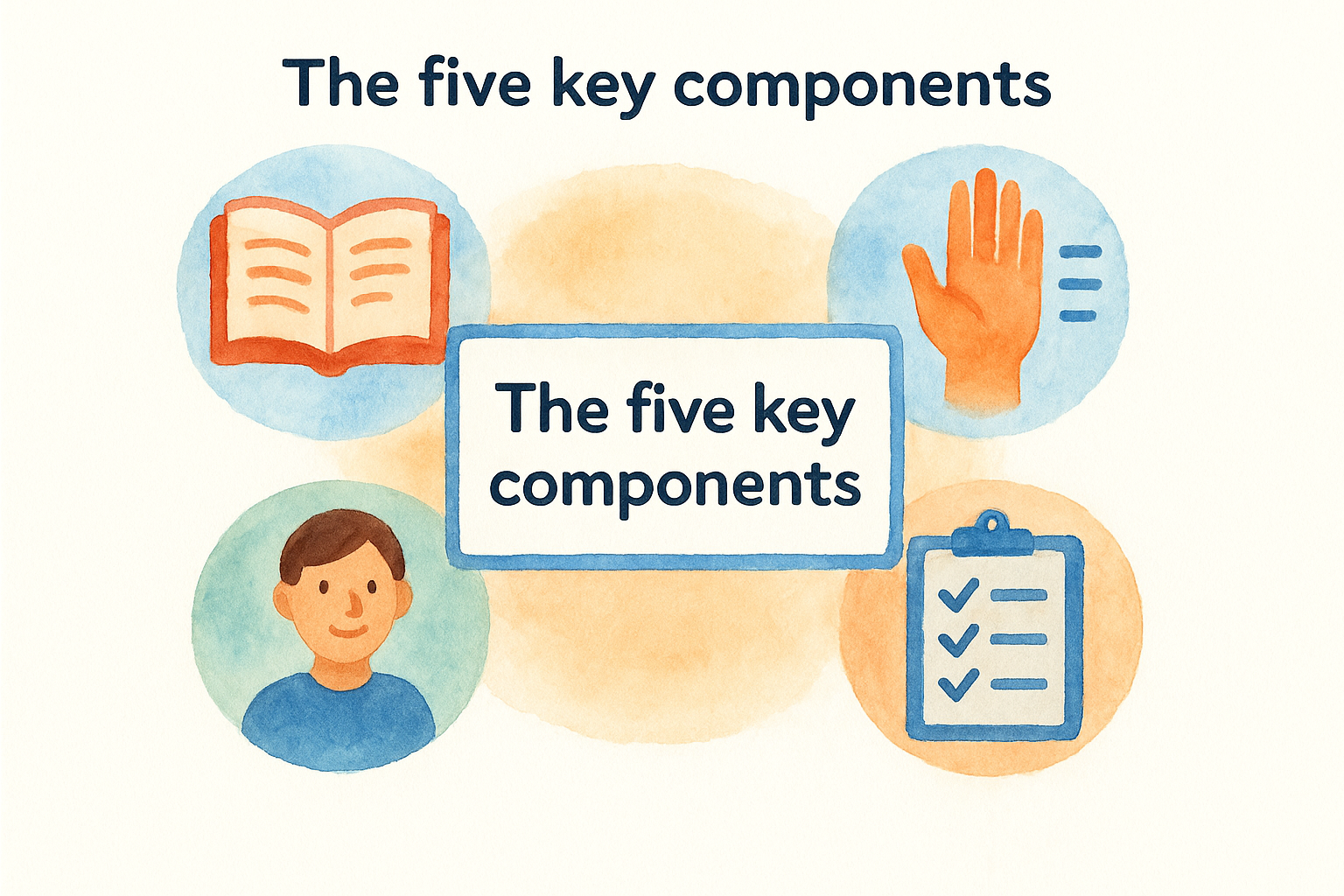
- Rules and procedures: Explicitly taught, consistently reinforced expectations that students understand from day one.
- Disciplinary interventions: A calm, graduated response system for when students push against those expectations.
- Teacher-student relationships: Deliberate, ongoing actions that build genuine trust and signal that you see each student as an individual.
- Mental set: Your own emotional awareness and self-regulation as the adult managing the room.
- Student responsibility: Structures that gradually move ownership of behavior from you to your students.
Each component depends on the others. Weak relationships, for example, undermine even the clearest set of rules because students who don’t trust you have less reason to follow your expectations. Strong procedures lose their power without consistent follow-through on interventions. Marzano’s framework asks you to develop all five areas together, which is why teachers who apply it see more durable results than those who only address one or two pieces of the system.
Why they improve learning and behavior
Marzano classroom management strategies work because they target the conditions that make learning possible, not just the symptoms of poor behavior. Proactive management reduces the total number of disruptions your students experience across a class period, which means more instructional time and less cognitive disruption for everyone in the room. When students clearly understand expectations and trust that you’ll respond consistently, they spend more mental energy on the actual content and less on reading the room for social cues or testing limits to see what you’ll do.
How management affects academic achievement
Research from Marzano’s meta-analysis establishes a direct, measurable link between classroom management quality and student academic performance. The connection makes sense: students in well-managed classrooms stay on task longer, participate more frequently, and submit work that reflects more sustained effort. Small daily losses of instructional time from disruptions accumulate fast across a school year, and recovering that time through stronger management produces results similar to adding instructional hours without changing anything else about your curriculum or teaching approach.
Students in well-managed classrooms can gain the equivalent of several weeks of additional instruction over a school year simply because fewer minutes are lost to off-task behavior.
How student behavior changes over time
Consistent management doesn’t only solve today’s discipline problems. Students who experience clear, fair, and predictable responses to their behavior internalize those norms progressively, which means you spend measurably less time on correction as the year moves forward. You also build a classroom culture where peer expectations reinforce the standards you set, so students begin holding each other accountable rather than waiting on you to restore order every time something goes sideways. That shift takes deliberate effort early, but it pays off across every remaining week of the school year.
How to set expectations, rules, and procedures
Marzano classroom management strategies treat rules and procedures as foundational infrastructure, not a first-week formality you move past once the year starts. Setting clear expectations early determines whether students know exactly how to behave or spend the year guessing, and the quality of that initial setup shapes your management workload for every month that follows. You want students to understand not just what the rules are, but why they exist and what following them makes possible.
How to build rules students actually understand
Your rules need to be specific, positively framed, and limited in number. Marzano’s research suggests keeping your list to five or fewer items and writing them as descriptions of desired behavior rather than lists of prohibitions. Students respond better to rules that describe what to do rather than what to avoid because positive framing gives them something concrete to aim for. Post the rules visibly, refer to them by name, and explain the reasoning behind each one on day one.
Rules you explain and justify earn significantly more buy-in than rules you simply announce, because students are more likely to follow expectations they understand the purpose of.
Here are examples of positively framed classroom rules:
- We listen when others are speaking.
- We come prepared with materials every day.
- We treat everyone in this room with respect.
How to design procedures that actually stick
Procedures govern the specific routines that drive daily activity, things like how students enter the room, where they submit work, and what they do when they finish early. The key difference between a rule and a procedure is that procedures require explicit instruction, not just announcement.
Walk students through each procedure step by step, narrate what you’re doing as you model it, and have students practice before you hold them accountable. Expect to reteach procedures multiple times early in the year rather than assuming a single demonstration was enough.
How to teach and reinforce routines every day
Teaching a routine once is not enough. Marzano classroom management strategies treat routine reinforcement as an ongoing instructional practice, not a one-time event during orientation week. Students need repeated, low-stakes practice with your procedures before those behaviors become automatic, and the only way to get there is through deliberate, daily follow-through on your part.
How to introduce routines with direct instruction
Treat each classroom routine the same way you’d treat a new academic skill: break it into clear, observable steps and model it before students attempt it independently. Walk through the procedure yourself while narrating each action aloud, then invite students to practice it with your feedback before you hold them accountable. This instructional approach removes ambiguity and gives students a concrete reference point when they’re unsure what to do.
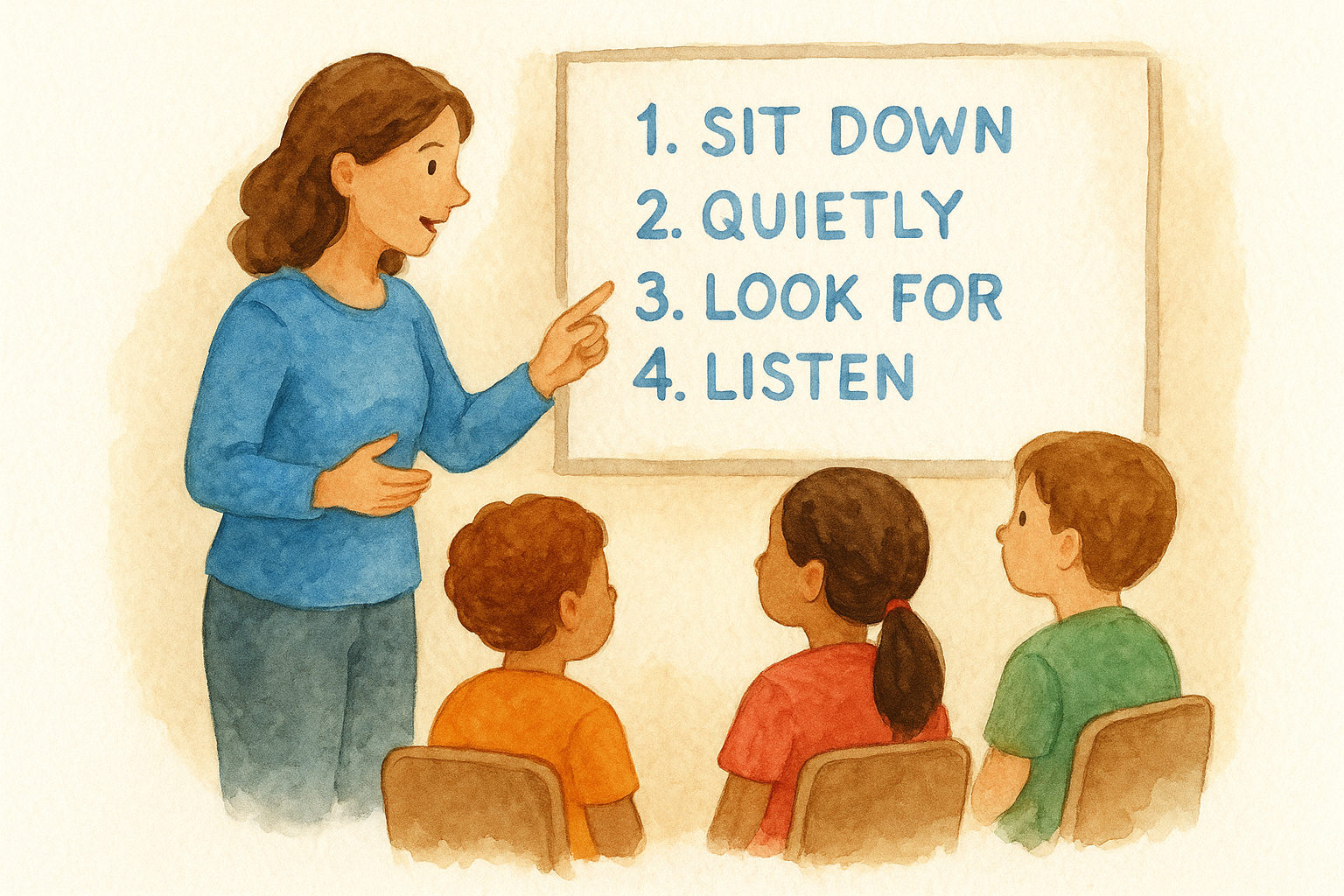
When students practice a routine correctly under your supervision before it becomes a daily expectation, they internalize the behavior far faster than when they learn through correction after the fact.
How to reinforce routines consistently throughout the year
Reinforcement isn’t just for the first two weeks. Each time a routine starts to slip, that’s your signal to reteach it, not simply correct individual students and move on. Returning to direct instruction mid-year signals that your standards stay constant, and it rebuilds the shared understanding your classroom depends on.
Brief, positive acknowledgment also accelerates reinforcement. Narrate what you see when procedures go well, name the specific behavior, and give students a quick practice repetition if the routine has drifted from your original model. This keeps expectations visible and reduces the amount of redirection you need across the rest of the year.
How to build relationships and respond to misbehavior
Marzano classroom management strategies place teacher-student relationships at the center of a functional classroom, not at the edges of it. Students who feel genuinely seen by you are more likely to follow your expectations, work through frustration without shutting down, and return to task quickly after a redirection. Building that trust is not a passive process. It requires deliberate, repeated action on your part throughout the year.
How to build genuine teacher-student relationships
Marzano identifies specific, low-effort actions that compound over time into meaningful relational capital with students. Greeting students by name at the door, making brief personal comments about their work or interests, and noticing when a student seems off are all concrete moves that signal you pay attention. None of these require extra planning time, but they require consistency. Students track whether your attention to them is genuine or transactional, and they respond accordingly.
A brief, sincere two-minute conversation at the right moment can do more for a student’s willingness to engage than weeks of corrective feedback.
How to respond to misbehavior without escalating
Your response to disruption either strengthens or weakens the management system you’ve built. Marzano’s framework recommends a graduated, calm intervention sequence that starts with the least intrusive option and only escalates when necessary. A proximity move, a quiet individual prompt, or a nonverbal cue costs you nothing and frequently resolves the behavior before it spreads to the rest of the room.
Avoid public confrontations whenever possible. Calling out a student in front of peers often produces a defensive reaction that has nothing to do with your original concern. A private, direct conversation after class or at a natural break point gives the student a path back to compliance without a face-saving issue getting in the way.
Next steps for your classroom
You now have the full picture of what Marzano classroom management strategies involve and how each component connects to the others. The next move is to pick one area where your classroom is struggling most right now and apply what you’ve learned there first. Starting with rules and procedures gives you the clearest early wins because the results show up within days, but any of the five components is a legitimate entry point depending on where you need the most traction.
Avoid trying to overhaul everything at once. Small, consistent changes compound into meaningful shifts over weeks and months, and teachers who see lasting results typically build one habit at a time rather than attempting a full system reset. If you’re looking for more practical tools and strategies to support your classroom work, explore the resources available at The Cautiously Optimistic Teacher and put what you find to work starting this week.