
Project Based Learning Professional Development Workshops
You’ve seen what project-based learning can do in a classroom, students solving real problems, collaborating with purpose, and actually caring about the work. But designing PBL units that hold up under the pressure of standards, assessments, and 30 different learners? That’s a different challenge entirely. Project based learning professional development workshops give you the structured training and hands-on practice to bridge that gap between inspiration and execution.
At The Cautiously Optimistic Teacher, we spend a lot of time building tools and resources that help educators work smarter, from differentiated unit plans to AI-powered lesson helpers. But some skills need more than a blog post or a template. PBL implementation is one of them. It benefits from guided practice, peer feedback, and expert coaching that only a dedicated workshop can provide.
This article breaks down some of the best PBL professional development workshops available right now. Whether you’re looking for a multi-day immersive experience or a self-paced online course, you’ll find options here that fit your schedule, budget, and experience level with project-based learning.
1. The Cautiously Optimistic Teacher
Before you invest in a dedicated project based learning professional development workshop, The Cautiously Optimistic Teacher gives you a solid foundation in PBL concepts and implementation. The site targets middle and high school educators who need practical, ready-to-use resources without wading through generic teaching advice.
What you can learn about PBL here
The site covers differentiated instruction, unit planning, and student engagement strategies that connect directly to PBL design principles. You’ll find resources on structuring inquiry-based learning and using AI-powered tools to cut planning time significantly.
Specific topics include:
- Building differentiated unit plans for diverse learners
- Generating critical thinking questions from project material
- Creating customized worksheets tied to project goals
How to use the site as a PBL PD plan
Treat the site as a self-paced professional development sequence rather than a random resource collection. Start with the unit plan templates, then work through the AI tools. Moving from templates to tools builds your understanding of how to scaffold a full PBL unit from start to finish.
Tying your self-directed PD to a specific upcoming project keeps your learning focused and immediately applicable.
Who this works best for
This resource works best for teachers who are new to PBL or still working out how to align project outcomes with standards. The site is also a strong fit if you want to integrate AI tools into your PBL planning process before committing to a formal training program.
If you already run complex multi-week projects regularly, use this site as a supplement rather than your primary professional development resource.
What to do next after you learn the basics
Once you’ve explored the core resources, use the Question Generator and Worksheet Maker to build materials for a real unit. Applying your learning to an actual project locks in the skills faster than any passive reading.
A practical next step: pick one upcoming unit and build its scaffolds entirely using the site’s tools before moving on to a formal workshop.
Pricing
All core resources and AI tools on The Cautiously Optimistic Teacher are free to access. Some premium downloadable materials carry a one-time fee, but you can build a solid PBL planning foundation at no cost.
2. PBLWorks workshops and courses
PBLWorks is one of the most recognized names in project based learning professional development workshops. Their offerings come directly from the Buck Institute for Education, which has spent decades developing and researching practical PBL frameworks for classroom use.
What you can learn
Their workshops cover Gold Standard PBL, a research-backed framework that outlines the core design elements every strong project needs. You’ll learn how to build sustained inquiry, authenticity, and student reflection into your units from the ground up.
Workshop formats and time commitment
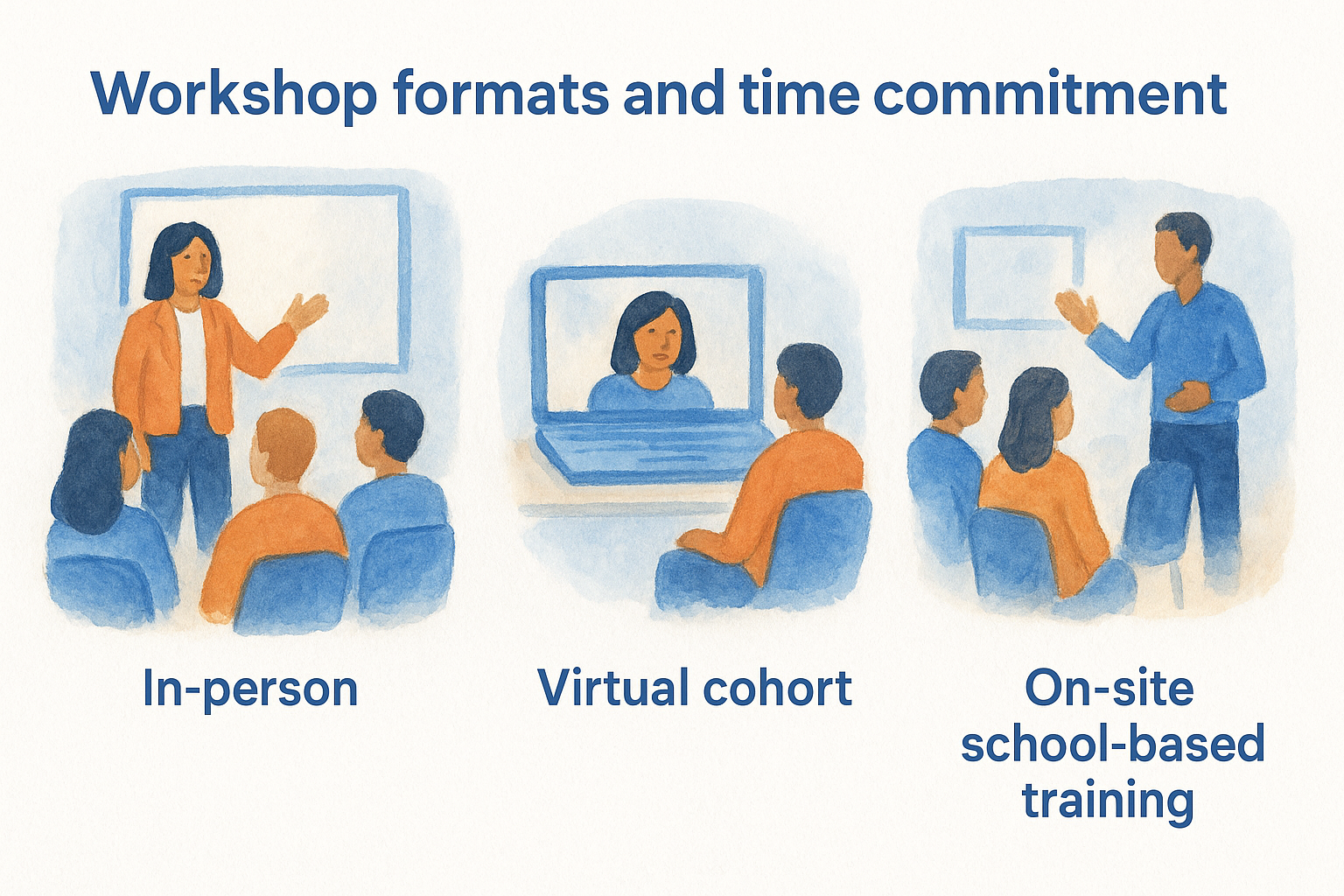
PBLWorks offers in-person workshops, virtual cohorts, and on-site school-based training. Sessions range from a single-day introduction to multi-day intensives, giving you options that fit your schedule and available planning time.
Who this works best for
This works best for teachers and instructional coaches who want a structured, research-grounded entry into PBL. It’s a strong fit if your school is moving toward systemic PBL adoption rather than a few isolated classroom experiments.
If your whole department is shifting to project-based learning, PBLWorks on-site training gives everyone a shared framework and common language.
How to choose the right session
Start by honestly assessing your current PBL experience level. PBLWorks organizes courses from foundational to advanced, so read the stated prerequisites and learning objectives carefully before you register.
Pricing
Pricing varies by format and delivery type. Individual workshop seats typically start around $500, while school-based contracts are quoted directly through the PBLWorks team.
3. New Tech Network professional learning
New Tech Network (NTN) takes a school-wide systems approach to project based learning professional development workshops, rather than focusing on individual teacher skill-building in isolation. They work with schools and districts that want to embed PBL as a core instructional model, not just a unit here and there.
What you can learn
NTN training covers project design, classroom culture, and assessment practices that work together to support deep PBL implementation. You’ll also learn how to build student agency and collaboration skills into your projects so they run sustainably throughout the year.
Training formats and supports
NTN delivers professional learning through on-site coaching, network convenings, and virtual learning communities. Their model pairs initial training with ongoing coaching so you’re not left figuring out implementation on your own after the first workshop ends.
This ongoing coaching structure is what separates NTN from most one-and-done professional development experiences.
Who this works best for
This works best for school leadership teams and administrators who want to shift their entire school’s instructional approach. Individual teachers can benefit, but NTN’s model is built around collective implementation at the building level.
What implementation typically requires
Expect a multi-year commitment from your school or district. NTN designs its supports around sustained professional learning, which means you’ll need administrative buy-in and a clear school-wide implementation plan before you start.
Pricing
NTN does not publish standard pricing publicly. Contact their team directly for a district or school-based quote, as costs depend on scope, duration, and the level of coaching support your school requests.
4. Edutopia PBL professional development guide
Edutopia offers a free, publicly available PBL professional development guide that you can use on your own or with a team. It’s a practical entry point for educators who want to explore project based learning professional development workshops without making a financial commitment first.
What you can learn
The guide walks you through core PBL principles, planning strategies, and assessment approaches drawn from classroom-tested examples. You’ll find articles, videos, and frameworks that give you a clear picture of what strong project design actually looks like in practice.
How to run it as a team session or solo study
You can work through the guide independently at your own pace or structure it as a series of department meetings. Assign specific articles ahead of each session, then use the discussion questions to drive collaborative reflection with your colleagues.
Running it as a team study gives everyone a shared vocabulary before you start designing projects together.
Who this works best for
This works best for individual teachers or small teams who want a low-pressure introduction to PBL before committing to a formal training program. It fits especially well if your professional development budget is limited.
How to turn the guide into a classroom-ready plan
As you move through the material, map each concept directly to an upcoming unit you’re already planning. That connection turns passive reading into active design work.
Pricing
Edutopia’s PBL guide is completely free to access online.
5. WeGrowTeachers PBL professional development
WeGrowTeachers offers hands-on project based learning professional development workshops built specifically for classroom teachers. Their approach focuses on practical application over theory, giving you tools and frameworks you can bring directly into your classroom.
What you can learn
WeGrowTeachers covers project design, driving question development, and formative assessment strategies that work across subject areas and grade levels. Their facilitators ground every concept in real classroom scenarios so you leave with usable ideas, not just abstract models.
How the training typically runs
Sessions run as in-person workshops or virtual cohorts, usually spanning one to two days. The training moves quickly through design phases, so you’ll spend most of your time building and getting feedback on actual project drafts rather than sitting through lectures.
This workshop-style format means you walk out with a project unit in progress, not just notes from a slideshow.
Who this works best for
WeGrowTeachers works best for individual teachers and small school teams who want structured guidance without a long-term institutional commitment. It fits well if your school doesn’t require a district-wide adoption but you want meaningful, focused training from experienced practitioners.
What to bring to the workshop
Bring a specific unit or curriculum area you’re planning to teach in the next semester. Having a real context lets you apply every activity directly to work that actually matters to you.
Pricing
WeGrowTeachers does not list public pricing on their site. Reach out to their team for current rates on individual seats or school group bookings.
Next Steps
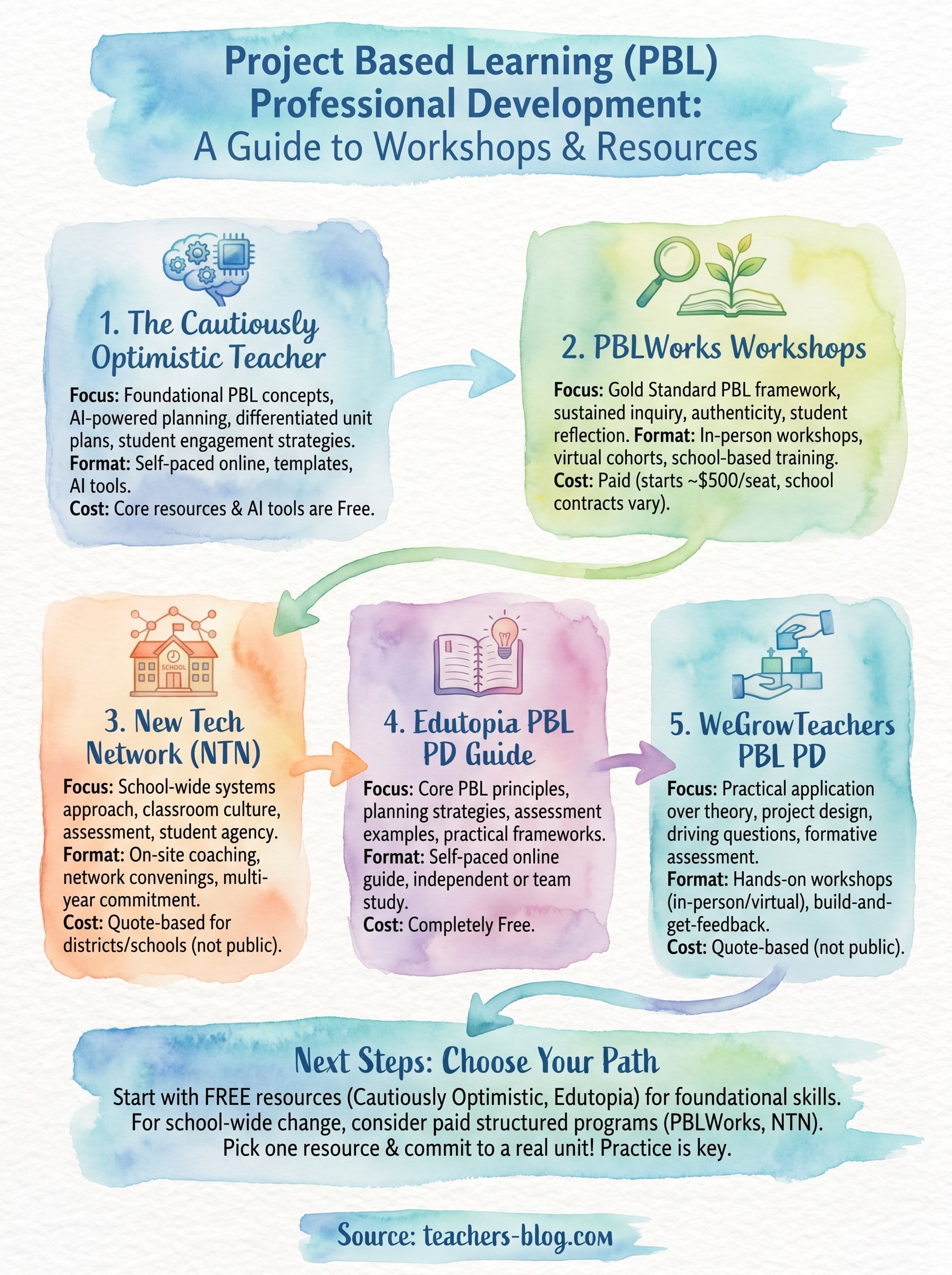
You now have five solid options for project based learning professional development workshops, ranging from free self-directed resources to school-wide coaching programs. The right choice depends on where you are right now. If you’re just starting out, begin with the free resources at The Cautiously Optimistic Teacher and Edutopia before spending money on a formal program. If your school is ready to go all-in, PBLWorks or New Tech Network gives you the structured, research-backed framework to make that shift stick.
Whatever path you pick, don’t wait until you feel fully ready. Pick one resource from this list and commit to working through it with a real unit in mind. That’s how theory turns into practice. When you’re ready to build your PBL planning toolkit, start with the free tools and resources at The Cautiously Optimistic Teacher and build from there.