Why Classroom Routines Reduce Behavioral Load
Classroom routines are the “operating system” of an effective learning environment. By automating repetitive tasks—like entering the room or transitioning between activities—routines drastically reduce behavioral load, the mental effort students spend trying to guess expectations. When the “how” of the classroom is predictable, students can redirect their limited cognitive energy away from social survival and toward academic learning.
This is Lesson 1 of Module 4: Classroom Environment and Management | Full Course Outline
Mindset Shift: Efficiency vs. Ease
| The Control Lens (Rigidity) | The Cognitive Lens (Ease) |
| View: Routines are about teacher convenience. | View: Routines are about student brain capacity. |
| Feel: Robotic, demanding, and inflexible. | Feel: Flowing, calm, and automatic. |
| Purpose: To keep students quiet and compliant. | Purpose: To free up working memory for learning. |
| Teacher Role: The traffic cop directing every move. | Teacher Role: The architect of a self-running system. |
| Behavioral Result: Resistance or “robotic” following. | Behavioral Result: Independence and lower stress. |
Imagine a classroom where students already know exactly what to do the moment they walk in. Backpacks are hung up, warm-up work is started without prompting, and everyone settles in calmly. This isn’t a fantasy — it’s what effective classroom routines can achieve. Routines make the day feel safe and predictable, which helps both teachers and students. In fact, establishing consistent routines is one of the simplest ways to lighten the behavioral load in your classroom. But what exactly is “behavioral load,” and why do routines make such a difference? Let’s explore the science behind it.
How Classroom Routines Lighten the Behavioral Load
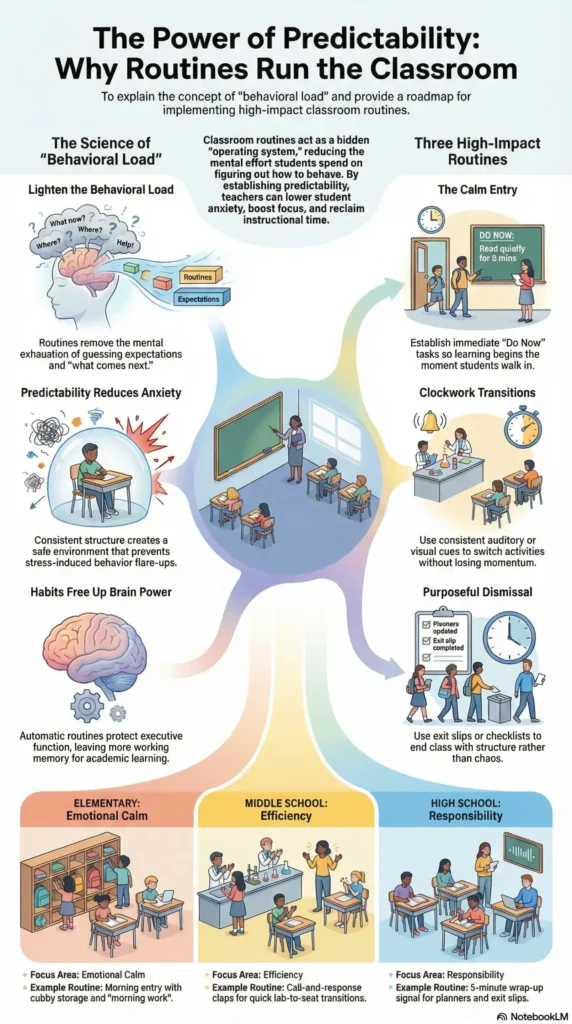
Behavioral load refers to the mental and emotional effort required to figure out how to behave or what to do next. In a classroom with no clear routines, students are constantly trying to guess the expectations – which can be mentally exhausting and lead to misbehavior. Routines remove that ambiguity. When expectations are crystal clear and consistent, students don’t have to burn energy worrying about what comes next or whether they’re doing the right thing. This frees up their attention for learning instead of scanning the room for clues. In short, classroom routines create cognitive ease: the brain can relax about the “how to behave” part and focus on the content of the lesson.
Predictability = Lower stress. A predictable routine gives students a comforting sense of order. Research in education shows that consistent routines provide structure and safety, which in turn reduces anxiety for students. When children know what’s going to happen each day – from how attendance is taken to how they line up for recess – the classroom becomes less scary or chaotic. This lower stress level means fewer behavior flare-ups that are caused by uncertainty or frustration. As one education expert puts it, strong routines create predictability that “lowers anxiety” and efficiency that “protects learning time”. Students feel safer and more confident when the environment is stable and routine-driven, and that often translates into calmer behavior.
Habits free up brain power. Classroom routines, when taught and practiced, eventually become habits. Instead of actively thinking through every step (“Where do I put my notebook? What do I do after I finish this task?”), students perform routine actions automatically. This habit formation lightens the load on executive function – the brain’s control center for things like working memory and self-control. Well-taught routines actually help free up students’ working memory to focus on academics. For example, if students habitually follow a set procedure to transition between activities, they don’t need to stop and figure out how to transition – they just do it. Research syntheses have found that when routines become automatic, students “won’t have to think about these things while focused on learning”. In other words, more mental energy is available for math, reading, and creativity because less is spent on managing behaviors.
Better self-regulation through structure. Routines aren’t only about making life easier for the teacher – they actively help students build self-regulation skills. A consistent framework of classroom routines gives children practice in controlling their own behavior and emotions within a safe structure. For instance, a daily routine might include a quiet “mindfulness minute” after lunch or a structured way to take turns speaking in class. These repeated experiences help students learn to wait their turn, manage impulses, and calm themselves, because they know what to expect and what is expected of them. Predictable routines have been shown to “reduce anxiety and allow [students] to focus on learning and emotional growth”. Over time, students internalize these patterns; they become better at self-control because the environment consistently cues and reinforces appropriate behavior. In a very real sense, routines are training wheels for self-regulation – the structure they provide helps students practice managing their own actions and feelings in a consistent context. As a bonus, when the whole class is following a routine, it’s easier for each individual to do the right thing (peer influence works in a positive way).
In teacher terms, routines are a lifesaver. By reducing behavior uncertainty, you’ll likely face fewer disruptions and decision-fatigue moments. It becomes easier to address the occasional misbehavior because the baseline of the class is orderly. Think of routines as the “operating system” of your classroom – once it’s running smoothly in the background, everything else (teaching, relationships, learning activities) runs with less friction. Students independently meeting expectations means you don’t have to constantly direct traffic, which lowers your own stress and burnout risk. It’s a win-win: students feel competent and secure, and you reclaim valuable teaching time that would otherwise be spent putting out fires.
Classroom Routines in Action: Examples from K–12
To make this more concrete, let’s look at how routines might play out at different grade levels:
Elementary School (e.g. 2nd Grade)
Every morning, Ms. Lopez’s class follows a morning entry routine. Students enter quietly, greet the teacher, put away their coats and backpacks in assigned cubbies, and place last night’s homework in a tray. They then immediately start a short “morning work” activity posted on the board. Because this routine is practiced from day one, students settle in without needing prompts. The predictability helps excitable 7-year-olds feel calm and focused – there’s no confusion about what to do, so there’s less chatter and wandering. Behavioral load is reduced because the students aren’t managing uncertainty; they’re on task and ready to learn within minutes of the bell.
Middle School (e.g. 7th Grade)
Mr. Chen teaches 7th grade science and uses a transition routine during lab experiments. When he needs students to move from their lab stations back to their seats for discussion, he doesn’t raise his voice or flicker the lights – he uses a simple call-and-response clap pattern they’ve learned. Upon hearing the pattern, students immediately stop, echo the clap back, tidy their lab area, and return to their seats within 30 seconds. They practiced this routine early in the year, so now it’s practically automatic. This structured transition prevents the typical chaos of “Okay everyone, let’s settle down now…” that could take several minutes. Students know the drill, which means switching tasks doesn’t devolve into off-topic talking or horseplay. The class stays on track, and Mr. Chen doesn’t feel his blood pressure spike every time he needs to regain attention.
High School (e.g. 10th Grade)
In Mrs. Rivera’s 10th-grade English class, an end-of-class routine wraps up each lesson. Five minutes before the period ends, she gives a familiar signal (like, “Wrap-Up Time!”). Students know this means they should finish their last thought, put away materials, and fill out the exit slip question that’s always on the board. Those who complete the task early use the remaining time to update their homework planners. By the time the bell rings, the room isn’t full of scrambling and shouting – students are calmly turning in their exit slips and Mrs. Rivera can dismiss them in an orderly way. This closing routine not only reinforces the day’s learning (through the exit question), but also creates a smooth, structured end to class rather than a mad dash at the door. Students leave more calmly, which often carries over into how they behave in the hallways and their next class.
These examples show how classroom routines can work at any grade. The specifics will vary (you wouldn’t use a sing-along cleanup song in high school, for example), but the principles are the same. Consistency and clarity are key. No matter the age, students appreciate knowing the plan. When you design routines that fit your students’ developmental level and practice them until they stick, you’ll see results: less confusion, smoother transitions, and better behavior overall.
Implementing Entry, Transition, and End-of-Day Routines
Ready to reduce your classroom’s behavioral load with classroom routines? Start with a few high-impact routines that every K–12 class can benefit from: how students enter, how they transition between tasks, and how they wrap up the day (or class period). Here are some practical tips for each, including how to teach and reinforce them:
Entry Routine (Starting the Day or Class)
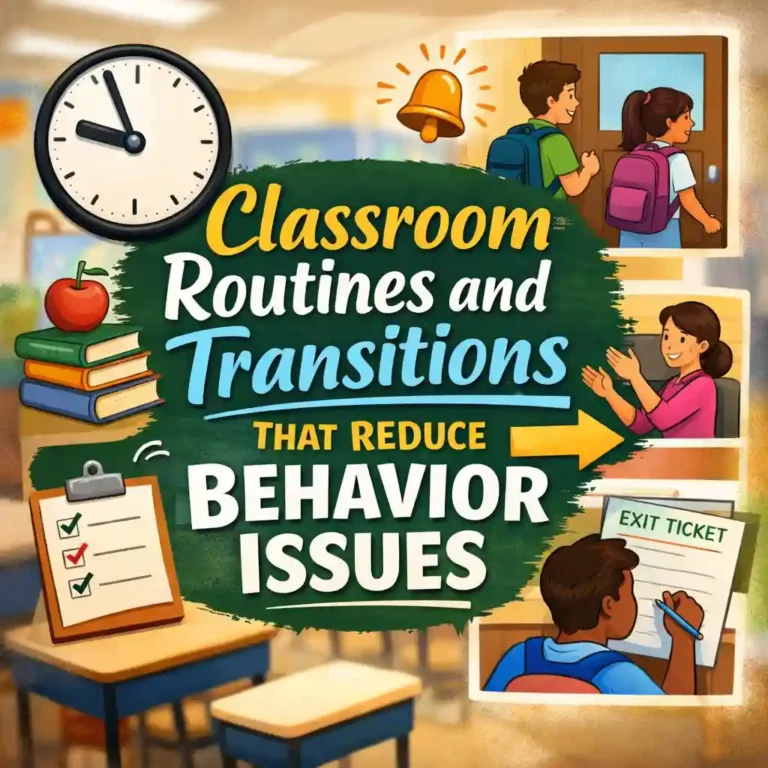
Establish a consistent procedure for the very first moments when students come in. For example, you might greet each student at the door, have them check a morning message or agenda, turn in homework, and immediately begin a warm-up activity (such as a “Do Now” problem or journal prompt). Teach this routine explicitly on the first day of school or class – explain and model each step clearly, then have the students practice it with you. Treat it like teaching an important lesson: show them what a good entry looks like, and even what it shouldn’t look like, to draw contrasts. Be consistent every day so it becomes habit. Reinforce the routine by praising students who follow the steps (“I see Maria already started her warm-up – excellent!”) and gently correcting those who need reminders. A well-taught entry routine sets a calm tone and signals to everyone that learning time is beginning. (As one expert notes, strong entry routines help lessons start “quickly and calmly”, instead of wasting time getting settled.)
Transition Routines (Switching Activities or Classes)
Frequent transitions (moving from carpet time to desks, switching from math to reading, or rotating through centers) are prime opportunities for disruption – unless you make the process routine. Create a standard signal or procedure for transitions. For younger students, you might use a fun auditory cue like a chime, a call-and-response, or a short cleanup song. Older students might respond to a countdown ( “You have 5 seconds to finish and eyes on me in 5-4-3-2-1”) or a projected timer. The key is to use the same method every time so that students know exactly what to do when they hear or see the cue. Just like with any routine, teach and practice it: literally rehearse how to switch from one task to another efficiently. For instance, you can role-play how to transition from group work back to individual seats in 30 seconds. Make it almost a game to “beat the timer” once they know the expectations. Keep an eye on transition times and hold students to the routine – if it starts getting sloppy or noisy, pause and reset by reviewing what a smooth transition looks like. Consistently using a transition routine protects instructional minutes (less time lost to chaos) and keeps the class’s momentum going. Students should eventually transition like clockwork, without you having to micromanage each move.
End-of-Day or Class Dismissal Routine
The final minutes of class are just as important as the first. Instead of letting them dissolve into chaos (“Pack up! Wait, don’t run out yet!”), build a routine for closing out the day or period. For younger grades, an end-of-day routine might include a clean-up song or a visual checklist of tasks (stack chairs, gather take-home folder, line up when ready). For older students, it could involve completing an exit slip, returning materials, and quietly waiting for the bell. The routine should provide closure and reflection: for example, ask students to share one thing they learned or to set a goal for tomorrow. Make sure to allocate a few minutes for this routine so it’s not rushed. Teach it and practice it just like other classroom routines – many teachers even simulate “dismissal practice” in the first week of school to show how to pack up and exit properly. Reinforce the routine by highlighting positives (“I love how the table 3 group is all packed up and waiting silently – they’ll be first to line up”). A consistent dismissal routine ensures that classes end with purpose and structure, rather than a noisy scramble. This not only reduces behavioral issues during dismissal (a common time for mischief), but also helps students leave on a positive, organized note. They know the day’s done when the routine is done – not just when the clock hits 3:00.
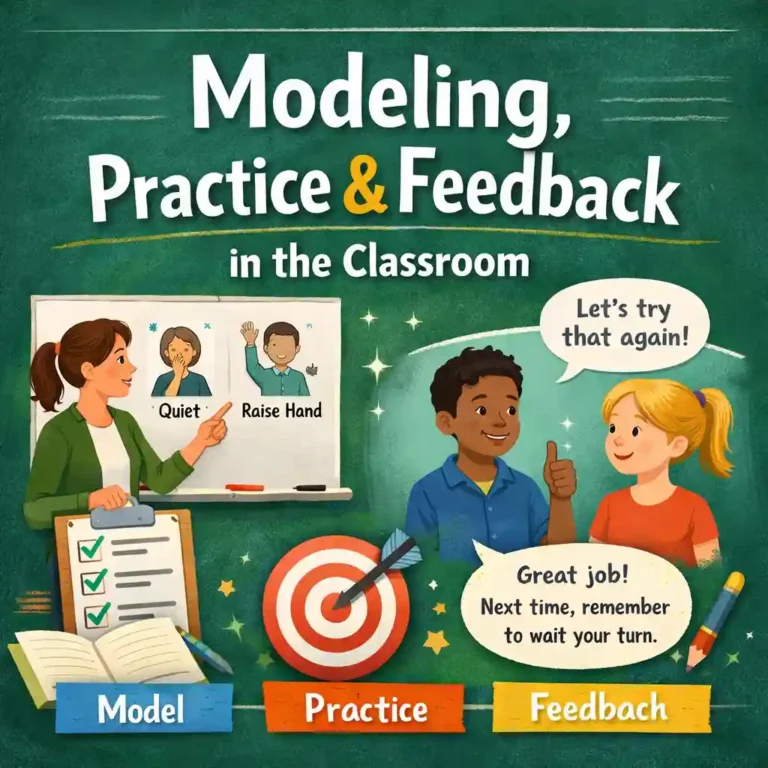
Teaching and reinforcing routines takes effort up front, but it pays off exponentially. Remember to reteach and practice routines after any long break or whenever you notice slippage – don’t just assume students remember them. The investment in practicing routines is far less stressful than constantly reacting to disorder. As one expert succinctly advises: “Re-teach key routines explicitly — don’t assume pupils remember. Model the routine exactly as you want it done. Practice it until it’s smooth and automatic… Consistency is the culture.” When you hold that line, routines truly start running the class in the background, and you can devote your energy to what you love – teaching!
In conclusion, effective routines are a cornerstone of good classroom management because they dramatically reduce the behavioral load on everyone. Students thrive on the consistency: they feel secure, less stressed, and more able to regulate their own behavior. Teachers benefit from fewer disruptions and decision-fatigue moments. By understanding the science (our brains and hearts love predictability) and implementing practical classroom routines for key parts of the day, you’ll create a classroom environment that is calmer, more focused, and primed for learning. Start small – pick one routine to refine this week – and watch how your students respond. With clear routines in place, you’ll spend less time saying “What on earth is happening right now?” and more time seeing your students shine. Consistency and clarity will set you and your students free – and that’s the real magic of routines.
Classroom Routines FAQ
What is behavioral load in a classroom? Behavioral load is the mental and emotional energy a student must expend to figure out how to behave or what to do next. When routines are unclear, this load is high, leading to decision fatigue, anxiety, and eventual misbehavior.
How do classroom routines improve student focus? Routines turn common classroom tasks into habits. Because habits are processed in a different part of the brain that requires less conscious effort, students have more ‘working memory’ available to focus on complex academic tasks.
Can routines help students with anxiety or ADHD? Yes. For students with anxiety or ADHD, predictability is a safety net. Clear routines remove the ‘unknowns’ that trigger stress and provide the external structure that helps students with executive functioning challenges stay on track.
Reflection
Earlier in my teaching, I assumed students would naturally figure out transitions and daily procedures on their own, so I didn’t teach them explicitly. I ended up spending far more time redirecting behavior than I expected, and the class often felt unsettled between activities. Once I began teaching classroom routines step by step and keeping them consistent, students became calmer and more independent almost immediately.
- Which parts of your class day still require students to guess what to do next rather than follow a clear routine?
- Where might behavior challenges in your classroom actually be signals of uncertainty instead of defiance?
- What is one routine you could teach more explicitly this week to reduce students’ decision-making load?
Continue the Classroom Management Course
In the next lesson, we’ll cover how teaching classroom procedures explicitly creates predictable structure that reduces disruptions and allows more time for learning.
Next Lesson: Teaching Procedures Like Academic Content
Module 4 Progress:
Back to Module 4 Overview
Return to Full Course Outline