Day 46: Types of Conflict Lesson Plan — Helping Students Track Story Tension
As we move deeper into our novel studies, conflicts are starting to bubble up—some quietly, some loudly, and some we’re not even sure how to label yet. Today’s lesson is designed to help students recognize the conflicts that are developing and start thinking about where those tensions might lead. It’s a simple, collaborative task that gets students talking, predicting, and engaging more deeply with their group novels.
1. Introduction
I like to open this lesson by reminding students that stories move forward because something gets in the way. Characters rarely get what they want without complications—and those complications are the conflicts that keep readers invested.
A quick warm-up question helps get everyone thinking:
“What has happened recently in your story that could turn into a problem for a character?”
Students don’t need to be perfect in their answers yet—the goal is simply to activate their thinking before we jump into the mini-lesson.
2. Mini-Lesson: A Quick Refresher on Types of Conflict
This part should be brief and high-impact, more a reminder than a full lesson.
Here’s the language I use:
Types of Conflict Refresher
Character vs. Character:
When two characters’ goals clash. This can be mild tension or a full-on rivalry.Character vs. Self:
Internal conflict—when a character wrestles with decisions, guilt, fear, identity, or emotions.Character vs. Society:
A character pushes back against rules, expectations, norms, or systemic forces.Character vs. Nature:
Weather, illness, animals, natural disasters—anything in the physical world creating obstacles.Character vs. Technology (optional):
Technology creates the central problem or acts against the character.Character vs. Supernatural (optional):
Forces beyond the natural world are involved.
I remind students that conflicts often overlap. A character battling society, for example, usually has internal conflict happening too.
3. Group Activity: Track Conflicts on Chart Paper
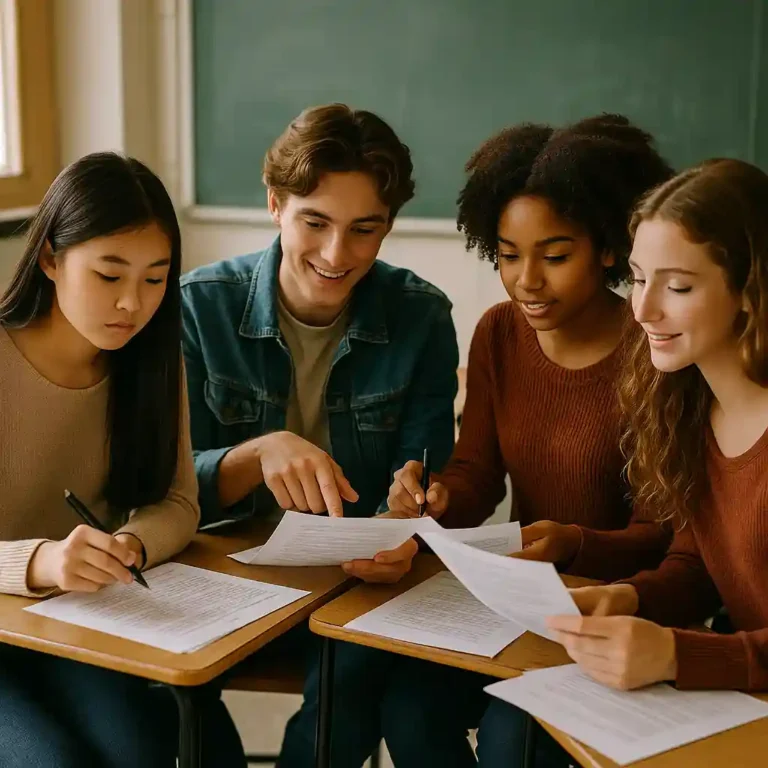
Students meet with their reading groups and complete the following:
Task Instructions
List all conflicts currently emerging in the story—even ones that feel small or uncertain.
Label each conflict with its type (e.g., Character vs. Self).
Provide a short explanation of how the conflict developed.
Make predictions:
How might these conflicts grow?
Who might be affected?
What might make the conflict worse?
How could it lead to a major turning point?
Each group records their ideas on chart paper.
Encourage them to use quotes where possible—this strengthens evidence-based analysis without adding too much complexity.
4. Student Presentations
Each reading group shares their chart paper with the class. Their presentation should include:
The main conflicts they identified
Why they classified each conflict as they did
Their predictions about where the story is headed
Any disagreements within the group (these make great discussion points!)
As the teacher, you can use this time to:
Highlight emerging themes
Reframe any conflicts students misidentified
Make connections across different books
Note key predictions students will revisit later
5. Conclusion
To wrap up, I ask students to individually respond to this reflection prompt:
“Which conflict in your book do you think will become the central problem of the story, and why?”
This quick write reinforces the day’s learning and gives me a snapshot of each student’s comprehension.
By this point in the unit, conflicts are becoming clearer, and students are better equipped to track how authors build tension. Today’s collaborative work not only deepens their understanding but also helps them prepare for later analytical tasks.