
Thomas Guskey Standards-Based Grading: Guide And Strategies
Traditional grading has a fundamental problem: a single letter or percentage often tells students nothing about what they actually know or what they need to work on. That’s exactly the issue that Thomas Guskey standards-based grading research tackles head-on. Guskey, a professor at the University of Kentucky and one of the most cited voices in grading reform, has spent decades arguing that grades should communicate learning, not rank students against each other.
At The Cautiously Optimistic Teacher, we’re always looking for research-backed approaches that make a real difference in how students learn and how teachers teach. Guskey’s framework fits that mission perfectly because it asks us to rethink something we’ve taken for granted for over a century, the way we assign grades. His work challenges comfortable habits, but the payoff is a grading system that actually helps students grow.
This guide breaks down Guskey’s core philosophy, the key principles behind his approach, and practical strategies you can use to bring standards-based grading into your own classroom. Whether you’re exploring the idea for the first time or looking to sharpen an implementation already underway, you’ll find concrete steps grounded in Guskey’s research to move forward with confidence.
Who Thomas Guskey is and what he argues
Thomas Guskey is a professor emeritus of educational psychology at the University of Kentucky and one of the most recognized researchers in grading reform. He has published over 300 articles, book chapters, and books, with titles like Developing Standards-Based Report Cards and On Your Mark: Challenging the Conventions of Grading and Reporting widely used by educators across the country. His career spans more than four decades of work focused on how assessment, grading, and professional learning connect to student outcomes.
How Guskey’s thinking developed
Guskey didn’t start his career convinced that traditional grading was broken. His interest grew from studying what actually changes student learning and tracing those changes back to the signals teachers send through assessment. Over time, he became convinced that the letter-grade system most schools still use carries too much noise and too little signal, blending attendance, effort, behavior, and academic performance into a single number that is hard for anyone to interpret accurately.
His move toward standards-based grading came from a specific question he kept returning to: does a grade clearly tell a student what they have learned and what they still need to work on? When the answer kept coming back as no, the case for reform became undeniable.
Guskey argues that when a grade blends academic achievement with non-academic factors, it stops being useful information and starts being a source of confusion for students, parents, and teachers alike.
The central argument Guskey makes about grades
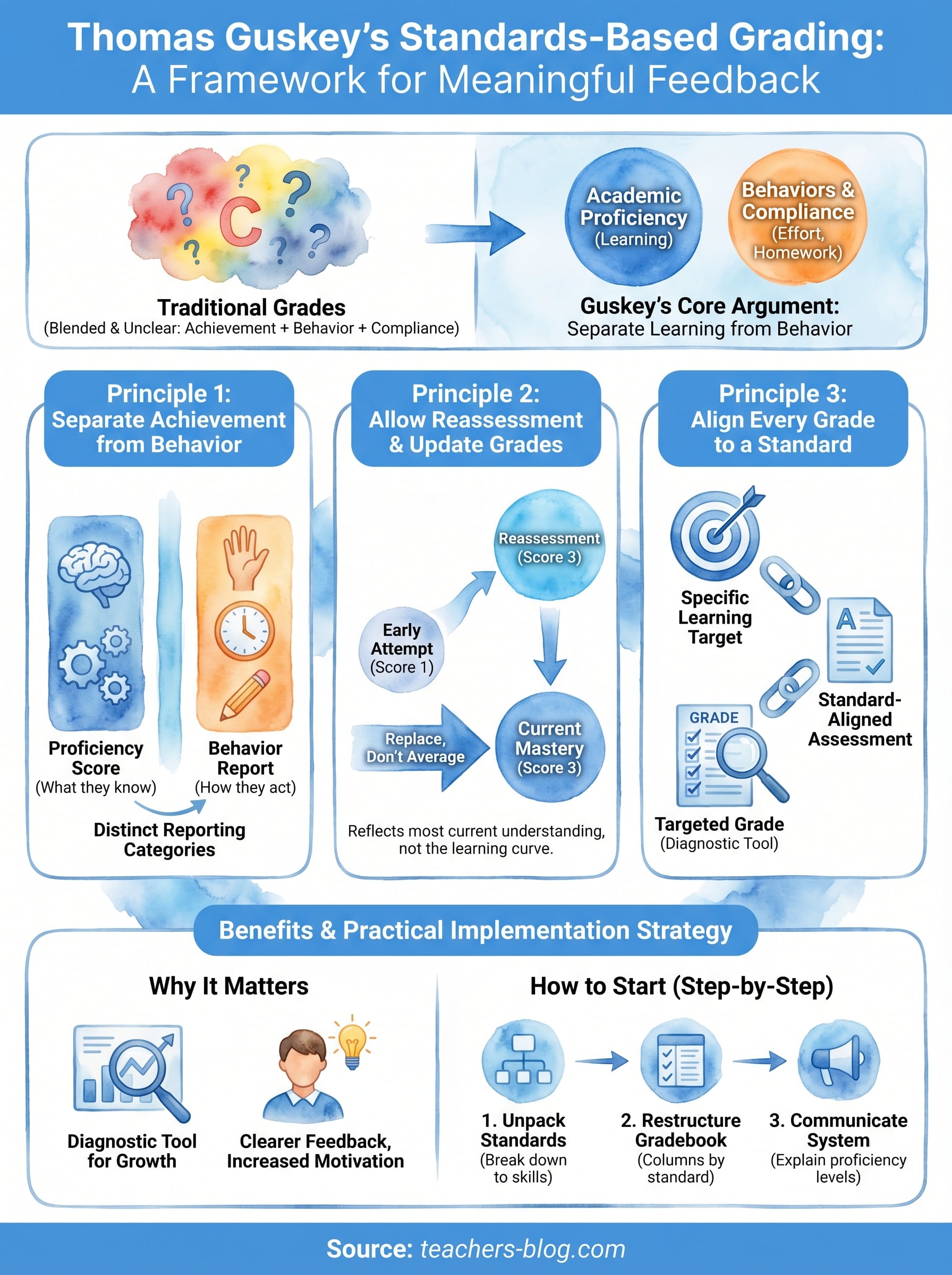
The core claim in thomas guskey standards based grading research is straightforward. Grades should report learning, not compliance, and schools should separate academic achievement from behaviors like homework completion, participation, and attendance. Guskey insists that mixing these elements into a single grade produces a report that is neither accurate nor meaningful.
He proposes that schools report academic proficiency and non-academic factors as distinct scores. A student might receive a standards-based proficiency rating tied purely to demonstrated mastery, alongside separate indicators for effort, responsibility, and behavior. That separation gives students, parents, and teachers a far clearer picture of where a student actually stands and what needs to change.
Why Guskey’s research holds weight
Guskey doesn’t rely on theory alone. He draws on decades of research on mastery learning, tracing back to Benjamin Bloom’s foundational work, and connects that evidence base directly to grading practices in real schools. His findings show consistently that when students receive accurate, specific feedback tied to clear learning targets, both motivation and achievement improve.
Your conversations with colleagues, parents, or administrators carry more weight when you can point to a research-grounded framework rather than personal preference. That is exactly what Guskey’s body of work provides, a way to make the case for grading reform using evidence that goes back decades and has been tested across multiple educational contexts.
Why standards-based grading matters in real classrooms
Traditional grading systems create a specific problem in real classrooms every day. When a student gets a C, that grade could mean anything from "strong conceptual understanding but poor homework habits" to "average across everything." Neither interpretation helps the student improve, and it certainly doesn’t help you as a teacher decide what to do next. The signal is buried inside a number that was never designed to be precise.
What traditional grades actually hide
Most traditional grade books mix academic achievement with behavior and compliance in ways that obscure both. A student who understands the material but misses assignments might receive the same grade as a student who turns in every assignment but has shallow understanding. That overlap creates a system where the grade reflects a combination of unrelated factors rather than what a student actually knows.
When a grade can’t tell you what a student knows, it can’t help that student grow.
The thomas guskey standards based grading framework cuts through that confusion by tying each grade directly to a specific learning standard. When you report proficiency by standard, you can identify exactly where a student is struggling and exactly what support they need. That precision turns grades from a final judgment into a useful diagnostic tool you can act on right away.
How students respond differently under SBG
Students behave differently when they know their grade reflects what they understand rather than what they submitted. Research consistently shows that students who receive specific, standard-aligned feedback are more likely to seek help and more willing to revise their work. The grade stops being a permanent verdict and starts being a marker of current progress.
For you as a teacher, that shift changes the entire conversation you have with students and parents. Instead of defending a number, you can point to specific standards a student has or hasn’t met, making feedback conversations clearer and more productive. That clarity is one of the most practical benefits that standards-based reporting delivers every grading period.
The core principles in Guskey’s standards-based grading
The thomas guskey standards based grading framework rests on a set of clear, connected principles rather than a loose collection of techniques. Understanding these principles gives you a solid foundation for making grading decisions that are consistent and defensible, whether you’re explaining a policy to parents or advocating for reform in your department. Each principle builds on the last, so grasping all of them together matters.
Separate achievement from behavior
Guskey’s first and most foundational principle is that academic proficiency and non-academic behaviors must never share a single grade. Effort, participation, and homework completion are real and worth tracking, but they belong in separate reporting categories, not folded into a proficiency score. When you keep them apart, every grade you assign reflects what a student actually understands rather than how cooperative or diligent they were during the unit.
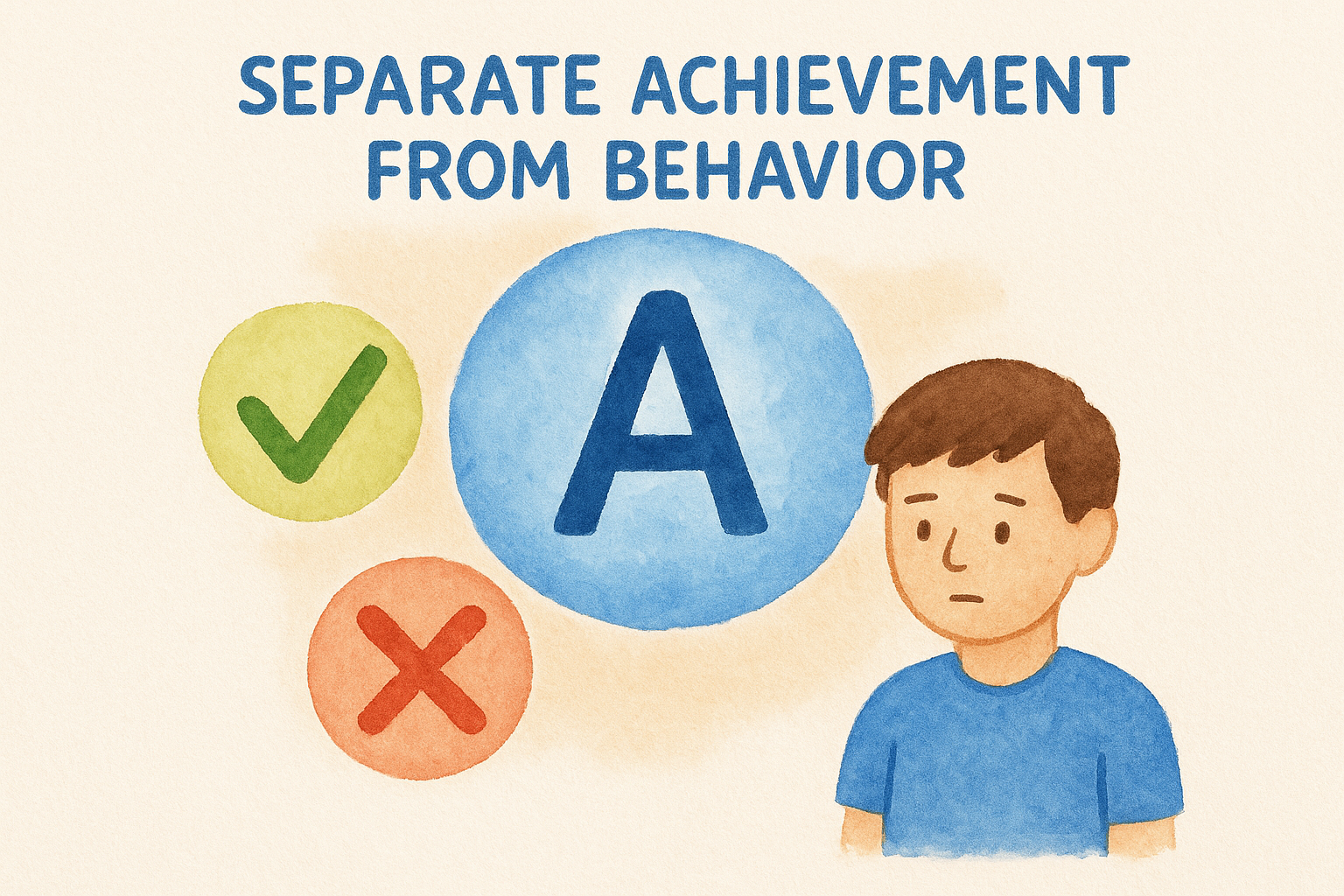
A grade that blends achievement with behavior tells you nothing reliable about either.
Allow reassessment and update grades on new evidence
Another core principle is that grades should reflect a student’s most current level of understanding, not an average of every attempt across a grading period. Guskey argues that averaging early struggles with later mastery penalizes students for the learning process itself. When you allow reassessment and replace older scores with newer evidence of proficiency, the grade becomes an accurate snapshot of where the student stands right now, which is the only information that actually helps anyone plan a next step.
Align every grade to a specific standard
Each grade a student receives should tie directly to a clearly stated learning target that students understand before instruction begins. Guskey emphasizes that transparency about expectations is not optional; it is what makes the whole system work. When every assessment connects to a specific standard, students can see exactly what they have mastered and what still needs work, removing the guesswork that frustrates students and parents under traditional grading systems.
How to implement Guskey-aligned SBG step by step
Putting the thomas guskey standards based grading framework into practice takes deliberate planning, but it doesn’t require you to overhaul everything at once. The most effective implementations start small, test the system in one unit or one course, and then expand from there. What matters most is that every decision you make connects back to the core principle of reporting what students actually know.
Step 1: Identify and unpack your learning standards
Start by pulling out the specific standards you are responsible for teaching in one course or unit. Read each standard carefully and break it down into observable, assessable skills that students can demonstrate. If a standard is too broad to assess directly, split it into two or three measurable learning targets that you can tie individual assignments and assessments to. This unpacking work takes time up front, but it makes every grading decision you make afterward far more straightforward.
When students can read a learning target and understand exactly what they need to show, they engage with assessment differently.
Step 2: Build your grade book around standards
Restructure your grade book so that each column represents a standard or learning target rather than an individual assignment. Record scores by proficiency level, such as a 1-to-4 scale, rather than by points or percentages. When a student reassesses, replace the old score with the new one so the grade book always reflects current understanding rather than an average of the learning curve.
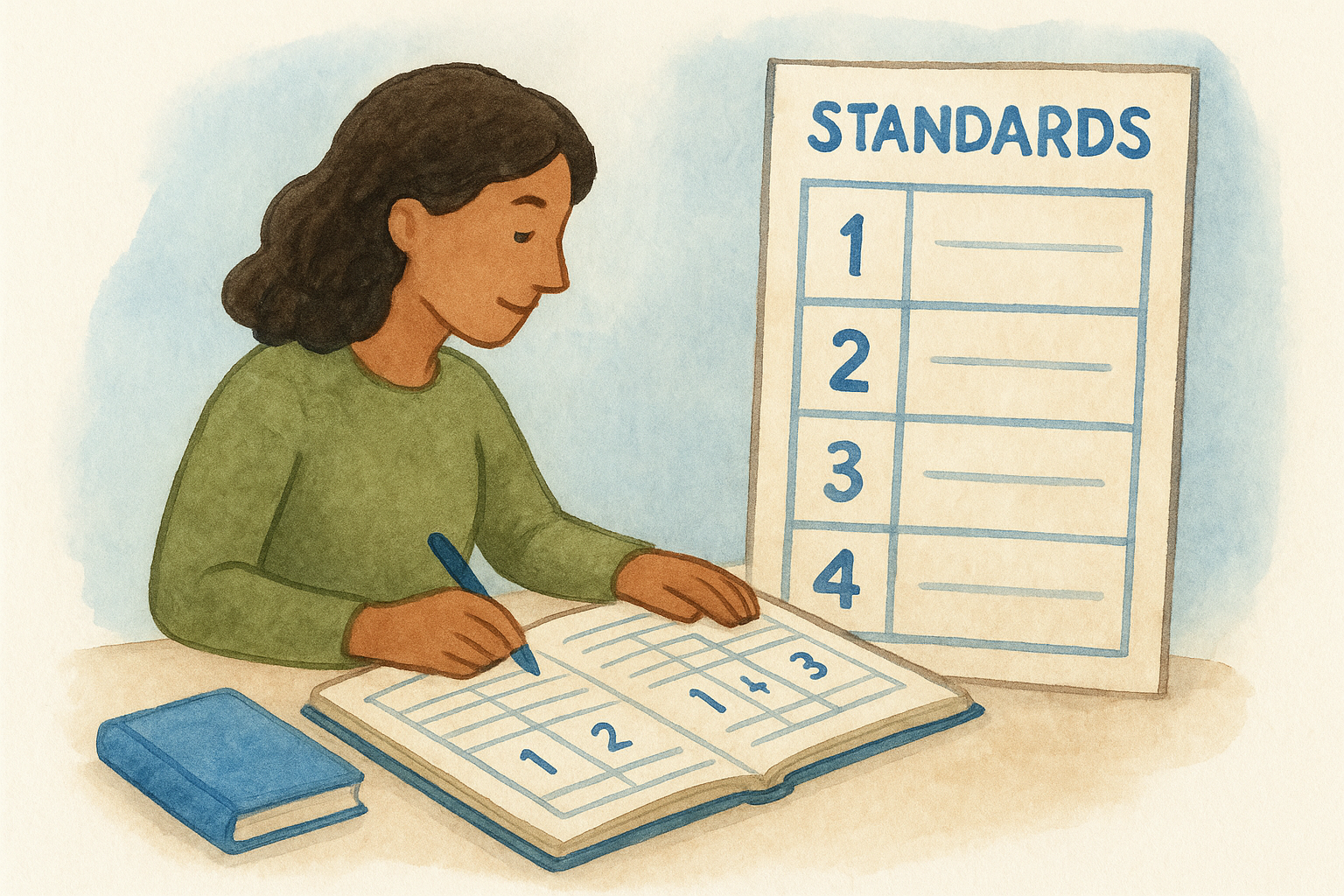
Step 3: Communicate the system to students and parents
Before the grading period begins, walk both students and parents through exactly how proficiency scores work and what each level means. Share a simple one-page breakdown that shows what a 3 looks like versus a 2 for each major standard. Parents who understand the system upfront are far less likely to push back when they receive a standards-based report instead of a traditional letter grade.
Common mistakes, pushback, and practical answers
Even when you understand the thomas guskey standards based grading framework well, implementation comes with predictable stumbling blocks. The most important thing to recognize is that most mistakes stem from layering new grading language onto old grading habits, which produces confusion rather than clarity. Knowing where things typically go wrong helps you avoid the most common traps before they undermine your effort.
Averaging scores across the grading period
One of the most common mistakes teachers make when shifting to standards-based grading is continuing to average all assessment scores together, including early attempts when students were still learning the material. Guskey is explicit that this approach contradicts the entire purpose of the framework. If a student scores a 1 on a standard in week two and a 4 in week six, the average tells you nothing useful about what that student actually knows right now.
Replace early scores with the most recent evidence of proficiency, and your grade book becomes a tool that reflects current understanding rather than the learning curve.
The fix is straightforward: when a student reassesses, update the score rather than average it. Some teachers worry this makes grades too easy to inflate, but the evidence shows the opposite. When students know that reassessment leads to score replacement, they engage with content more seriously because the stakes shift from game-playing to genuine learning.
Handling pushback from parents and administrators
Parents and administrators often push back when traditional letter grades disappear from report cards and proficiency scales appear in their place. That reaction is understandable because most people were graded with traditional systems and trust what feels familiar. Your best response is to prepare clear examples before the grading period starts showing exactly what a score of 3 looks like in practice compared to a 2 or a 4.
Administrators respond well when you connect your grading decisions to specific research, which is where Guskey’s published body of work becomes a practical tool rather than just background reading. Bring one clear finding to the conversation and anchor the discussion there.
A clear path forward
The thomas guskey standards based grading framework gives you something most grading reform conversations lack: a research-backed rationale for every decision you make. Guskey’s core argument is simple. Grades should communicate what students know, not blend achievement with behavior into a number that confuses everyone who reads it. When you separate proficiency from compliance, allow reassessment, and tie every score to a specific standard, your grades start working as tools for learning rather than final verdicts.
Start with one unit, one course, or one standard. Implement the scoring changes there first, get comfortable explaining the system to students and parents, and build from that foundation before expanding further. The shift takes time, but each small change compounds. If you want practical tools and strategies to support that process, explore what The Cautiously Optimistic Teacher has available for educators ready to make grading work for their students.