Teaching Responsibility and Empathy in the Classroom
One of the biggest mistakes we make in classroom management is assuming students already know how to take responsibility for their actions.
Many don’t.
And even when they do understand responsibility intellectually, they may not yet have the emotional tools to practice it — especially when they’re upset, embarrassed, or trying to save face in front of peers.
This is why teaching responsibility and empathy must be treated like any other skill in the classroom.
We don’t expect students to master writing essays or solving equations without instruction.
The same should be true for accountability and empathy.
When we teach these skills intentionally, students begin to:
Take ownership of their actions
Understand how their behavior affects others
Repair harm instead of denying it
Build stronger relationships with peers
This is the heart of restorative classroom management.
Why Responsibility and Empathy Matter
Traditional discipline systems often focus on rule-breaking and punishment.
But punishment alone rarely teaches students why their behavior matters.
Instead, students learn to:
Avoid getting caught
Blame others
Argue about fairness
Shut down emotionally
Restorative approaches shift the focus from rule violation to impact.
Instead of asking:
“What rule was broken?”
We ask:
“Who was affected, and how can we repair the harm?”
This subtle shift changes everything.
Students begin to see themselves as members of a community, not just individuals trying to avoid consequences.
The Two Skills Students Must Learn
Teaching responsibility and empathy involves building two connected abilities.
1. Taking Ownership
Students must learn to say:
“I made a mistake.”
“That was my responsibility.”
“I need to fix this.”
This can be surprisingly difficult for adolescents.
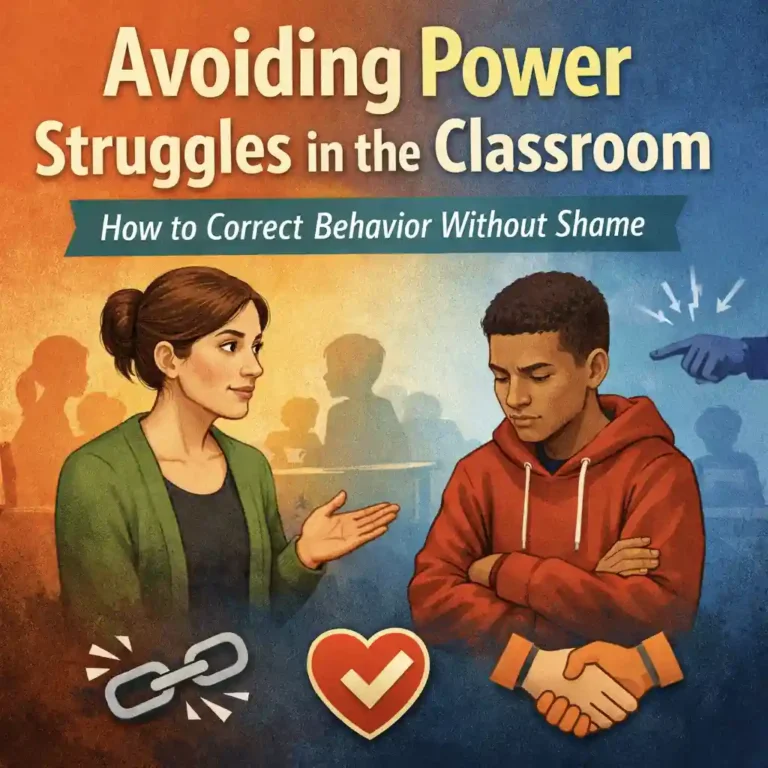
Admitting fault can feel threatening to their identity or social status.
Teachers can support this by making accountability safe rather than humiliating.
2. Understanding Impact
Empathy develops when students recognize how their behavior affects others.
For example, students begin to understand that:
Interrupting disrupts learning for others
Hurtful comments can damage relationships
Ignoring responsibilities affects the whole group
This awareness helps students move from self-centered thinking toward community thinking.
Practical Ways to Teach Responsibility and Empathy
These strategies can be built into daily classroom routines.
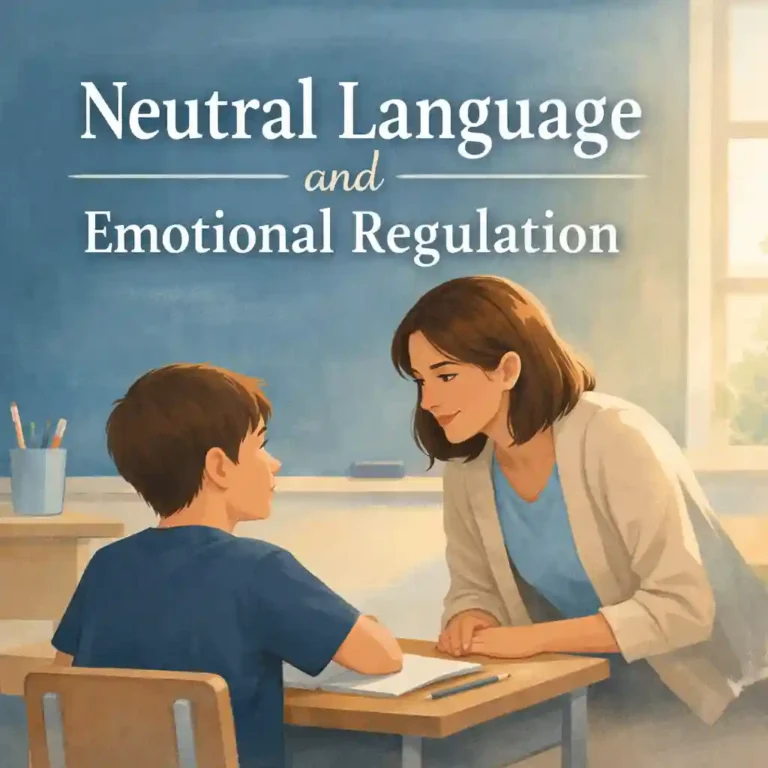
1. Use Impact-Based Language
When addressing behavior, describe the impact, not just the rule.
Instead of:
“Stop talking.”
Try:
“When conversations continue, it becomes hard for others to focus.”
This helps students understand that behavior affects people, not just rules.
2. Ask Reflective Questions
When something goes wrong, guide students through reflection.
Useful restorative questions include:
What happened?
What were you thinking at the time?
Who was affected by what happened?
What needs to happen to make things right?
These questions help students process events rather than simply defend themselves.
3. Normalize Mistakes
Students are more willing to take responsibility when mistakes are treated as part of learning.
You might say:
“Everyone makes mistakes. What matters is how we respond to them.”
This removes shame while still encouraging accountability.
4. Teach Repair, Not Just Apology
A simple “sorry” often isn’t enough.
Students should learn how to repair harm.
Examples include:
Rewriting hurtful messages
Helping clean up a mess they created
Supporting a peer they interrupted
Completing missed responsibilities
Repair restores relationships and reinforces responsibility.
5. Model Accountability Yourself
Students notice when teachers take responsibility.
Simple statements like these matter:
“I rushed that explanation earlier. Let me clarify.”
“I should have explained that expectation more clearly.”
“I misunderstood what happened — thank you for explaining.”
When teachers model accountability, students learn that taking responsibility is a strength, not a weakness.
6. Highlight Empathy in Classroom Conversations
Empathy grows when students practice perspective-taking.
During discussions, ask questions like:
“How might that feel from their perspective?”
“Why might someone react that way?”
“What do you think they needed in that moment?”
These questions build emotional awareness over time.
7. Use Reflection Instead of Immediate Punishment
When possible, give students space to think before responding.
Reflection prompts might include:
What happened?
What were you hoping would happen?
What actually happened instead?
What could you do differently next time?
Reflection helps students move from reaction to insight.
What Responsibility Looks Like in a Healthy Classroom
In classrooms where responsibility and empathy are taught consistently, you start to see small but powerful shifts.
Students begin to:
Apologize without being forced
Acknowledge mistakes more quickly
Support classmates who are struggling
Repair relationships after conflict
Think about the impact of their actions
These changes don’t happen overnight.
But they build over time when responsibility and empathy are explicitly taught and practiced.
Try This Tomorrow
Use one restorative question the next time a minor behavior issue occurs.
Instead of correcting immediately, ask:
“Who might be affected by what just happened?”
Then give the student a few seconds to think.
Even small moments like this begin to develop the habits of responsibility and empathy that make classrooms healthier and more respectful places to learn.
Next: Managing Behavior in Middle School vs. High School