6 Peer And Self Assessment Strategies For Better Reflection
Most students finish an assignment and immediately move on. They rarely pause to think about what they did well, what confused them, or how they could improve. That’s a problem, because reflection is where real learning happens. And one of the most effective ways to build that habit is through peer and self assessment strategies that give students ownership of the process.
At The Cautiously Optimistic Teacher, we’re always looking for practical approaches that help educators foster student growth without adding hours to their workload. Peer and self assessment fits that goal perfectly. When done right, it sharpens critical thinking, builds metacognitive skills, and frees you up to focus on targeted feedback where it matters most.
This article breaks down six strategies you can start using to make peer and self assessment a meaningful part of your classroom, complete with tools like rubrics and reflection journals to keep things structured. Whether you’re new to these methods or looking to refine what you already do, you’ll walk away with concrete ideas ready for implementation.
1. Build a student-friendly rubric with AI support
A rubric only works if students can actually read and use it. When criteria are vague or written in teacher-speak, students guess instead of self-assess, and peer feedback becomes meaningless. AI tools can help you build rubrics that are clear, specific, and written at the right level for your students in a fraction of the time it would normally take.
What this strategy improves
When you give students a well-built rubric, both peer and self assessment strategies shift from guesswork into a structured process. Students move from "I think this is good" to identifying specific strengths and gaps against defined criteria. That shift builds metacognitive awareness and makes your feedback conversations far more productive.
How to set criteria students can actually use
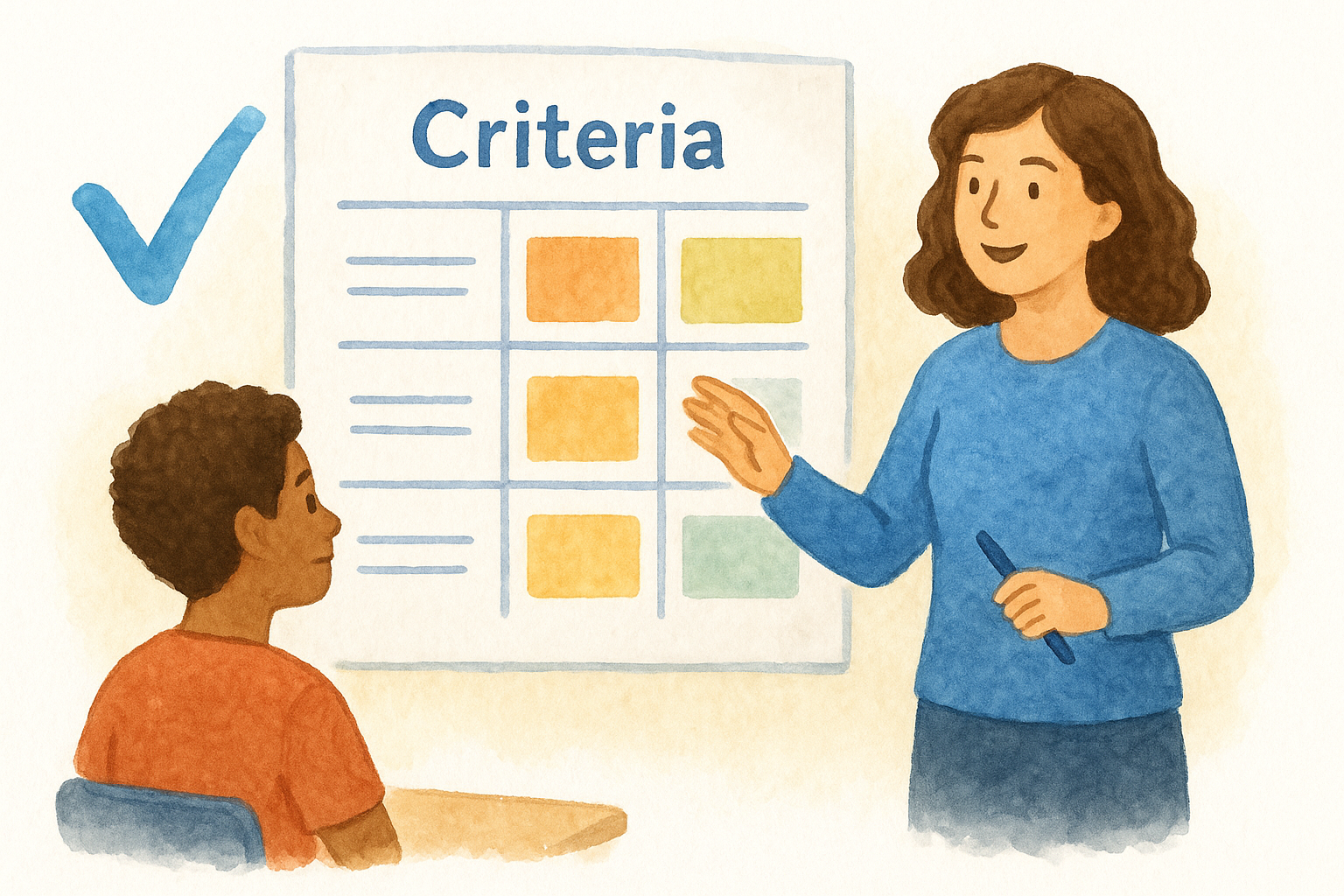
Start with three to five core criteria tied directly to your learning goals. Each criterion should describe observable behaviors, not abstract qualities. Instead of "good organization," write "each paragraph starts with a clear topic sentence." That specificity gives students something concrete to check rather than something open to wide interpretation.
How to co-create the rubric with students
Involve students in the drafting process to increase buy-in. Share a rough draft and ask them to flag any language they find confusing. Then revise it together as a class. When students help define what "meets expectations" looks like, they internalize the criteria faster and apply them more accurately during peer review.
Co-creating the rubric takes one extra class period upfront and saves you dozens of vague feedback cycles later.
How to use the rubric for peer and self scores
Give students the rubric before they start the task, not after. During peer review, each student scores their partner’s work against each criterion and writes one specific comment per row. For self-assessment, they complete the same process on their own work. This side-by-side comparison surfaces discrepancies worth addressing in a brief follow-up conference.
What to watch for and how to fix it
The most common issue is students marking everything at the highest level to avoid conflict. Counter this by requiring evidence for every score they assign. If a student gives a peer top marks for organization, they must quote a specific sentence that supports it. That single requirement raises the quality of peer feedback significantly.
2. Calibrate with exemplars before students assess
Before students assess each other’s work, they need to agree on what quality actually looks like. Without that shared standard, peer and self assessment strategies fall apart because every student applies a different internal benchmark.
What calibration changes in student feedback
Calibration shifts students from subjective impressions to evidence-based judgments. When you show the class examples of work at different quality levels before they start assessing, students build a shared understanding of the criteria that makes their feedback consistent and fair.
How to pick or create strong exemplars
Choose two or three pieces of work that clearly represent different performance levels. You can use anonymized samples from previous classes or create your own examples that deliberately hit or miss specific criteria. Either way, give students something concrete to compare against each row of the rubric.
Strong exemplars do more teaching in ten minutes than a rubric explanation alone can do in a full period.
How to run a quick whole-class practice rating
Display one exemplar and ask students to score it independently before discussing as a group. Then open the floor for students to compare scores and explain their reasoning. This short practice round surfaces misunderstandings about criteria before they carry into actual peer review.
How to align students to the same success criteria
After the discussion, clarify any scoring disagreements as a class and lock in shared definitions for each rubric level. Post those definitions somewhere visible so students can reference them during assessment without guessing.
How to prevent inflated scores and vague comments
Require students to cite specific evidence from the work when defending their scores. That one habit pushes students away from hollow praise and toward targeted, useful observations that actually help their peers improve.
3. Use paired marking with clear feedback stems
Paired marking gives each student a designated reviewer and a structured way to respond. When you combine that with clear feedback stems, students stop writing vague comments and start delivering feedback that their partner can actually act on.
What paired marking looks like in real time
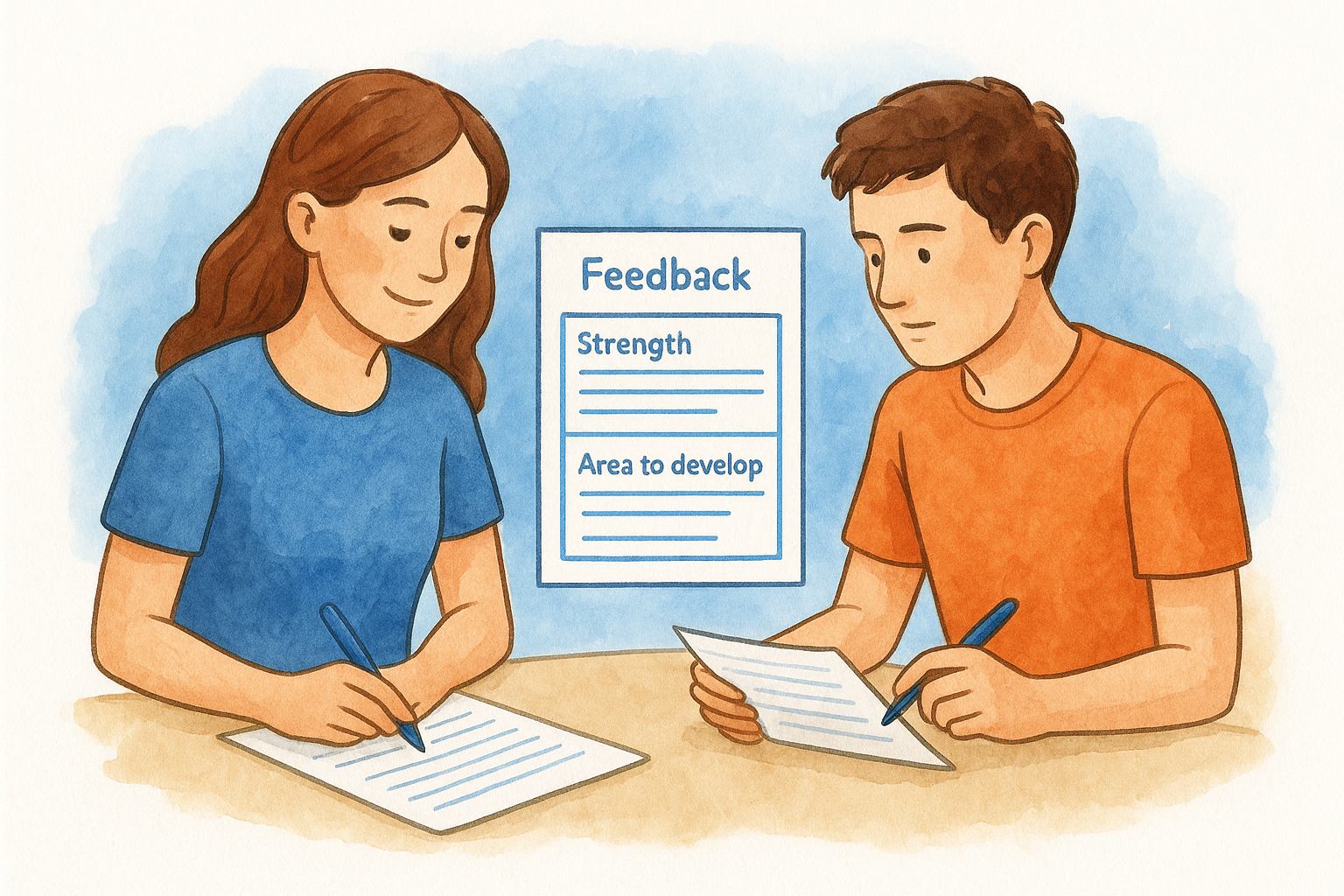
Students swap work with one partner, then complete a structured response form tied to the rubric. Each stem prompts a specific type of comment, such as "One strength I noticed is…" or "One area to develop is…" This focused format prevents students from writing "good job" and moving on without substance.
How to assign partners and rotate reviewers
Pair students strategically rather than randomly. Match students with similar skill levels first so feedback feels credible and fair, then rotate partners after a few cycles. Rotating reviewers exposes students to different approaches and keeps the process from feeling stale over time.
How to require specific evidence-based feedback
Tell students they must quote or reference something specific from the work in every comment. A stem like "I noticed this in line…" forces careful reading before responding. That habit alone raises the quality of your peer and self assessment strategies across the whole classroom.
Feedback stems act as training wheels. Once students internalize the habit, you can gradually remove the structure.
How to keep feedback kind, useful, and short
Limit each student to two strengths and two improvements per review. Short constraints prevent feedback overload and keep comments focused. Remind students that useful feedback is specific, not simply generous.
How to grade the process without over-grading
Score the quality of the feedback form rather than the accuracy of every score assigned. A simple three-point check for completeness, evidence, and tone takes under two minutes per student and keeps grading entirely manageable.
4. Run a reflection journal that leads to next steps
A reflection journal turns peer and self assessment strategies into a habit with direction. Without a structured place to record thinking, students reflect once and forget. Journals create a paper trail of growth that both you and your students can reference over time.
What to prompt so reflection stays concrete
Vague prompts produce vague entries. Use specific questions tied to the task, such as:
- What step gave you the most difficulty?
- What would you change if you did this again?
Those targeted questions produce actionable insight rather than surface-level summaries.
How to connect reflections to the rubric
Direct students to reference at least one rubric criterion in every entry. This anchors reflection to learning goals rather than general feelings. When students write "I struggled with the topic sentence criterion," the next step becomes obvious.
Connecting reflections to the rubric closes the loop between assessment and improvement.
How to build goal setting into the routine
End each entry with one specific, verifiable goal for the next task. Strong goals follow this simple format: action verb + specific criterion + timeline.
That structure keeps goals concrete enough to check and prevents vague intentions like "try harder" from taking over.
How to make it fast enough to sustain weekly
Keep entries to three to five minutes of focused writing. Consistent short practice beats occasional long sessions every time.
A prompt sheet gives students a clear starting point each week. That small tool reduces friction and keeps the routine predictable and repeatable.
How to respond without creating extra workload
Acknowledge entries with a quick stamp or checkmark rather than written comments. Reserve your written responses for students who flag a specific concern.
This keeps your grading load light while still honoring the habit students are building.
5. Use exit tickets and traffic lights for quick self-checks
Exit tickets and traffic light signals give you fast, low-stakes data on how students are actually processing the lesson. These tools make peer and self assessment strategies feel manageable for students who find longer reflection tasks overwhelming.
How exit tickets uncover learning gaps fast
Exit tickets surface specific misunderstandings before they compound over several days. When students write one sentence about what confused them, you get real-time insight into exactly where instruction needs to shift.
How to write exit prompts that drive reflection
Write prompts tied directly to today’s learning target, not general feelings about the class. A prompt like "Explain this concept in your own words" produces far more useful data than "How do you feel about today’s lesson?"
Specific prompts take thirty seconds to write and can save you hours of reteaching unfocused content.
How traffic lights support honest self-assessment
Traffic light signals (red, yellow, green) give students a simple vocabulary for rating their own understanding. Display the scale and ask students to write their color on the exit ticket before leaving class.
How to turn results into regrouping and reteaching
Sort exit tickets into three piles by confidence level right after class. That sort takes under five minutes and gives you a clear grouping plan for the next day’s opening activity.
How to reduce performative answers and copycatting
Require students to write their response independently before sharing or signaling anything to the class. That one step stops students from mirroring their neighbor and gives you honest, individual data you can actually use.
Where to start this week
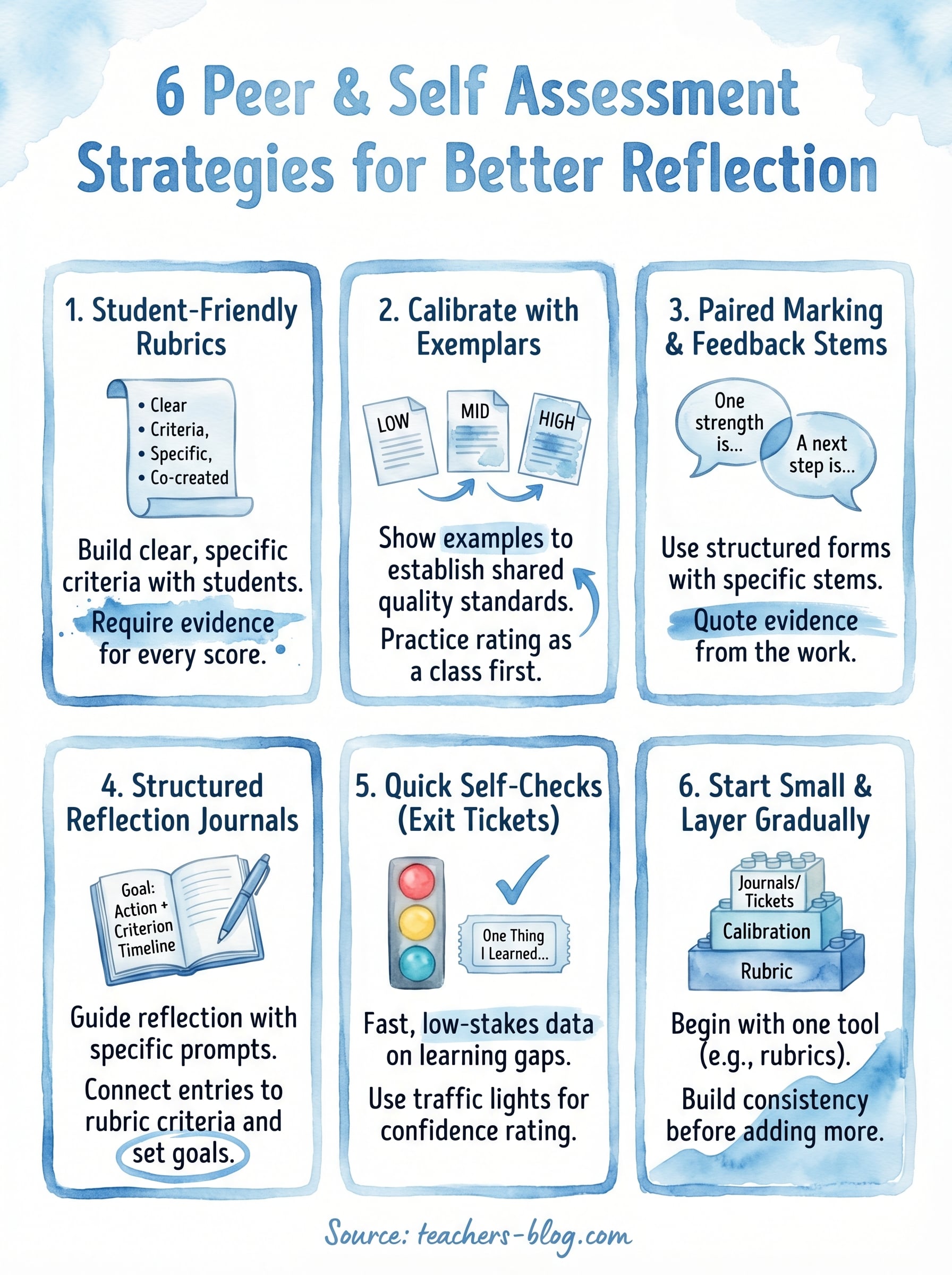
You do not need to launch all five strategies at once. Pick one tool from this list and commit to it for two weeks before adding anything else. If you are new to peer and self assessment strategies, start with the student-friendly rubric from strategy one. It builds the foundation that every other approach in this article depends on.
Once students can read and apply the rubric with confidence, layer in calibration with exemplars. That combination alone will raise the quality of your class discussions and make peer review feel fair rather than arbitrary. Add the reflection journal or exit tickets when you want to build a consistent habit of student ownership that extends beyond individual assignments.
Every strategy here is designed to work in real classrooms without adding unsustainable workload to your plate. Visit The Cautiously Optimistic Teacher for more tools and resources that help you teach smarter.