5 New Teacher Resume Examples to Copy and Adapt
You have zero years of official classroom experience, a stack of practicum hours, and a job posting that wants "proven results." Staring at a blank document while searching for new teacher resume examples at 11pm is a rite of passage for almost every education major. The good news: you don’t need a decade of teaching to write a resume that gets you an interview, you just need to know how to frame what you already have.
This article gives you exactly that. Below are five complete resume samples built for different entry points into teaching, from a fresh graduate with only student teaching under her belt to a career-changer moving into the classroom from another field. Each one shows you how to translate coursework, tutoring, and coaching into language that principals actually want to read.
You’ll see the formatting choices that matter, like where to place your certification status and how to phrase a substitute teaching stint so it reads as an asset instead of a placeholder. Copy the structure, swap in your own details, and you’ll walk into your first hiring season with a document that looks like it belongs to someone already comfortable in front of a class.
1. First-year elementary school teacher resume example
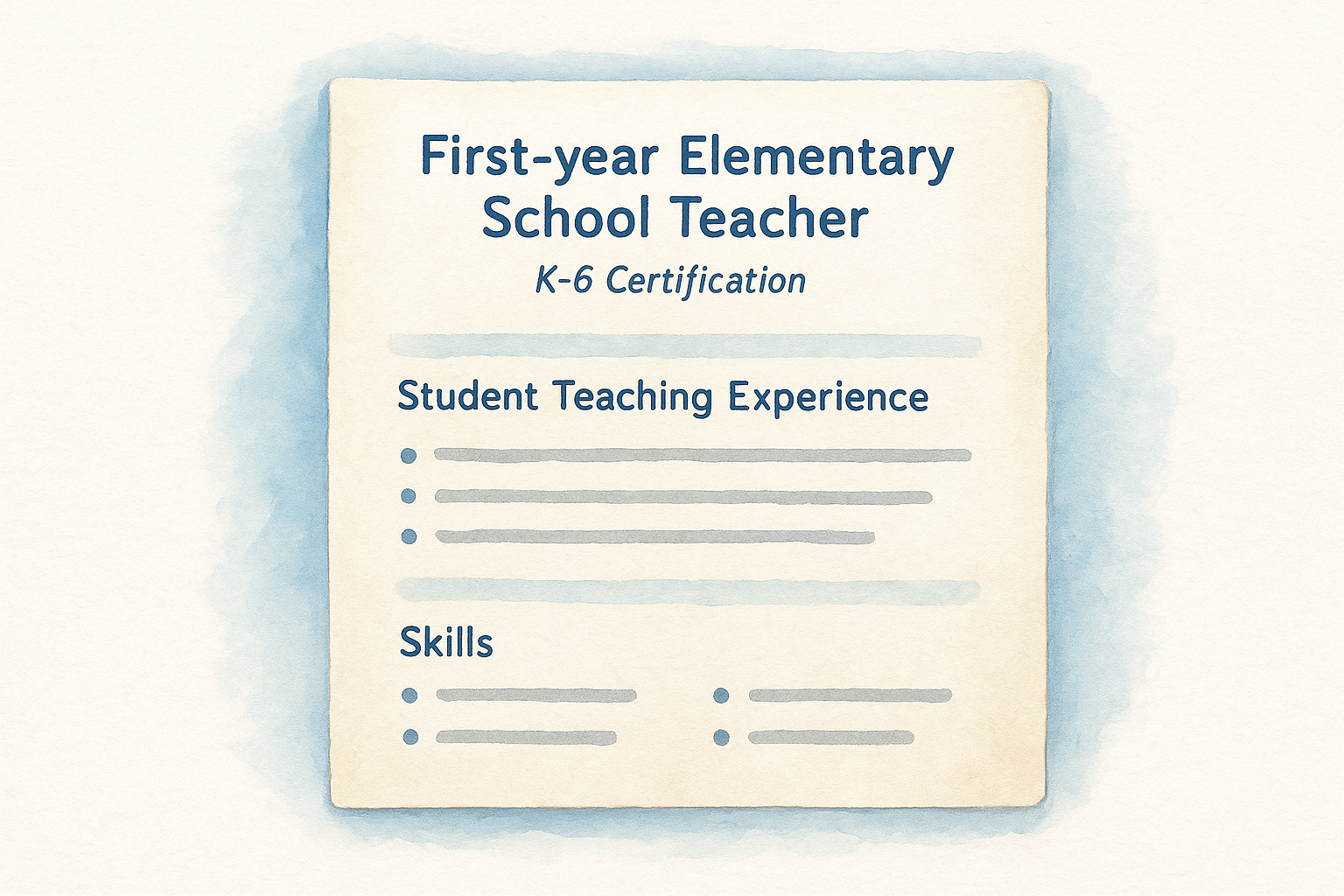
Picture a candidate with a fresh K-6 certification, 100 hours of student teaching in a second-grade classroom, and a summer spent running a day camp. That’s the profile this example targets, and it leans hard on classroom management stories and parent communication because elementary principals hire for patience and consistency, not flashy credentials.
Who this example fits
This sample works best for new graduates in early childhood or elementary education who haven’t held a paid teaching contract yet. If your strongest experience comes from student teaching placements, a nanny job, or a summer camp counselor role, this is your template. It also suits substitute teachers applying for their first full-time classroom.
Key sections to highlight
Put your certification status right under your name, even if it’s still pending, because elementary hiring committees screen for licensure first. Follow it with a Student Teaching Experience section written like a job history, complete with grade level, school name, and dates.
A pending certification listed clearly at the top of the resume tells a hiring committee you’re serious before they read a single bullet point.
Skills and keywords to include
Elementary postings repeat certain phrases in the job description itself, so mirror them:
- Differentiated instruction
- Classroom management
- Phonics and literacy instruction
- Behavior intervention plans
- Parent-teacher communication
How to adapt it for your application
Swap the sample’s second-grade placement details for your own grade band, then rewrite each bullet using a number: 12 students with IEPs supported, or 3 reading groups differentiated by level. Skip generic phrases like "worked well with children" and replace them with a specific outcome, such as improved sight-word recognition scores across a semester.
2. New middle school teacher resume example
Middle school hiring teams want proof you can handle the volatility of sixth through eighth grade, where kids swing between needing structure and needing autonomy in the same class period. This example centers on a candidate with a content-area endorsement, like English or science, plus experience running a club or coaching a sport, because that combination signals someone who can manage adolescents outside a traditional lesson too.
Who this example fits
Use this template if you’re licensed in a specific subject area and your background includes tutoring, coaching, or leading an after-school program with middle schoolers. It also fits candidates moving from an elementary placement who want to pivot toward older students.
Key sections to highlight
Lead with your content endorsement and any advisory or club experience, since middle schools value teachers who build relationships beyond the gradebook.
Middle school resumes succeed when they prove you can hold a teenager’s attention and their trust at the same time.
Skills and keywords to include
- Content-area instruction (name your subject)
- Adolescent development
- Formative assessment
- Advisory or homeroom leadership
- Conflict de-escalation
How to adapt it for your application
Replace the sample’s subject with yours, then quantify your club or coaching role with a real number, like 15 students mentored weekly.
3. Entry-level high school teacher resume example
High school hiring managers care about one thing above all: can you handle a specific subject at a rigorous level while still connecting with teenagers who’d rather be anywhere else. This example fits a candidate with a single-subject credential, maybe in math or history, and experience that shows subject mastery, like a relevant college major or a tutoring gig at a learning center.
Who this example fits
This template suits new grads with a single-subject endorsement and no full-time contract yet, especially those who tutored, graded AP exams, or ran a subject-specific study group. It also works for long-term substitutes hoping to convert to a permanent role.
Key sections to highlight
Open with your subject credential and grade band, then add a section on curriculum or test-prep experience, since department chairs want proof you understand the content standards, not just classroom control.
A high school resume earns trust when it proves subject depth before it proves anything else.
Skills and keywords to include
- Standards-based instruction
- AP or honors curriculum familiarity
- Data-driven assessment
- Cross-curricular collaboration
- Test preparation strategies
How to adapt it for your application
Name your exact subject and swap in a measurable result, like average score gains on a unit test you helped design.
4. Career-change to teaching resume example
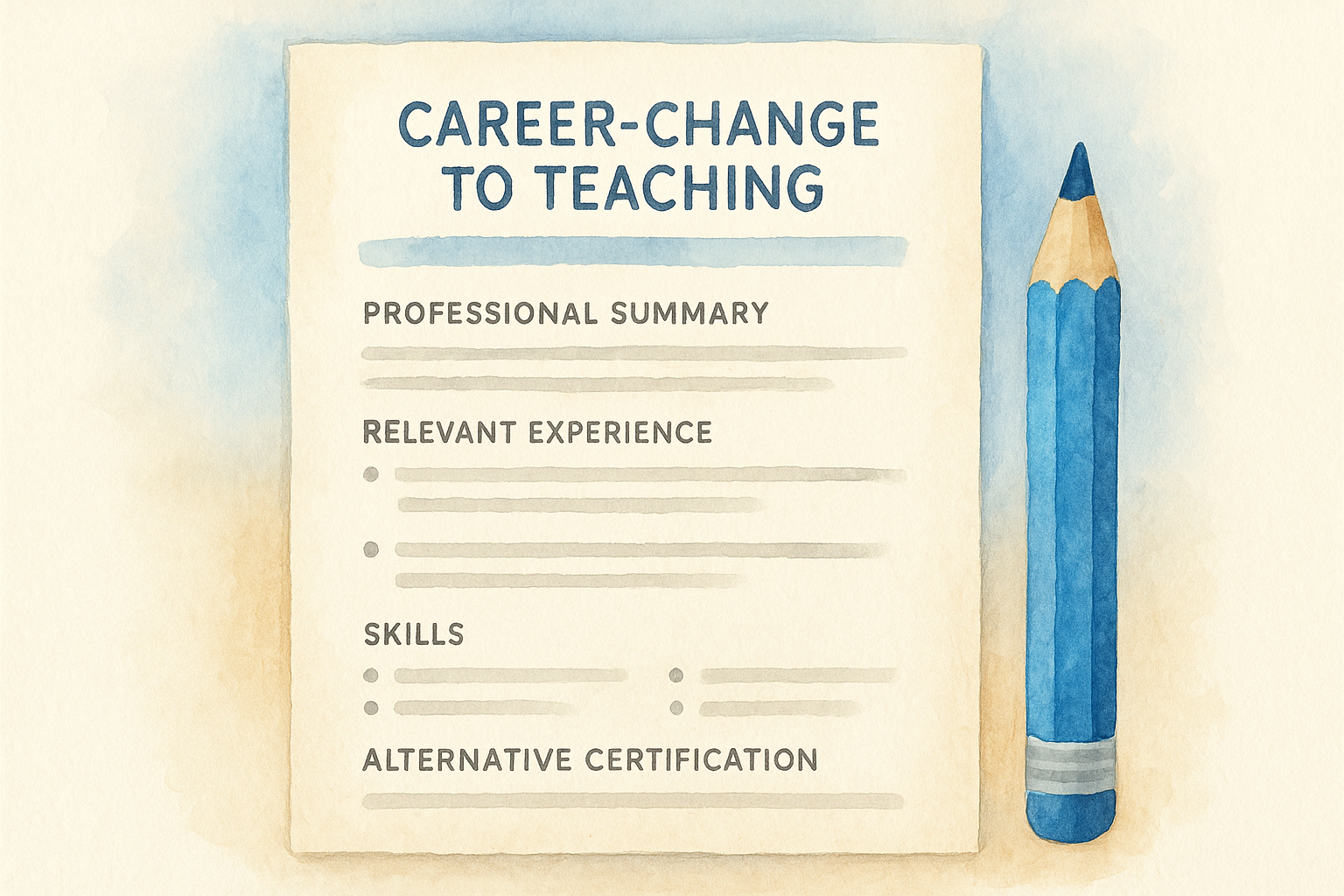
Someone leaving corporate training, nursing, or a decade in retail management brings something a 22-year-old graduate doesn’t: real workplace judgment. This example fits a candidate with an alternative certification in progress, a bachelor’s in something unrelated to education, and a professional history full of transferable skills that just need translating into classroom language.
Who this example fits
This template works for career-changers pursuing alternative certification while still finishing coursework, plus anyone whose prior job involved training, presenting, or managing people. Former corporate trainers, nurses, and paralegals moving into teaching all fit this profile well.
Key sections to highlight
Open with a Professional Summary that names your transition directly, then follow with a Relevant Experience section that reframes old job titles around teaching-adjacent duties like training new hires or presenting to groups.
A career-change resume works when it stops apologizing for the switch and starts selling it as an advantage.
Skills and keywords to include
- Curriculum design or training development
- Public speaking and presentation
- Cross-functional collaboration
- Alternative certification progress
- Adult and youth instruction
How to adapt it for your application
Rewrite each former job bullet to lead with an instructional verb, like "trained" or "onboarded," instead of a corporate one like "managed." Then add a line naming your certification timeline so principals know exactly when you’ll be classroom-ready.
5. Student teacher to full-time teacher resume example
This candidate just finished a semester of student teaching and wants that placement to read as real classroom leadership, not an internship. The example assumes a recent graduate with a completed placement who took over lesson planning and grading for several weeks, maybe even ran a parent conference solo, and needs a resume that makes that stretch of independence obvious.
Who this example fits
Use this template if you finished student teaching within the last six months and haven’t landed a contract yet. It also suits candidates applying to the same school or district where they completed their placement, since that familiarity is worth naming directly.
Key sections to highlight
Expand your student teaching entry beyond a single line. List the specific responsibilities you owned, like unit planning, grading, or leading a full week of instruction solo.
A student teaching placement described in detail reads like real experience, not a formality.
Skills and keywords to include
- Lesson plan development
- Gradual release of responsibility
- Cooperating teacher collaboration
- Formative and summative assessment
- Classroom transition management
How to adapt it for your application
Name the exact weeks you led instruction independently, and mention any mentor teacher praise you can quote briefly.
Writing your own resume from here
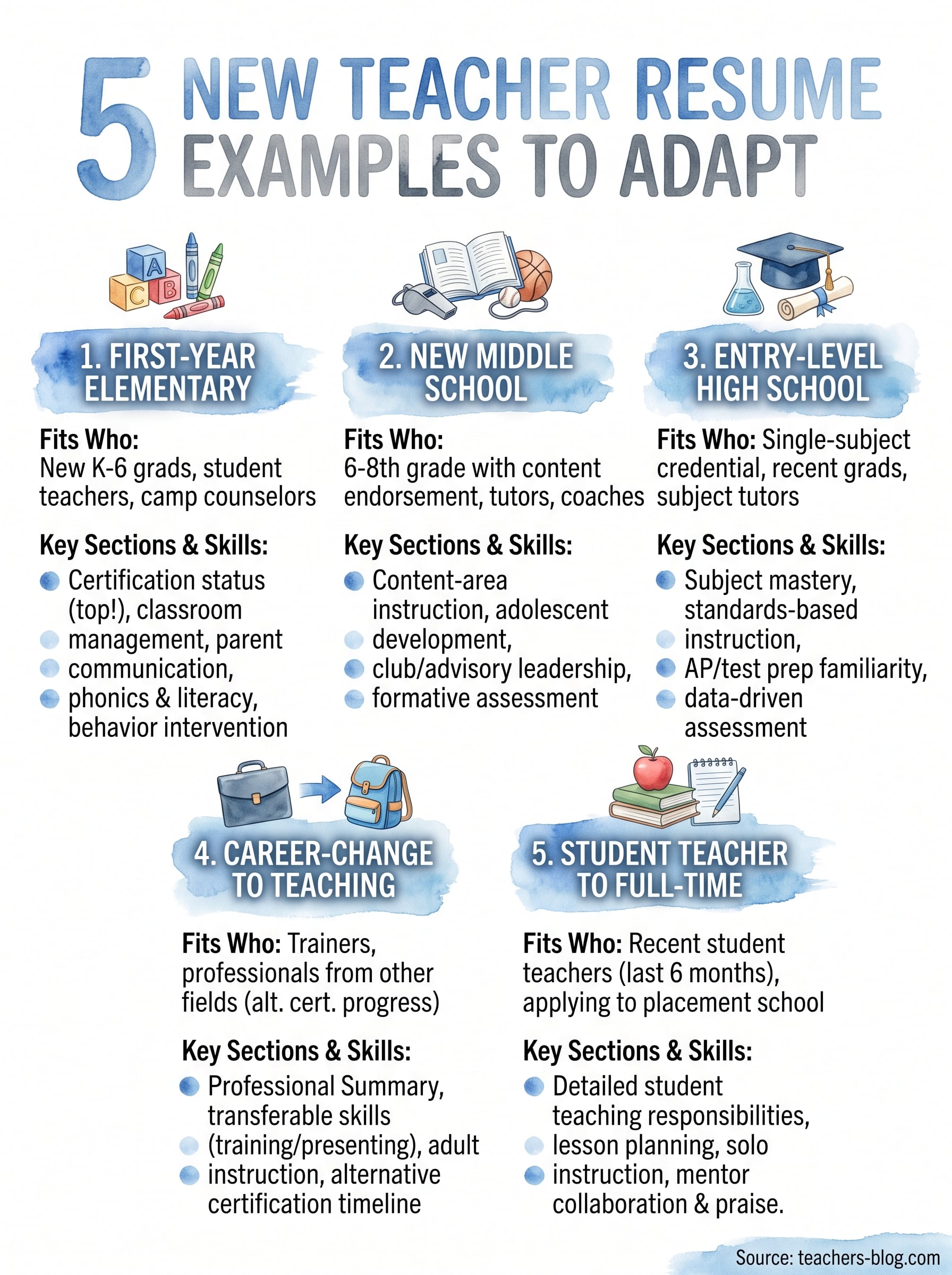
Five templates, one goal: a resume that reads like you already belong in the classroom. Whichever example matches your path, elementary, middle, high school, career-change, or fresh out of student teaching, the same rule applies. Specific numbers and real responsibilities beat vague phrases every time. A hiring committee skims fast, so give them a bullet they can’t skip past.
Before you hit submit, reread your draft one more time and cut anything that sounds like it could describe any candidate, not just you. Concrete classroom details are what separate a resume that gets filed from one that gets a callback.
Once your resume is solid, the interview is next, and that’s a whole different kind of pressure. Head over to The Cautiously Optimistic Teacher for interview prep, lesson planning tools, and more resources built for teachers just getting started.