11 Ways To Start Improving Student Participation Today
You ask a question. Silence. A few students stare at their desks. One picks at a fingernail. Another is suddenly very interested in the ceiling tiles. You rephrase. Still nothing. If this scene feels familiar, you’re not alone, and improving student participation is likely something you think about more than you’d care to admit.
Here’s the thing: low participation rarely means students don’t care. More often, it means something in the classroom environment, the question type, the social risk, the pacing, is working against them. The good news? Small, intentional shifts in how you structure lessons and interactions can produce real, measurable changes in how many students speak up, contribute, and engage.
That’s exactly what we focus on here at The Cautiously Optimistic Teacher, giving educators practical tools and strategies that actually work in real classrooms, not just in theory. From our AI-powered differentiation tools to our unit plans and lesson resources, everything we create is built around one core belief: every teacher deserves support that makes their job more effective and less exhausting. This article is no different.
Below, you’ll find 11 actionable strategies you can start using immediately to get more students actively participating. No filler, no abstract pedagogy, just concrete techniques backed by classroom experience that you can adapt to your grade level, subject area, and students.
1. Generate better prompts with the question generator
The quality of your questions directly determines the quality of your students’ responses. When you ask vague or surface-level questions, you get one-word answers or silence. The AI-powered Question Generator on The Cautiously Optimistic Teacher takes the content you’re already teaching and produces higher-order thinking questions that give students something genuinely worth responding to.
What to do today
Go to the Question Generator, paste in a paragraph or passage from your current unit, and generate a set of questions. Pick three to five that require students to explain, defend, compare, or connect ideas rather than simply recall facts. Save them before your next lesson and replace at least two of your usual discussion questions with the new ones.
Why it works
Students go quiet when they’re unsure what a "good answer" looks like. Open, analytical questions remove that pressure because no single correct answer exists to chase. Research on classroom questioning consistently shows that higher-order questions increase both the quantity and depth of student responses, which directly supports improving student participation at every grade level.
The type of question you ask signals to students whether their thinking matters or whether they’re just expected to repeat information back at you.
Classroom examples
A history teacher covering the Civil Rights Movement might swap "What year was the March on Washington?" for "What made the March on Washington effective, and could a similar strategy work today?" An English teacher can replace "Who is the protagonist?" with "What does the protagonist’s decision in chapter three reveal about their values?" Both versions require students to actually think before they speak.
Differentiate for different learners
Use the generator to build two tiers of questions from the same content: one tier for students who need more scaffolding and one for students ready to go deeper. Distribute these on index cards so students choose their entry point without feeling singled out. Adding sentence starters like "I think… because…" or "This connects to… in the way that…" helps hesitant speakers structure a complete response.
How to measure progress
Track how many different students voluntarily respond during a single class discussion each week. After two weeks of using stronger prompts consistently, you should see more students raising their hands unprompted. A simple tally in your grade book is enough to spot the trend.
2. Co-create participation expectations with students
When students help define what participation looks like, they take genuine ownership of it. Instead of following rules handed down from you, they follow norms they helped build, which makes those norms far easier to maintain throughout the year.
What to do today
On your next class day, spend ten minutes asking students: "What does good participation look and sound like?" Record their answers on the board and narrow them down to four or five clear expectations together. Post the final list somewhere visible and refer back to it regularly.
Why it works
Students comply more consistently with rules they helped create because those rules feel fair rather than imposed. This sense of shared ownership directly supports improving student participation by reducing the resistance that often comes from top-down classroom management.
When students see their own words on the wall, participation stops being your expectation and starts being their commitment.
Classroom examples
A middle school class might settle on "one voice at a time" and "build on what someone else said." A high school class might add "ask a follow-up question" before moving on. Both sets work because students generated them.
Differentiate for different learners
Give quieter students a written option: have them submit their suggested norms on a sticky note before the group discussion begins. That way, every student shapes the list, not just the most vocal ones.
How to measure progress
At the end of each week, ask students to self-rate their participation against the co-created norms on a simple 1-5 scale. Compare their ratings to your own observations and look for patterns.
3. Ask more open-ended questions during instruction
The way you phrase a question can open a conversation or shut it down before it starts. Closed questions with one correct answer put students on the spot in a way that discourages risk-taking, while open-ended questions invite multiple valid responses and give more students a genuine entry point into the discussion.
What to do today
Before your next lesson, take three to five questions you planned to ask and rewrite them so they start with "how," "why," or "what do you think." Write the revised versions in your lesson plan so you use them in the moment rather than defaulting to recall-based questions out of habit.
Why it works
Open-ended questions signal to students that their perspective has value, not just their ability to retrieve a fact. This shift is central to improving student participation because it lowers the social risk of being wrong and raises the perceived value of contributing.
When there is no single right answer to chase, more students feel safe enough to try.
Classroom examples
A science teacher might swap "What is photosynthesis?" for "Why do you think plants evolved to use sunlight instead of another energy source?" A math teacher can ask "How did you decide which operation to use first?" instead of simply checking for the correct answer.
Differentiate for different learners
Post two or three sentence starters on the board so students who struggle to formulate responses have a clear structure to lean on without feeling singled out.
How to measure progress
Count how many unique students respond per class session each week, and note whether that number increases as you shift your questioning style.
4. Use wait time and planned silence
Most teachers wait less than one second after asking a question before jumping in to fill the silence. That pace locks out slower processors and rewards only the students who can respond in under a second, which is a fraction of your class.
What to do today
After you ask your next question, count silently to five before calling on anyone. Tell students upfront: "I’ll give you five seconds to think before anyone responds." That single instruction resets the whole dynamic and signals that thinking time is expected, not optional.
Why it works
Wait time directly supports improving student participation because it gives every student a fair chance to form a response before the fastest hand goes up. Research from Mary Budd Rowe’s foundational work on classroom questioning found that extending wait time to three to five seconds increased the length and accuracy of student responses and drew in students who otherwise stayed quiet.
Silence in a classroom is not dead time. It is thinking time, and thinking time is where participation actually begins.
Classroom examples
A social studies teacher can say "Take five seconds, then we’ll hear from someone who hasn’t shared yet." A science teacher might project the question on the board so students read and think simultaneously before anyone speaks.
Differentiate for different learners
Allow English language learners or students with processing differences extra think time by pairing silent wait time with a quick written note before the verbal response.
How to measure progress
Note how many different students contribute per discussion day and track whether that number grows over two weeks of consistent wait time use.
5. Build in think-pair-share every class
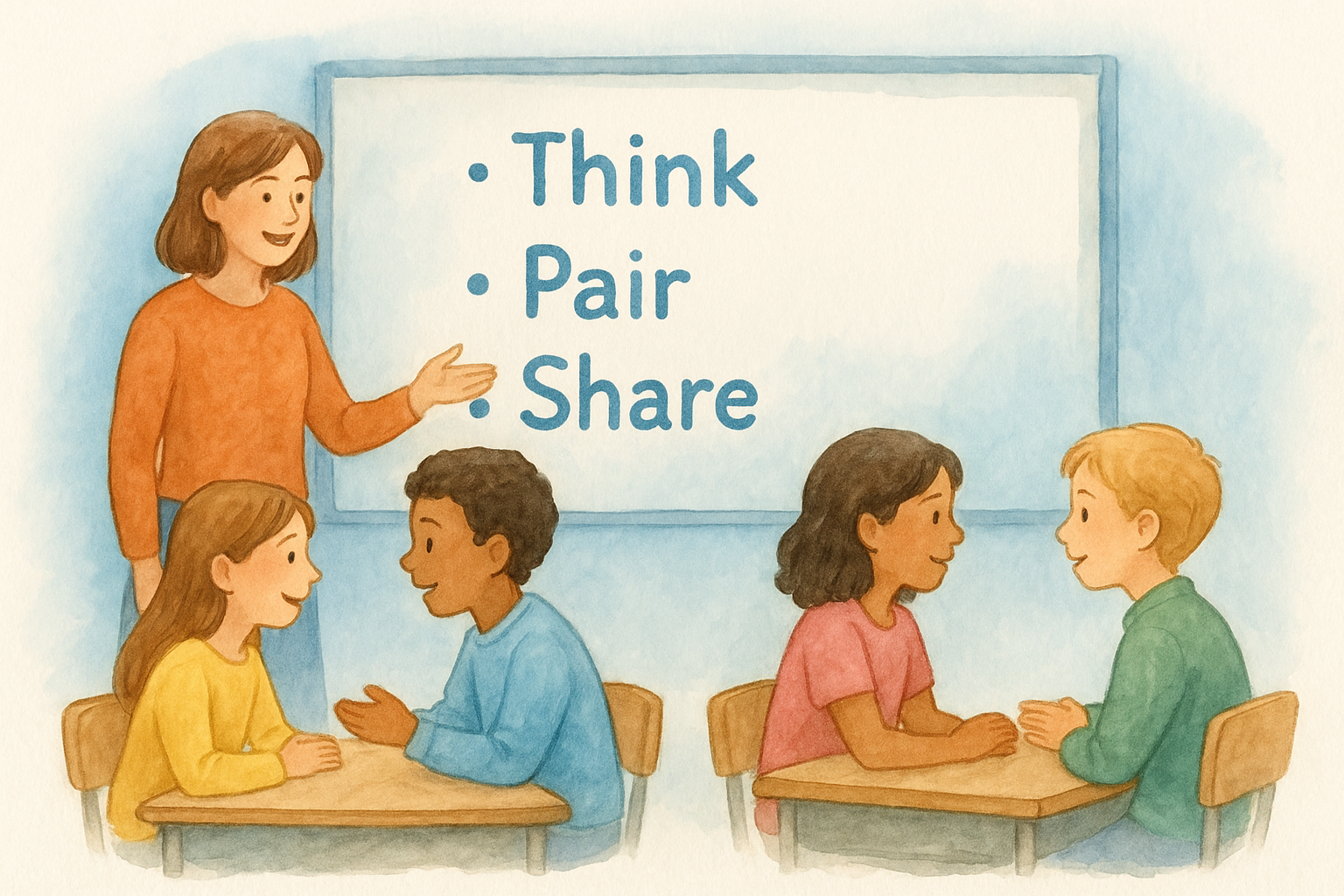
Think-pair-share turns a one-directional classroom into a multi-voice environment by giving every student time to think independently, process with a partner, and then contribute to the larger group. This structure is one of the most reliable tools for improving student participation because it removes the pressure of performing cold in front of everyone.
What to do today
Pick one discussion question from your next lesson and build the structure around it. Write the three steps on the board so students know exactly what to expect:
- Think: 60 seconds of silent, independent thinking
- Pair: 2 minutes to talk with a partner
- Share: One or two pairs report back to the class
Why it works
When students rehearse their answer with a partner first, the social risk of speaking drops significantly. They arrive at the whole-group share having already tested and refined their thinking without the pressure of performing in front of everyone first.
Students who would never raise their hand alone will speak up after a partner has confirmed their thinking.
Classroom examples
An English teacher asking "What motivates this character?" can run think-pair-share before a full class discussion. A biology teacher reviewing cell division can use it to consolidate understanding right before a quiz.
Differentiate for different learners
Pair students strategically rather than randomly. Placing a hesitant speaker with a patient, supportive peer builds confidence over time without drawing attention to the pairing.
How to measure progress
Count how many different pairs contribute during the share phase each week and track whether that number grows consistently over two weeks of use.
6. Add low-stakes participation points for effort
Grading students on whether they gave the "right" answer punishes risk-taking and rewards only the students who already feel confident. Shifting your participation grade to reward effort instead of correctness removes the fear of being wrong, which is one of the most direct levers for improving student participation across ability levels.
What to do today
Update your participation rubric so students earn points for attempting a response, asking a question, or building on a classmate’s idea, not for being correct. Communicate this shift explicitly to your class so students know effort is what earns credit, not accuracy.
Why it works
When students believe a wrong answer costs them points, most choose silence. Effort-based grading separates participation from performance, which makes the classroom feel safer for every student, especially those who struggle or have high anxiety.
Safety to be wrong is the foundation of a classroom where more students choose to speak.
Classroom examples
A math teacher might award one point per attempt during problem-solving discussions, regardless of outcome. An English teacher can give participation credit for any verbal contribution during Socratic seminars, including questions.
Differentiate for different learners
Allow shy or anxious students to earn effort points through written contributions, like a question submitted on paper, so all students have a path to full credit.
How to measure progress
Keep a weekly participation tally and compare the number of contributing students before and after implementing effort-based grading.
7. Offer multiple ways to participate beyond speaking
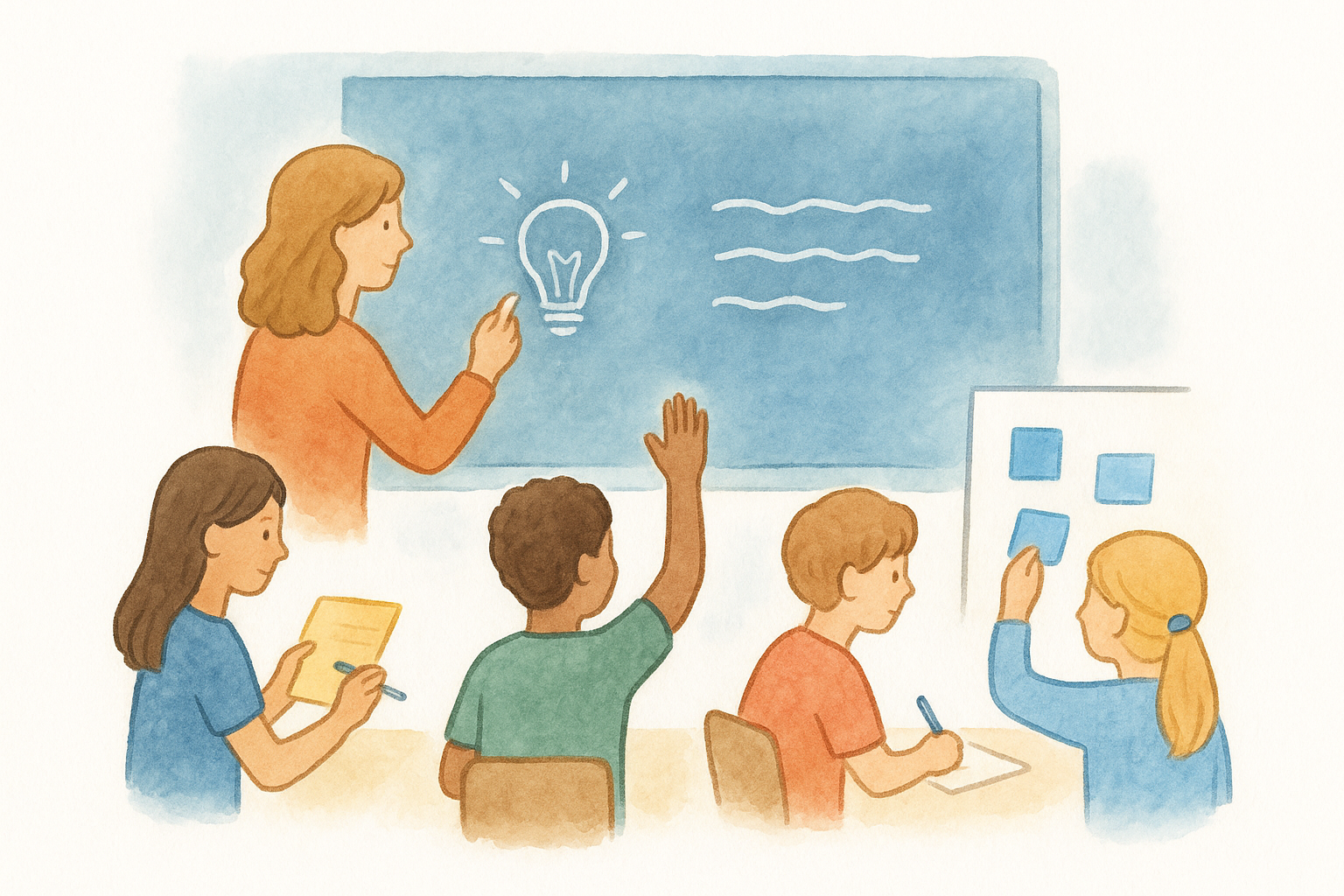
Some students have great ideas but freeze when verbal participation is the only option available to them. Expanding how students can contribute, through writing, drawing, voting, or movement, directly supports improving student participation by giving every learner a valid entry point.
What to do today
Add at least one non-verbal participation method to your next lesson. Options include exit tickets, whiteboard responses, digital polls, sticky note contributions, or hand signals. Choose whichever fits your content without requiring extra prep time.
Why it works
Verbal participation favors extroverted, confident, and fast-processing students by design. When you add other modes, you signal that thinking matters more than performance, which draws in students who contribute richly in writing or movement but shut down when public speaking is the only route available to them.
Participation is not synonymous with speaking, and the students who know that most are the ones still waiting for you to agree.
Classroom examples
A social studies teacher can use digital polling to gather student opinions before a debate opens. An English teacher might ask students to annotate a shared document in real time as an alternative to raising hands during close reading.
Differentiate for different learners
Let introverted or anxious students submit written responses before the verbal discussion begins so they enter the conversation having already organized their thinking.
How to measure progress
Track how many total students contribute per class when you include non-verbal options and compare that number to verbal-only days.
8. Use cold call with safety nets and choices
Cold calling gets a bad reputation because, when done poorly, it humiliates students and shuts participation down fast. Done well, it does the opposite: it tells every student that their thinking matters and that the classroom expects engagement from everyone, not just volunteers.
What to do today
Before your next lesson, decide on two or three questions you plan to cold call on. When you call on a student, give them a choice: answer now, ask for 30 seconds to think, or say "I’d like to add to someone else’s answer." That choice removes the ambush feeling while keeping everyone accountable.
Why it works
Cold call with built-in options is one of the most direct tools for improving student participation across a full class because it signals that no one gets to opt out entirely. Giving students a structured way to respond on their terms keeps the accountability without the panic.
Students stay more mentally present when they know they might be called on, even if they aren’t put on the spot.
Classroom examples
A history teacher can cold call and offer: "Give your answer or tell me one thing you’re unsure about." Both responses count, and both keep the student engaged with the content.
Differentiate for different learners
Give anxious students advance notice by privately telling them the question before class so they can prepare a response without pressure.
How to measure progress
Track how many different students you call on each week and whether more students start volunteering after cold call becomes a routine.
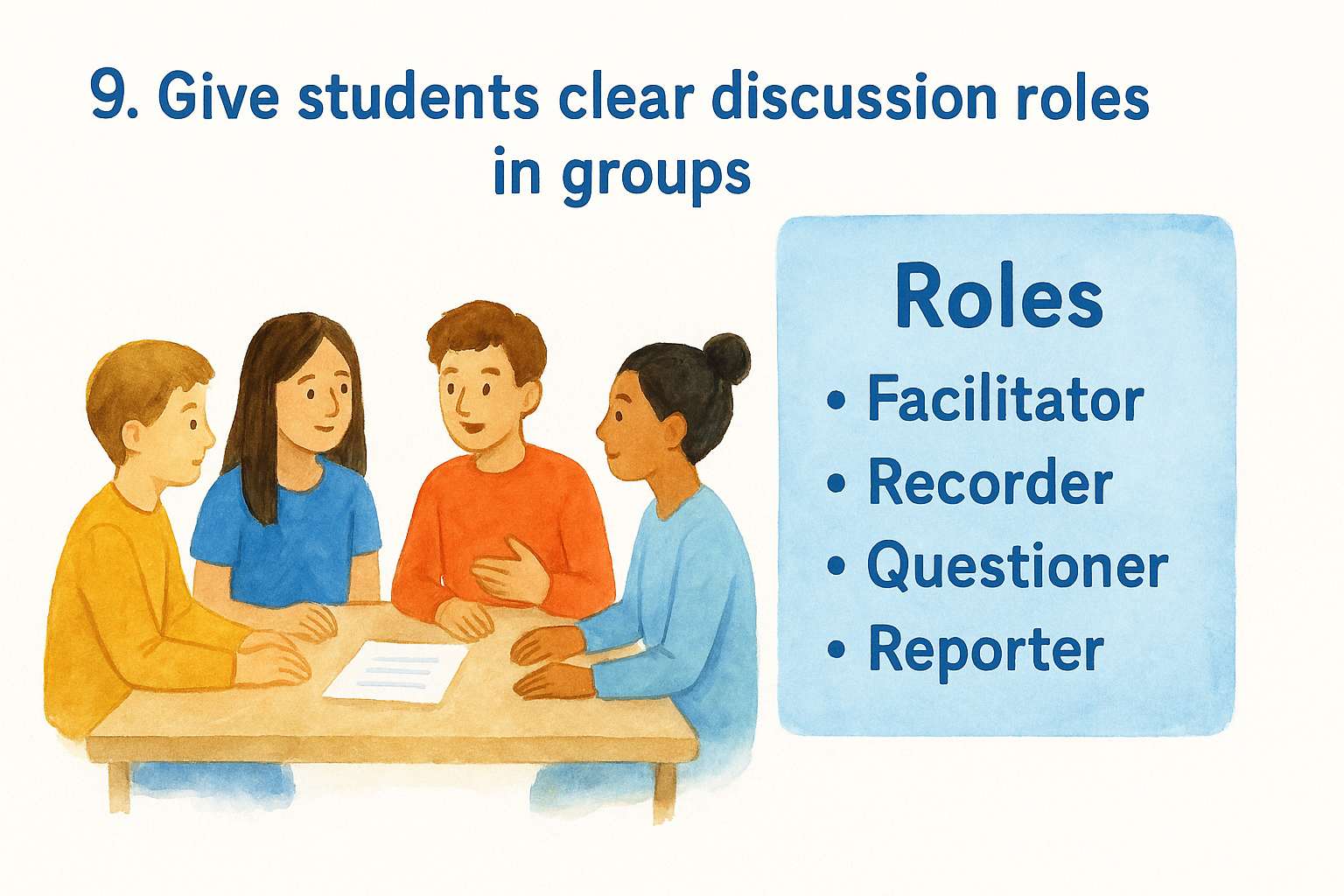
9. Give students clear discussion roles in groups
Unstructured group discussions tend to collapse into two or three students talking while the rest disengage. Assigning clear roles before the conversation starts gives every student a reason to stay involved and a specific job to do.
What to do today
Before your next group activity, assign each student one of four roles: facilitator, recorder, questioner, or reporter. Write the role descriptions on a visible slide or handout so students understand exactly what each role expects from them before the discussion begins.
Why it works
Roles remove the ambiguity that causes passive students to check out. When every student has a defined responsibility, participation stops being optional. This is one of the most direct structural tools for improving student participation in group settings because it distributes accountability across the whole group rather than letting it concentrate in one or two students.
Structure does not limit discussion; it creates the conditions where more students feel equipped to join it.
Classroom examples
An English teacher running a literature circle can assign the questioner role to a student who rarely volunteers, ensuring they prepare at least two questions before the group meets.
Differentiate for different learners
Match quieter students to roles that suit their strengths first, such as recorder or questioner, before rotating them into more visible roles like reporter over time.
How to measure progress
After each group discussion, note which students actively fulfilled their roles and track whether off-task behavior decreases week over week.
10. Start class with a quick knowledge check
Opening class with a brief knowledge check gives every student an immediate reason to engage before the main lesson begins. That early activation primes students mentally and signals that participation starts on day one, not after you’ve spent ten minutes reviewing.
What to do today
Write two to three questions on the board before students arrive. As they walk in, they answer independently on a sticky note or index card. Collect responses before you begin instruction so you can address common gaps right away and reference student thinking throughout the lesson.
Why it works
Starting with a knowledge check is a reliable method for improving student participation because it removes the cold-start problem where nobody wants to be first. Every student commits to a response privately before the class discussion opens, which means more students arrive at the group conversation with something already formed in their minds.
A student who has already written down a thought is far more likely to share it than one who has not.
Classroom examples
A science teacher can post two review questions about the previous night’s reading. An English teacher might ask students to write one question they still have about a text before discussion begins.
Differentiate for different learners
Allow students who need scaffolding to use their notes when completing the check. Students ready for more challenge can add a brief justification to each answer.
How to measure progress
Compare the number of students who volunteer during discussion on knowledge-check days versus days without one.
11. Reinforce participation with specific feedback
Generic praise like "good answer" tells students nothing useful. When you name exactly what a student did well and why it moved the discussion forward, you give them a repeatable behavior to build on, which directly supports improving student participation over time.
What to do today
After your next class discussion, identify two or three specific contributions and name them out loud: "You built on Marcus’s point and added a new reason, that’s exactly what strong discussion looks like." Write those observations in a brief post-class note so you can track which students you’re reinforcing and which ones still need more intentional feedback.
Why it works
Specific feedback creates a clear behavioral target for students. When they know exactly what earned recognition, they repeat it. Vague praise, by contrast, gives students no actionable information and fades fast.
Telling a student their thinking was strong is less powerful than telling them precisely what made it strong.
Classroom examples
A history teacher can say, "You connected today’s reading to last week’s event, that kind of link-making is strong historical thinking." An English teacher might note, "You asked a follow-up question instead of just agreeing, which pushed the conversation deeper."
Differentiate for different learners
Deliver specific feedback privately in writing for students who feel uncomfortable with public recognition. A quick written note or digital message after class carries the same instructional weight without the spotlight.
How to measure progress
Track how many students you give specific feedback to each week and note whether those students contribute more frequently in the sessions that follow.
Quick recap and a simple plan
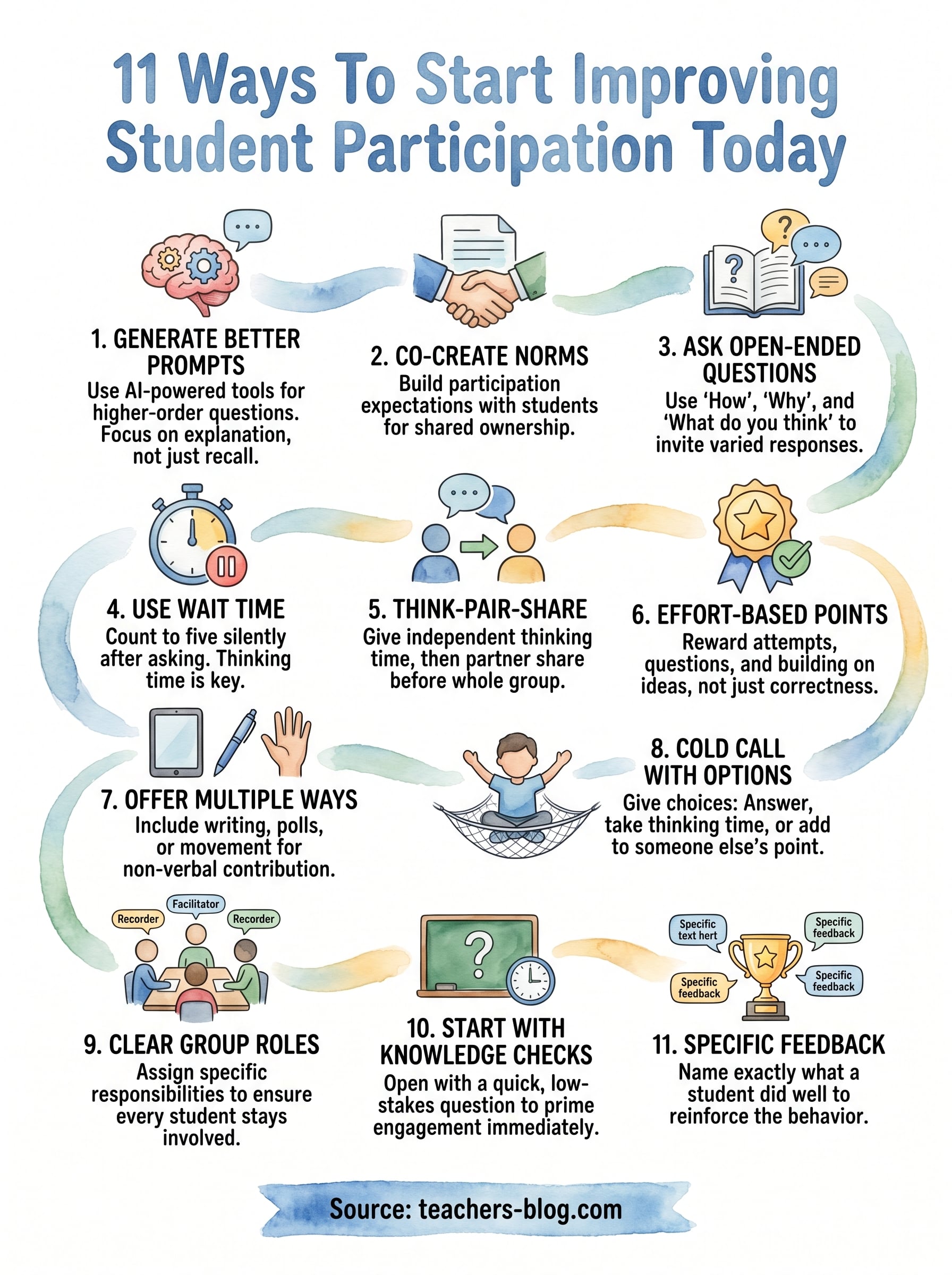
Improving student participation does not require a full classroom overhaul. Every strategy in this list targets a specific barrier, whether that is question quality, social risk, pacing, or structure, and each one is something you can test in your next lesson. You do not need all eleven at once. Pick two that fit your current unit and run them consistently for two weeks before adding more.
Start with the ones that feel most natural. If your questions feel flat, try the Question Generator at The Cautiously Optimistic Teacher to build prompts that actually invite thinking. If silence is the problem, add wait time. If only three students talk every day, give the others a role, a partner, or a non-verbal route in. Each small shift compounds, and within a few weeks you will see more students contributing, more often, with more confidence.