High Expectations and High Support: A Blueprint for Better Classroom Management and Student Success
The most effective classroom management style is the “warm demander” approach, which balances high expectations and high support. Raising standards alone leads to student frustration, while offering support without challenge leads to stagnation. By combining rigorous academic and behavioral goals with active scaffolding and emotional encouragement, teachers create an authoritative environment that boosts both achievement and student buy-in.
This is Lesson 3 of Module 3: Building Teacher-Student Relationships | Full Course Outline
Mindset Shift: The Teaching Quadrants
| The Authoritarian Lens (High Expectations / Low Support) | The Authoritative Lens (High Expectations / High Support) |
| Focus: Strict obedience and high performance at any cost. | Focus: Growth through rigorous goals and active help. |
| Philosophy: “Sink or swim.” | Philosophy: “I know you can do this, and I’ll help you.” |
| Climate: High anxiety; students fear making mistakes. | Climate: High trust; students feel safe to take risks. |
| Teacher Role: The Enforcer. | Teacher Role: The “Warm Demander.” |
| Result: Short-term compliance; long-term resentment. | Result: Sustainable success; self-regulated learners. |
High expectations and high support form a powerful combination in education. Research shows that students do best when teachers set the bar high and provide the support needed to reach it. Simply put, raising standards alone isn’t enough—and offering help without challenging students isn’t either. When expectations are lowered, quality suffers, and when support is removed, students flounder. The key is to balance both: maintain ambitious goals for all students while ensuring they have the encouragement, resources, and guidance to succeed. This balance is crucial across all grade levels, from elementary classrooms to high school lecture halls.
In practice, a high-expectations, high-support approach means every student is believed capable of growth and held to rigorous academic and behavioral standards, within a caring, scaffolded environment. Educators sometimes call this the “warm demander” style – being warm and supportive while demanding the best effort. As educator Lisa Delpit famously described, “warm demanders” expect a great deal of their students, convince them of their brilliance, and help them reach their potential in a disciplined and structured environment. In other words, teachers communicate: “I know you can do this, and I’m here to help you get there.”
How High Expectations and High Support Improve Behavior and Achievement
Holding high expectations has a well-documented positive effect on student outcomes. In the classic “Pygmalion Effect” study, teachers were told certain (randomly chosen) students were poised for an intellectual “growth spurt.” By year’s end, those students showed greater IQ gains, simply because teachers believed in their potential and subtly conveyed higher expectations. Decades of research echo this: when a teacher truly believes a student can succeed, the teacher tends to give more challenge, display more warmth, and allow more wait time for answers, which in turn boosts student performance. Belief becomes a self-fulfilling prophecy – students rise (or fall) to the expectations set for them.
However, expectations alone are not enough. Without support, lofty goals can lead to frustration or classroom management issues. Imagine expecting every student to master a tough concept but providing no extra help or guidance – many would become disengaged or act out. This is why effective classroom management research points to an “authoritative” teaching style (not to be confused with authoritarian). Authoritative teachers combine high demands with high responsiveness: they set clear, firm expectations but also show care, listen to student needs, and provide help. Studies find that an authoritative approach – characterized by high expectations and supportive guidance – enhances both academic performance and classroom behavior. In well-run classrooms with high expectations and support, students stay more engaged, show fewer disruptive behaviors, and take greater responsibility for their learning. In contrast, a purely authoritarian (high expectations, low support) climate may suppress behavior problems in the short term, but often at the cost of student trust and motivation. Likewise, a permissive (high support, low expectations) approach might make students feel good, but they won’t be pushed to achieve their potential.
In essence, high expectations provide the challenge and vision for excellence, while high support provides the tools and confidence to get there. This synergy leads to improved achievement, better classroom behavior, and a positive learning atmosphere. For example, one study on teacher feedback demonstrated the power of pairing high standards with personal assurance. When teachers gave students critical feedback with an added note that said, “I have very high expectations and I know you can reach them,” students became more receptive, were more likely to revise their work, and ultimately produced higher-quality outcomes. Notably, this simple intervention had the strongest effects on students who might otherwise doubt their teachers’ motives, such as historically underserved students. The message combined a challenge (high expectations) with a vote of confidence and support, which increased student trust and effort.
Crucially, a high-support environment also means no student is left to struggle alone. Support can take many forms: reteaching material in a different way, providing tutoring or extra practice, offering encouragement and mentorship, or supplying needed resources. Research in higher education emphasizes that institutions with both high expectations and robust support services see better student engagement and success rates. The lesson is universal for K-12 as well: when we give all students access to what they need to meet high standards, more of them will meet or exceed those standards.
Strategies for Teachers to Implement High Expectations and High Support
Implementing a high-expectations, high-support approach is a daily practice. It involves both mindset and methods. Below is a step-by-step plan and set of strategies teachers (at both elementary and high school levels) can use to create a classroom culture that challenges and supports every learner:
Believe in Every Student’s Potential and Communicate It
Mindset comes first. Truly adopt the belief that all your students – regardless of background or past performance – can learn and improve. Guard against labeling students as “low” or “average,” which can cap expectations. Instead, set a tone of optimism. Regularly tell students you believe in their ability to succeed. For example, when giving feedback or encouragement, you might say, “I’m pushing you because I know you’re capable of great things.” Research suggests that when teachers sincerely believe in students, they interact differently – offering more opportunities to speak, more challenging work, and more patience. Communicating this belief raises students’ own expectations of themselves.
Set Clear, High Expectations (Academic and Behavioral)
Establish what “high expectations” means in concrete terms for your class. Align expectations to ambitious but attainable standards (e.g. grade-level or beyond). Make these expectations explicit: explain what quality work looks like, and model it if possible. Likewise, set high behavioral expectations for respect, effort, and routines. This clarity and consistency are critical for classroom management. Students should know that excellence is the norm, not the exception. At the same time, ensure the expectations are within reach – high but not unrealistic – so students remain motivated to strive for them. It helps to involve students in the process: for example, co-create classroom norms or goals so they take ownership. When students understand the why and see the expectations as fair and consistent, they are more likely to rise to them.
Provide Adequate Support and Scaffolding
High expectations do not mean “sink or swim.” Every high bar should come with a ladder. Plan supports to help all learners meet your standards. This may include: differentiating instruction (tailoring tasks to different skill levels while keeping the goals high), scaffolding complex assignments into manageable steps, offering additional tutoring or practice sessions, pairing students for peer support, and supplying resource materials. Monitor student progress closely – if many are falling short, that’s a signal to increase support, not to lower the bar. For example, if you assign a challenging project, you might provide a sample outline, conduct mini-lessons on tough components, or conference with students one-on-one. By proactively giving help, you prevent frustration and keep students on track. As one education report noted, “Lower the standard, and quality suffers; eliminate the support, and students flounder.” Schools that marry high expectations with strong supports give students the tools to succeed. Make support a normal part of learning (for instance, encouraging all students to attend study hall or office hours, not just those “in trouble”). This normalizes help-seeking and growth.
Be a “Warm Demander” – High Caring, High Firmness
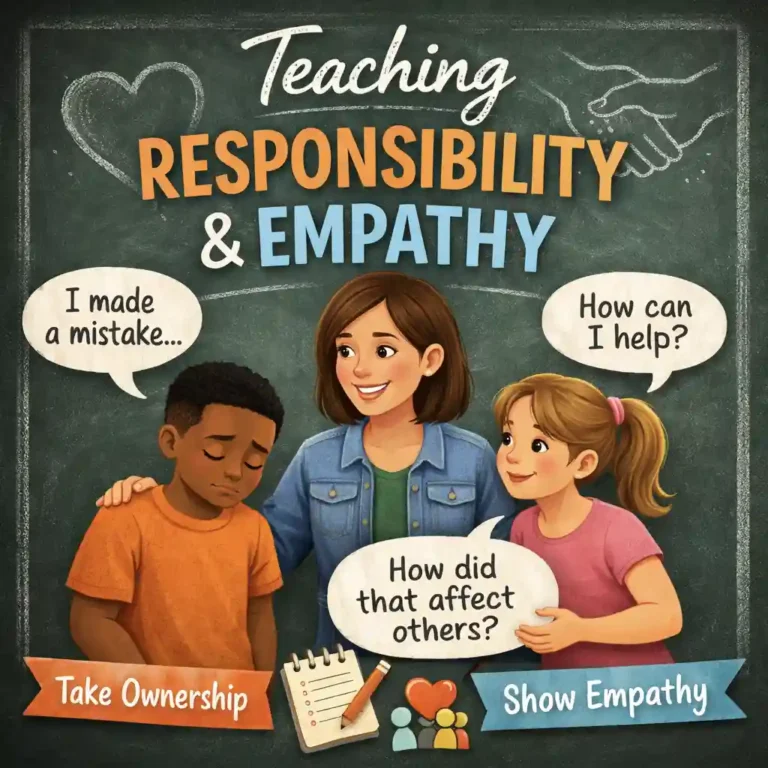
The tone with which high expectations are enforced matters greatly for classroom climate. Adopting a warm but strict demeanor – sometimes called being a warm demander – means you insist on excellence while also showing empathy and respect. For example, you hold every student accountable for class rules and quality work, but you do so with encouragement and without humiliating anyone. If a student is off-track, a warm demander teacher will calmly remind them, “I know you’re better than that – how can I help you get focused?” This approach aligns with restorative and culturally responsive practices, emphasizing high expectations and high support for all students along with positive, proactive discipline. It balances authority with nurturing. Practically, this could involve using a positive tone, building personal relationships (so students know your critiques come from care), and being consistent/fair in enforcing rules. Students learn that you mean business because you care about their success. Over time, this fosters trust and a cooperative classroom, which improves behavior management.
Use Feedback that Combines High Standards with Encouragement
Feedback is a powerful tool to reinforce high expectations and provide support. Make your feedback specific and aligned to the high standard you expect, but deliver it in a way that motivates. A research-backed technique is “wise feedback,” which explicitly signals high expectations and belief in the student’s capacity to meet them. For instance, when returning an essay with critiques, you might say or write:
“I’m giving you these comments because I have very high expectations and I know you can reach them.”
This kind of feedback has been shown to increase students’ willingness to revise and improve – especially when they might otherwise feel discouraged or judged. Always couple critiques with support: suggest actionable steps for improvement, offer to confer one-on-one, or provide resources for help. Similarly, praise in a high-expectations classroom should recognize effort, progress, and high-quality work – not just easy wins. Avoid insincere “good job” praise for subpar work; instead, uphold the standard and praise when they meet or approach it. This way, students know that your approval means something and is attainable through effort.
Cultivate a Growth Mindset and Resilience
Emphasize that the reason you hold high expectations is because you believe students can grow. Teach students to view ability as expandable with effort and learning. This ties directly into support: if they struggle, that’s not a signal to quit but to get support and try new strategies. Normalize mistakes and productive struggle as part of learning. For example, when a student errs, respond with, “Great, now we found something to improve – let’s work on it.” By framing challenges positively, you help students persevere towards high standards. Celebrate improvements and breakthroughs, even small ones, to show that growth is valued. This keeps morale up in a rigorous classroom. In an environment where high expectations are paired with understanding, students learn to be resilient, which benefits them academically and behaviorally.
Be Consistent and Reflective
Consistency is key to credibility. Enforce your classroom expectations uniformly and follow through on offers of help. Students will trust high expectations more if they see you consistently supporting those who struggle and not giving up on anyone. Additionally, reflect on your practice: Are there areas where your expectations could be unconsciously low (perhaps for certain students or groups)? Are you providing enough support for the hardest parts of your curriculum? Encourage feedback from students about what supports help them most. Continuously refining this balance will improve the classroom culture. Classrooms that achieve the “high expectations, high support” balance don’t happen by accident – they are intentionally cultivated and adjusted over time.
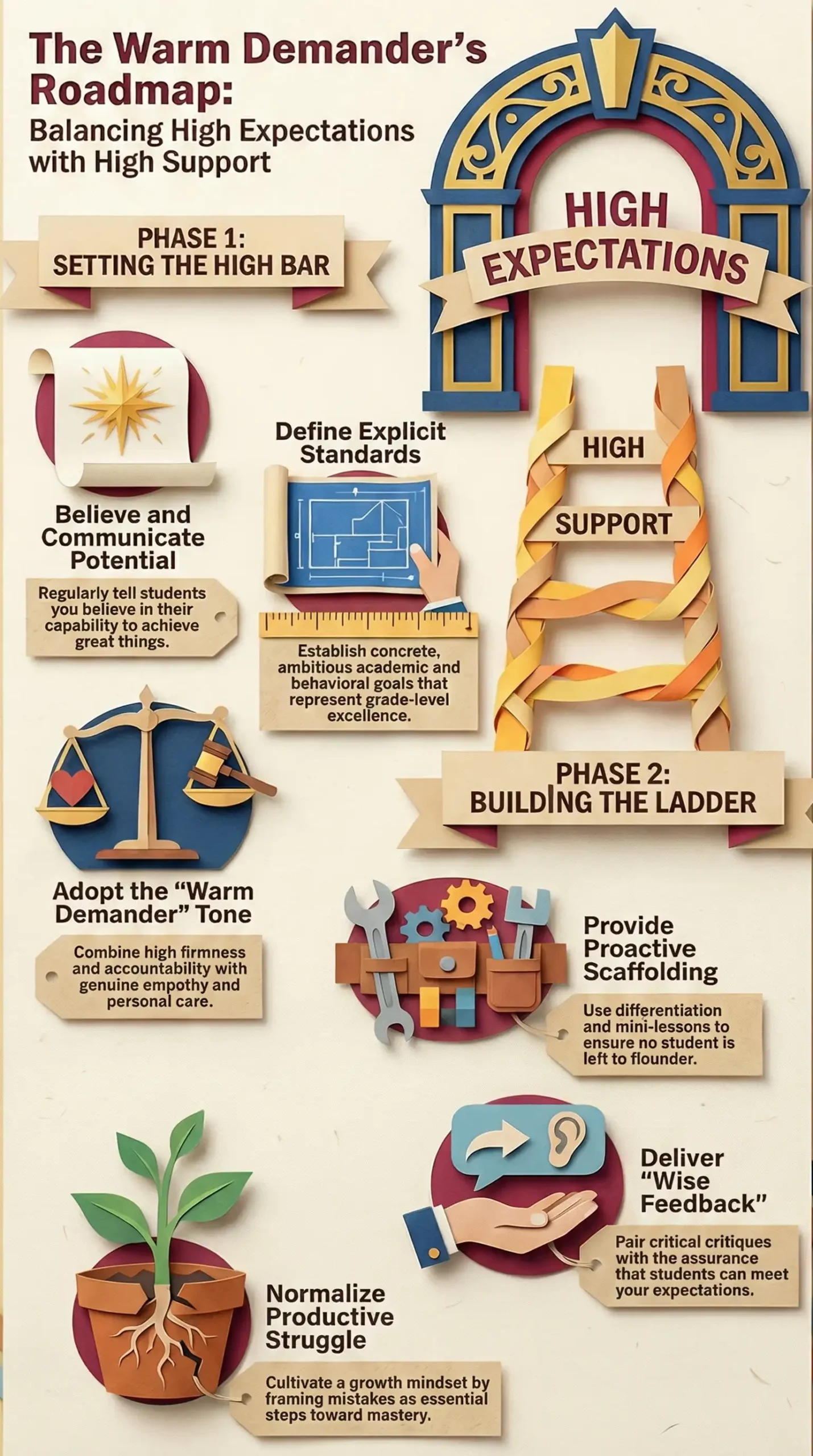
By implementing these strategies, teachers create a classroom climate reminiscent of the best coaches: pushing students to excel, yet never letting them fall without a helping hand. This approach works in a second-grade classroom learning to read and in a high school algebra class tackling quadratic equations. In both cases, the teacher challenges each student and provides paths to meet those challenges. Over time, students internalize these high expectations and become more self-motivated and self-regulated. They know what quality looks like and strive for it, and they trust that their teacher and classmates will support them in that pursuit.
Conclusion: Fostering a Culture of High Expectations and High Support
Cultivating high expectations alongside high support is a proven recipe for better classroom management and student success. When every student feels both challenged and supported, the results are transformative: higher achievement, fewer behavior problems, and a classroom full of confident, engaged learners. The science is clear that high expectations, when met with appropriate support, can unlock students’ potential in ways that mere kindness or strictness alone cannot. It creates a virtuous cycle – success builds confidence, which leads to greater effort and more success.
For teachers, the charge is to hold that bar high for all students, never giving in to the soft bigotry of low expectations, while also doing everything possible to help each student reach those heights. This dual commitment defines the very best educators. It may require extra effort – more planning, more patience, more reflection – but the payoff is enormous. As one report succinctly put it, “colleges [and schools] that demonstrate both high expectations and high support give their students essential tools to succeed.” With intentional practice, any teacher can create this kind of environment. By expecting the best and supporting every step toward it, we not only improve our classroom management and academic outcomes, we also send a powerful message to students: you are capable, you are cared for, and together we will achieve greatness.
High Expectations and High Support FAQ
What is a ‘warm demander’ in education? A warm demander is a teacher who shows high levels of personal care and warmth while simultaneously maintaining high academic and behavioral expectations. This style convinces students of their own potential and provides the structured environment needed to reach it.
What is the Pygmalion Effect in the classroom? The Pygmalion Effect is a psychological phenomenon where high expectations lead to improved performance. When teachers believe students are capable of growth, they subconsciously provide more challenges and support, which in turn causes students to rise to those expectations.
How do you provide high support without lowering expectations? High support involves providing ‘ladders’ to reach the high bar, such as scaffolding complex tasks, offering descriptive feedback, differentiating instruction, and normalizing help-seeking behavior. It means the goal stays the same, but the path to get there is supported.
Reflection
Early in my teaching, I assumed students would automatically feel comfortable approaching me if they needed help, so I didn’t make much effort to build individual connections right away. I later realized that several students stayed quiet and disengaged simply because they weren’t sure I was someone they could trust yet. Once I began greeting students personally and checking in more intentionally, participation and confidence improved noticeably.
- Which students in your class might still be waiting for a clearer signal that you are approachable and on their side?
- What small daily habit could you add to strengthen your connection with students who participate the least?
- How intentionally do you create opportunities for students to interact with you outside of academic correction or evaluation?
Continue the Classroom Management Course
In the next lesson, you’ll see how strong student-teacher connections help students feel seen, safe, and supported, which increases motivation and engagement while reducing behavioral disruptions and improving overall classroom learning conditions.
Next Lesson: Small Daily Moves That Build Connection
Module 3 Progress:
Back to Module 3 Overview
Return to Full Course Outline