Professional Detachment and Emotional Boundaries for Teachers
Teaching is emotional work.
You care about your students. You want them to succeed. You want them to be safe, confident, and capable.
But here’s the difficult truth that many teachers learn the hard way:
You cannot carry every student’s emotions, problems, and outcomes on your shoulders.
If you try to, the result is almost always burnout.
Strong classroom management doesn’t just depend on strategies, routines, and expectations.
It also depends on something many teachers are never taught:
Healthy emotional boundaries.
When teachers learn to maintain emotional boundaries for teachers while staying compassionate and supportive, they create a classroom environment that is calmer, more consistent, and more sustainable.
What Emotional Boundaries Actually Mean
Emotional boundaries do not mean becoming cold, distant, or uncaring.
They mean understanding the difference between:
Supporting students
Carrying students
Teachers should do the first.
Teachers cannot sustainably do the second.
Healthy boundaries allow teachers to remain calm, consistent, and fair without becoming emotionally overwhelmed by every challenge that arises in the classroom.
In practical terms, emotional boundaries mean recognizing:
You are responsible for teaching and guiding, not fixing every problem.
You care about students, but their choices are ultimately their responsibility.
A student’s bad day is not a reflection of your worth as a teacher.
Without these boundaries, classroom management quickly becomes emotionally exhausting.
Why Teachers Struggle with Emotional Boundaries
Most teachers enter the profession because they care deeply about students.
Ironically, this strength can sometimes make emotional boundaries difficult.
Many teachers feel that if they are not constantly worried about their students, they are somehow failing them.
But that belief leads to unhealthy patterns like:
Taking student behavior personally
Feeling responsible for every outcome
Overthinking every interaction
Carrying stress home every night
The truth is that students benefit far more from teachers who are steady and regulated than teachers who are emotionally overwhelmed.
Professional detachment allows teachers to respond thoughtfully rather than react emotionally.
The Difference Between Caring and Carrying
A helpful way to think about emotional boundaries for teachers is to distinguish between caring and carrying.
Caring Looks Like
Listening to students
Offering support and encouragement
Holding students accountable
Believing students can improve
Carrying Looks Like
Feeling responsible for fixing students’ lives
Losing sleep over student behavior
Feeling personally attacked by misbehavior
Taking every conflict home emotionally
Caring is sustainable.
Carrying is not.
The goal of professional detachment is to stay deeply caring while letting go of the emotional weight that doesn’t belong to you.
Why Professional Detachment Improves Classroom Management
When teachers maintain emotional boundaries, several positive things happen in the classroom.
1. You Respond Instead of Reacting
Students often test limits emotionally.
Without boundaries, teachers may react with frustration or defensiveness.
Professional detachment allows you to remain calm and neutral.
That calmness keeps situations from escalating.
2. Students Learn Responsibility
If teachers emotionally absorb every mistake students make, students never fully experience responsibility for their own choices.
Boundaries allow students to understand that:
Their actions have consequences
Their growth belongs to them
They are capable of improving
This actually increases student independence and maturity.
3. You Preserve Your Energy
Classroom management is much easier when teachers have emotional energy available.
Teachers who carry every stress often feel depleted halfway through the week.
Boundaries protect the mental space needed to stay patient, consistent, and effective.
Practical Ways to Build Emotional Boundaries
Developing emotional boundaries for teachers is a skill that improves with practice.
Here are several simple strategies that can help.
1. Separate Behavior from Identity
Student behavior is information, not a personal attack.
Instead of thinking:
“Why are they doing this to me?”
Try thinking:
“What is this behavior telling me about what they need right now?”
This shift removes the emotional sting from many classroom challenges.
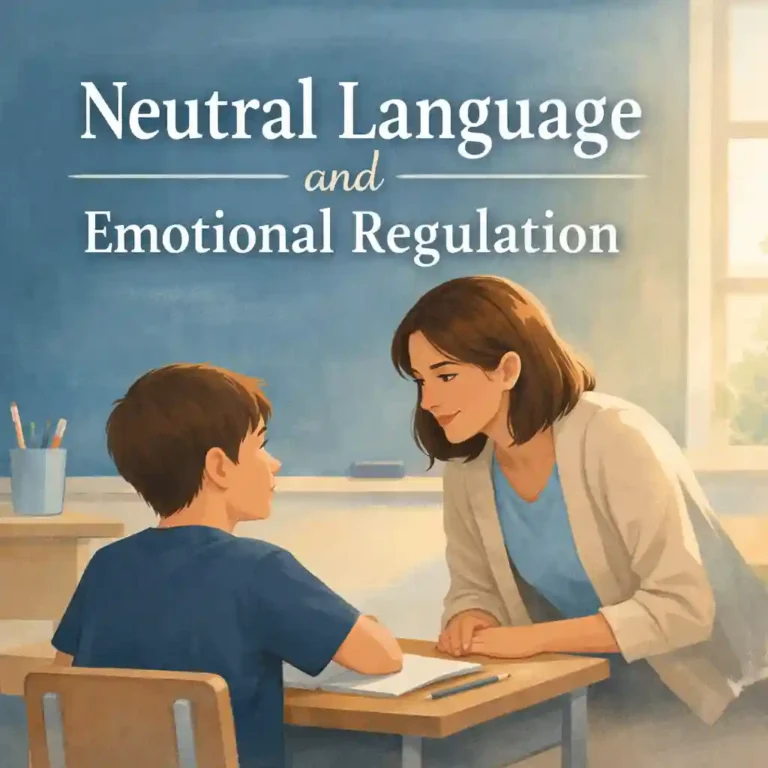
2. Use Neutral Language
Neutral language keeps interactions professional and calm.
Instead of saying:
“You’re being disrespectful.”
Try saying:
“I need everyone focused on the task.”
Neutral language helps maintain emotional distance without damaging relationships.
3. Pause Before Responding
If a situation feels emotionally intense, pause before reacting.
A simple pause allows your nervous system to settle and keeps the interaction from becoming personal.
Sometimes the most powerful classroom management move is a calm pause.
4. Leave School at School
This one is simple but incredibly important.
Teachers who mentally replay the day for hours at home quickly exhaust themselves.
Instead, try creating a simple mental transition ritual:
Review tomorrow’s plan
Close your laptop
Tell yourself: “Today is done.”
Your brain needs permission to rest.
5. Remember What You Control
Teachers control:
Instruction
Structure
Expectations
Responses
Teachers do not control:
Every student choice
Every student emotion
Every outcome
Accepting this reality protects your mental health and allows you to focus on what actually matters.
Compassion Without Absorption
The best teachers are compassionate.
But compassion does not require absorbing every difficulty students face.
In fact, students benefit most from teachers who model emotional regulation and stability.
Professional detachment allows teachers to say:
“I care about you, and I will support you — but I cannot carry this for you.”
That message encourages both connection and responsibility.
Sustainable Teaching Requires Boundaries
Long-term teaching success requires more than good strategies.
It requires emotional sustainability.
Teachers who maintain emotional boundaries for teachers can:
Stay patient longer
handle disruptions more calmly
build healthier relationships with students
remain in the profession without burning out
In other words, emotional boundaries don’t make you a worse teacher.
They make you a stronger one.
Reflection Questions
When do you find yourself carrying students’ emotions rather than supporting them?
What situations make it hardest for you to maintain emotional boundaries?
What small habit could help you leave work stress at school?
Next: Reflecting Without Self-Blame