
Digital Detox in Schools: Why Analog Classrooms Are Back
For more than a decade, classroom technology moved in one direction: more devices, more digital platforms, more online assignments, and more one-to-one access. In 2026, that momentum is starting to change.
A growing number of schools, districts, and universities are questioning whether constant access to screens is actually improving learning. The result is a new conversation about a digital detox in schools—not a rejection of technology, but a deliberate effort to decide when screens help and when they get in the way.
This shift is happening quickly. In August 2026, Education Week reported that districts are preparing for growing parent and educator pushback over classroom screen time. Los Angeles Unified is scaling back screen use beginning in the 2026-27 school year, including no classroom screen use for kindergarten and Grade 1 and new limits for older students. In Pennsylvania, Canon-McMillan School District is removing regular Chromebook access for K-2 students and limiting it for Grades 3-8.
What Is Driving the Digital Detox in Schools?
The concern is not simply that students are looking at screens. The deeper question is whether technology is replacing experiences that matter for learning: sustained reading, handwriting, discussion, collaboration, movement, and focused attention.
Research and educator surveys are adding urgency to the debate. Education Week’s 2026 review of screen-time research notes that majorities of educators surveyed saw school-related technology use as having negative effects on students’ social-emotional skills, classroom behaviour, and physical and mental health. A little more than one-third said school technology use decreased learning more than it increased it.
At the same time, the issue is more complicated than simply counting minutes. A student creating a video, running a simulation, using assistive technology, or collaborating on a shared document is doing something very different from clicking through low-level practice or drifting between browser tabs.
That distinction may become one of the most important education questions of 2026-27: not how much technology do we have, but what is the technology actually doing for learning?
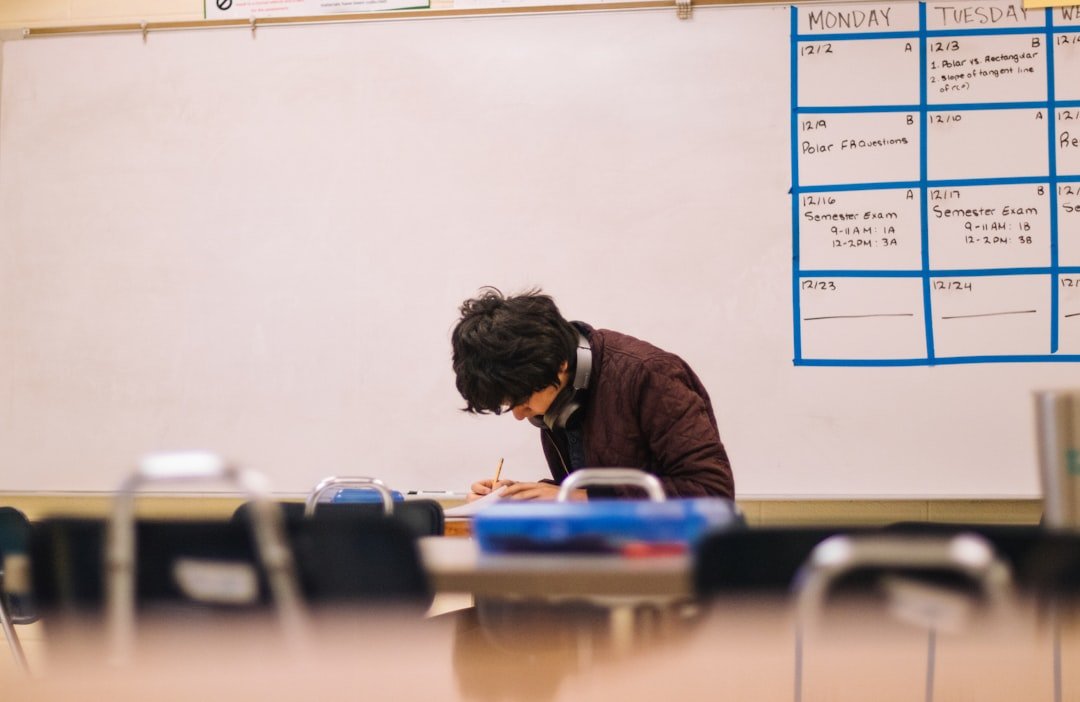
Photo by Jeswin Thomas via Unsplash.
The Analog Classroom Is Becoming a Serious Idea Again
The most striking sign of the shift may be coming from higher education. In August 2026, the University of Chicago announced that its core social-sciences courses would be taught as intentionally “analog” courses. According to reporting from The Chicago Maroon, students will generally read on paper, participate in device-free discussions, and complete work without AI assistance.
What makes that development especially interesting is that the university is not rejecting artificial intelligence altogether. The broader institution is also expanding access to AI tools. The message is more nuanced: students may need to learn how to work with advanced technology while also preserving the ability to read, write, discuss, and think without it.
That may be the most useful way for K-12 educators to think about the analog comeback as well. The goal is not to recreate a classroom from 1995. It is to protect certain kinds of learning from being crowded out.
When Analog Learning May Work Better
There are classroom moments when removing the screen can make the task clearer and more demanding in a productive way. Close reading on paper can make annotation more visible. Handwritten brainstorming can slow students down enough to develop an idea. Face-to-face discussion removes the temptation to divide attention between a classmate and a device.
Teachers experimenting with reduced screen time are also rediscovering practices that never stopped working: mini-whiteboards, manipulatives, printed texts, Socratic discussion, stations, collaborative chart paper, physical sorting activities, sketch-noting, and short written reflections.
Many of these approaches fit naturally alongside the instructional strategies teachers already use to increase participation and deepen thinking. The important point is that “analog” should not mean passive. A paper worksheet that asks students to copy answers is not automatically better than a digital task. The learning design still matters.
When Technology Still Deserves a Place
The risk in any backlash is that the pendulum swings too far. Technology can provide benefits that paper simply cannot.
Adaptive assessments can provide immediate information about student understanding. Shared documents can make collaboration visible. Multimedia can provide access to primary sources, demonstrations, maps, audio, video, and authentic audiences. Assistive technology can be essential for students who need text-to-speech, speech-to-text, enlarged text, translation, or other accessibility supports.
Digital tools can also support the principles of Universal Design for Learning by giving students multiple ways to access information and demonstrate understanding.
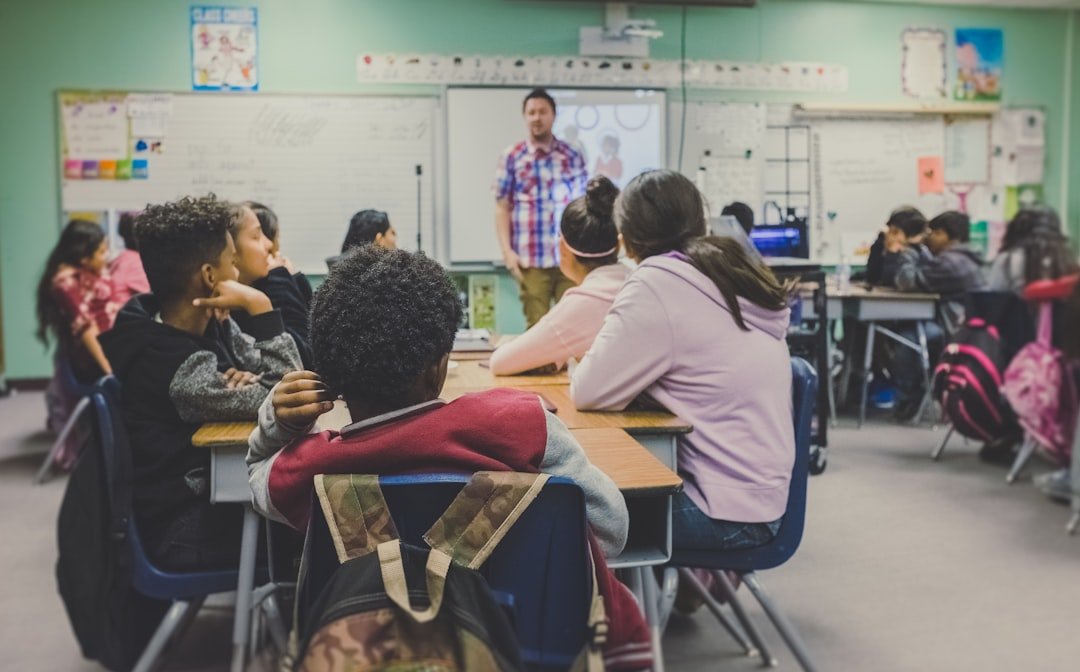
Photo by Quilia via Unsplash.
The strongest version of a digital detox, then, is not “screens are bad.” It is technology must earn its place in the lesson.
A Simple Decision Test for Classroom Technology
Before opening the laptops, teachers can ask one question: What becomes better because students are using this device?
| Learning Goal | Often Better Analog | Often Better Digital |
|---|---|---|
| Deep reading | Printed text, annotation, discussion | Accessibility tools, searchable reference material |
| Brainstorming | Notebook, sticky notes, whiteboard | Collaborative idea boards when sharing across groups |
| Practice | Teacher-guided problems, manipulatives | Adaptive practice with useful feedback |
| Collaboration | Face-to-face discussion, chart paper | Shared documents and multimedia production |
| Research | Books, printed source sets | Databases, current sources, primary-source archives |
| Reflection | Handwritten exit ticket or learning log | Digital portfolio when work needs to accumulate over time |
This kind of decision-making also helps teachers avoid using technology simply because a resource already exists online. As one 2026 Education Week discussion of effective screen use argued, online materials do not require students to remain on screens continuously. Teachers can deliberately break up digital tasks with talk, movement, writing, or reflection.
What a Practical Classroom Digital Detox Could Look Like
A school does not need a dramatic device ban to begin rebalancing technology use. Small routines can make a noticeable difference.
- Start class screen-free. Use a discussion prompt, notebook response, retrieval question, or short collaborative task before devices appear.
- Build screen breaks into longer digital lessons. After a period of online work, shift to partner talk, handwritten notes, movement, or teacher-led synthesis.
- Close devices when the digital task ends. A laptop left open becomes a competing source of attention even when it is no longer needed.
- Protect discussion. When the goal is listening, reasoning, and responding to others, put devices away unless they serve a specific accessibility need.
- Use paper strategically. Printed excerpts, planning sheets, diagrams, and annotations can provide a useful change of pace without turning every lesson into photocopy packets.
- Keep high-value technology. Preserve tools that provide meaningful feedback, accessibility, authentic creation, or access to resources students otherwise could not use.
Teachers can combine these choices with proven methods for effective teaching rather than treating technology as a teaching method in itself.
AI Makes the Conversation Even More Important
Generative AI adds a new layer to the screen-time debate. Schools are simultaneously being asked to prepare students for an AI-rich future and to make sure students can still perform foundational intellectual work independently.
That means the next phase of educational technology may be less about universal access and more about intentional boundaries. Students may use AI to critique an argument after first developing their own. They may use a digital tool to publish a finished product after drafting ideas by hand. They may use technology for research but discuss what they found without a screen between them.
This is not a contradiction. It is a more mature approach to technology.
The Bigger Trend to Watch in 2026-27
The digital detox in schools is likely to grow because it connects several concerns educators are already dealing with: attention, student behaviour, AI, academic integrity, mental health, parent anxiety, and the quality of classroom interaction.
Australia is debating a broader school “digital detox,” while districts in the United States are reducing device access or setting new screen limits. Education Week has described the growing response as a classroom technology “techlash.” The term may sound dramatic, but the most promising changes are actually quite measured.
The real trend is not a return to chalkboards and overhead projectors. It is a shift from technology by default to technology by purpose.
For teachers, that is a useful standard. Keep the tools that make learning more accessible, creative, connected, or efficient. Put them away when reading, writing, conversation, movement, or quiet thinking would do the job better.
If 2026 becomes the year schools rethink classroom screen time, the most important outcome may not be fewer devices. It may be better decisions about when students actually need them.