
6 De-Escalation Techniques for Teachers in Any Classroom
A student shoves a desk. Another starts yelling. The rest of the class freezes, watching you. What you do in the next thirty seconds matters more than any lesson plan you wrote that morning. These moments aren’t hypothetical, they’re Tuesday. And having reliable de-escalation techniques for teachers ready to deploy can be the difference between a situation that resolves quickly and one that spirals into something much harder to repair.
The reality is that most teacher prep programs spend very little time on this. You get a semester on Bloom’s Taxonomy and maybe a half-day workshop on classroom management that barely scratches the surface. Meanwhile, escalated student behavior is one of the top reasons educators cite for burnout and leaving the profession entirely. You deserve better tools than "just stay calm", because that’s not a technique, it’s a vague suggestion.
At The Cautiously Optimistic Teacher, we build resources that help educators handle the real, messy parts of the job, not just the Pinterest-worthy ones. This article breaks down six practical, research-informed de-escalation techniques you can use regardless of grade level, subject area, or school setting. Each one is something you can practice and apply starting this week, no special training required.
1. Build your go-to de-escalation scripts with The Cautiously Optimistic Teacher
Scripted responses aren’t a sign of weakness. They’re a sign that you’ve prepared for pressure, because when adrenaline kicks in, improvised words often make things worse. Having ready-made language gives your brain something reliable to reach for when it needs it most.
What it is and why it works
A de-escalation script is a short, pre-planned set of phrases you use when a situation starts heating up. Scripts work because they keep your language neutral, consistent, and calm even when you’re not feeling any of those things. Rehearsed language bypasses the reactive part of your brain and lets you respond rather than react, which is exactly what effective de-escalation techniques for teachers require.
How to use it in under 2 minutes
You don’t need a long setup. Choose two or three go-to phrases before the school year starts and practice saying them out loud until they feel automatic. Write them on an index card and place it somewhere only you can see, like inside a cabinet door or tucked at the corner of your desk.
What to say in the moment
Keep your language short, calm, and non-threatening. Avoid questions that corner a student or phrases that assign blame up front.
The goal is to lower the temperature, not to win the argument.
Try these scripts:
- "I can see you’re frustrated. Let’s figure this out together."
- "Take a minute. I’m here when you’re ready."
- "I’m not here to fight with you. I want to help."
What to do after the moment
Once the student is calm, follow up privately before the day ends. A brief, low-key check-in reinforces that the relationship still matters and reduces the chance of a repeat incident. Avoid replaying the situation in front of peers or dragging it into the next lesson.
Mistakes that make scripts backfire
Scripts fail when you deliver them with sarcasm, impatience, or a raised voice. Students read tone before they process words. If your body signals threat, your scripted words won’t land, so keep your delivery steady and mean what you say.
2. Catch escalation early and intervene fast
Most classroom blowups build gradually, and students who seem to snap out of nowhere almost always gave you signals first. Learning to spot those early warning signs is one of the most effective de-escalation techniques for teachers because it gives you time to act before things go critical.
What escalation looks like before it explodes
Watch for physical cues like a clenched jaw, tapping, or sudden silence from a normally talkative student. Behavioral shifts such as refusing to work, muttering, or making side comments to peers often signal that regulation is already slipping.
Quick, low-disruption interventions you can use mid-lesson
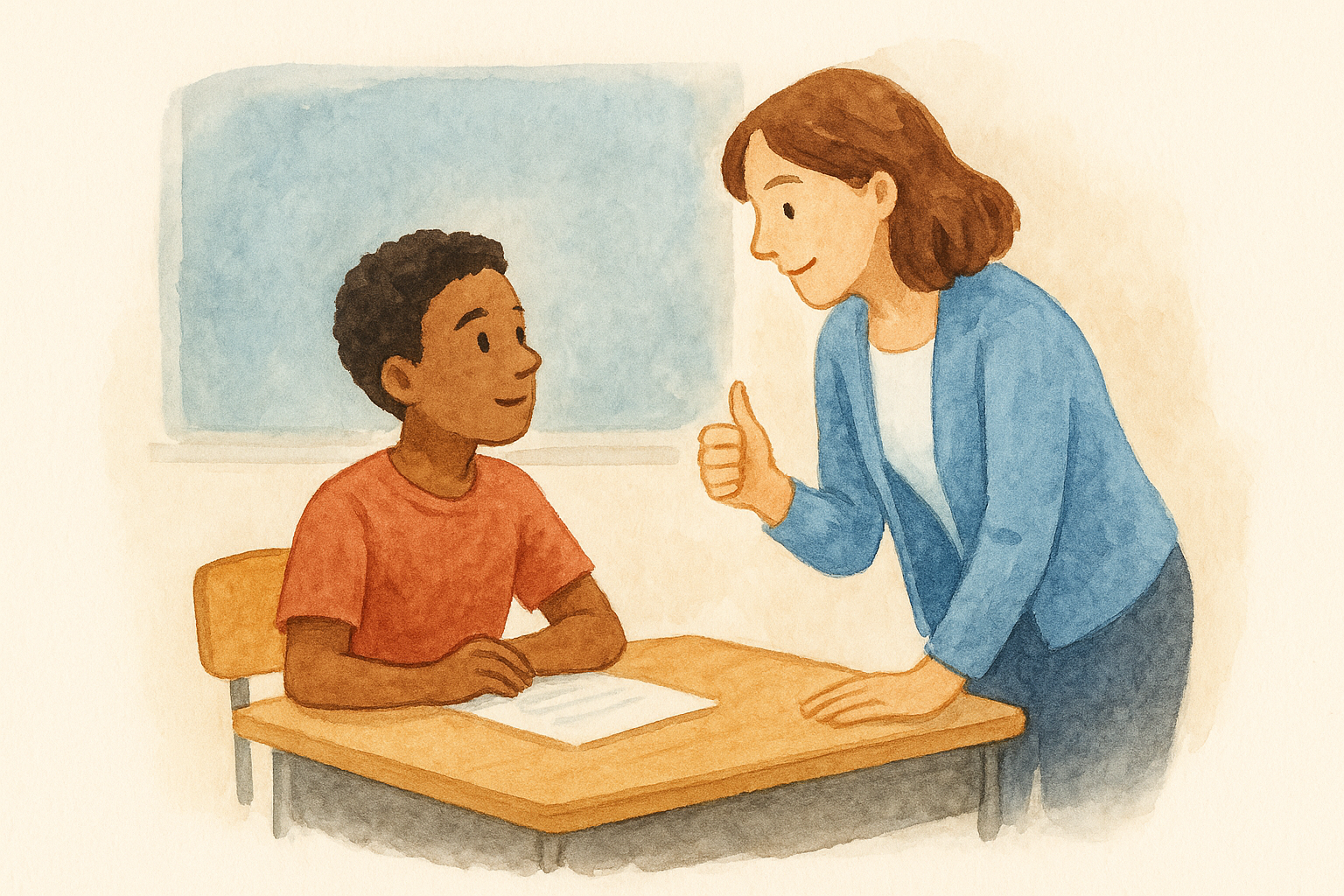
A proximity move, quietly walking near a student’s desk without addressing them directly, can interrupt a building pattern without drawing class attention. A brief nonverbal check-in like a thumbs-up or soft desk tap signals awareness without putting the student on the spot.
What to say without starting a power struggle
Keep your language open rather than accusatory so the student doesn’t feel cornered.
Use low-stakes phrases like "Hey, you good?" instead of "Why aren’t you working?" Short, private check-ins during transitions work better than public confrontations every time.
What to avoid that fuels acceleration
Skip public ultimatums that damage a student’s dignity in front of peers. Repeating a demand multiple times in quick succession almost always escalates the situation rather than resolves it.
When to call for support for safety
If a student becomes physically threatening, call for support immediately. Your school’s crisis protocol exists for exactly this reason, so use it without hesitation.
3. Regulate your body language, tone, and pacing first
Students in crisis scan your body language and tone for safety signals before they process a single word you say. Bringing yourself down first is strategic, and it forms the foundation of every effective de-escalation technique for teachers.
The fastest ways to downshift your own stress response
Take one slow exhale before you speak or move. Unclenching your jaw and dropping your shoulders lowers your own stress response and signals safety to the student at the same time.
Nonverbal moves that lower threat and protect dignity
Angle slightly sideways rather than squaring up directly, and keep your hands visible and relaxed at your sides to reduce any sense of physical threat in the moment.
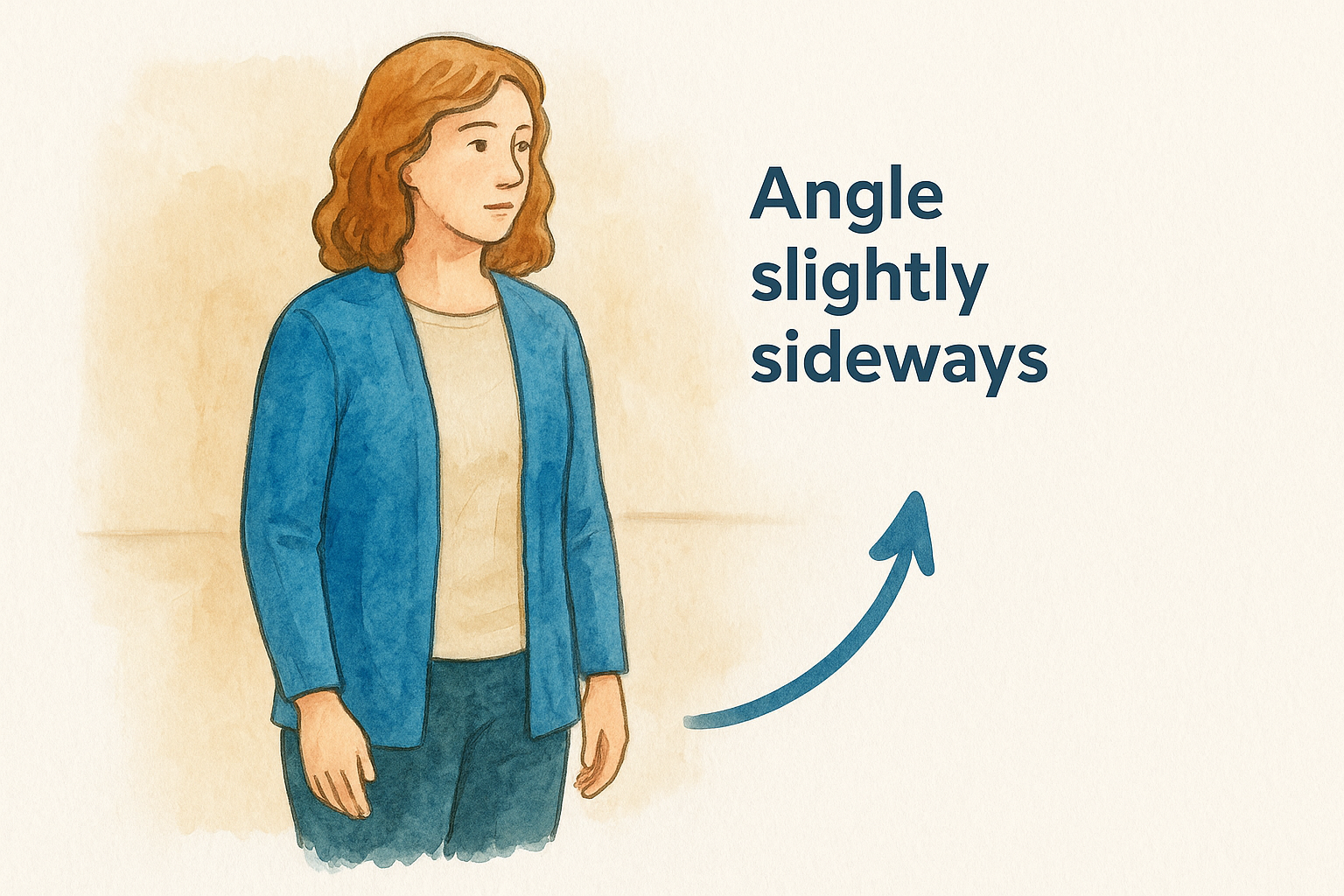
Your posture speaks before your words do, so position yourself with clear intention.
Voice and wording that de-escalate instead of provoke
Lower your volume and slow your pace deliberately. A quieter, measured voice pulls the student’s attention in and naturally reduces intensity in the room without you having to say much at all.
How to give directions without turning up the heat
Give one clear direction and then wait. Stacking multiple demands raises cognitive load and almost always accelerates tension rather than resolving it.
How to keep the rest of the class steady
Assign the class a brief independent task using a calm, steady voice. Keeping other students occupied reduces the audience effect and takes pressure off everyone involved in an already tense situation.
4. Validate feelings and listen without rewarding the behavior
Validation is not agreement, and knowing the difference keeps you in control of the situation. When you acknowledge a student’s emotion without endorsing the behavior driving it, you remove the power struggle entirely and open a path toward calm. This is one of the most underused de-escalation techniques for teachers across every grade level.
How to separate emotion from behavior in your response
Name the feeling, not the action. Saying "I can see you’re really frustrated" lands very differently than "Stop acting out right now." You’re acknowledging the emotion while keeping your focus on resolution rather than confrontation.
Active listening moves that actually calm students
Nod, maintain relaxed eye contact, and resist the urge to interrupt or fix the situation immediately. Short verbal affirmations like "I hear you" or "okay" signal presence and lower the student’s guard without escalating the exchange.
When a student feels genuinely heard, they become far more open to regulation.
Validation phrases that work across ages
Keep your phrases short and direct so they land across different developmental stages. Try these:
- "That sounds really frustrating."
- "I get why you’re upset."
- "Your feelings make sense to me."
Boundary phrases that stay respectful and firm
Follow every validation with a clear, calm redirect: "And right now, we need to…" This pairing keeps you respectful and firm at the same time without sacrificing either.
What to do if the student argues or escalates verbally
Don’t match their energy level. Repeat your validation phrase once, then stop talking and give them space to process before you say anything else.
5. Offer choices and set clear limits to end the power struggle
Power struggles grow when students feel they have no control over what happens to them. Offering structured choices removes that fuel without surrendering your authority or the direction of the class.
How to frame choices so they feel real and safe
Both options you offer need to be genuinely acceptable to you. If one choice is a trap, students sense it immediately and dig in harder.
Two-choice scripts you can use in common scenarios
Keep your scripts direct and neutral: "You can finish this at your desk or at the back table. Your call." This is one of the most effective de-escalation techniques for teachers because it shifts ownership to the student without removing structure.
How to use "when-then" to keep learning moving
When-then statements redirect without threatening. Try "When you start the task, then we can talk about the other thing" to keep the learning on track while signaling that their concern still matters.
This phrasing keeps you focused on behavior and forward movement rather than what already went wrong.
How to keep consequences calm, immediate, and predictable
State consequences once, clearly, and without emotion. Students respond better when the outcome feels fair and expected, not arbitrary or personal.
What to do if the student refuses every option
Give them thirty seconds of silence and space. Then restate one option in a calm, flat tone and walk away to remove the audience pressure entirely.
6. Use a reset routine and restore the relationship afterward
A reset routine gives both you and the student a structured path back to calm without losing more instructional time than necessary. These de-escalation techniques for teachers only complete their work when the relationship gets repaired after the moment resolves.
Quick reset options that preserve learning time
Keep resets short and purposeful, around three to five minutes, so the return to class feels natural. Some reliable low-disruption options include:
- A calm-down corner with a simple breathing or drawing task
- A brief supervised walk to the water fountain
- Quiet independent work at the back of the room
Co-regulation tools when a student cannot self-regulate
Some students need your regulated presence to find their own calm. Sit nearby, breathe visibly and slowly, and say very little until the student’s body begins to settle.
Co-regulation works because the nervous system responds to environmental cues, not just internal ones.
How to debrief after the student returns to calm
Wait until the student is fully settled, then check in privately with two or three low-pressure questions about what happened and what they need next time.
Repair steps that reduce repeat blowups
A brief, genuine acknowledgment that the moment was hard rebuilds trust quickly and signals to the student that your relationship is still intact.
What to document and what to communicate to families
Log the specific trigger, your intervention, and the outcome in a short note. Contact families using factual, non-inflammatory language focused on support rather than blame.
Quick recap and next steps
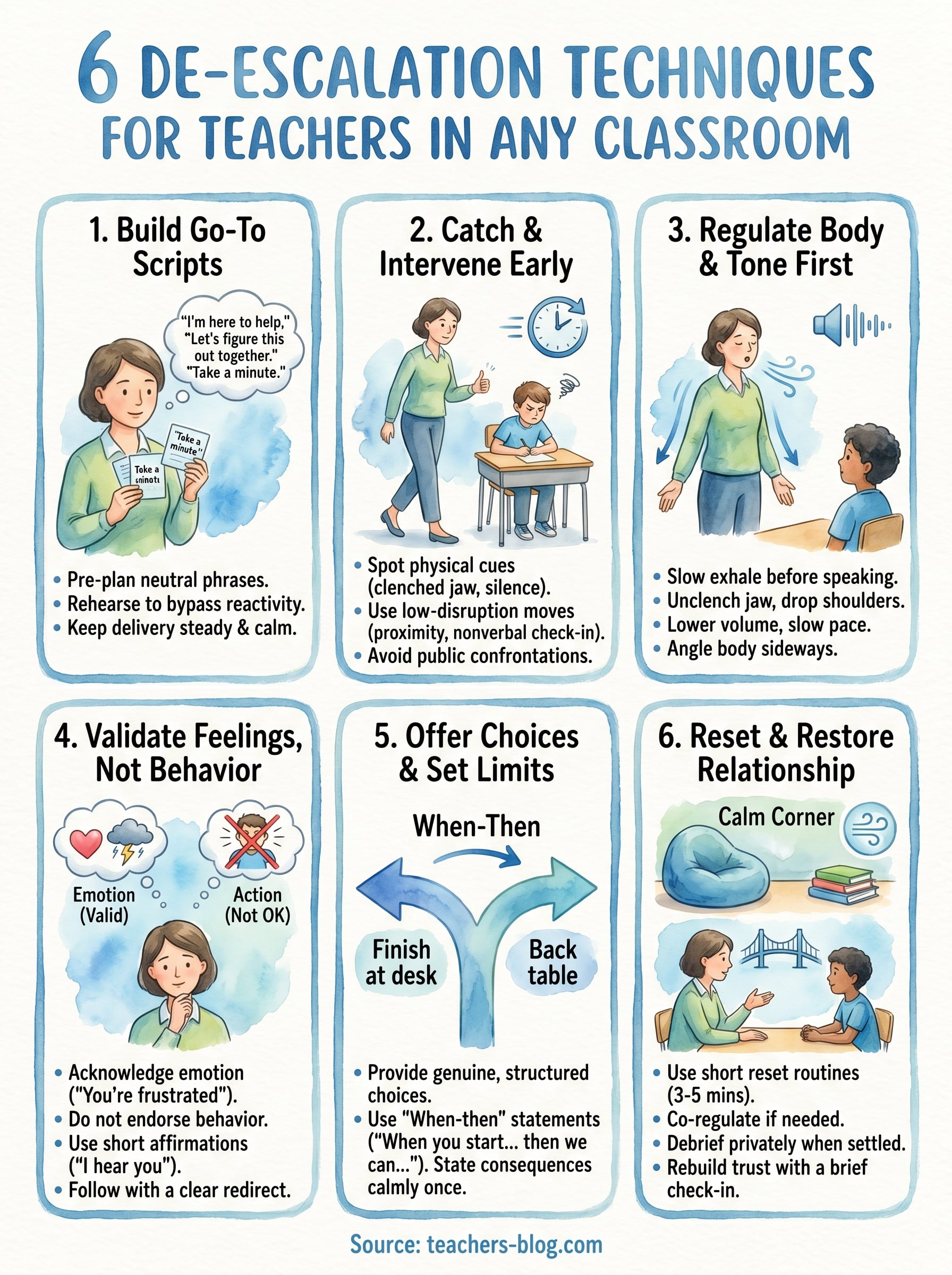
These six de-escalation techniques for teachers give you a concrete toolkit you can reach for before a situation becomes unmanageable. You learned how to build reliable scripts, catch escalation early, regulate your own body language, validate student emotions without rewarding harmful behavior, offer structured choices, and use reset routines to repair the relationship after a hard moment.
None of this requires a perfect classroom or a flawless response every time. What matters is that you practice these strategies consistently so they become second nature when the pressure is real. Start with one technique this week, build it into your routine, and add another when the first feels solid.
If you want more resources like this one, The Cautiously Optimistic Teacher has practical tools and strategies that support you through the parts of teaching that prep programs never fully prepared you for.