Culturally Responsive Classroom Management: How Inclusion Prevents Behavior Problems
Classroom management problems often get blamed on motivation, effort, or respect.
But sometimes the real issue is something deeper.
Students behave differently when they feel misunderstood, invisible, or judged in the classroom.
This is why culturally responsive classroom management matters.
It is not about lowering expectations or avoiding difficult conversations. It is about building a classroom where students feel seen, respected, and valued, which dramatically improves behavior, engagement, and trust.
When students feel that the classroom is a place where they belong, many behavior issues disappear before they start.
What Culturally Responsive Classroom Management Is
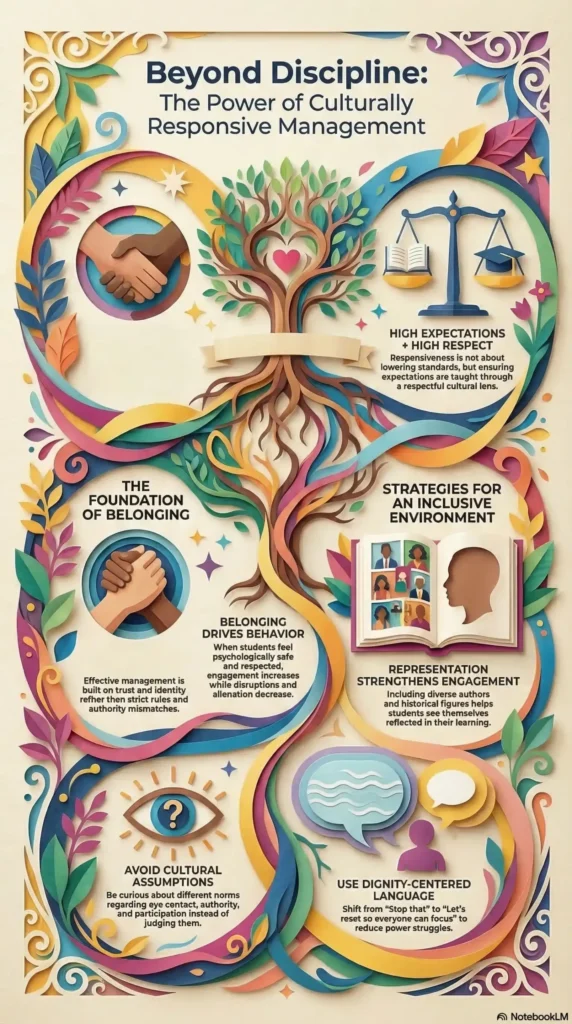
Culturally responsive classroom management means designing your classroom environment so that students’ identities, backgrounds, and experiences are respected and reflected in the learning environment.
This includes:
Communication styles
Cultural norms around authority and participation
Representation in curriculum and materials
Classroom expectations and routines
Importantly, culturally responsive classroom management does not mean abandoning structure or expectations.
In fact, culturally responsive classrooms often have very clear expectations.
The difference is that expectations are taught in a way that respects and acknowledges students’ cultural perspectives.
Why Culture Affects Classroom Behavior
Students interpret teacher actions through their own cultural lens.
Something that feels neutral to a teacher might feel very different to a student.
For example:
A teacher might think:
“I’m maintaining authority.”
But a student might experience:
“The teacher is disrespecting me.”
This mismatch can lead to unnecessary conflict.
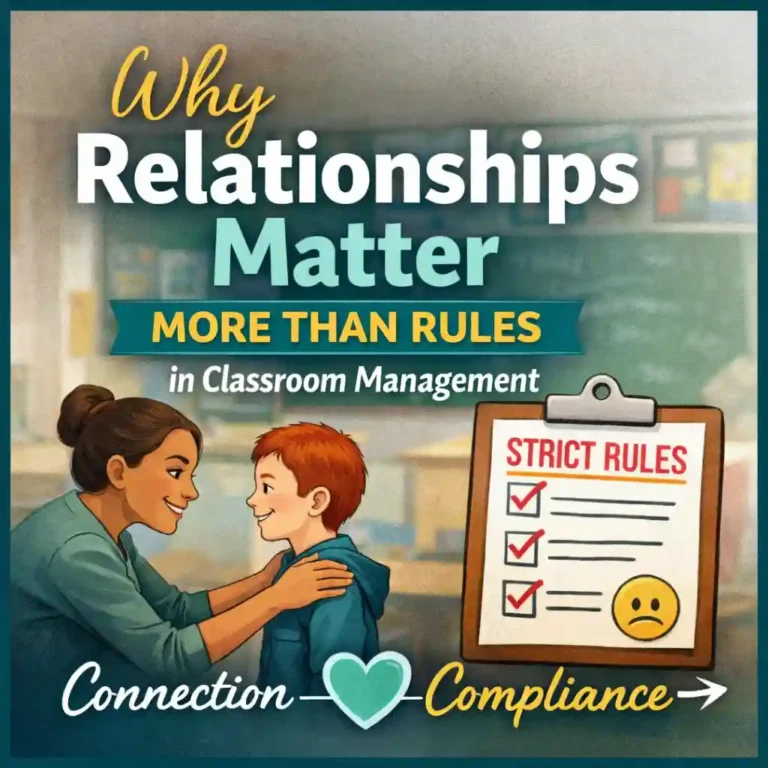
Culturally responsive classroom management helps teachers understand that behavior is not just about rules — it is also about relationships, identity, and belonging.
The Belonging–Behavior Connection
Students behave better in environments where they feel psychologically safe.
Research on belonging consistently shows that when students feel respected:
Engagement increases
Cooperation increases
Disruptions decrease
Motivation improves
Students who feel alienated or misunderstood are far more likely to disengage or act out.
This does not mean every student will always behave perfectly.
But it means that the baseline emotional climate of the classroom supports positive behavior.
Common Misconceptions About Cultural Responsiveness
Some teachers worry that culturally responsive practices mean:
Being afraid to correct behavior
Allowing students to ignore expectations
Avoiding discipline
None of these are true.
Culturally responsive classroom management actually strengthens authority because it combines:
High expectations + High respect
Students are more willing to follow expectations when they feel the system is fair and inclusive.
Practical Strategies for Culturally Responsive Classroom Management
The good news is that many culturally responsive strategies are simple adjustments to everyday teaching practices.
1. Learn About Your Students
Take time to understand students’ backgrounds and experiences.
This can include:
Interest surveys
Community knowledge
Informal conversations
Family communication
Small insights about students’ lives help build stronger relationships.
2. Avoid Cultural Assumptions About Behavior
Different cultures have different norms around:
Eye contact
Speaking to authority
Participation styles
Group collaboration
A behavior that looks like disengagement may simply be a different communication style.
Being curious rather than judgmental prevents unnecessary discipline issues.
3. Use Inclusive Examples and Materials
Students should be able to see themselves reflected in classroom materials.
This can include:
Diverse authors and historical figures
Multiple cultural perspectives
Real-world examples that reflect students’ communities
Representation increases engagement and strengthens belonging.
4. Build Strong Relationships First
Relationships are the foundation of culturally responsive classroom management.
Students are far more likely to accept correction from a teacher who they believe:
Respects them
Understands them
Wants them to succeed
Small daily interactions make a big difference.
Greeting students, showing interest in their lives, and listening when they speak helps build this trust.
5. Use Respectful Language When Addressing Behavior
Language matters.
Neutral, respectful language reduces power struggles and maintains student dignity.
Instead of:
“Stop that right now.”
Try:
“Let’s reset so everyone can focus.”
The goal is always to correct behavior without damaging relationships.
6. Invite Student Voice Into the Classroom
Students are more invested in classrooms where they have a voice.
You can do this by:
Allowing choice in projects
Encouraging discussion and perspective sharing
Co-creating classroom norms
When students help shape the environment, they feel more responsible for maintaining it.
When Cultural Differences Lead to Conflict
Even the most culturally responsive teachers will sometimes encounter misunderstandings.
When this happens, the goal is repair, not punishment.
Helpful steps include:
Speak privately with the student
Ask questions before making assumptions
Listen carefully to their perspective
Clarify expectations respectfully
Rebuild the relationship
Many conflicts dissolve once students feel heard.
Culturally Responsive Classrooms Maintain High Expectations
Respecting culture does not mean lowering standards.
Students thrive when teachers combine:
High academic expectations
Clear behavior expectations
Strong relational support
Culturally responsive classroom management simply ensures that expectations are fair, transparent, and respectful to everyone in the room.
The Big Idea
The most effective classroom management systems are not based on control.
They are based on belonging.
When students feel respected and valued, they are far more willing to participate, cooperate, and take responsibility for their behavior.
Culturally responsive classroom management helps teachers create classrooms where every student feels like they belong — and classrooms that feel like they belong rarely have major management problems.
Reflection Questions
How well do my classroom materials represent the diversity of my students?
Are there behavior expectations that might unintentionally conflict with students’ cultural norms?
How can I strengthen relationships with students whose backgrounds differ from my own?
Next: Why Burnout Worsens Classroom Management