7 Classroom Management Tips for Substitute Teachers Today
You walk into an unfamiliar classroom, thirty students stare you down, and someone in the back row mutters, "Oh, we have a sub." That moment, right there, is where classroom management for substitute teachers either clicks into place or falls apart. Without established relationships or routines to lean on, subs face a unique challenge that even experienced educators find tough. And yet, effective management as a substitute is absolutely learnable.
The problem isn’t a lack of teaching ability. Most substitutes know their stuff. The real issue is that students test boundaries the second they spot an unfamiliar face, and traditional classroom management advice assumes you’ve had weeks to build rapport. You haven’t. You might have five minutes before the bell rings to set the tone for the entire day. That demands a different playbook, one built around quick authority, clear expectations, and adaptable strategies.
Here at The Cautiously Optimistic Teacher, we build resources that help educators handle real classroom challenges with practical, no-fluff strategies. Whether you’re a full-time sub, picking up occasional days, or an aspiring teacher getting your feet wet, these seven tips will give you a concrete framework for walking into any classroom with confidence. Each one is something you can use immediately, no prep time required.
1. Start with a bell ringer you can generate fast
The first three minutes of class determine how the next fifty will go. When students walk in and see nothing on the board and no clear direction, they fill that vacuum with side conversations, phone use, and general chaos. A bell ringer, a short task students start the moment they sit down, solves that problem before it starts.
What to do
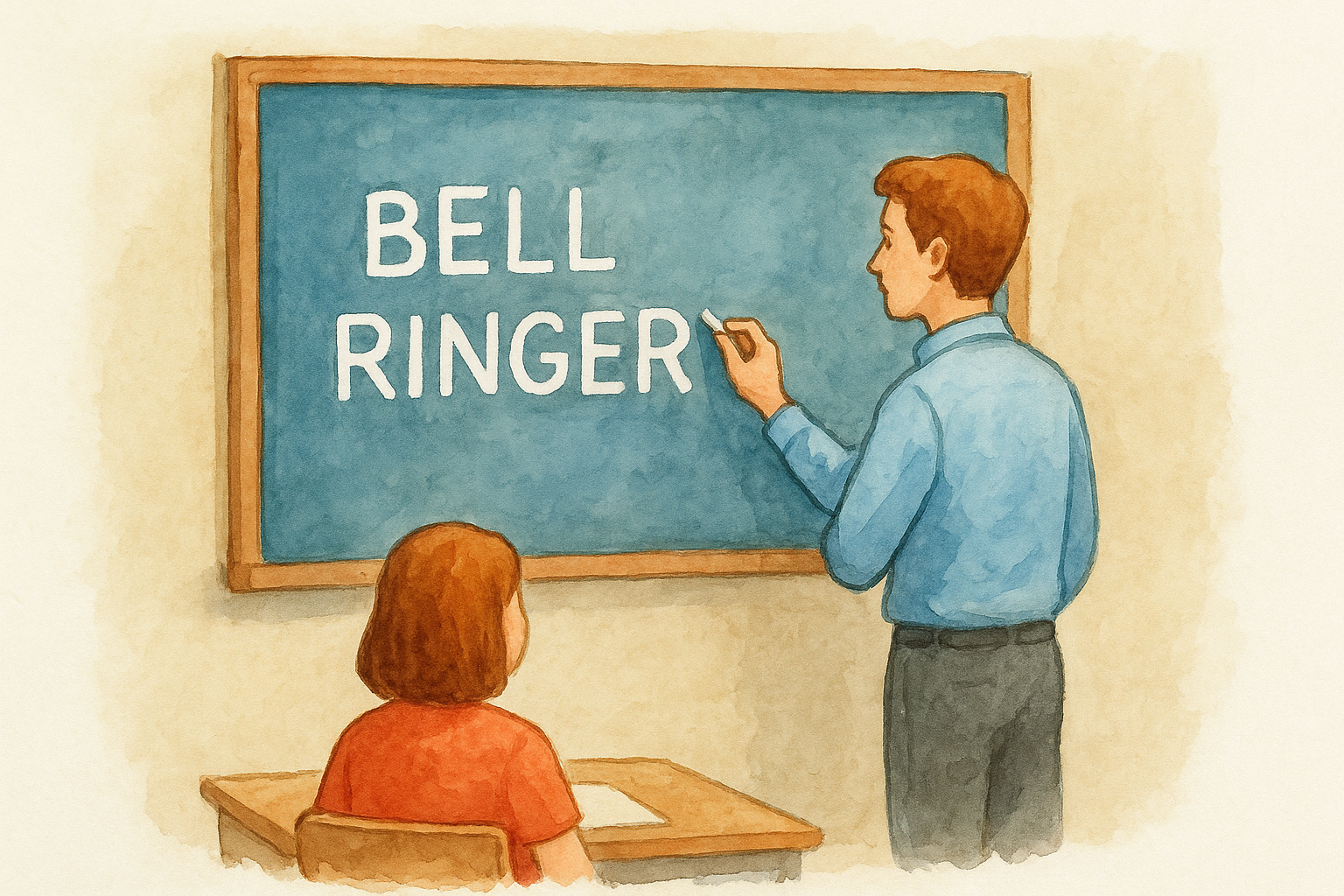
Write a task on the board before the first student walks in. It doesn’t need to be complex. A single question, a short writing prompt, or a quick vocabulary challenge is enough to redirect attention toward something productive. If the regular teacher left a lesson plan, pull a prompt from the material. If they didn’t, generate one yourself based on the subject on the door.
The best bell ringer is one you can write in 60 seconds and students can start in 30.
Why it works
A bell ringer works because it gives every student a default behavior the moment they enter. Instead of deciding how to act, they see a task and most of them just start. This is especially powerful in classroom management for substitute teachers because you haven’t had time to build any routines. The bell ringer creates a routine instantly, on day one, in period one.
Examples and quick scripts
You don’t need subject expertise to write a usable bell ringer. Here are a few that work across any class:
- English or Social Studies: "Write 3 sentences predicting what today’s lesson will cover based on yesterday’s notes."
- Math or Science: "Solve this problem on the board, then write one question you still have about the topic."
- Any subject, no context: "Write about one thing you learned in this class last week and why it stuck with you."
When students arrive, point to the board and say, "Get started on that prompt right away, I’ll be checking in two minutes." That single sentence sets your authority and buys you time to take attendance without losing the room.
2. Teach expectations in two minutes, then enforce them
Students don’t automatically know how you want them to behave. Your first job, right after the bell ringer settles the room, is to state your expectations clearly and briefly. Two minutes is all you need.
What to do
Pick three non-negotiable expectations and say them out loud before instruction starts. Keep them short: phones away, raise your hand to speak, stay in your seat unless given permission. Write them on the board if you have time. Then tell students what happens if they break those rules, a quick reminder first, then a consequence like a seat change or a note in your report to the teacher.
Why it works
Clear expectations remove ambiguity, and ambiguity is where student misbehavior lives. When students don’t know the rules, some will push to find the edges. Stating expectations upfront shuts that process down. This is a core principle of classroom management for substitute teachers because you don’t have the luxury of letting norms develop over time.
Students behave better when they know exactly what you expect and that you mean it.
Examples and quick scripts
Use this simple opener: "Before we start, here are my three rules for today" then list them. If a student breaks one, say calmly, "That’s rule two, first reminder." Naming the rule removes emotion and keeps your response consistent throughout the period.
3. Use active supervision so issues never get momentum
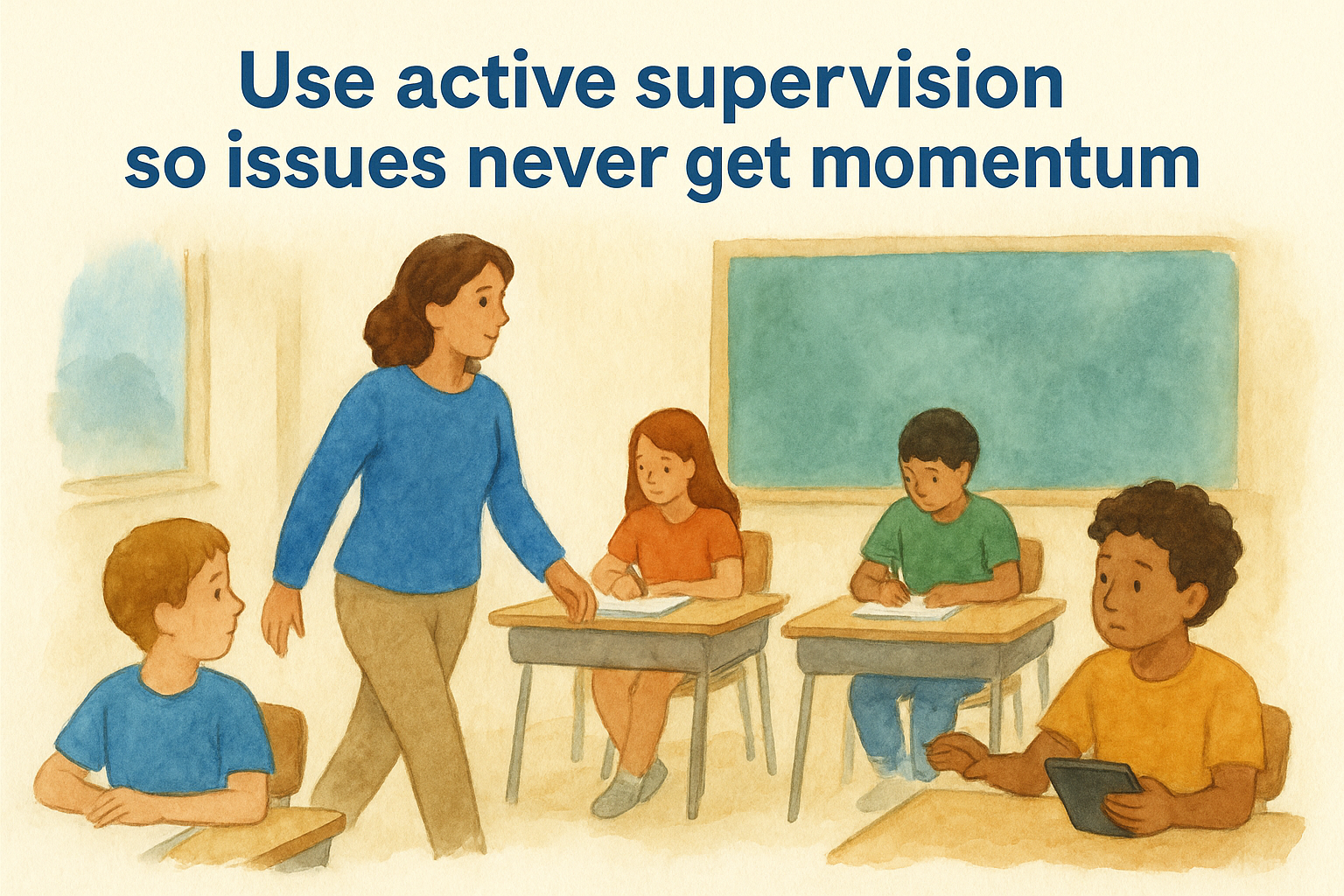
Standing at the front of the room feels safe, but it’s actually the fastest way to lose control of a class. Active supervision means moving through the room constantly, positioning yourself near problems before they start. In classroom management for substitute teachers, this physical presence is one of your most reliable tools.
What to do
Don’t anchor yourself to the front of the room during independent work. Move through every section of the class while students are working, keeping your eyes scanning the whole time. Three moves that work immediately:
- Perimeter loop: Walk the outside of the room every few minutes during work time.
- Proximity pause: Stand near an off-task student without saying anything.
- Back positioning: Stand at the back during instruction so students face forward naturally.
Why it works
Students behave differently when you’re standing next to them versus all the way across the room. Physical proximity signals awareness, and awareness alone stops most small problems before they build into something harder to manage.
If students think you see everything, most of them will act like you do.
Examples and quick scripts
When someone reaches for their phone, walk toward them and pause nearby without a word. That silent redirect works most of the time without pulling the whole class’s attention.
If proximity alone doesn’t work, say quietly, "I need you to put that away." Keep your voice low so the rest of the class stays focused and the student doesn’t feel publicly called out.
4. Learn names fast and build rapport without losing time
Knowing a student’s name changes the entire dynamic of a correction or a compliment. Students pay more attention when they realize you see them as an individual, and calling someone by name signals respect without requiring any prior relationship. You don’t need hours to make this happen.
What to do
Use the seating chart the moment you walk in. If the teacher left one, keep it in your hand during the first activity and glance at it constantly. If there’s no chart, ask students to write their names on a folded piece of paper and place it on their desks. Either method gives you names within the first five minutes without interrupting your flow.
Why it works
Names are a low-effort tool with a high-impact result in classroom management for substitute teachers. When you call a student by name to redirect behavior, the correction feels more personal and lands more firmly than a generic "hey, you in the back."
Students who feel recognized are significantly less likely to act out.
Examples and quick scripts
When you catch a student doing something right, say "Nice work, Marcus" rather than a vague "good job." When redirecting, use "Jordan, I need your eyes up here" instead of pointing across the room. Both approaches build enough rapport to keep the class on your side without spending a single extra minute.
5. Keep everyone responding so off-task behavior drops
When only one student answers at a time, the other twenty-nine have nothing to do. Idle students drift, and drifting students find trouble. High response rates keep every student mentally engaged, which is one of the most underused tools in classroom management for substitute teachers.
What to do
Replace single-student responses with whole-class response techniques that require everyone to participate at once. Three methods you can use without any materials:
- Choral response: Ask a question, say "everyone together," and have the class answer simultaneously.
- Think-pair-share: Give students 30 seconds to think, then 60 seconds to tell a partner, then call on someone to share.
- Whiteboard or paper response: Have students write their answers and hold them up on your count.
Why it works
When every student expects to respond, they stay tuned in because they can’t predict who you’ll call on or when you’ll ask the group. A room full of engaged, responding students has almost no room for side conversations or off-task behavior to take hold.
Participation is not just a learning strategy. It is a management strategy.
Examples and quick scripts
Say "Write your answer and show me in three, two, one" during any review question. For discussion, use "Turn to your partner and give them your answer right now" to keep the energy moving without losing the room.
6. Use praise, narration, and pre-corrections all day
Most substitutes focus on correcting bad behavior when it appears. A smarter approach is to narrate good behavior as it happens, praise students specifically, and pre-correct before problems start. This trio of techniques keeps the tone positive while maintaining firm expectations across the entire period.
What to do
Use behavior narration to describe what students are already doing right: "Half the class has their notebooks open, I’m seeing more pencils moving." Before transitions, use a pre-correction to state exactly what you expect: "When I say go, everyone opens to page twelve quietly." Sprinkle specific praise throughout the period to reinforce the standard you want to hold.
Why it works
In classroom management for substitute teachers, narration and pre-corrections reduce misbehavior by raising the floor of expected behavior rather than reacting to the ceiling of bad behavior. Students who hear their peers praised naturally adjust to match that standard without direct confrontation or escalation.
Positive narration shifts the class’s attention toward good behavior instead of spotlighting the bad.
Examples and quick scripts
Try these immediately: say "I see ten students ready to go" during transitions, or "Three rows are completely on task" during independent work. Before a potentially chaotic moment like passing papers, say, "We pass papers forward without talking. Let’s go." These short, calm narrations give students a clear behavioral standard to match and take almost no time to deliver.
7. Correct calmly, avoid power struggles, document everything
When a student pushes back on a correction, the worst thing you can do is escalate. Power struggles in front of the class give students an audience, and audiences make backing down feel impossible for everyone involved. The most effective classroom management for substitute teachers keeps corrections brief, calm, and private whenever possible.
What to do
Deliver corrections in a low, even tone and then move on immediately. Give the student a short window to comply rather than standing over them waiting for a reaction. If the behavior continues or the student argues, offer a simple choice: follow the expectation or receive a documented consequence. At the end of the period, write down every incident with names, times, and what happened so the classroom teacher has a clear record.
Why it works
Staying calm signals confidence, not weakness. Students who are testing your authority expect a reaction. When you don’t give them one, the confrontation loses its appeal fast. Documenting incidents protects you professionally and gives the teacher the information they need to follow up properly.
A short, calm correction with a written record is far more effective than a heated exchange that disrupts the entire class.
Examples and quick scripts
When a student argues, say "I’ve told you what I need, the choice is yours" and walk away. At the end of class, write: "Student name, time, behavior, outcome" on a single sheet and leave it on the teacher’s desk.
Quick wrap-up
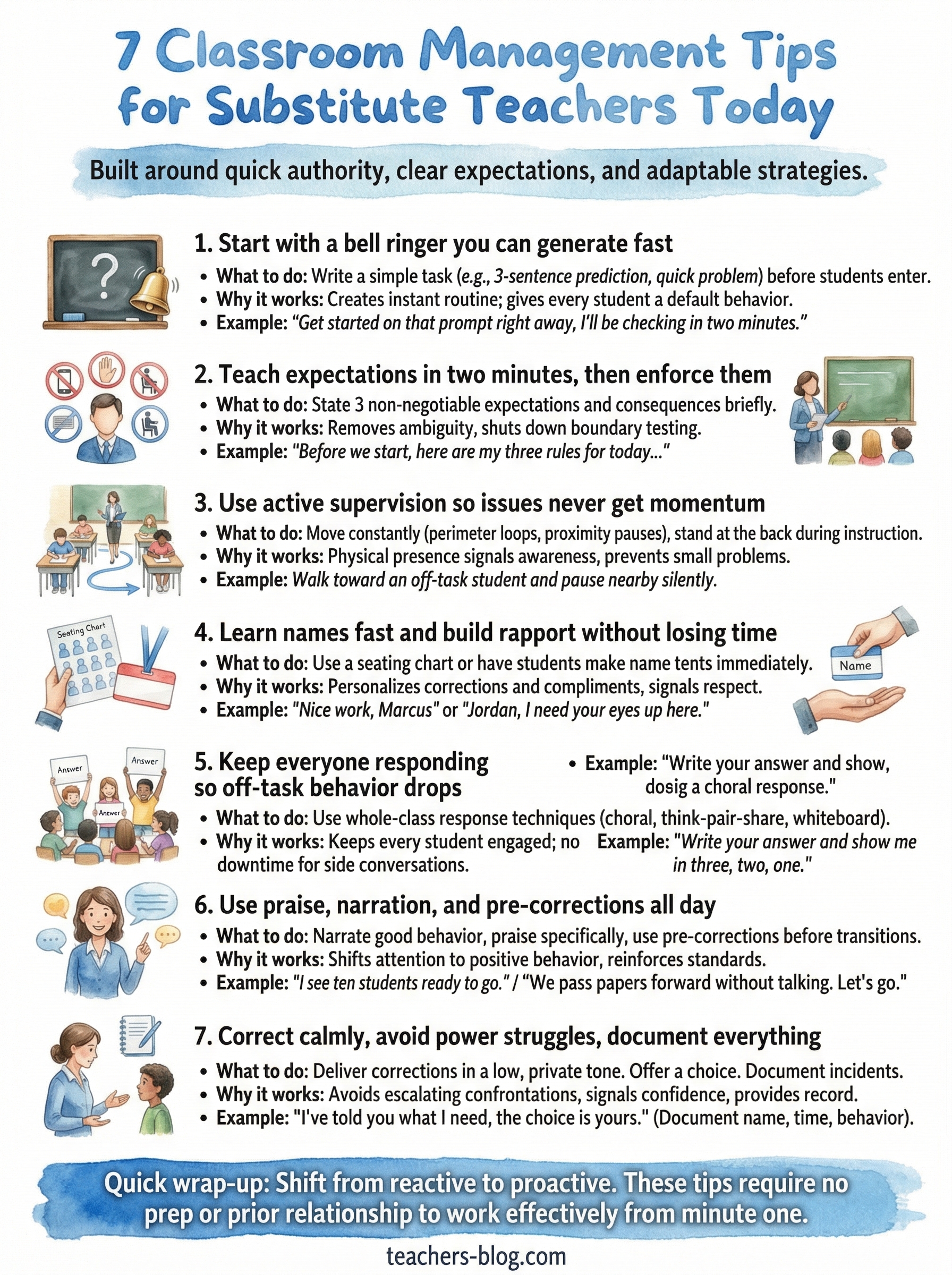
Classroom management for substitute teachers comes down to a handful of repeatable habits that you can apply from the first minute of class. Start with a bell ringer to settle the room, state your expectations clearly, move through the space constantly, learn names fast, keep everyone responding, narrate good behavior, and correct calmly when issues arise. None of these tips require prep time or a relationship with the class, which is exactly what makes them work in a substitute setting.
The more often you use these strategies, the more automatic they become. You stop reacting to problems and start preventing them before they form. That shift from reactive to proactive is where confident substitute teaching lives. If you want more practical tools and strategies built specifically for educators, visit The Cautiously Optimistic Teacher for resources that help you handle real classroom challenges every day.