Avoiding Power Struggles in the Classroom: How to Correct Behavior Without Shame
Avoiding power struggles in the classroom requires a shift from seeking compliance through control to seeking cooperation through regulation. Power struggles occur when a student’s “threat response” is triggered; by using neutral language and private corrections, teachers can maintain authority without inducing shame. This approach protects the teacher-student relationship and fosters behavioral fluency, as students remain in a cognitive state where they can actually learn from the correction.
This is Lesson 3 of Module 7: Trauma-Informed and Neurodiversity-Affirming Management | Full Course Outline
Mindset Shift: From Ego to Influence
| The Power Struggle Lens (Ego) | The De-Escalation Lens (Influence) |
| Focus: Who is winning the argument. | Focus: Who is regulating the environment. |
| Teacher Action: Raising volume, sarcasm, or “the last word.” | Teacher Action: Strategic silence, calm tone, and space. |
| View of Student: “They are challenging my authority.” | View of Student: “They are defending their identity.” |
| Goal: Immediate, forced compliance. | Goal: Long-term behavioral fluency. |
| Long-term Result: Fractured trust and recurring conflict. | Long-term Result: Mutual respect and a calmer room. |
If you’ve taught for more than a week, you’ve felt it. That moment when a student pushes back. When your authority is tested. When something small suddenly feels personal. And in that split second, you have a choice: Win the moment — or win the relationship. Avoiding power struggles in the classroom isn’t about giving up authority. It’s about understanding what actually leads to lasting behavior change. And here’s the truth:
Shame creates compliance.
Connection creates growth.
If we want strong classroom management, we have to stop confusing control with influence.
Let’s unpack how to do that.
Why Power Struggles in the Classroom Happens
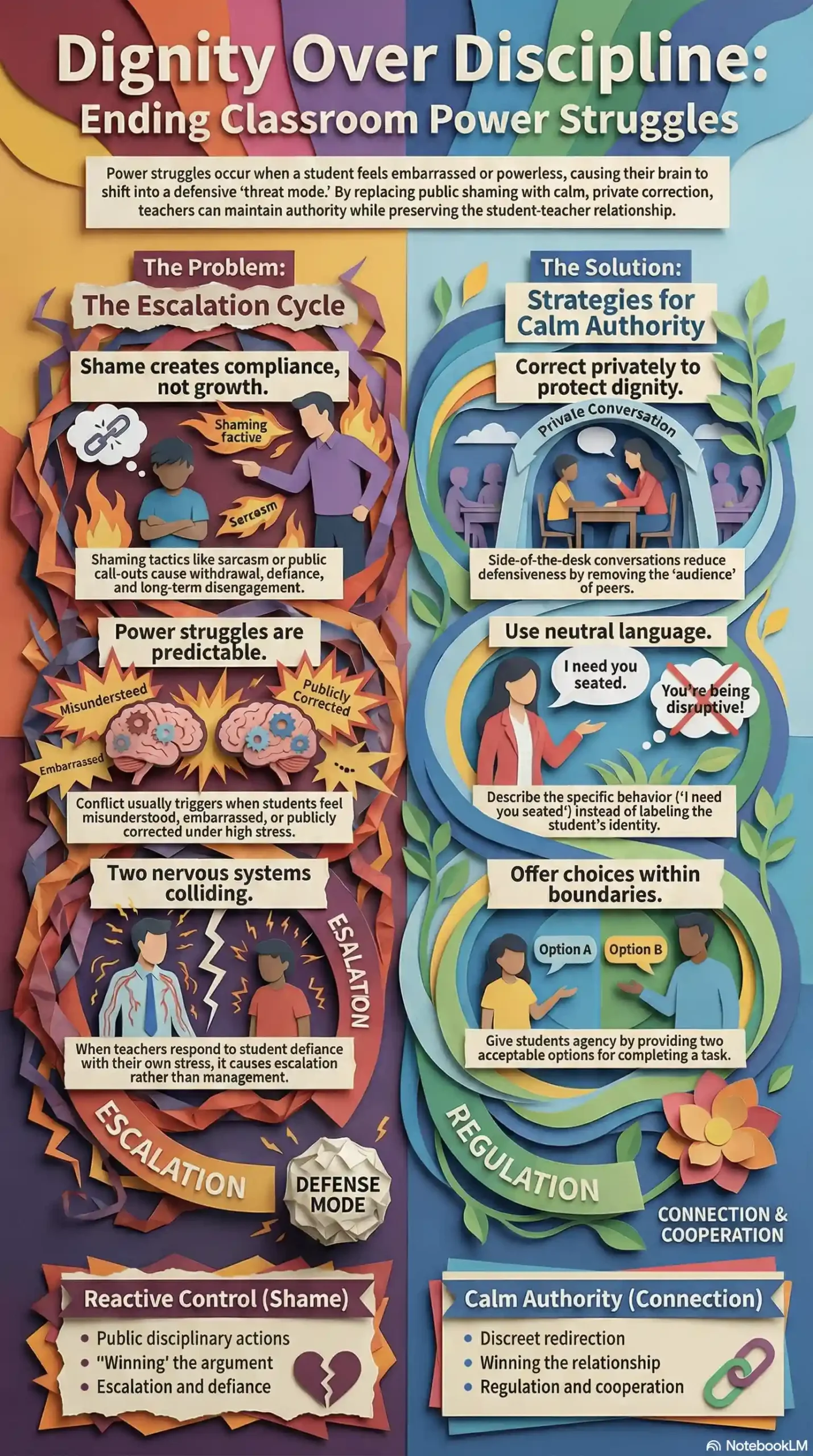
Power struggles aren’t random. They’re predictable.
They often occur when:
A student feels embarrassed
A student feels powerless
A student feels misunderstood
A teacher feels challenged or disrespected
The correction happens publicly
Stress levels are already high
When stress rises, the brain shifts into defense mode. Students aren’t thinking logically — they’re protecting their identity.
And when we respond from our own stress response?
Now you have two nervous systems colliding.
That’s not classroom management.
That’s escalation.
Avoiding Power Struggles in the Classroom Because of Shame
Shame is one of the most powerful social emotions we experience.
In classrooms, shame often shows up as:
Sarcasm
Public call-outs
Eye-rolling
Tone shifts
“Why are you always…”
Comparing a student to others
Making examples of students
Shame might produce short-term compliance.
But it also produces:
Withdrawal
Defiance
Masking
Relationship damage
Long-term disengagement
And for neurodivergent students — especially those with ADHD, autism, anxiety, or trauma histories — shame can be deeply destabilizing.
If Module 7 has taught us anything, it’s this:
Behavior is communication.
Shame shuts communication down.
Avoiding Power Struggles in the Classroom Without Escalation
Here’s the key shift:
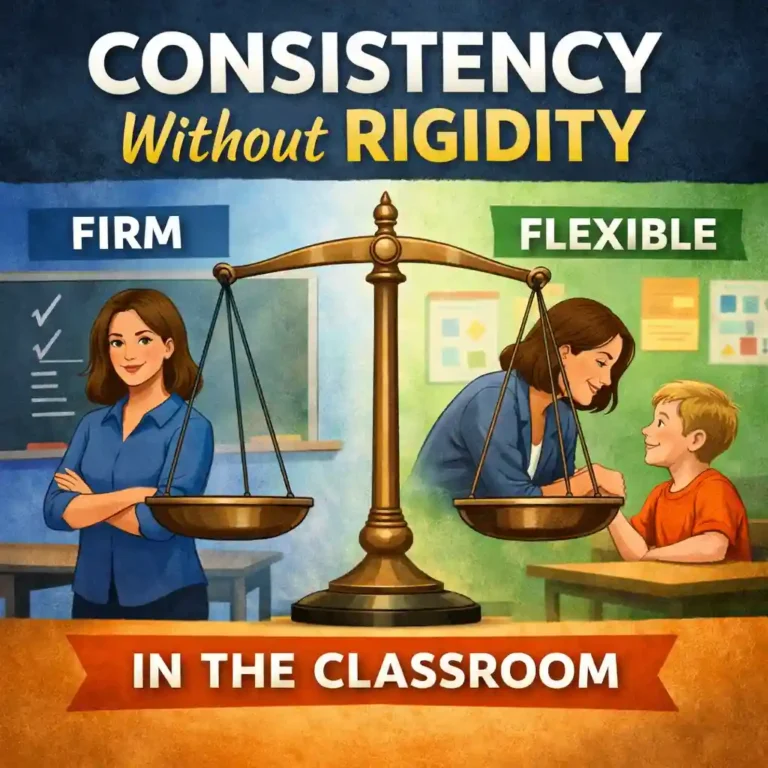
Authority is not volume.
Authority is not dominance.
Authority is not public correction.
Authority is calm consistency.
Students trust adults who are regulated.
When we avoid power struggles, we model self-control — and that is one of the strongest classroom management tools we have.
10 Practical Strategies for Avoiding Power Struggles in the Classroom
These are classroom-ready moves you can use tomorrow.
1. Pause Before Responding
When challenged, your first reaction may not be your best one.
Try:
A breath
A five-second pause
A neutral facial expression
Regulation is contagious.
2. Lower Your Voice, Don’t Raise It
When tension rises, lowering your voice signals confidence.
Raising your voice signals threat.
Calm authority is disarming.
3. Correct Privately Whenever Possible for Avoiding Power Struggles in the Classroom
Public correction invites public resistance.
A quiet, side-of-desk conversation protects dignity.
Dignity preserved = defensiveness reduced.
4. Offer Choices Within Boundaries
Instead of:
“Stop that right now.”
Try:
“You can finish this quietly here, or take two minutes in the hallway and come back ready.”
Choice restores agency without giving up structure.
5. Use Neutral Language While Avoiding Power Struggles in the Classroom
Replace:
“You’re being disrespectful.”
“Why are you acting like this?”
With:
“I need you seated.”
“We’re starting.”
“That language isn’t okay here.”
Describe the behavior.
Don’t label the student.
6. Avoid “Always” and “Never”
Absolutes attack identity.
Instead of:
“You always do this.”
Try:
“Right now, this isn’t working.”
Keep the moment small.
7. Refuse the Invitation to Argue
Some students escalate verbally when they feel cornered.
You don’t have to debate.
Try:
“We can talk about this after class.”
“I hear you. Right now, we’re moving on.”
Not every comment requires engagement.
8. Separate the Audience
If peers are watching, intensity increases.
If possible:
Move the student
Move yourself
Create space
Remove the stage.
9. Repair After Tension
If things escalated, circle back.
Try:
“Yesterday got heated. I want you to know I’m on your side.”
Repair strengthens authority — it doesn’t weaken it.
10. Focus on the Long Game
Ask yourself:
Will this matter in a week?
Is this about safety or ego?
Am I trying to teach, or win?
Winning the moment can cost the relationship.
Winning the relationship strengthens classroom management long-term.
Special Consideration When Avoiding Power Struggles in the Classroom: Neurodivergent and Trauma-Affected Students
Students with ADHD, autism, anxiety, or trauma histories often experience heightened threat responses.
Public correction can feel overwhelming.
Unexpected confrontation can trigger shutdown or escalation.
Avoiding power struggles is not lowering expectations.
It’s removing unnecessary emotional barriers so expectations can actually be met.
When students feel safe:
Compliance increases
Engagement increases
Self-regulation improves
Trust builds
This is preventative classroom management at its core.
What Avoiding Power Struggles in the Classroom Is Not
Avoiding power struggles does not mean:
Ignoring behavior
Being permissive
Letting students run the room
Avoiding consequences
It means delivering consequences without humiliation.
It means maintaining standards without attacking identity.
It means remembering that your authority doesn’t need to be defended — it needs to be modeled.
Try This Tomorrow
Pick one class.
When a minor behavior happens:
Pause.
Lower your voice.
Use neutral language.
Correct privately if possible.
Notice what changes.
Not instantly.
But over time.
Avoiding Power Struggles in the Classroom FAQ
How can teachers avoid power struggles in the classroom? Teachers can avoid power struggles by refusing to engage in back-and-forth arguments, using neutral language, and offering choices within boundaries. By correcting students privately and staying calm, you prevent the student from feeling the need to ‘defend’ themselves in front of peers.
Does avoiding power struggles mean letting students do whatever they want? No. It means holding the boundary without the emotional heat. You still deliver the consequence, but you do so in a way that preserves the student’s dignity. Authority is found in the consistency of the follow-through, not the intensity of the confrontation.
Why does shame lead to more power struggles? Shame triggers the brain’s survival mode (fight or flight). When a student feels shamed, they often lash out to regain their social standing or ‘save face’ with peers. This creates a cycle of escalation that damages classroom management and prevents behavioral fluency.
Reflection
I sometimes felt like I had to respond immediately when a student pushed back, because staying silent felt like losing control of the room. Over time, I learned that stepping back, lowering my voice, or correcting privately often prevented small moments from turning into power struggles and helped protect the relationship instead. Now I see calm authority not as backing down, but as choosing the long game.
When do you feel most likely to enter a power struggle?
What student behaviors trigger you emotionally?
How might avoiding shame improve long-term behavior?
Continue the Classroom Management Course
In the module, we will see how restorative classroom management focuses on repairing harm, rebuilding relationships, and strengthening community.
Next Module: Restorative Approaches to Classroom Management
Module 7 Progress:
- Understanding Trauma Responses in the Classroom
- Supporting Neurodivergent Students Through Design
- Avoiding Power Struggles and Shame
Back to Module 7 Overview
Return to Full Course Outline