
AI In Education Definition: What It Is And How It Works
If you’ve used an AI tool to generate report card comments or differentiate a lesson plan, you’ve already encountered AI in education, whether you realized it or not. But what does the AI in education definition actually cover? It’s broader than most teachers expect, and understanding it matters because these tools are already reshaping how we teach and how students learn.
At The Cautiously Optimistic Teacher, we build and recommend AI-powered tools specifically for educators, from worksheet makers to question generators. So we think about this topic constantly. The term gets thrown around in staff meetings and PD sessions, but rarely with the clarity it deserves. A solid working definition helps you make smarter decisions about which tools to adopt and which to skip, rather than just reacting to the latest ed-tech trend.
This article breaks down what AI in education actually means, how it functions in real classroom settings, and why it’s worth your attention. You’ll walk away with a concrete understanding of the concept, not a vague buzzword, plus practical examples you can connect to your own teaching practice.
What AI in education means in plain English
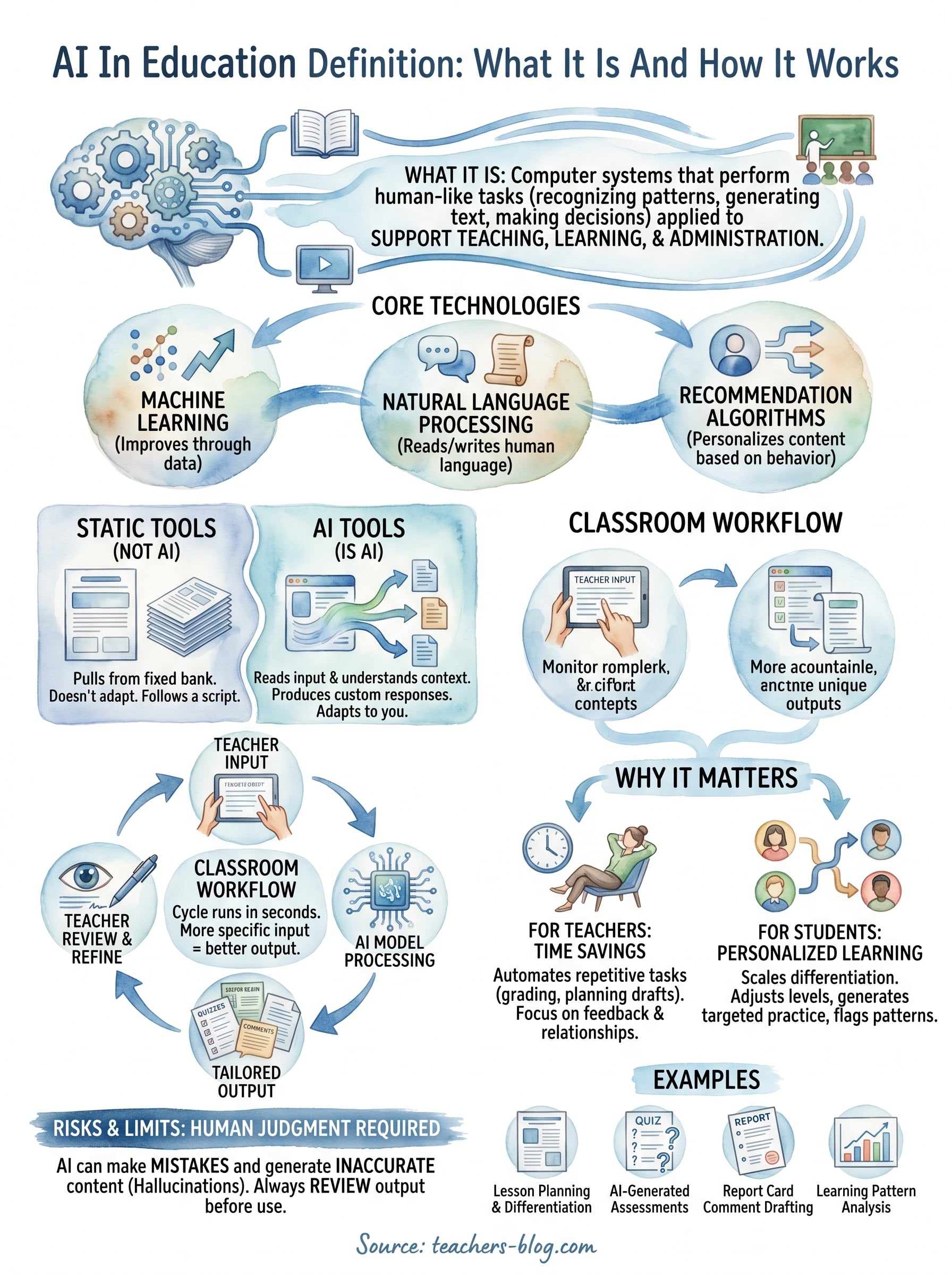
The ai in education definition starts with understanding what AI actually is. At its core, artificial intelligence refers to computer systems that perform tasks normally requiring human thinking, things like recognizing patterns, generating text, making decisions, or adjusting to new information. When you apply that to a school setting, you get AI in education (often called AIEd), which covers any use of these systems to support teaching, learning, or school administration.
AI in education isn’t a single tool or product. It’s an entire category of technology applied to an educational context.
What counts as AI and what doesn’t
Not every piece of ed-tech qualifies as AI. A static worksheet template that pulls from a fixed bank of questions isn’t AI. But a tool that reads your input, understands the context, and produces a custom response based on that understanding? That’s AI. The distinction matters because it affects what you can realistically expect from a tool. True AI systems adapt to your input rather than just following a script.
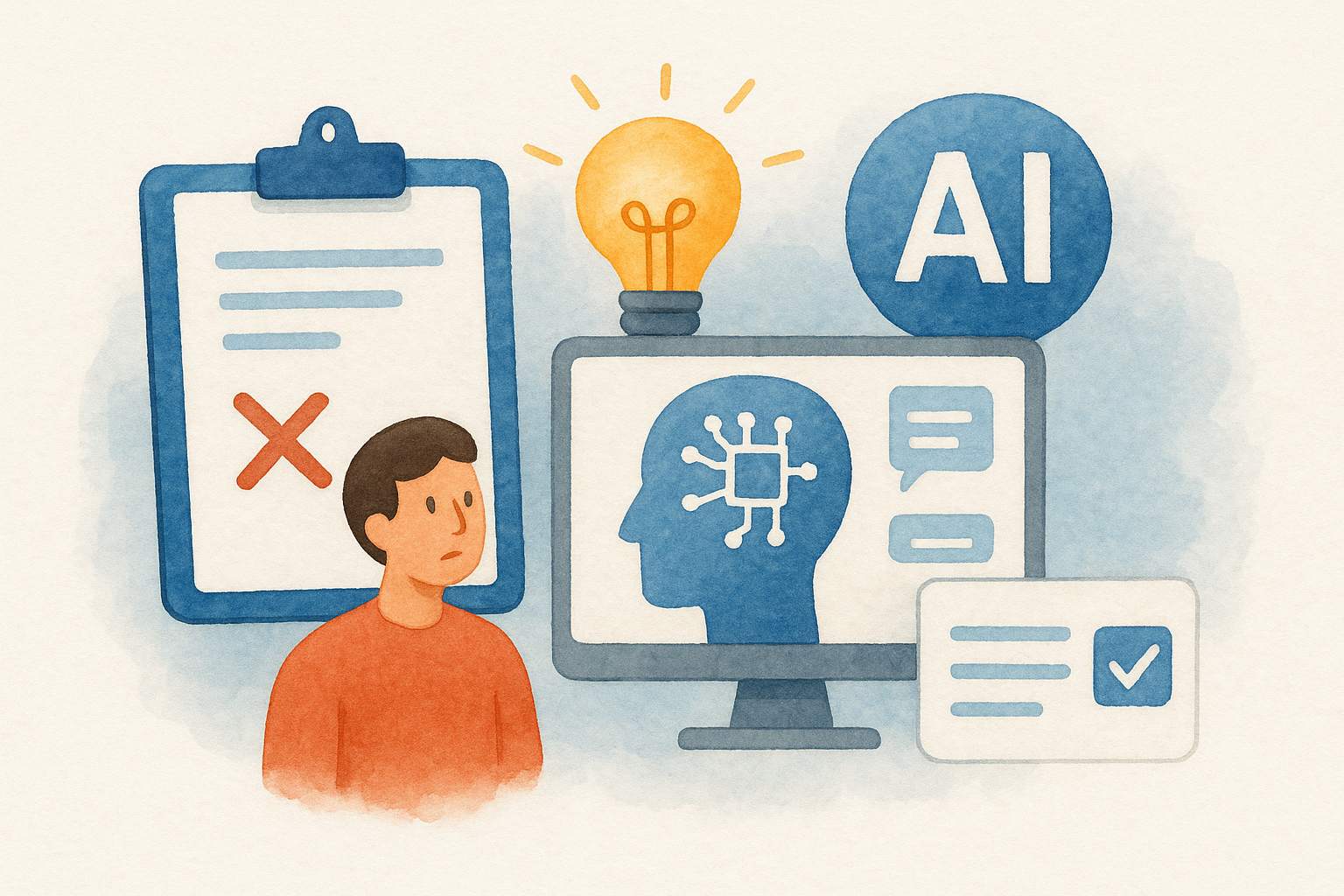
The technology behind most classroom AI tools today falls into a few categories: machine learning, which lets systems improve through data; natural language processing, which lets systems read and write human language; and recommendation algorithms, which personalize content based on user behavior. When you use a tool that generates differentiated questions from a reading passage or writes individualized report card comments, you’re working with at least one of these systems.
Where the definition gets tricky
Companies stretch this term in ed-tech marketing, labeling tools as "AI-powered" even when the intelligence is minimal. Your best filter is to ask what the system actually does with your input and whether it adapts to context or just follows a rigid formula. That single question cuts through most of the noise quickly.
Why AI in education matters for teachers and students
Understanding the ai in education definition isn’t just academic. These tools directly affect how much time you spend on repetitive tasks versus meaningful work, and that gap adds up quickly across a school year.
What it means for your workload
Administrative tasks like writing report card comments, generating differentiated materials, and building assessments take real time. AI systems can handle the first draft of these tasks in seconds, freeing you to focus on feedback, relationships, and actual instruction.
The goal isn’t to replace your judgment. It’s to remove low-value tasks so your judgment goes where it actually counts.
What it means for your students
Students benefit when personalized learning becomes practical rather than just a goal in your lesson plan. AI tools can do things that scale beyond what manual planning allows, including:
- Adjusting reading levels for different learners
- Generating targeted practice based on a student’s gaps
- Flagging patterns in student responses across a class
That doesn’t make AI a substitute for you. It makes it a tool that extends what you can realistically offer each student in a room of thirty.
How AI in education works in the classroom
Most AI classroom tools follow a straightforward loop: you provide input, the system processes it using a trained model, and it returns output tailored to your context. That cycle runs in seconds, which is why these tools feel immediate and responsive compared to older software.
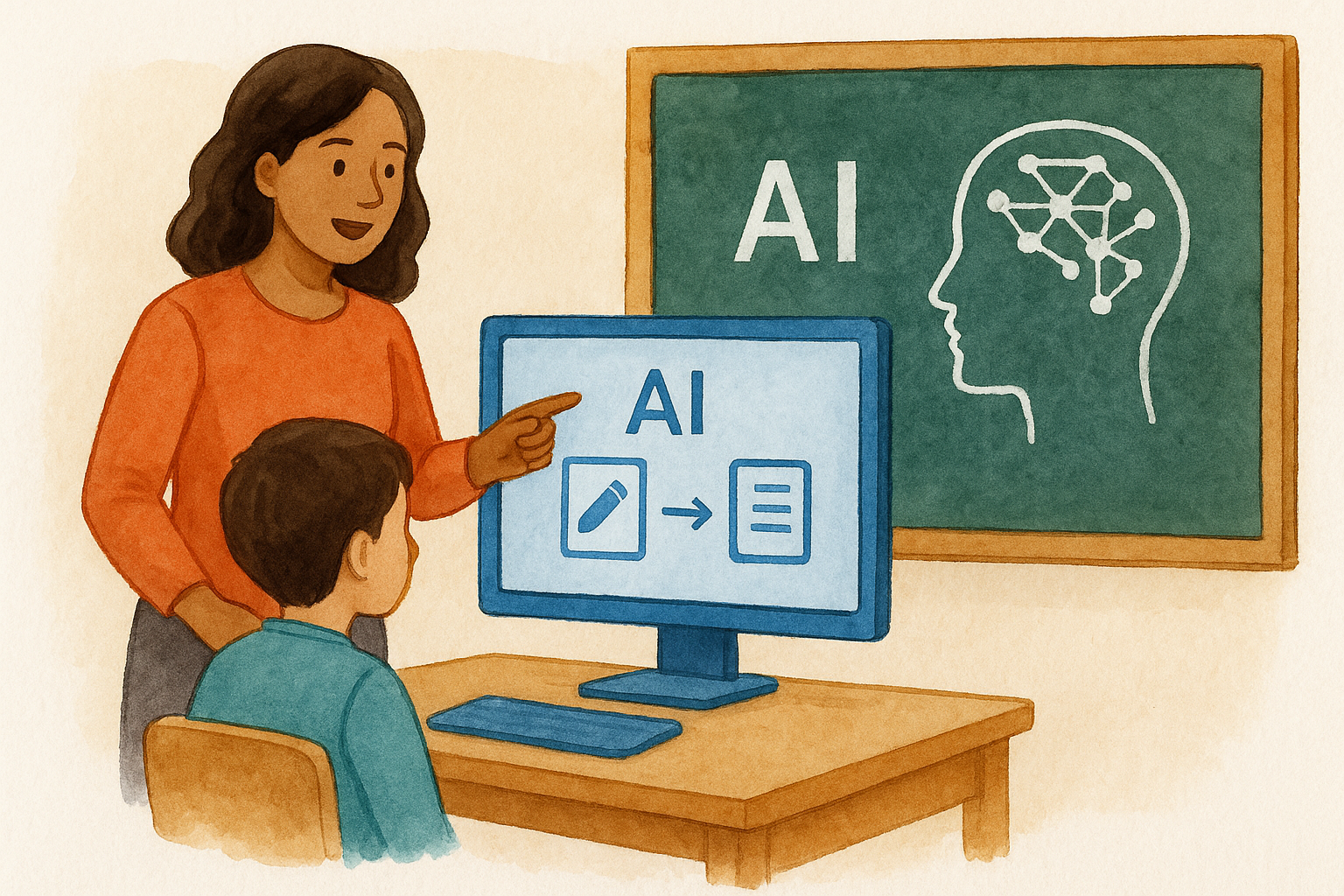
The more specific your input, the more useful the output. Vague prompts produce generic results.
What happens when you use an AI tool
When you type a prompt into an AI tool, the system runs your text through a language model trained on large datasets. It identifies patterns in your input and generates a response that fits your context. The model doesn’t "understand" language the way you do, but it predicts what a useful response looks like based on what it has learned.
Every part of the ai in education definition connects back to this input-output process, whether you’re generating quiz questions, adjusting reading levels, or drafting report card comments. The practical takeaway is that you control the quality of what the tool produces by how clearly you define your task. Treat AI like a capable assistant that needs clear direction to do its best work.
Common AI in education examples and use cases
The ai in education definition becomes concrete when you look at where these tools actually show up in daily teaching. Most educators are already closer to AI adoption than they think, because many common tasks now have AI-powered solutions that fit directly into existing workflows.
Tools that support lesson planning and differentiation
Lesson planning tools powered by AI can generate differentiated materials from a single text or topic in seconds. You input a reading passage, set the parameters, and the tool produces multiple versions at different complexity levels without you rebuilding everything from scratch.
Differentiation stops being a planning burden when AI handles the initial drafts.
Tools that support assessment and feedback
AI-generated quiz and question tools let you pull critical thinking questions directly from content you provide, which cuts the time between finishing a unit reading and having a ready assessment. Beyond quizzes, report card comment generators use student data points you supply to produce individualized comments that you review and adjust before sending home. These tools don’t replace your knowledge of the student; they give you a starting point so you spend your time refining rather than writing from zero.
Risks, limits, and responsible AI use in schools
No part of the ai in education definition is complete without acknowledging what these tools get wrong and where they create real risk. AI systems make mistakes, generate inaccurate content, and reflect biases baked into the data they were trained on. Treating output as final without reviewing it is where problems begin.
Your professional judgment is what turns AI output into something reliable enough to use with students.
What AI gets wrong
Accuracy is not guaranteed with any AI tool. Models can produce confident-sounding text that contains factual errors, outdated information, or content that doesn’t fit your specific classroom. You should review every output before it reaches a student, a parent, or a colleague. That step is non-negotiable.
Hallucinations are the technical term for when AI confidently invents facts that aren’t real. This happens often enough that any AI-generated content touching on specific data, dates, or student information needs a human check before use.
Using AI responsibly in your classroom
Clear boundaries matter when you bring AI into your practice. Be transparent with students about when and how AI supports your work, and set explicit expectations around academic integrity before students use these tools themselves. Schools that build responsible use policies early avoid most of the conflicts that come up later.
A quick wrap-up and what to do next
The ai in education definition covers more ground than most teachers realize when they first hear the term. AI in education is not a single product or platform. It’s a category of tools that uses machine learning, natural language processing, and recommendation systems to support teaching, learning, and administration. Understanding that distinction helps you make better decisions about which tools deserve a place in your workflow and which don’t.
You don’t need to overhaul your entire practice to start benefiting from AI. Small, targeted applications like generating differentiated materials or drafting report card comments give you real time savings without disrupting what already works. Your professional judgment remains the most important part of the process, with AI handling the first draft and you making it accurate and relevant. If you’re ready to see what AI-powered teaching tools look like in practice, explore what The Cautiously Optimistic Teacher has built for educators and find a starting point that fits your classroom.