How to Motivate Students in the Classroom: 8 Strategies
You’ve got a lesson planned that took you an hour to build, and half the room is staring at phones under desks or doodling in the margins. If you’re searching for how to motivate students in the classroom, you already know the problem isn’t your content, it’s getting kids to actually invest in it. That gap between a good lesson and a genuinely engaged class is where most teachers lose sleep.
The good news: motivation isn’t a personality trait some students have and others don’t. It’s built through specific classroom moves, things like choice in assignments, feedback that feels personal instead of generic, and tasks pitched at the right challenge level. You don’t need a personality transplant or a bigger budget. You need a handful of repeatable strategies you can start using tomorrow.
This article walks through eight of them, pulled from what actually works in middle and high school classrooms, not just theory from a textbook. Some tie into building a growth mindset, others focus on structure and autonomy. By the end, you’ll have concrete tactics to try this week, not just another list of vague advice about "engagement."
1. Connect lessons to real life
Students shut down the second a lesson feels disconnected from anything in their actual world. You’ve seen it: the sighs when you introduce a new grammar rule with no context, or the blank stares during a math unit that never mentions why the formula matters. Real-world relevance is one of the fastest levers you can pull because it answers the question every student is silently asking: why should I care about this?
How it works in the classroom
Grounding a lesson in real life means tying the skill or content to something students already encounter, care about, or will use outside your room. A persuasive writing unit becomes sharper when students draft a real email to the school board about cafeteria food, the same logic behind real-world projects that students actually care about. A biology lesson on genetics lands harder when it starts with a discussion of a viral news story about DNA testing kits. You’re not abandoning your standards, you’re just wrapping them in a context that already has the student’s attention.
Why it boosts motivation
Motivation researchers call this utility value, the sense that a task connects to a goal you already have. When students see a direct line between the lesson and their own life, effort stops feeling like compliance and starts feeling like investment. This is a core piece of student engagement strategies backed by decades of research from places like the American Psychological Association.
When students see why a lesson matters to their own life, effort stops feeling like a chore.
How to start tomorrow
You don’t need to redesign your whole unit to see a difference. Try one of these before your next class:
- Open with a real headline, video clip, or local example tied to your topic
- Ask students to name one place they’ve seen this concept outside school
- Swap a generic prompt for one with a real audience, like a letter to a real recipient
You can also lean on our Differentiated Instruction Helper and these ways to tailor a lesson to different learners to quickly rework an existing lesson with real-world hooks suited to your specific class.
2. Give students choice and autonomy
Nobody likes being told exactly how to do something, and your students are no different. When every assignment has one path and one right answer, kids stop thinking and start just complying. Student autonomy flips that dynamic by handing over small decisions that make the work feel like theirs instead of another box to check.
How it works in the classroom
Giving choice doesn’t mean a free-for-all. It means building in options at the edges of an assignment: pick your own novel from a themed list, choose between three project formats, or decide the order you tackle a set of tasks, all small examples of why student choice matters in differentiated lessons. The learning target stays fixed. The path there opens up.
Why it boosts motivation
Research on self-determination theory, one of the most cited frameworks for increasing student engagement, shows that autonomy is a basic psychological need alongside competence and connection. Students who feel some control over their work report higher effort and lower resistance, even when the task difficulty stays the same, which is why ownership changes student behavior.
Give students one real choice per assignment, and compliance starts turning into ownership.
How to start tomorrow
Pick one assignment this week and build in a choice point:
- Offer two or three formats for the final product (essay, poster, short video)
- Let students choose their own topic within a set theme
- Allow a choice in partner or solo work
Small shifts like these cost you nothing to plan and change how students walk into the room.
3. Turn tasks into games and challenges
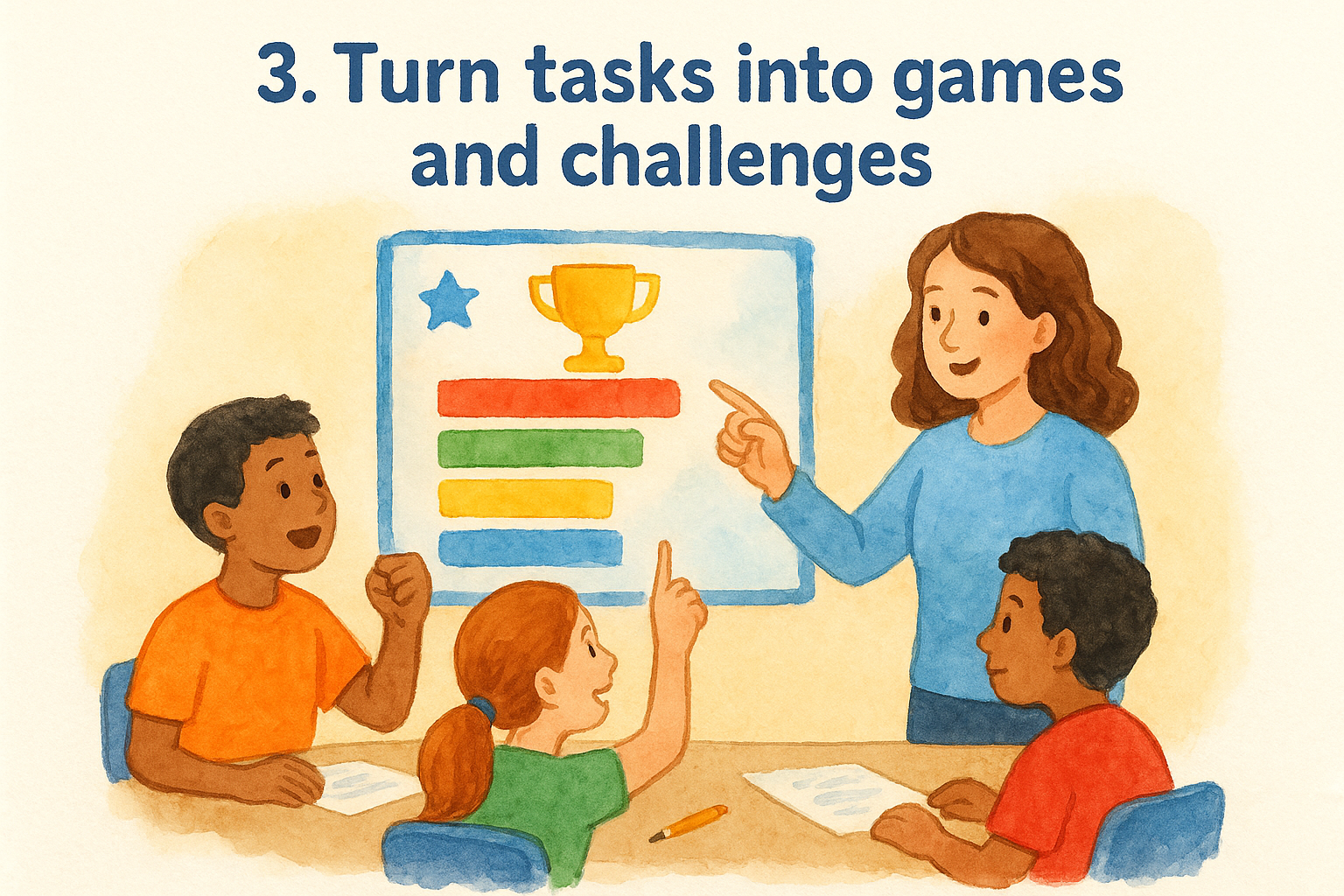
Some students who tune out a worksheet will fight for a spot on the leaderboard. Gamified learning taps into the same drive that keeps kids grinding through video game levels: clear goals, quick feedback, and a visible way to win, and it helps to understand how gamification actually works. You don’t need an app or a budget to borrow that energy for your classroom.
How it works in the classroom
Turning a task into a game can be as simple as timing a review round like a quiz show, or as involved as a points-based unit where students level up through checkpoints. A vocabulary drill becomes a bracket-style tournament. A math review turns into a scavenger hunt with answer codes hidden around the room. The content doesn’t change, only the framing does.
Why it boosts motivation
Games work because they build in instant feedback loops and low-stakes competition, two things traditional worksheets rarely offer. Students get to see progress in real time, which keeps effort from fading halfway through a task.
Turn a review session into a game, and suddenly nobody wants class to end early.
How to start tomorrow
Pick a task you already have planned and try:
- Add a simple point system or team scoreboard
- Set a timer and frame the task as a beat-the-clock challenge
- Break a worksheet into stations with a small reward for finishing each one
4. Build genuine teacher-student relationships
Students work harder for teachers they trust, and that trust doesn’t build itself. You can have the sharpest lesson plan in the building, but if a student doesn’t believe you’re in their corner, that lesson lands flat. Genuine relationships are the foundation under every other strategy on this list, and skipping this step is why so many good ideas fail to stick.
How it works in the classroom
Building real rapport means noticing things beyond the gradebook: remembering a student’s weekend soccer game, checking in after a rough test, or just learning names fast and using them right. It’s small, consistent attention, not one big gesture. Over a semester, those small moments add up to a student feeling seen, which changes how they show up to your room.
Why it boosts motivation
Students take more academic risks with teachers they trust, which is exactly what improving classroom engagement requires. When a student believes you actually care, criticism feels like coaching instead of judgment, and that shift alone can turn around a kid who’s given up on a subject, which is why strong teacher-student relationships prevent behavior problems.
A student who trusts you will take the academic risks that motivation actually requires.
How to start tomorrow
- Greet each student by name at the door
- Ask one non-academic question per class period
- Write a quick positive note on a returned assignment
5. Design for collaborative learning
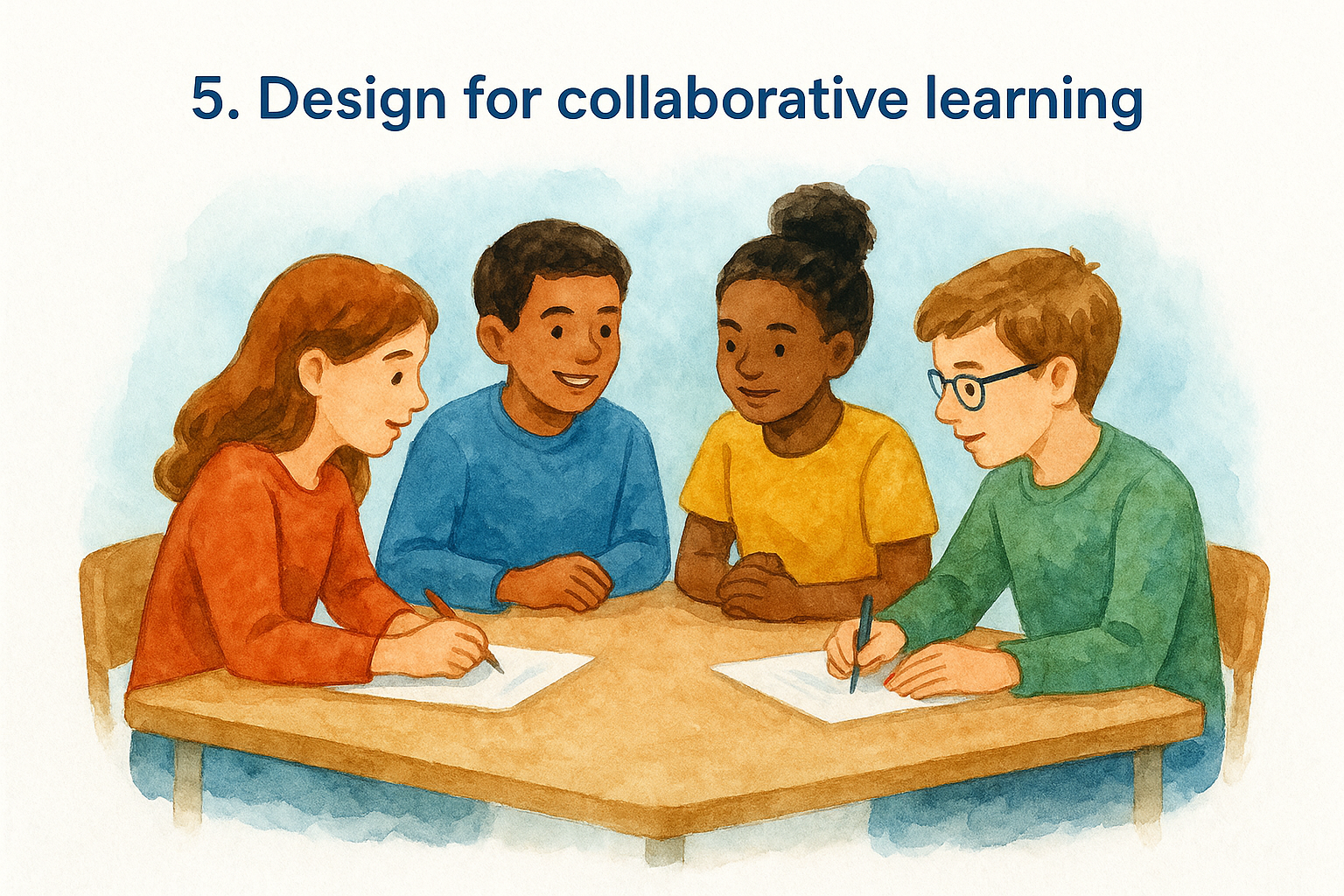
Some of your quietest students come alive the moment you put them in a small group with a clear job to do. Collaborative learning works because it shifts the pressure off performing for the whole class and onto contributing to a team that needs them specifically. That shift alone can pull a disengaged student back into the work.
How it works in the classroom
Effective group work assigns real roles, not just seats pushed together. Give one student the job of recorder, another the presenter, another the fact-checker, and rotate those roles across projects so nobody gets stuck doing the same task all year, one of several collaboration teaching strategies for student teamwork. A jigsaw activity, where each student masters one piece of content and then teaches it to their group, works especially well for dense reading or research units.
Why it boosts motivation
Students feel accountable to peers in a way they rarely feel accountable to a teacher alone. This kind of peer accountability taps into a social need that solo worksheets never touch, and it’s a reliable way to raise engagement without changing your content at all.
Put students on a team with a real job, and even the quiet ones start pulling their weight.
How to start tomorrow
- Assign specific roles for your next group task instead of leaving it open-ended
- Try a jigsaw reading for your next dense text or chapter
- Rotate group membership every few weeks so roles and relationships stay fresh
6. Make progress visible and celebrate wins
Students lose steam when effort feels invisible. A student who’s improved three reading levels since September has no way of feeling that progress if every grade just says "C+." Visible progress turns abstract effort into something a student can point to and say, that’s mine, I built that.
How it works in the classroom
Tracking progress means giving students a concrete marker of growth beyond a single grade: a skills checklist they check off, a portfolio of drafts showing revision, or a simple chart plotting quiz scores over the unit. Wins get called out publicly and specifically, not just "good job" but "you nailed the thesis structure we worked on last week."
Why it boosts motivation
This is one of the most overlooked answers to how to motivate students in the classroom, because visible growth builds a sense of competence, the belief that effort actually produces results. Without that feedback loop, students default to believing ability is fixed and effort is pointless, which is exactly the pattern practical steps for shifting a fixed mindset are designed to break.
Show a student proof of their own growth, and effort stops feeling like a gamble.
How to start tomorrow
- Add a simple progress tracker students update themselves
- Call out one specific improvement per student each week
- Post a class-wide goal and chart progress toward it publicly
Making motivation part of your daily routine
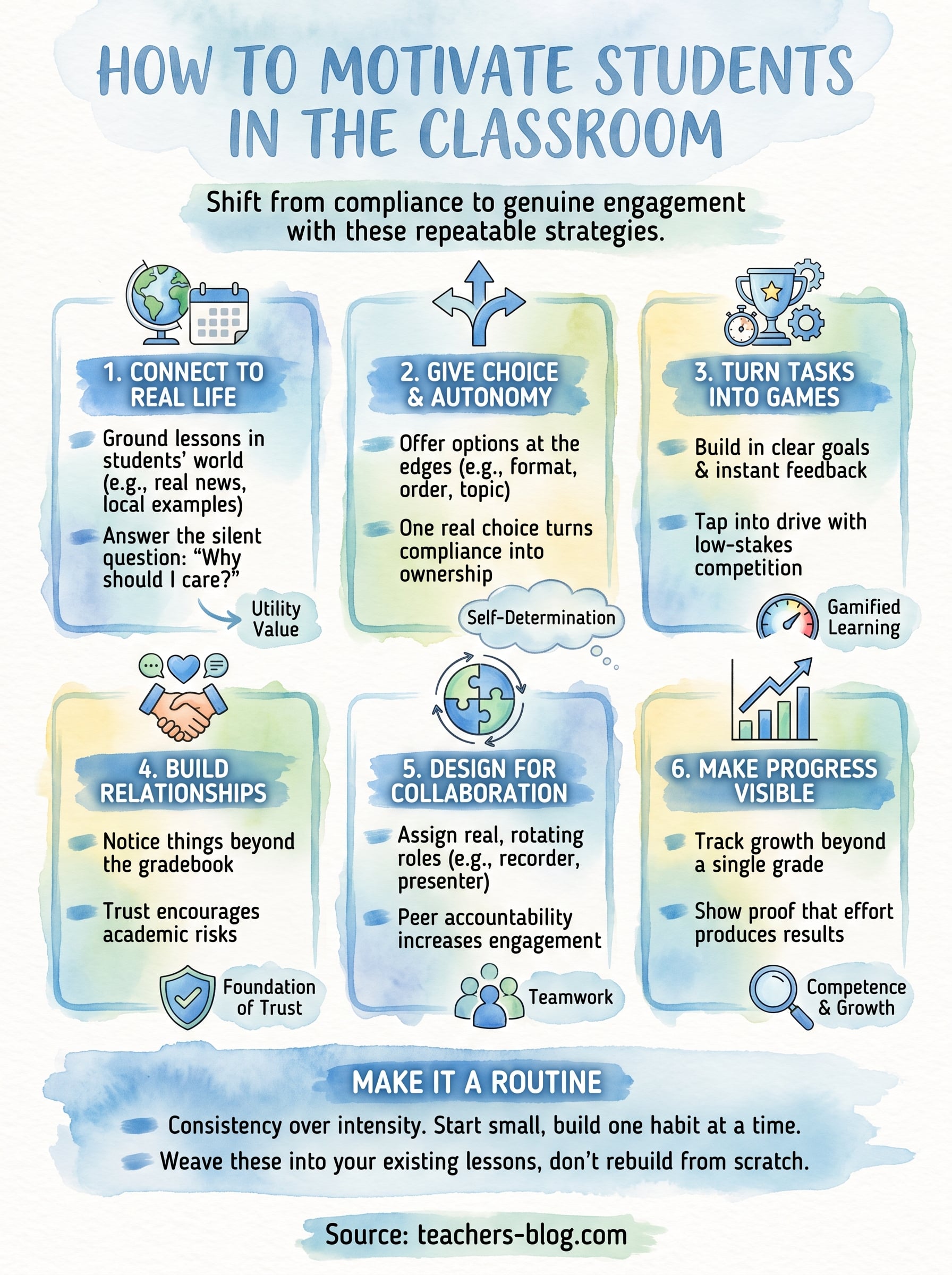
None of these eight strategies work as a one-time trick you pull out before an observation. Real-world connections, choice, games, relationships, collaboration, and visible progress only move the needle when they show up week after week, woven into how you already teach. Pick two that fit your style and your current unit, run them for a month, and watch what shifts before adding more.
Start small on purpose. Trying all eight strategies at once by Friday will burn you out faster than it engages your students. Sustainable engagement comes from consistency, not intensity, so build one habit at a time and let it become automatic before layering on the next.
You don’t have to rebuild your lesson plans from scratch to pull this off. Browse The Cautiously Optimistic Teacher’s blog for ready-to-use activities and unit plans, and see the AI tools that keep students engaged and make these strategies easy to fold into what you’re already teaching.