
Fixed vs Growth Mindset Poster: What to Include and Why
You want a fixed vs growth mindset poster on your wall that actually changes how students talk about failure, not just one more decoration that fades into the background by October. Most posters you find online list the same tired phrases without explaining why those specific words matter or how to use them in daily classroom conversation.
Here’s what you need to know: an effective growth mindset vs fixed mindset poster works because of what it includes, not just because it looks nice. The best versions pair contrasting phrases ("I can’t do this" versus "I can’t do this yet") with visual cues kids can point to during a rough moment, and they get referenced often enough that the language becomes part of how your class actually thinks.
In this article, I’ll walk through exactly what belongs on a growth mindset vs fixed mindset bulletin board, which traits and phrases make the strongest contrast, common mistakes that turn these posters into wallpaper, and how to introduce one so students genuinely use it instead of ignoring it.
Why a fixed vs growth mindset poster matters in class
Students narrate their struggles out loud, whether you hear it or not. The kid who mutters "I’m just bad at math" after missing three problems in a row is rehearsing a script, and that script sticks unless something interrupts it. A fixed vs growth mindset poster gives you a visual interruption point, and so do other mindset posters that inspire resilience. Instead of arguing with a student’s self-assessment in the moment, you point to the wall. The poster does the reminding so you don’t have to repeat the same pep talk twenty times a week.
A poster only works if it changes what kids say to themselves when nobody’s watching.
Language shapes behavior more than most teachers realize
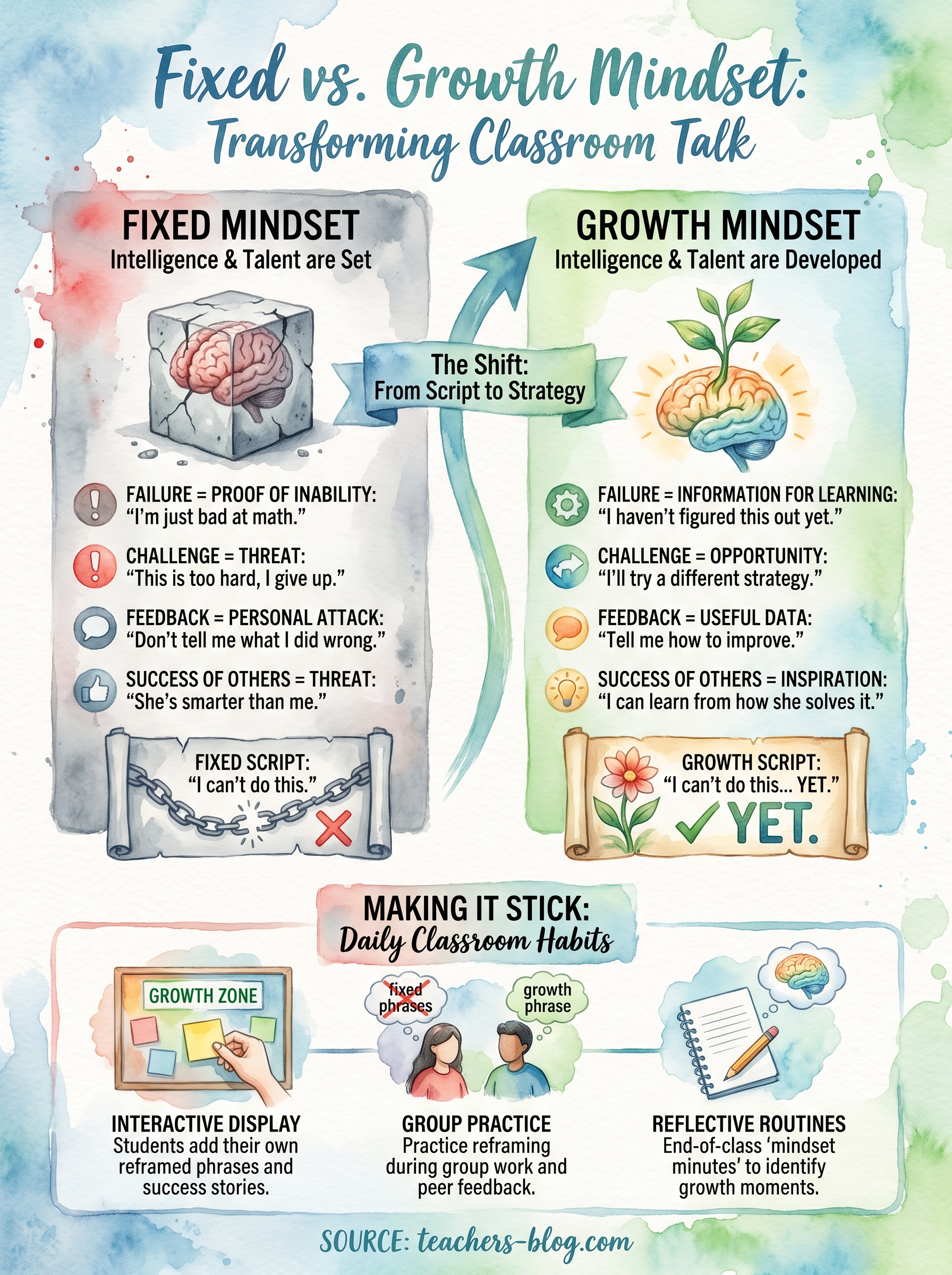
Carol Dweck’s research on what separates a growth mindset from a fixed one didn’t just describe two ways of thinking, it showed that the words students use to explain setbacks predict whether they keep trying or shut down. Kids with a fixed mindset treat failure as proof of a fixed trait: "I’m not smart enough." Kids with a growth mindset treat the same failure as information: "I haven’t figured this out yet." That single word, "yet," changes the emotional weight of the sentence, which is why teaching the power of yet as its own lesson pays off. A well-designed growth mindset vs fixed mindset poster puts that contrast in front of students constantly enough that the growth version starts to feel like the default option rather than a teacher’s slogan.
A poster creates shared vocabulary for the whole room
Every class develops its own shorthand, and a mindset poster hands you one for free. Once students have seen "I give up" paired with "I’ll try a different strategy" often enough, you can say "which column are you in right now?" and they’ll know exactly what you mean. That shared reference point matters more in mixed-ability classrooms, where some kids need almost no prompting and others need the language modeled dozens of times before it becomes automatic. Pair the poster with structured practice, like the activities in a Brain Builders Workshop or other classroom-ready mindset activity ideas, and the vocabulary moves from wall decoration to something students actually reach for during group work and independent tasks.
Without a visual anchor, mindset talk fades fast
Teachers who skip the poster and rely only on verbal reminders tend to see the message evaporate within a few weeks. You mention growth mindset during the first week of school, maybe again after the first round of test anxiety, and then the momentum dies because there’s no persistent cue in the room. A fixed mindset vs growth mindset poster solves that decay problem simply by existing where students look every day, whether that’s next to the pencil sharpener or above the turn-in bin, the same way other visual anchors in the classroom work. Location matters here: a poster buried behind a bookshelf does nothing, but one placed where kids naturally glance during a hard moment keeps doing its job without any extra effort from you.
The stakes go beyond the classroom
This isn’t just about smoother lessons. Students who internalize growth-oriented self-talk show up to standardized tests, class discussions, and even college applications with more resilience, according to research the American Psychological Association has compiled on mindset interventions. A poster is a small, low-cost piece of that larger shift, but it’s one of the few interventions you can put up once and have it work quietly in the background for the rest of the year. That’s the real case for hanging one: not decoration, but a daily, low-effort nudge toward the kind of thinking that helps students recover from setbacks instead of getting stuck in them.
What to include on your poster and why it works
A fixed vs growth mindset poster earns its wall space through structure, not decoration. The strongest versions share a few concrete design choices that separate a poster kids actually reference from one they stop noticing by week three. Below is what to build into yours and the reasoning behind each choice.
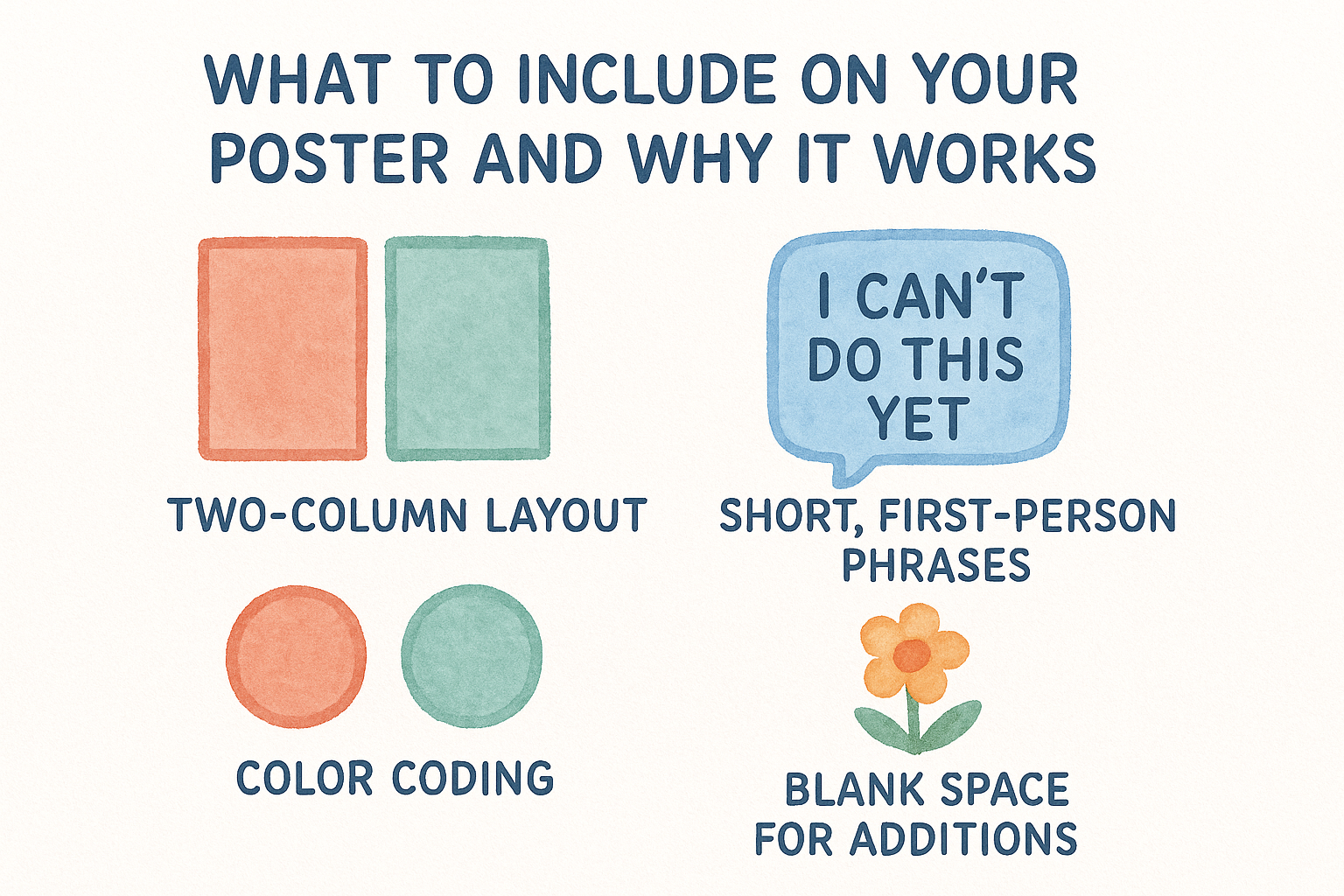
| Element | Why it works |
|---|---|
| Two-column layout | Lets students see the contrast at a glance, side by side, without reading a paragraph |
| Short, first-person phrases | Kids repeat "I can’t do this yet" to themselves faster than a long explanation |
| Color coding | Red or gray for fixed, green or blue for growth, gives an instant visual signal even from across the room |
| Icons or simple images | Non-readers and younger students can still grasp the message |
| Blank space for student additions | Keeps the poster alive instead of static after the first week |
Contrast beats explanation every time
Skip the paragraph of research summary. A growth mindset vs fixed mindset poster that tries to teach Dweck’s theory in full sentences loses students before they finish reading. Two short columns of matched phrases do more work than a wall of text, because kids process the contrast instantly and can point to it mid-conversation. If you’re building your own instead of buying a premade version, run the phrases through the Differentiated Instruction Helper or another of these AI tools for teachers to make sure the reading level fits your youngest students without watering down the message for older ones.
The poster that gets used is the one a student can read in three seconds, not the one that explains the theory behind it.
Color and icons carry meaning before words do
Design choices aren’t cosmetic here. Color coding lets a student register the contrast before they’ve even read the phrase, which matters most in the heat of a frustrating moment when reading feels like extra effort. Icons work the same way for younger grades or students who struggle with text, turning the poster into something a whole range of readers can use, not just your strongest ones.
Leave room for the class to add their own lines
Every growth mindset vs fixed mindset bulletin board should have blank space, whether that’s a sticky-note section or an open column you fill in as the year goes on. Static posters fade into background noise, but ones that grow with the class stay relevant because students see their own words on the wall, not just a printed template someone else wrote.
Example fixed vs growth mindset statements to feature
Picking the right phrases matters more than picking a lot of them. A growth vs fixed mindset poster works best with six to ten paired statements, not thirty, because students need to be able to scan the whole thing in one glance and still remember what they saw an hour later. Below are tested pairs organized by age group and situation, drawn from growth mindset examples in real life, so you can pull exactly what fits your class instead of copying a generic list wholesale.
Ten phrases a student remembers beat thirty phrases nobody reads past the first row.
Statements for younger students
Elementary kids respond to short, concrete phrases paired with simple icons, since abstract language about "effort" or "potential" doesn’t land the same way it does with teens. Simple wording keeps the contrast obvious even for kids who are still building reading fluency.
- "I’m not good at this" versus "I’m going to train my brain"
- "This is too hard" versus "This may take some time"
- "I give up" versus "I’ll try a different way"
- "I made a mistake" versus "Mistakes help me learn"
Statements for older students and teens
Middle and high schoolers need phrases that acknowledge real frustration instead of sounding like a slogan, or they’ll dismiss the whole poster as childish, which is the same reason a growth mindset lesson plan for middle school leans on honest language. Honest phrasing here does more to earn buy-in than anything upbeat or overly simple.
- "I’m just not a math person" versus "I haven’t built that skill yet"
- "Plan A failed" versus "There’s a Plan B"
- "She’s smarter than me" versus "I can learn from how she solves it"
- "I got a bad grade" versus "I got useful feedback"
Statements built around effort and feedback
Some of the strongest pairs don’t focus on ability at all, they focus on how students respond to feedback and effort, which is where mindset actually shows up day to day. Feedback framing teaches kids that criticism is data, not a verdict on their worth, which is the same shift behind how students respond to their own mistakes.
| Fixed mindset line | Growth mindset line |
|---|---|
| "Don’t tell me what I did wrong" | "Tell me how to improve" |
| "I shouldn’t have to try this hard" | "Effort is how I get better" |
| "If I have to ask for help, I’m failing" | "Asking for help is a strategy" |
Rotate a few pairs every month or two instead of keeping every phrase fixed all year. Refreshing even two or three lines keeps returning students from tuning the poster out, and it gives you a natural excuse to revisit the concept out loud without repeating the same intro speech from September.
Design and display ideas for bulletin boards and walls
Where you hang a fixed vs growth mindset poster matters almost as much as what’s printed on it, much like classroom layout, seating, and flow shapes behavior. A poster tucked in a back corner near the coat hooks gets seen twice a day at most. Placement should follow the moments when students actually need the reminder, which usually means near the areas where frustration builds, like the returned-quiz bin, the group work tables, or the door they walk through on their way out after a rough class.
A poster in the wrong spot is just paper on a wall; a poster in the right spot is a daily intervention.
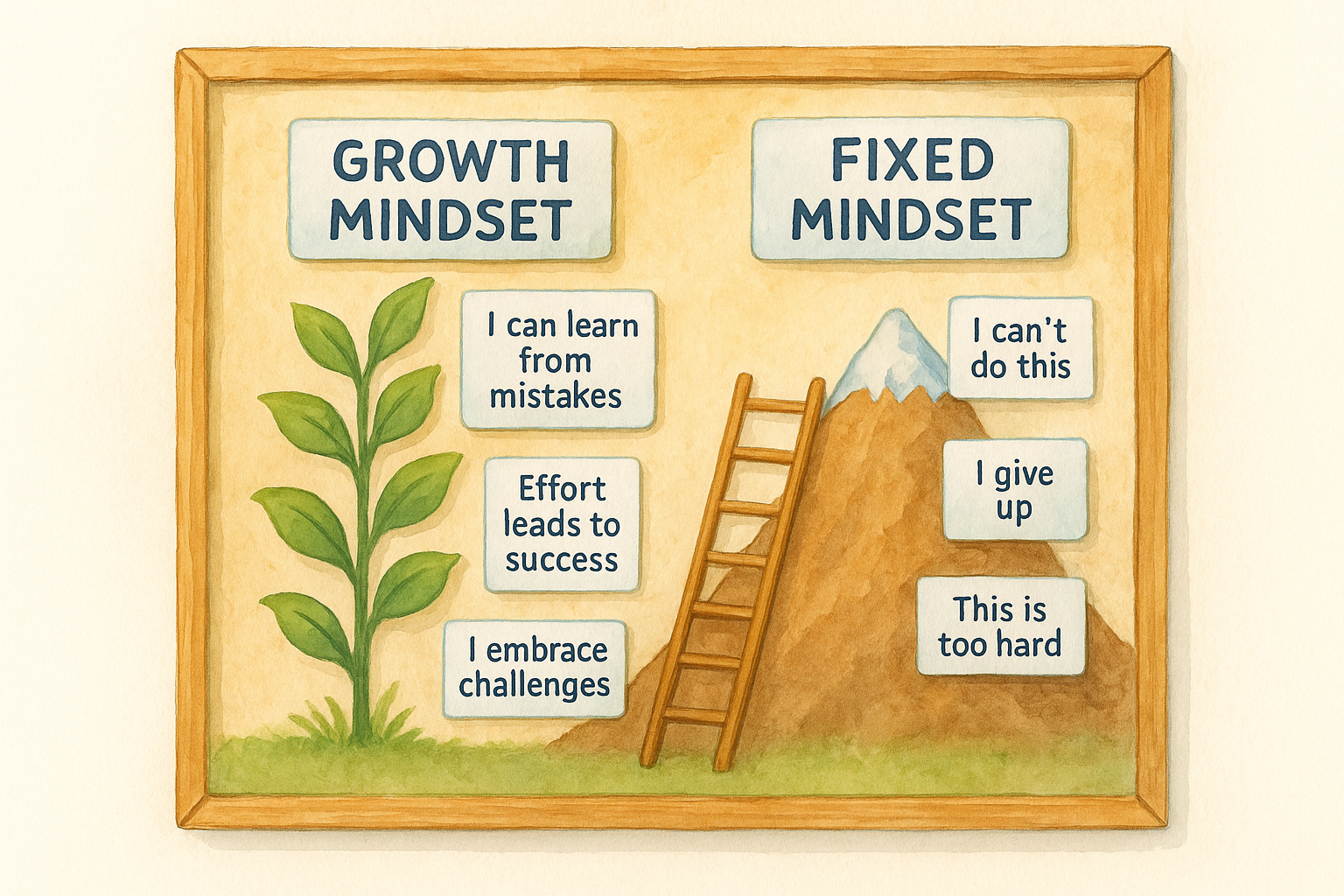
Build the bulletin board around a visual metaphor
Growing plants, climbing mountains, or a brain literally "under construction" all give a growth mindset vs fixed mindset bulletin board a theme that ties the phrases together instead of leaving them as a flat list. Kids remember a metaphor faster than a caption, and a theme also gives you an easy way to add new material throughout the year without the board looking patched together. A simple ladder with fixed-mindset statements at the bottom rungs and growth statements climbing upward does more visual work than a plain two-column chart taped to cork board.
Keep the layout functional, not just pretty
Resist the urge to cram every phrase you like onto one board. A crowded board with tiny text asks students to do reading work exactly when they’re least willing to do it. Instead:
- Use large, bold type for the core contrast phrases so they’re readable from a student’s desk, not just up close
- Leave a dedicated strip of blank space for sticky notes or student-submitted lines
- Group phrases by category (effort, feedback, mistakes) instead of scattering them randomly
- Add a small "mindset moment" pocket where you drop in a new example each week
Make it interactive instead of static
A board that only gets looked at loses value fast. Turn part of it into something students touch: a flip card where one side shows the fixed statement and the other reveals the growth reframe, or a pocket chart where kids physically move a card from the fixed column to the growth column once they’ve talked themselves through a setback. Physical interaction sticks in memory longer than passive reading, and it gives you a quick classroom management tool too. When a student is spiraling over a bad grade, sending them to flip a card on the board is a lower-stakes redirect than a lecture, and it reinforces the exact language you want them internalizing without adding to your workload.
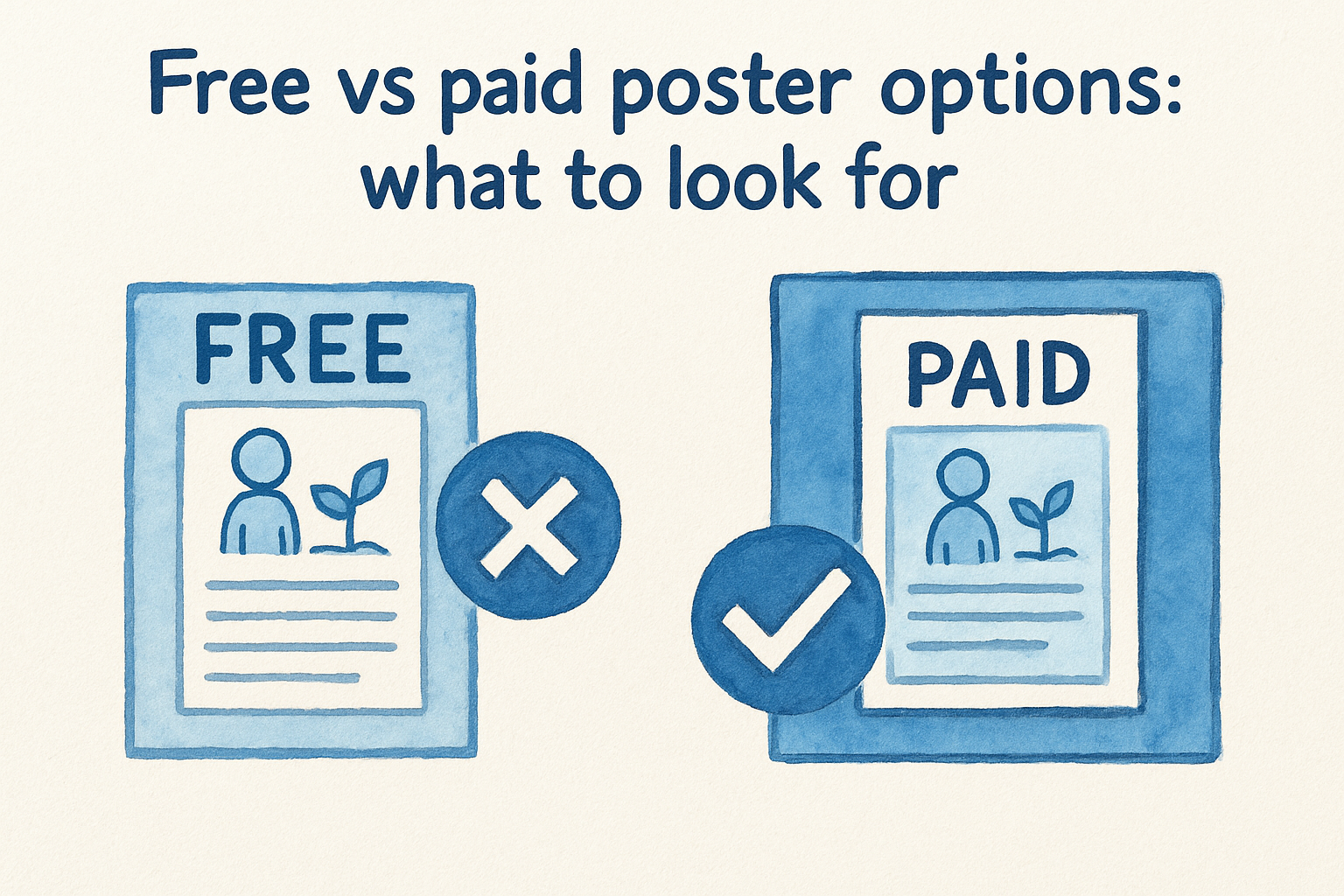
Free vs paid poster options: what to look for
A quick search turns up hundreds of free fixed vs growth mindset poster downloads, and most of them look fine on a screen. The real test comes after you print one, tape it up, and watch whether students actually reference it three weeks later. Price isn’t the deciding factor here. Design quality, editability, and how well the phrases match your students’ age group matter more than whether you paid for the file.
A free poster that gets ignored costs you more than a paid one that gets used every day.
What free options usually get right and wrong
Free printables, like printables for any subject and grade, win on convenience. You can grab one during a prep period and have it on the wall before lunch. The tradeoff is that most free versions use generic phrasing that skews either too babyish for older students or too vague for younger ones, and you rarely get an editable file, so swapping in your own class’s language means retyping the whole thing or covering it with sticky notes. Generic phrasing is the most common complaint teachers run into once the novelty wears off.
What paid or premium options usually add
Paid poster sets, especially ones designed by teachers rather than generic print shops, tend to include editable templates, matching bulletin board sets, and phrase banks sorted by grade level, which saves you the trial and error of writing your own pairs from scratch. That said, paid doesn’t automatically mean better. Some premium sets still cram in thirty phrases and tiny fonts, the same crowding problem free versions have.
| What to check | Free posters | Paid posters |
|---|---|---|
| Editable text | Rarely | Usually |
| Age-matched phrasing | Hit or miss | Often sorted by grade |
| Print resolution | Varies widely | Usually high-res |
| Matching bulletin board set | Rare | Common |
| Cost | $0 | Typically $3 to $15 |
Build your own if nothing fits
Sometimes the fastest path is skipping the search entirely. If you already know which phrases work for your class from the examples earlier in this article, you can lay them out yourself and run the wording through the Worksheet Maker or another AI worksheet generator to generate a clean, print-ready layout in your own class’s reading level rather than settling for a template written for someone else’s students. This route also solves the editability problem free downloads have, since you control every line from the start and can adjust it as your class’s needs shift throughout the year.
Activities that reinforce the poster’s message
A fixed vs growth mindset poster only sticks in memory if students practice the language it teaches, not just glance at it between classes. Pair the wall display with short, repeatable growth mindset activities for students and the phrases stop feeling like slogans and start showing up in how kids actually talk about setbacks. The goal isn’t a big production every week, it’s small, consistent reps that build the habit the poster started.
Turn the poster into a daily habit
Build a two-minute routine around the poster instead of treating it as a one-time lesson. Start class with a quick "mindset minute" where one student points to a phrase pair and gives a real example from their own week, or end class by asking students to name which column their self-talk landed in that day. Repetition is what moves the language from the wall into a student’s actual vocabulary.
The poster teaches the words, but daily practice is what teaches the habit.
Group work that practices the reframe
Give students a chance to rehearse the growth phrasing out loud with a partner before they need it during a real setback. Small group activities work better than solo worksheets here because kids hear the reframe modeled by peers, not just a teacher.
- Card sort: hand out slips with fixed-mindset statements and have partners rewrite each one using the growth column from the poster, or pull the slips straight from a fixed vs. growth mindset worksheet activity
- Mindset journal: a two-minute weekly entry where students describe a struggle and the phrase they used to work through it
- Reframe relay: one student reads a fixed statement aloud, the next student has three seconds to respond with the growth version
- Peer coaching pairs: students catch each other using fixed-mindset language during group work and gently point to the poster instead of correcting verbally
Reflection routines that close the loop
Closing the loop matters as much as the activity itself, since a reframe that never gets revisited fades fast. Build a short reflection into your feedback cycle, whether that’s a sentence on a returned quiz or a line in progress notes home, so students see the same growth language reflected back at them from you, not just from the poster. If you’re writing report card comments for struggling students, running a few lines through the Report Card Commentor with growth-oriented phrasing baked in reinforces the exact vocabulary the poster teaches, so the message stays consistent from the wall to the paperwork parents actually read.
Making the mindset shift stick
A fixed vs growth mindset poster does its job when it disappears into daily routine, not when it hangs perfectly still and gets ignored. Get the phrases right, put it where frustration actually happens, and build in a few minutes of practice each week, and the wall display turns into real classroom language. Skip any of those pieces and you’re left with decoration that fades by October, exactly what you were trying to avoid.
Given all that, the poster is really just one piece of a bigger habit you’re building around student self-talk. Pair it with the workshop activities, phrase banks, and feedback routines covered above, and you’ll see the growth column show up in conversations you didn’t even prompt. If you want more ready-to-use ideas for building that habit across your whole classroom, browse the full collection of ready-to-use growth mindset resources at The Cautiously Optimistic Teacher.