
How to Create a Growth Mindset Booklet for Your Classroom
You know the moment when a student crumples up their paper and says "I’m just bad at this." A growth mindset booklet can catch that moment before it turns into a habit. Instead of a one-off lesson on grit, you get a reusable resource students can flip through, write in, and return to whenever frustration hits. That’s the appeal, and it’s why so many teachers search for a ready-made version instead of starting from scratch.
Here’s the thing: you don’t need to buy a workbook or dig through a hundred free PDFs to find one that fits your students. You can build your own classroom growth mindset resource in an afternoon, customized to your grade level, your curriculum, and the specific mindset traps your kids fall into, whether that’s math anxiety, perfectionism, or giving up after one failed attempt.
This guide walks you through the actual process: choosing your booklet’s structure, picking activities that go beyond generic quotes and posters, and formatting pages that hold up to daily classroom use. By the end, you’ll have a printable template you can hand to any class, this year and every year after.
Why create your own growth mindset booklet
Before you spend another hour scrolling through templates on Pinterest or Teachers Pay Teachers, consider what those generic downloads are missing: your kids. A pre-made growth mindset workbook is built for an imaginary average student, not the eighth grader who shuts down during fractions or the sophomore who won’t turn in a rough draft because it isn’t perfect yet. Building your own means every page addresses a real pattern you’ve watched play out in your room, which is the difference between a resource students skim once and one they actually reference.
It fits your students, not a generic template
Off-the-shelf booklets tend to use one-size-fits-all prompts, like "Write about a time you failed and what you learned." Those questions work fine, but they rarely connect to your specific content. A custom growth mindset booklet can ask a student to reflect on the exact essay they bombed last week or the science lab where their hypothesis flopped. That specificity is what turns a worksheet into a mirror, and it’s why homemade resources tend to outperform generic ones in actual classroom use.
A booklet built around your students’ real struggles gets used; a generic one gets filed away.
It saves money and stays reusable year after year
Quality printed workbooks and licensed curriculum bundles can run anywhere from $8 to $30 per set, and that cost multiplies fast across a full roster, let alone multiple class periods. Design your own once, and you’ve got a free growth mindset workbook you can reprint every semester at the cost of paper and toner. You also own the file outright, so you can tweak a page, swap an activity, or update the language for a new grade level without waiting on a publisher’s next edition.
| Option | Upfront cost | Customization | Reusability |
|---|---|---|---|
| Purchased workbook | $8–$30 per set | Low, fixed content | Limited to as-printed |
| Free PDF download | $0, but time spent searching | Low to none | Depends on license |
| DIY booklet | Your planning time only | Full control | Reprint and edit forever |
It builds buy-in because students help shape it
Students notice when a resource was made for them specifically. Letting your class weigh in, even something as simple as voting on the booklet’s title or suggesting a favorite growth mindset quote, turns the project into something they feel ownership over. Teachers who’ve tried this report that students are far more likely to actually fill in a self-created growth mindset journal than one that arrived looking like a corporate handout. That sense of ownership doesn’t just improve completion rates; it makes the reflection more honest, since kids are less likely to write a throwaway answer in something they helped design.
It integrates directly with what you’re already teaching
Unlike a standalone mindset curriculum you’d have to schedule separately, a homemade booklet can slot straight into units you’re already running. If you’re teaching To Kill a Mockingbird and discussing Scout’s resilience, a growth mindset page can ask students to connect her perseverance to their own. If you’re running a unit on opinion essay writing, you can build in a reflection page on revising a weak first draft. Weaving mindset work into existing content saves instructional time and reinforces the idea that growth mindset isn’t a separate subject, it’s a lens for everything else you teach.
Step 1. Define your goals and grade level
Before you open a design tool or sketch a single page, get specific about what you want this growth mindset booklet to actually fix. "Build resilience" is too vague to design around. "Help students keep trying after a failed quiz instead of shutting down" gives you something you can write activities toward. Spend fifteen minutes jotting down the two or three mindset patterns you see most often in your room, then let those patterns drive every decision that follows.
Name the specific struggle, not the general trait
Watch your students for a week and take notes on what actually happens when things get hard. Do they ask for help, or do they hide their work? Do they blame the test, the teacher, or themselves? Those observations become your booklet’s backbone. A classroom mindset resource built around "students give up after one wrong answer" will look completely different from one built around "students won’t share drafts because they fear judgment," even though both fall under the umbrella of what counts as a growth mindset.
A booklet aimed at a vague trait teaches nothing; a booklet aimed at a real struggle changes behavior.
Match the content to your grade level
What lands with a sixth grader will bore or confuse a junior, and vice versa, which is why it helps to skim growth mindset lesson plans by grade band before you commit to a tone. Younger students respond well to characters, simple visuals, and short prompts, while older students need room for genuine reflection and are quick to tune out anything that feels babyish. Use this as a rough starting point when you’re deciding on tone, vocabulary, and page length:
| Grade band | Prompt style | Page length | Visual style |
|---|---|---|---|
| Grades 3-5 | Short sentence starters, simple choices | 1 short activity per page | Bright, character-based |
| Grades 6-8 | Open-ended questions, real classroom scenarios | Half a page of writing space | Clean, minimal graphics |
| Grades 9-12 | Reflective essays, goal-setting frameworks | Full page, less structure | Text-forward, mature layout |
If you teach multiple grade levels or sections with a wide skill range, plan on two versions of the same booklet rather than one that tries to serve everyone and satisfies no one.
Write your goals down before you move on
Grab a notebook or a blank doc and finish these three sentences before starting Step 2:
- The main mindset struggle I want to address is…
- My students are in grades… and respond best to…
- I’ll know the booklet worked if students start…
Those three answers will keep your growth mindset workbook focused as you start choosing themes and drafting pages, instead of drifting into generic content that could apply to any classroom anywhere.
Step 2. Choose your growth mindset themes
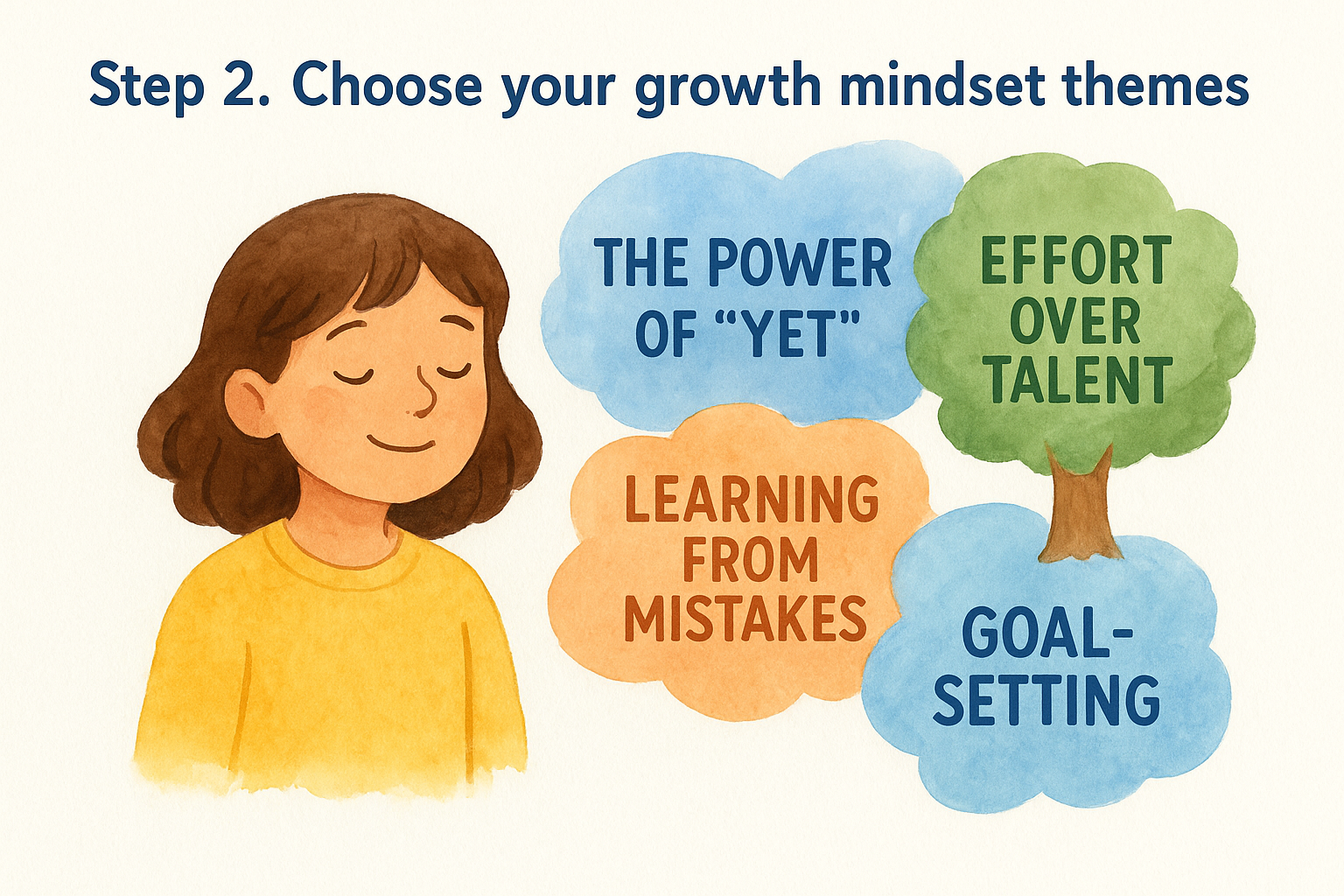
Once your goals are on paper, narrow down the actual content of your growth mindset booklet before you start designing pages. Trying to cover every mindset concept, effort, failure, self-talk, goal-setting, brain science, in one booklet spreads your students’ attention too thin and leaves no page with enough depth to matter. Pick three to five themes that connect directly to the struggles you identified in Step 1, and build the rest of the booklet around those.
Pick a handful of themes instead of covering everything
Most effective classroom booklets pull from a short list of proven growth mindset concepts. Choose the ones that match what you’re actually seeing in your room:
- The power of "yet": reframing "I can’t do this" into "I can’t do this yet"
- Effort over talent: praising the process instead of the outcome
- Learning from mistakes: treating errors as data, not failure
- Brain plasticity: the basic science of how practice changes the brain
- Self-talk: noticing and rewriting the negative script students run in their heads
- Goal-setting: goal-setting activities that stick, breaking a big goal into steps students can actually track
A booklet that covers five themes deeply beats one that skims fifteen.
Map each theme to a real classroom moment
Don’t leave your themes abstract. For every theme, jot down one specific assignment, test, or classroom scenario where it applies. "Effort over talent" might tie to how students prepare for a vocabulary quiz. "Learning from mistakes" might tie to revising a rough draft after peer feedback. If you’ve already run something like the Brain Builders Workshop, pull directly from those activities instead of reinventing them, and browse 25 engaging mindset activity ideas rather than starting over, since your students may already recognize the language and framing.
Sequence your themes in a logical order
Order matters more than most teachers expect. Start with a concept students can grasp quickly, like the power of "yet," before moving into harder territory like self-talk or goal-setting, which require more self-awareness. A rough sequence that works well for most grade levels: introduce the brain science first so students understand why mindset matters, then move into effort and mistakes, and finish with self-talk and goal-setting once students have the vocabulary to reflect honestly. That progression keeps your growth mindset workbook building on itself rather than jumping randomly between unrelated ideas.
Step 3. Draft engaging activities and worksheets
Now that your themes are locked in, turn each one into an actual page students will write on. Skip the trap of filling a growth mindset booklet with word searches and quote pages that ask for zero real thinking. Every activity should push a student toward a specific, personal answer, like these growth mindset activities that actually work, not a generic circle-the-word exercise.
Vary the activity type from page to page
Repetition kills engagement fast, especially with middle and high schoolers who can spot a formula after two pages. Mixing formats keeps students from settling into autopilot:
- A fill-in-the-blank reflection: "The last time I struggled with ___, I told myself ___. Next time, I could tell myself ___."
- A rating scale check-in: students circle a number from 1-5 on how they responded to a recent setback
- A short scenario response: describe a fictional student’s struggle and ask what advice they’d give
- A goal-tracking grid: a small table where students log one goal, one obstacle, and one next step each week
Variety keeps a workbook from feeling like homework disguised as a pamphlet.
Write prompts that demand specifics, not generalities
Questions like "Describe a time you failed" invite a vague, forgettable answer. A prompt like "What grade did you get on your last math quiz, and what’s one thing you’d do differently before the next one?" forces a real answer tied to your classroom. Anchor every growth mindset worksheet in something that actually happened this semester, whether that’s a specific assignment, a class discussion, or a group project that fell apart.
Use a tool to speed up drafting
If you’re short on planning time, generate a first draft of a worksheet page with the Worksheet Maker or another of the tools that draft worksheets for teachers, then tighten the wording yourself so it matches your students’ voice. The same logic applies to tailoring prompts across skill levels: the Differentiated Instruction Helper can quickly produce a simpler and a more advanced version of the same activity, and these practical differentiated activity examples show the pattern, so your growth mindset activities stretch across a mixed-ability classroom without you rewriting everything from scratch.
Step 4. Design the layout and visuals
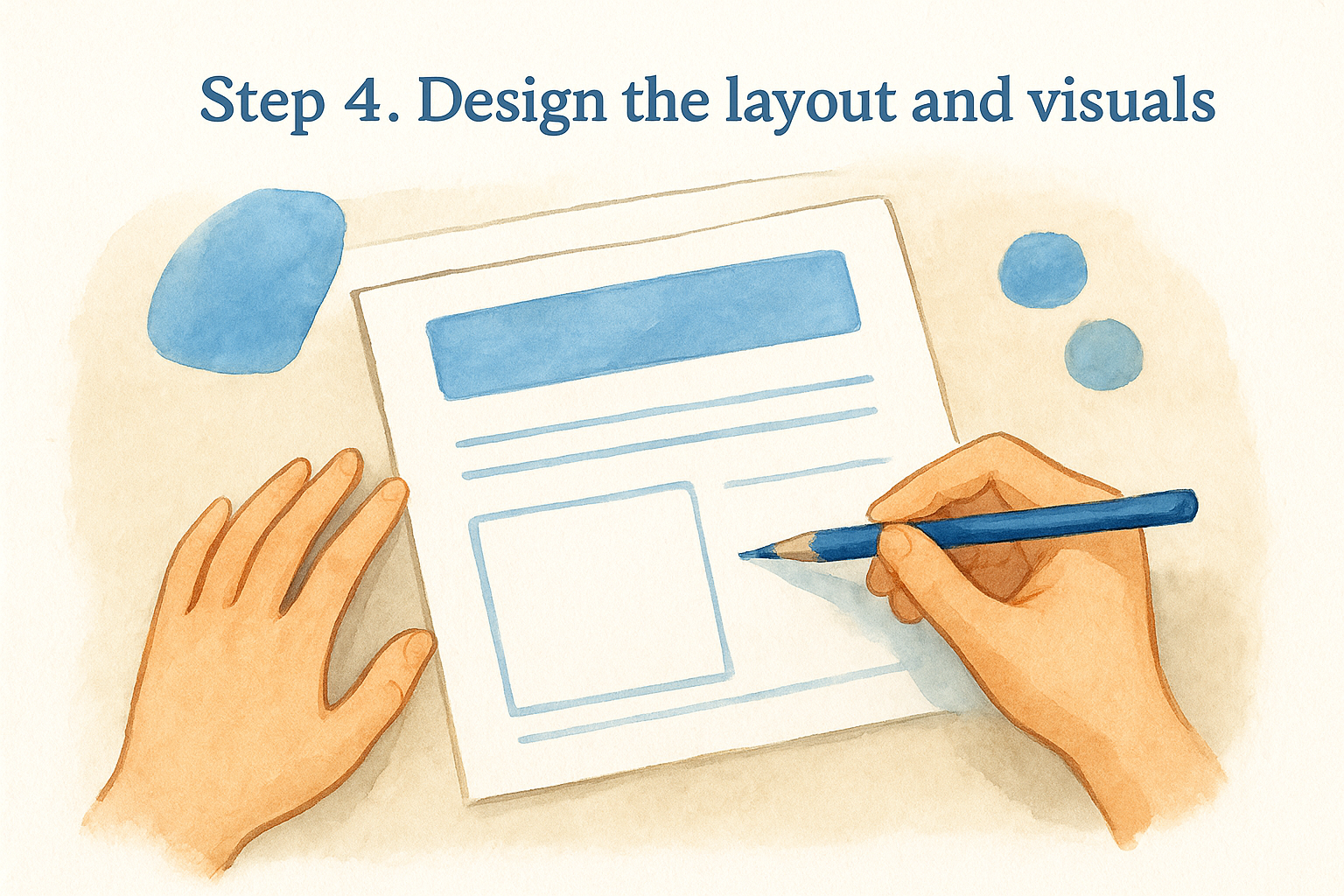
Once your pages are drafted, turn your attention to how the booklet actually looks and feels in a student’s hands. A cluttered page with five fonts and clashing colors distracts from the reflection you’re trying to build, while a clean, predictable layout signals that this growth mindset booklet is worth taking seriously. You don’t need design software or a background in graphic design here, just a few consistent choices applied across every page.
Keep the layout simple and consistent
Pick one template structure, title at the top, a short prompt or fact, then writing space, and reuse it on every page. Consistency helps students navigate the booklet without relearning the format each time, and it makes your job faster since you’re duplicating a layout instead of designing from scratch each page. Free tools like Google Docs or Canva work fine for this; you don’t need anything fancier than a table or text boxes you can copy and paste.
A booklet that looks the same on every page lets students focus on what they’re writing, not how to read it.
Choose fonts and colors that hold up on a photocopier
Bright colors and decorative fonts look great on a screen but often turn muddy or illegible once run through a school copier in black and white. Stick to one or two clean fonts, a readable body size around 12-14 points, and reserve any color for cover pages you plan to print separately. Test a sample page on your actual copier before finalizing the whole document, since what renders well on your laptop screen doesn’t always survive the trip to paper.
Leave room for actual writing
Students need physical space to respond, not a cramped two lines squeezed under a paragraph of instructions. Aim for these rough guidelines when laying out response areas:
| Grade band | Minimum writing space per prompt |
|---|---|
| Grades 3-5 | 3-4 lines |
| Grades 6-8 | Half a page |
| Grades 9-12 | Full page for reflective prompts |
Generous space also signals to students that you expect a real answer, not a one-word dodge. If you already use a UDL Lesson Plan Template or other universal design for learning in the classroom materials, borrow their formatting conventions here too, since matching the look of resources students already recognize builds familiarity and lowers the friction of picking up something new.
Step 5. Print, bind, and personalize the booklet
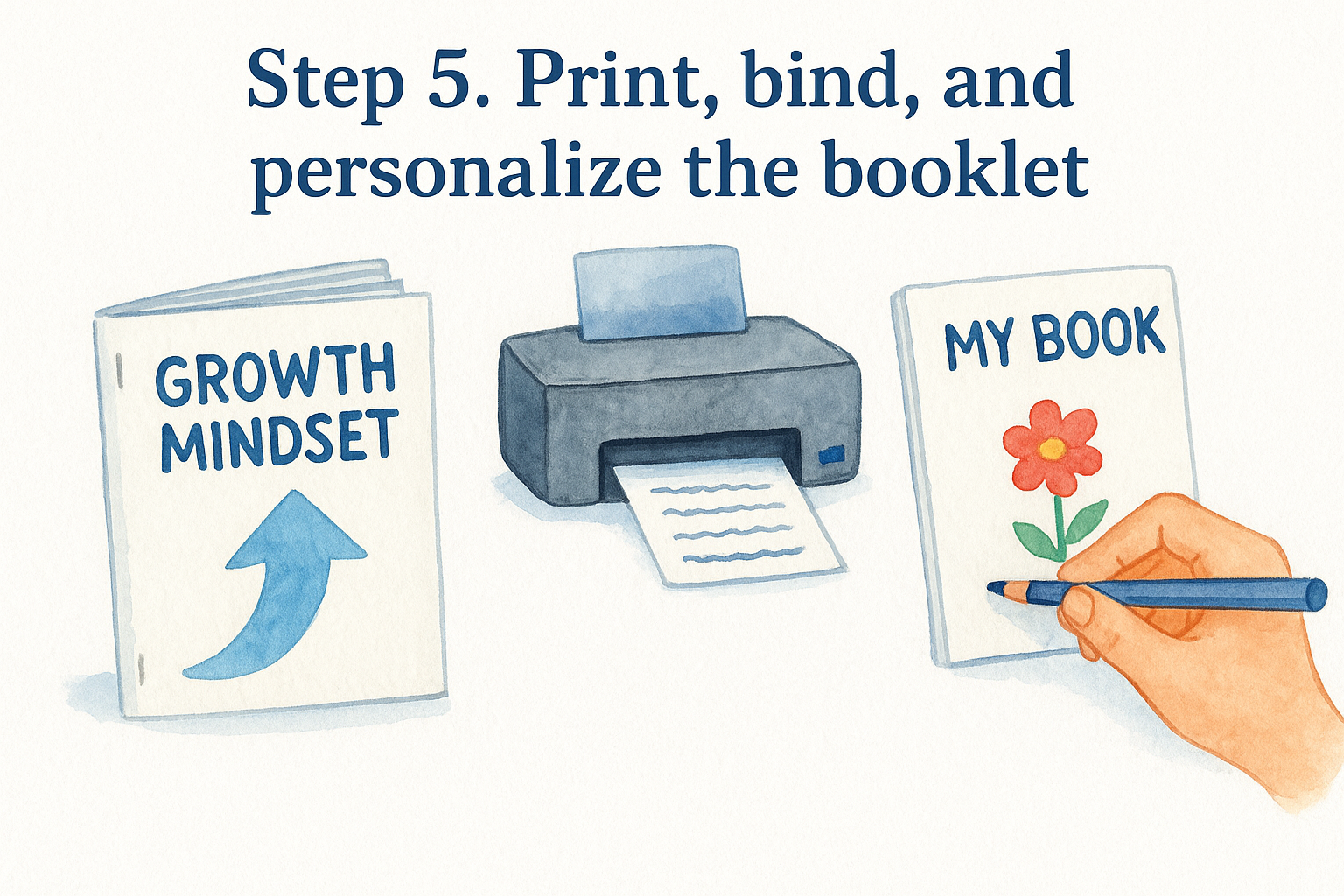
Once your pages are finalized, it’s time to turn a digital file into something students can actually hold, flip through, and carry between classes. This is where a lot of teachers overthink the process. You don’t need a laminator or a spiral-binding machine sitting in a closet to make your growth mindset booklet feel like a real, finished resource. A few smart choices at the printing stage go a long way toward durability without adding cost or hassle.
Choose a binding method that fits your budget
Schools rarely have a dedicated budget for classroom booklets, so pick a binding method that matches what your copy room already has. Staples in the top corner work fine for younger grades who won’t be flipping pages constantly, while a simple three-hole punch and a brad or binder ring holds up better for a booklet students will use across a full semester.
| Binding method | Cost | Durability | Best for |
|---|---|---|---|
| Stapled corner | Free | Low | Short booklets, younger grades |
| Three-hole punch + brad | Low | Medium | Semester-long use |
| Comb or spiral binding | Moderate | High | Multi-year reuse |
The best binding method is the one your copy room already supports, not the fanciest one online.
Print in bulk without straining your budget
Before running a full class set, print one copy and flip through it as if you were a student. Check that margins didn’t shift, text didn’t get cut off, and writing space still looks generous once it’s on paper instead of a screen. Once that test copy checks out, batch-print double-sided to cut paper use roughly in half, and ask your school’s front office about bulk copier access if your classroom printer can’t handle the volume.
Personalize each copy so it feels like theirs
Leave a blank cover page where students write their own name and decorate it, rather than printing a generic title page for everyone. Even five minutes with colored pencils, the same reason character coloring pages work so well as filler, turns a photocopied packet into something a student recognizes as theirs. That small step of ownership carries into how seriously they treat the pages inside, which matters more for long-term use than any binding choice you make.
Step 6. Introduce and use it in your classroom
A finished growth mindset booklet does nothing sitting in a filing cabinet, so plan the launch day as carefully as you planned the pages. Hand out copies during a moment that already fits your goals from Step 1, right after a graded quiz comes back, at the start of a new unit, or following a class discussion where a student voiced frustration out loud. That timing gives the booklet an immediate, obvious purpose instead of feeling like one more handout.
Launch it with a real story, not a lecture
Before students open to page one, tell them about a time you struggled with something and pushed through it anyway. Keep it short and specific, a class you failed, a skill that took years to learn, a lesson that flopped the first time you taught it. Modeling vulnerability yourself does more to sell the concept than any explanation of what growth mindset means.
Students buy into a mindset booklet faster when they see the teacher practice it first.
Build it into a weekly rhythm
One-off use rarely sticks, so schedule a recurring slot, even ten minutes on a Friday, where students pull out their booklets and complete the next page, the same way you’d build any growth mindset routine into the week. Consistency matters more than length here. A short but repeated routine along these lines works well for most classrooms:
- Monday: quick check-in on last week’s goal
- Wednesday: new theme introduced with a short discussion
- Friday: booklet page completed independently
Anchoring the booklet to specific days removes the decision fatigue of remembering to use it and turns your growth mindset activities into an expected part of the week rather than an occasional extra.
Respond to what students write
Skim entries periodically and jot a short comment on a page here and there, even just a sentence. That small response tells students someone is actually reading, which keeps the writing honest instead of rushed. If you’re already using the Report Card Commentor to draft individualized feedback elsewhere, or working from examples of comments that save teachers time, apply that same specific, encouraging tone to your booklet comments. Students notice the difference between a generic "Good job" and a note that references their actual words, and that noticing is what keeps a growth mindset workbook in active use all year instead of forgotten after week two.
Making growth mindset stick in your classroom
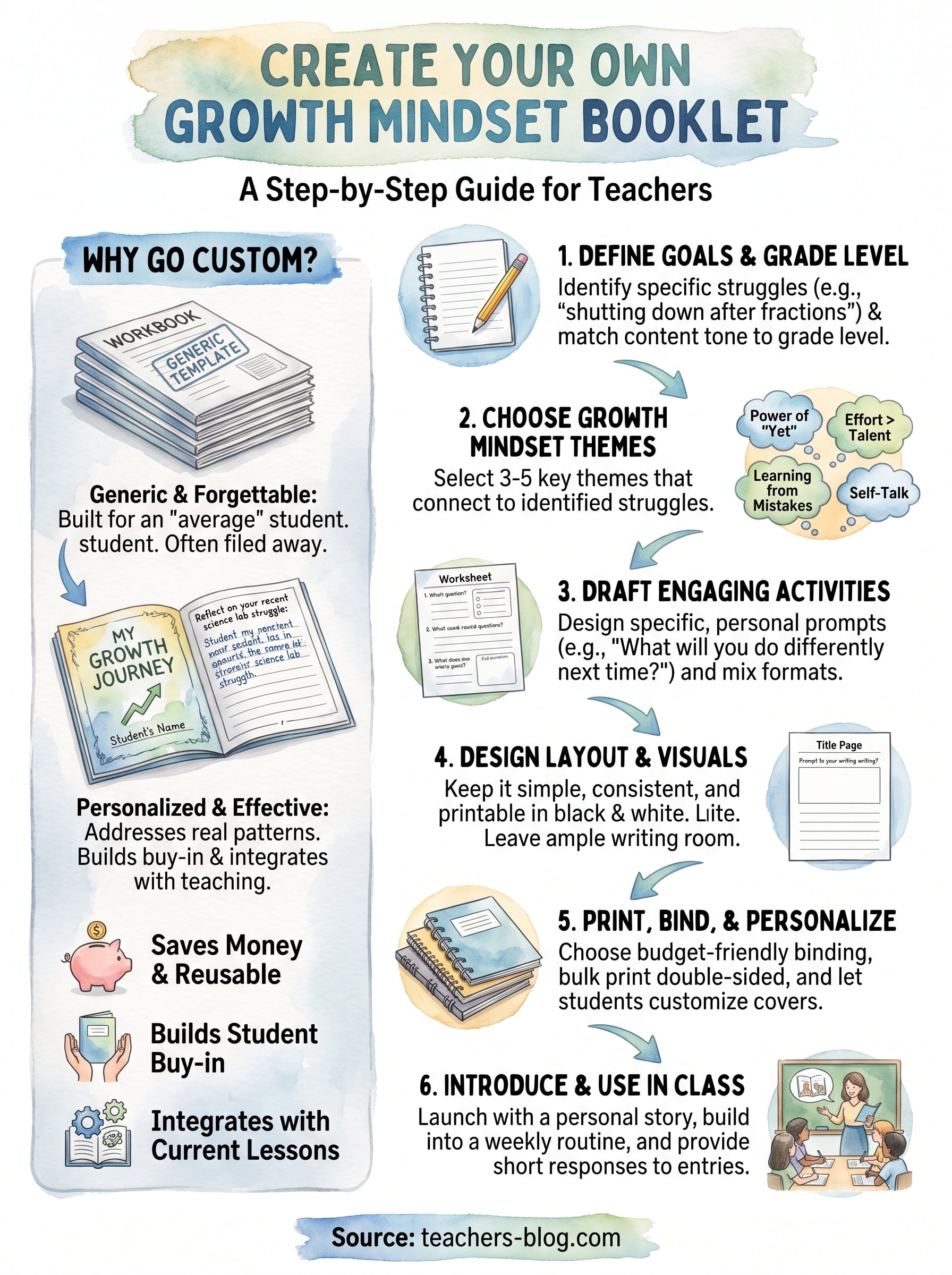
A growth mindset booklet only works if it lives in your weekly routine, not a drawer. Build it around the real struggles you named in Step 1, keep the themes tight, and let students personalize their copy, and you’ll have a resource that outlasts a single unit. Notice how each step builds on the last: goals shape themes, themes shape activities, and layout choices decide whether students actually pick the thing up. Skip any one of those steps and the booklet turns into another handout nobody reopens.
Give yourself permission to revise it every year. Swap out a worksheet that fell flat, add a prompt tied to a new class you’re teaching, and keep what worked. That flexibility is the whole point of building your own instead of buying one off a shelf. For more classroom-tested strategies like this, along with the tools mentioned throughout this guide, browse our growth mindset resources that really work at The Cautiously Optimistic Teacher.