
12 Best Growth Mindset Books for Teachers and Students
You know a growth mindset changes how kids handle failure, but pointing students toward a solid book growth mindset lessons actually stick to is harder than it sounds. Half the titles out there are dense psychology texts written for researchers, not restless ten-year-olds or the teachers trying to reach them. You need something that works in a classroom, on a bus ride home, or during a quiet planning period.
This list solves that problem directly. Whether you’re hunting for growth mindset books to read aloud during morning meeting, a growth mindset book for your own professional shelf, or something to hand a struggling student who’s convinced they’re "just bad at math," you’ll find it below, sorted by who it actually serves best.
We cover twelve titles: picture books for elementary classrooms, chapter books upper graders can read independently, and research-backed reads for teachers who want the science behind Carol Dweck’s original work. Each entry includes who it’s for, why it earns a spot on this list, and how to actually use it, not just shelve it.
1. Mindset by Carol Dweck
Every growth mindset conversation in education traces back to this book. Carol Dweck, a Stanford psychologist, spent decades researching why some students bounce back from failure while others shut down completely. Her answer became the foundation for an entire field of educational psychology, and if you’re building a book on growth mindset recommendations for your staff room, this one goes first, not last.
What it’s about
Dweck lays out her core research: people generally operate from either a fixed mindset (believing intelligence and talent are static) or a growth mindset (believing abilities develop through effort and strategy). She backs this up with decades of lab studies, then applies the theory to parenting, coaching, business, and relationships. The classroom chapters are the most useful for educators, but the whole book builds toward one argument: how we praise and respond to failure shapes how people see their own potential.
Key growth mindset lesson
The single most important takeaway is Dweck’s warning against praising intelligence directly. Telling a kid "you’re so smart" backfires when they hit something hard, because failure then threatens their identity instead of just being a data point. Praising process and effort instead keeps kids resilient when work gets difficult.
Praise the strategy, not the smarts, and you protect a student’s willingness to keep trying.
Who it’s best for
This is a teacher and parent book first, not a student one. The prose is accessible, but the audience is adults making decisions about how they talk to kids, not the kids themselves. Middle and high school students with strong reading stamina can handle it too, especially ones interested in psychology or sports performance.
How to use it in the classroom
Don’t hand this to students as required reading. Instead, mine it for language and structure you bring into daily practice:
- Swap "good job" for specific effort-based feedback ("you tried three different approaches before this worked")
- Use the fixed vs. growth mindset framework as a whole-class vocabulary lesson, then revisit it during report card conferences
- Read the sports and business chapters aloud in staff PD sessions to spark discussion about grading and feedback habits
- Pair it with a growth mindset book aimed at students, like Your Fantastic Elastic Brain, so kids get the same message in age-appropriate form
2. Atomic Habits by James Clear
James Clear built this book around one idea: small, consistent actions compound into massive change over time. It’s not a psychology text like Dweck’s work, but a practical system for behavior change that happens to align perfectly with growth mindset thinking. Teachers looking for a growth mindset book with actionable systems, rather than pure theory, land here.
What it’s about
Clear breaks habit formation into four steps: cue, craving, response, and reward. He argues that identity-based habits stick better than goal-based ones. Instead of a student saying "I want to get an A," he’d want them saying "I’m the kind of student who does homework every night." That shift from outcome to identity is what separates this book from typical productivity advice.
Key growth mindset lesson
The core lesson is that improvement isn’t dramatic, it’s incremental. Clear’s famous claim that getting 1% better daily compounds into extraordinary results over a year reframes failure as feedback, not proof of inability.
Small daily improvements, not overnight transformations, build the identity of someone who succeeds.
Who it’s best for
High schoolers with executive function struggles benefit most, along with teachers wanting to build classroom routines around consistency rather than willpower.
How to use it in the classroom
Use these strategies from the book directly:
- Have students design a habit tracker for one academic behavior, like nightly reading
- Teach "habit stacking": attach a new study habit to an existing routine
- Discuss the "two-minute rule" for beating procrastination on big assignments
3. Grit by Angela Duckworth
Angela Duckworth spent years studying why some people outperform others with equal or lesser talent, and her answer is grit: a mix of passion and sustained persistence toward long-term goals. If your books on growth mindset shelf only has Dweck’s title so far, this one adds the missing piece about follow-through over years, not just moments of failure.
What it’s about
Duckworth, a psychologist who left a consulting career to teach math before turning to research, tracked cadets at West Point, spelling bee competitors, and salespeople to isolate what predicted success. Talent mattered less than she expected. Grit, measured as sustained effort toward a single goal over years, predicted outcomes better than IQ or natural ability in nearly every group she studied.
Key growth mindset lesson
The book’s central claim is that effort counts twice: once to build a skill, and again to turn that skill into achievement. Duckworth’s formula, talent times effort equals skill, and skill times effort equals achievement, makes the case that consistency beats intensity.
Talent without sustained effort produces nothing; effort applied twice is what turns potential into results.
Who it’s best for
High school students working toward long-term goals like college applications or athletic recruitment connect with this immediately. Teachers coaching multi-year projects, like a research thesis or a four-year sport, will find useful language here too.
How to use it in the classroom
Assign the "grit scale" self-assessment from Duckworth’s website as a discussion starter. Have students track a personal long-term goal across a semester, journaling setbacks weekly. Use her research on West Point dropout rates to discuss why raw talent alone doesn’t guarantee success.
4. The Growth Mindset Coach by Annie Brock
Annie Brock, a former classroom teacher, wrote this book specifically for educators who read Dweck’s research and then asked, "okay, but what do I do on Monday?" It’s the practical bridge between theory and lesson plans, built around a month-by-month structure you can implement without redesigning your whole curriculum. If you’re searching for a growth mindset book that skips the research summary and goes straight to classroom scripts, this is it.
What it’s about
Brock organizes the book around a school-year calendar, giving teachers specific language, activities, and reflection prompts for each month. Instead of abstract theory, you get scripted teacher talk, bulletin board ideas, and journal prompts ready to copy into your own planning. She also addresses mindset-based grading, showing teachers how to build feedback systems that reward revision and effort rather than first-attempt scores.
Key growth mindset lesson
The book’s core message is that mindset instruction needs repetition and structure, not a single assembly or poster. Brock argues that a once-a-year mindset lesson rarely changes behavior; students need the vocabulary reinforced monthly until it becomes classroom culture.
A growth mindset sticks when you teach it every month, not once and forget it.
Who it’s best for
This book suits classroom teachers, grades three through twelve, who want a done-for-you framework rather than a theory to adapt themselves. New teachers especially benefit from the ready-made scripts.
How to use it in the classroom
Pick one monthly theme from the book and build it into your existing morning meeting or advisory period. Use her suggested reflection journal prompts as weekly bell-ringers. Adopt her mindset-based grading language during parent conferences to explain how revision opportunities work.
5. How Children Succeed by Paul Tough
Paul Tough, a journalist rather than a researcher, spent years reporting on classrooms, chess clubs, and neuroscience labs to answer one question: why do some kids from tough circumstances thrive while others with every advantage struggle? His answer challenges the test-score obsession that drives so much of American schooling, and it makes this book on growth mindset thinking essential for anyone teaching students dealing with poverty or trauma.
What it’s about
Tough weaves together stories from a Chicago chess prodigy, KIPP charter schools, and stress researchers studying childhood adversity. His central argument: character strengths like curiosity, self-control, and persistence predict long-term success better than IQ or standardized test scores, especially for kids growing up under chronic stress.
Key growth mindset lesson
The book’s biggest lesson is that struggle itself builds capacity. Kids who face manageable adversity, with support, develop stronger coping skills than kids shielded from every setback.
Struggle with support builds more resilience than a childhood with no obstacles at all.
Who it’s best for
Teachers and administrators working in high-poverty schools benefit most. School counselors and anyone designing trauma-informed practices will find direct application here too.
How to use it in the classroom
Use Tough’s research to justify building in productive struggle rather than removing every obstacle:
- Introduce low-stakes challenges before high-stakes tests so students practice recovering from setbacks
- Share chapters on stress and the brain during staff PD focused on trauma-informed teaching
- Discuss the chess-club sections with students to model persistence through repeated losses
6. The Subtle Art of Not Giving a F*ck by Mark Manson
Mark Manson’s blunt, profanity-laced bestseller isn’t a typical growth mindset book, but it earns its spot because it tackles the same core idea from an unexpected angle: growth comes from choosing your struggles wisely, not avoiding struggle altogether. Older students tired of toxic positivity posters respond to its honesty in a way they never would to a traditional self-help text.
What it’s about
Manson argues against the constant pursuit of positivity, claiming that trying to feel good all the time actually makes people miserable. Instead, he pushes readers to identify which problems are worth their energy, since life always hands you difficulty and the only real choice is what kind of difficulty you want.
Key growth mindset lesson
The book’s central claim flips typical motivational advice: growth isn’t about eliminating failure or negative emotion, it’s about picking meaningful values to struggle for. Manson calls this "the subtle art," and it fits growth mindset thinking because it treats discomfort as the price of progress, not a signal to quit.
Growth doesn’t mean avoiding every struggle; it means choosing which struggles are worth your effort.
Who it’s best for
High school juniors and seniors, especially skeptical or burned-out ones, connect with this far more than with gentler mindset books. Teachers dealing with their own professional burnout benefit too.
How to use it in the classroom
Assign individual chapters rather than the whole book given the language, and pair excerpts with values-clarification exercises where students rank what actually matters to them before senior year decisions.
7. The 7 Habits of Highly Effective People by Stephen Covey
Stephen Covey wrote this book in 1989 for a business audience, but its principles translate almost perfectly to classrooms and student goal-setting. Educators who want a growth mindset book that also teaches organizational skills and personal responsibility often land on this one after exhausting the psychology-focused titles.
What it’s about
Covey organizes the book around seven habits, moving from dependence to independence to interdependence. Habits like "be proactive" and "begin with the end in mind" ask readers to take ownership of their choices instead of blaming circumstances. The later habits shift toward collaboration, teaching readers to seek mutual benefit rather than competition.
Key growth mindset lesson
Covey’s proactivity habit is the clearest growth mindset connection in the book. He argues that between any stimulus and your response sits a choice, and people who recognize that gap can change their outcomes regardless of circumstance.
Between what happens to you and how you respond lies a choice, and that choice is where growth actually happens.
Who it’s best for
Middle and high school students benefit from The 7 Habits of Highly Effective Teens, Sean Covey’s adaptation of his father’s work. Teachers wanting a framework for student leadership programs or advisory curricula will find the original text useful too.
How to use it in the classroom
Build a semester-long unit around one habit per month, starting with proactive language: swap "I have to" for "I choose to." Use the "circle of influence" diagram to help students separate what they control from what they don’t. Assign personal mission statements as a fall writing project, then revisit them in spring.
8. The Miracle Morning by Hal Elrod
Hal Elrod wrote this book after surviving a near-fatal car accident that left him temporarily unable to walk or fully process new information. That personal story of rebuilding his life from scratch gives the book credibility that typical productivity guides lack, and it’s why teachers hunting for a growth mindset book about daily discipline, not just classroom theory, keep recommending it to colleagues and students alike.
What it’s about
Elrod’s system centers on six morning practices he calls the Life S.A.V.E.R.S.: silence, affirmations, visualization, exercise, reading, and scribing (journaling). He argues that how you spend your first hour awake determines the trajectory of your entire day, and that most people sabotage themselves before they even leave the house by scrolling phones or hitting snooze repeatedly.
Key growth mindset lesson
The book’s core lesson is that self-discipline compounds through routine, not motivation. Elrod insists that waiting to feel motivated before acting gets things backward; consistent small actions, done daily regardless of mood, build the identity of someone capable of change.
You don’t wait for motivation to build good habits; you build the habit, and motivation follows.
Who it’s best for
High school students juggling sports, jobs, and coursework benefit from a structured morning routine. Teachers looking to model consistency for students, rather than just assign it, will find the framework easy to demonstrate personally.
How to use it in the classroom
Have students design a scaled-down five-minute version of the S.A.V.E.R.S. routine for school mornings. Use the journaling component as a weekly reflection assignment, and discuss why routine beats willpower when motivation runs low.
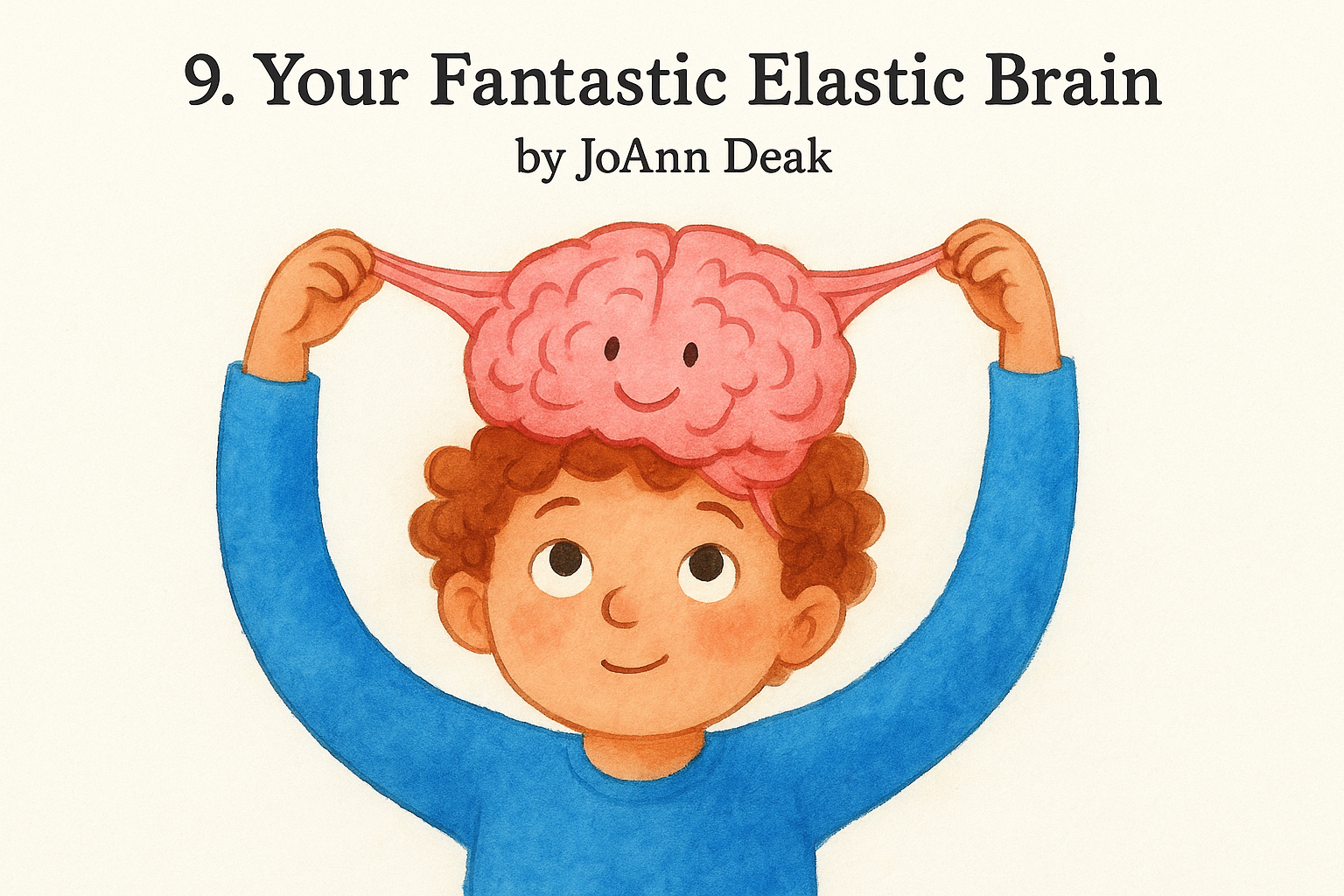
9. Your Fantastic Elastic Brain by JoAnn Deak
JoAnn Deak, a psychologist who specializes in child development, wrote this picture book to explain neuroplasticity to kids young enough to still believe their brain is a fixed lump they were born with. It’s the elementary answer to Dweck’s research, translated into language a first grader can actually picture and repeat back to you.
What it’s about
Deak uses bright illustrations and a friendly narrator to explain that the brain has physical parts you can name, like the cerebellum and the amygdala, and that each part can literally grow and strengthen with practice. Kids learn that mistakes stretch the brain like a muscle, giving the abstract idea of growth mindset a concrete, almost cartoonish anchor they won’t forget.
Key growth mindset lesson
The central lesson is that struggling with something hard isn’t a sign of weakness, it’s the exact moment your brain grows new connections. Deak frames errors as brain exercise, not failure, which reframes how young kids talk about getting things wrong in class.
A brain that struggles isn’t broken, it’s stretching, and that’s precisely how it grows stronger.
Who it’s best for
This book suits kindergarten through third grade classrooms and any parent looking for a growth mindset book their child can read independently once they’re past early readers.
How to use it in the classroom
Read it aloud early in the year, then post a simple diagram of the brain parts kids can point to when they hit a hard problem. Turn "my brain is stretching" into a classroom phrase students say instead of "I can’t do this."
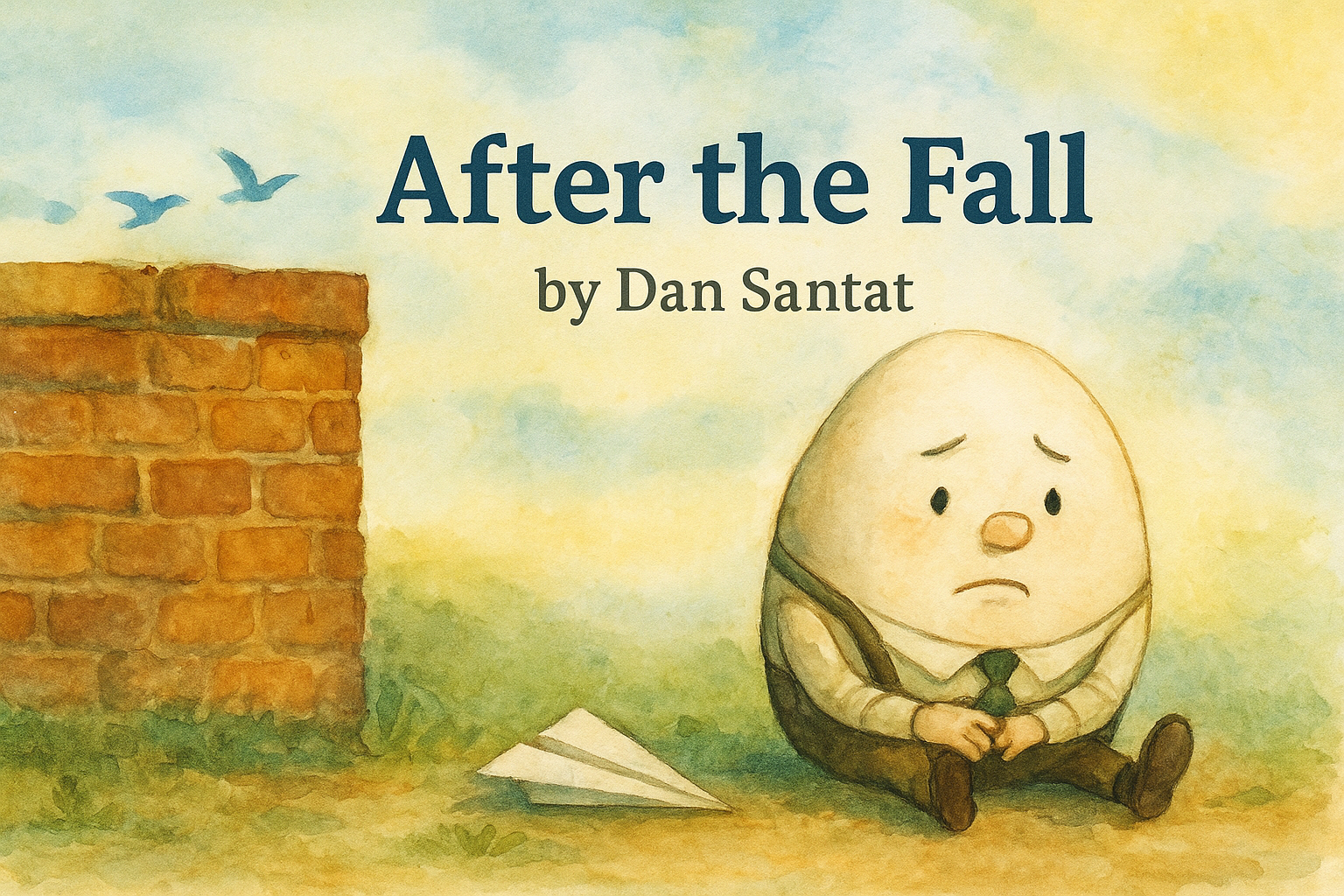
10. After the Fall by Dan Santat
Dan Santat, a Caldecott-winning illustrator, took the Humpty Dumpty story past the part every kid already knows and asked a better question: what happens after the fall? That question turns a nursery rhyme into a genuine growth mindset book about fear, avoidance, and finally trying again after something scares you badly.
What it’s about
Humpty Dumpty survives his famous fall but develops a crippling fear of heights afterward. Santat’s lush illustrations follow him avoiding the wall entirely, watching birds soar overhead while he stays grounded and miserable. The story doesn’t rush his recovery. It sits with the fear long enough that kids understand avoidance feels safe but costs something too, before showing Humpty build his own paper airplane and finally face the height that broke him.
Key growth mindset lesson
The lesson here is that recovering from failure often takes longer than the failure itself, and that’s normal. Santat shows fear as a legitimate stage, not a character flaw to rush past.
Getting back up doesn’t mean the fear disappears; it means you find a way to move forward anyway.
Who it’s best for
This book fits kindergarten through fourth grade especially well for kids who’ve had a genuinely scary failure, like a bad fall, a public mistake, or a humiliating grade, and need permission to feel shaken before trying again.
How to use it in the classroom
Read it after a rough test week or a class-wide setback, then ask students to name one thing they’ve avoided since it went wrong once. Have them sketch their own "paper airplane," a small first step back toward whatever scared them.
11. The Most Magnificent Thing by Ashley Spires
Ashley Spires, a Canadian author and illustrator, built this picture book around a young inventor and her canine assistant trying to build "the most magnificent thing." It’s become a staple growth mindset book in elementary classrooms because it captures frustration honestly instead of glossing over it with easy encouragement.
What it’s about
The girl attempts her invention again and again, and each failed try gets tossed aside as junk. When frustration finally boils over, she quits completely and storms off for a walk with her dog. That walk, not another attempt, is what turns the story around. Spires shows that stepping away from a problem can be just as productive as pushing through it, which is a nuance many growth mindset books skip entirely.
Key growth mindset lesson
The book’s central lesson is that frustration is a normal, expected part of creating something new, not a sign you should give up for good. Taking a break to reset counts as problem-solving, not failure.
Walking away from frustration isn’t quitting, it’s how you make room to solve the problem.
Who it’s best for
This book suits preschool through second grade classrooms, especially during maker-space units, STEM challenges, or any project where students build something with their hands and hit repeated setbacks.
How to use it in the classroom
Pair a read-aloud with a simple building challenge, like a spaghetti-and-marshmallow tower. When students get frustrated, point back to the girl’s walk and let them take a supervised breather before returning to their project.
12. Rosie Revere, Engineer by Andrea Beaty
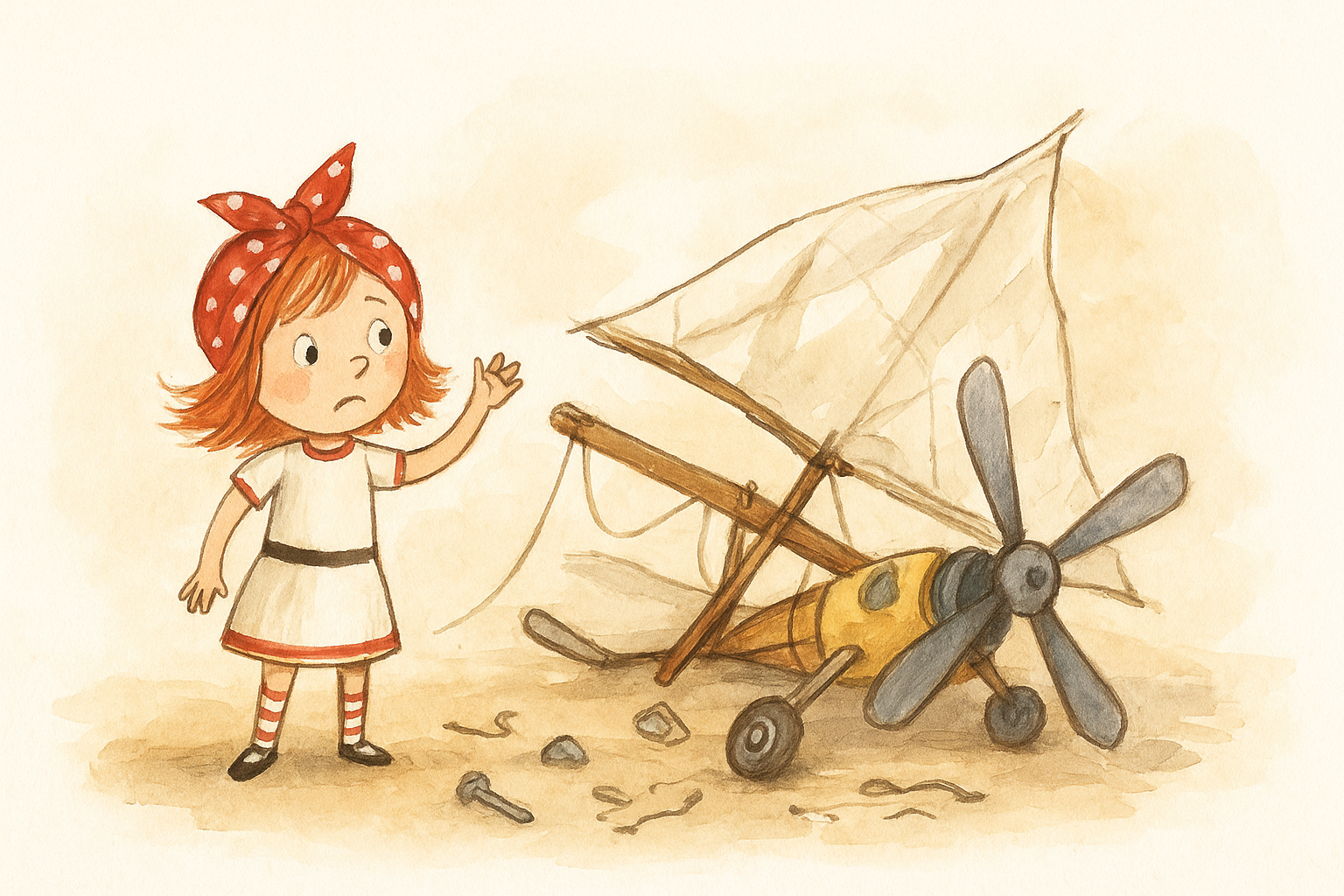
Andrea Beaty’s rhyming picture book follows a shy girl who loves building gadgets out of junkyard scraps but stops sharing her inventions after someone laughs at one. It’s become a go-to growth mindset book for teachers running STEM units, since it tackles the fear of public failure head-on instead of pretending kids won’t care what classmates think.
What it’s about
Rosie secretly builds contraptions in her attic, hiding them from family after an early invention gets mocked. When her great-great-aunt Rose visits and asks Rosie to help build a flying machine, the device crashes almost immediately. Rosie assumes she’s failed again, but her aunt celebrates the crash as useful data, not defeat, and pushes Rosie to keep tinkering.
Key growth mindset lesson
The book’s core message is that a first failed attempt is only the first draft of an invention, not the final verdict on your ability. Beaty frames engineering itself as a cycle of failure and revision, which normalizes flopped experiments for kids who expect instant success.
A crashed invention isn’t proof you failed, it’s proof you’re one step closer to what works.
Who it’s best for
This book suits kindergarten through third grade classrooms, particularly girls who need visible role models in engineering, plus any STEM or maker-space unit where kids build prototypes that won’t work on the first try.
How to use it in the classroom
Read it before a design-and-build challenge, then have students predict what might go wrong with their first prototype before testing it. Celebrate the crash aloud, the way Aunt Rose does, and log what each failed attempt taught the builder before the next try.
Choosing the right growth mindset book for you
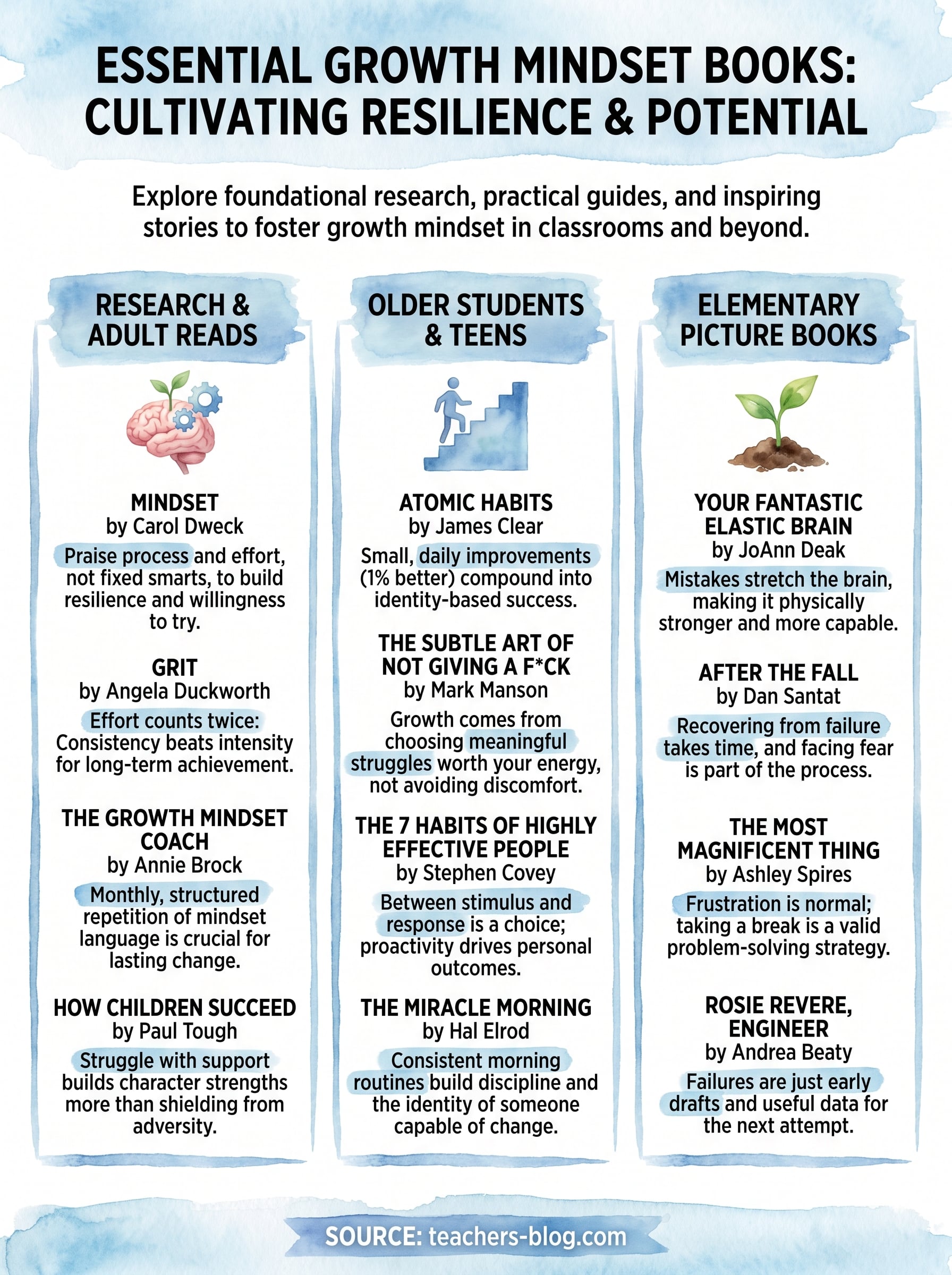
Twelve books, one shelf, and no single right answer. If you’re building your own professional development plan, start with Dweck and Duckworth, then branch into Clear or Covey once the research feels solid under you. If you’re picking something for a classroom read-aloud, match the book to the moment: After the Fall for a scary setback, Rosie Revere for a STEM unit that’s about to hit its first flop. The best growth mindset book isn’t the one with the most reviews, it’s the one that matches what your students are struggling with right now.
Don’t overthink the order. Grab one title this week, use it the way we outlined above, and watch how quickly the language shows up in your students’ own self-talk. For more classroom-ready strategies, tools, and unit plans built around exactly this kind of thinking, explore the resources at The Cautiously Optimistic Teacher.