
Student Goal Setting Worksheet: How to Use One in Class
You know the moment. You hand out a goal-setting activity, students scribble something vague like "get better grades," and by Friday nobody remembers what they wrote. A student goal setting worksheet only works if it’s structured well and actually gets revisited, not filed away after one lesson.
If you’re searching for a printable template you can hand out tomorrow, you’re in the right place. This guide walks through how to use a goal setting worksheet in a real classroom, from the first introduction to the follow-up conversations that make goals stick. You’ll see what sections belong on the page, how to phrase prompts so students write something specific instead of generic, and how often to check in without turning it into another form to grade.
We’ll also cover age-appropriate adjustments for middle versus high school, plus how to connect the worksheet to your existing routines like advisory periods or morning meetings. If you’re building a growth mindset culture in your classroom, this worksheet becomes a tool students actually reference, not a one-and-done handout. By the end, you’ll have a clear plan for rolling one out this week.
Why goal-setting worksheets help students succeed
Students rarely fail because they lack ambition. They fail because nobody taught them how to break a big, fuzzy wish into something they can actually act on Monday morning. A goal setting worksheet forces that translation. When a student writes "raise my math grade from a C to a B by the end of the quarter" instead of "do better in math," they’ve already done the hardest part of the work: defining what success looks like and by when.
Research on goal-setting theory backs this up. Edwin Locke and Gary Latham’s decades of studies found that specific, challenging goals consistently produce higher performance than vague or easy ones, largely because they clarify effort and sustain motivation over time (find a summary of that research through the American Psychological Association). Put a worksheet in front of a student and you’re not handing them busywork. You’re giving them a proven mechanism for directing attention and persistence toward something measurable.
A vague goal gives a student nothing to aim for; a written, specific one gives them a target they can hit.
Worksheets also solve a classroom logistics problem. Verbal goal-setting discussions disappear the moment the bell rings. A written record survives. Students can pull it out during a check-in, compare last month’s goal to this month’s progress, and see growth they’d otherwise forget happened. That visibility matters especially for students who struggle with confidence. Watching a paper trail of small wins accumulate does more to build a growth mindset than any pep talk you could give.
Beyond the individual student, worksheets give you, the teacher, a shared language for conferences and parent communication. Instead of saying "Jamal needs to try harder," you can point to his own words: "Jamal set a goal to read two chapters a week and hit it three weeks straight." That specificity turns a vague concern into a concrete conversation, and it shifts ownership of the outcome onto the student rather than onto you. Once students see their own handwriting driving that conversation, the worksheet stops feeling like a chore and starts feeling like evidence of their own progress.
Step 1. Choose the right goal-setting worksheet
Not every template fits every classroom. Before you print thirty copies, decide what you actually need students to track and how often they’ll revisit the page. A middle schooler setting a first-ever academic goal needs simpler language and more visual structure than a junior writing a college-prep goal for AP Chemistry. Grab a template that matches your students’ reading level and the length of time you’re tracking, whether that’s a single unit or a full semester.
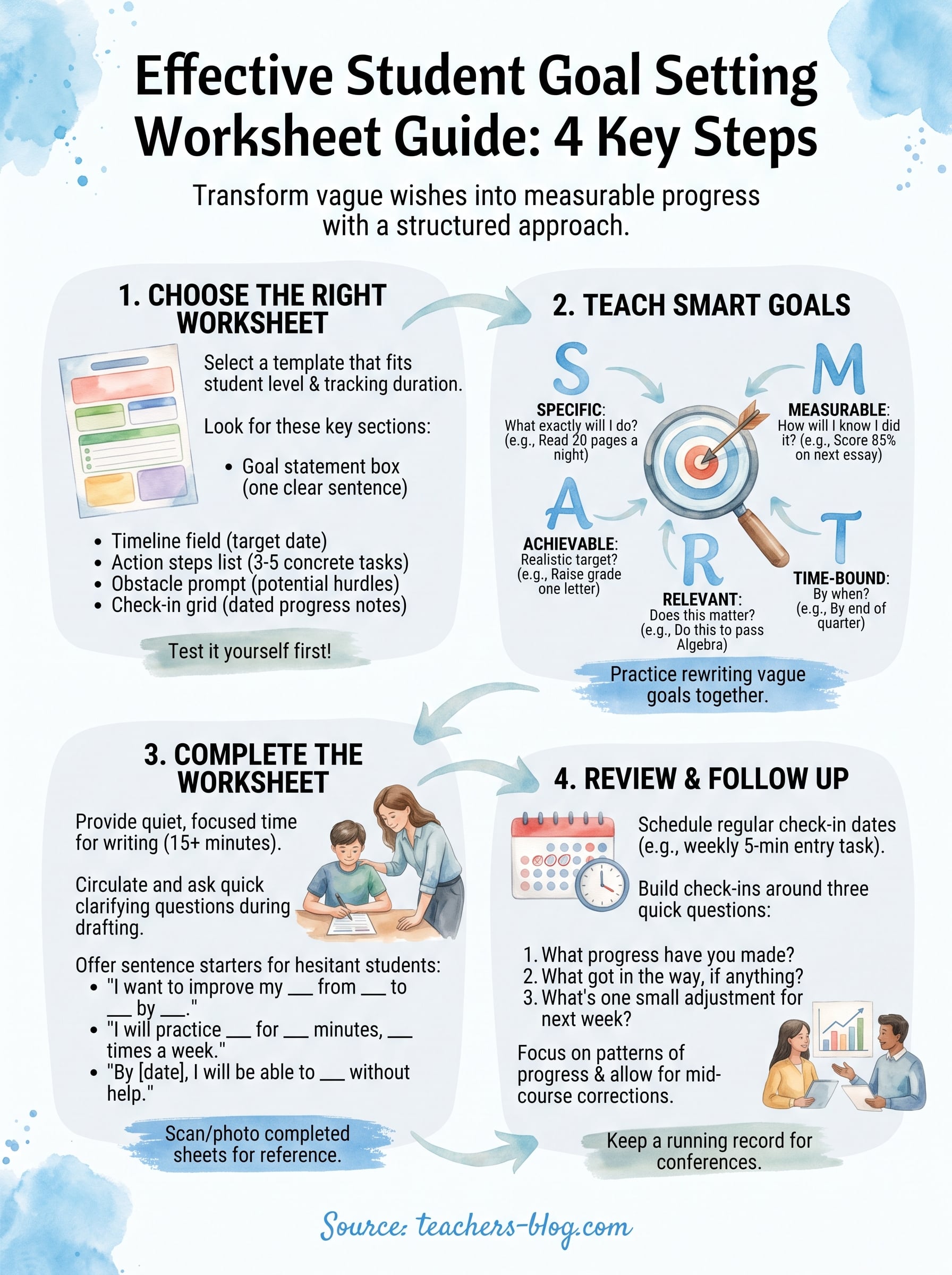
Look for these sections on any worksheet before you commit to it:
- Goal statement box: room for one clear, specific sentence, not a paragraph
- Timeline field: a target date, so the goal has an expiration point
- Action steps list: three to five concrete tasks the student controls
- Obstacle prompt: a line asking what might get in the way
- Check-in grid: dated boxes for weekly or biweekly progress notes
The best worksheet isn’t the prettiest one, it’s the one your students will actually fill out again next week.
If you’re short on time, start with a ready-made template rather than building one from scratch. The Cautiously Optimistic Teacher’s Brain Builders Workshop resources include goal-tracking pages designed for exactly this kind of repeated use, so you’re not reinventing the format every semester. Whatever you choose, test it yourself first. Fill one out as if you were a student. If a section feels confusing or optional to you, it will feel that way to a fourteen-year-old too.
Step 2. Teach students how to set SMART goals
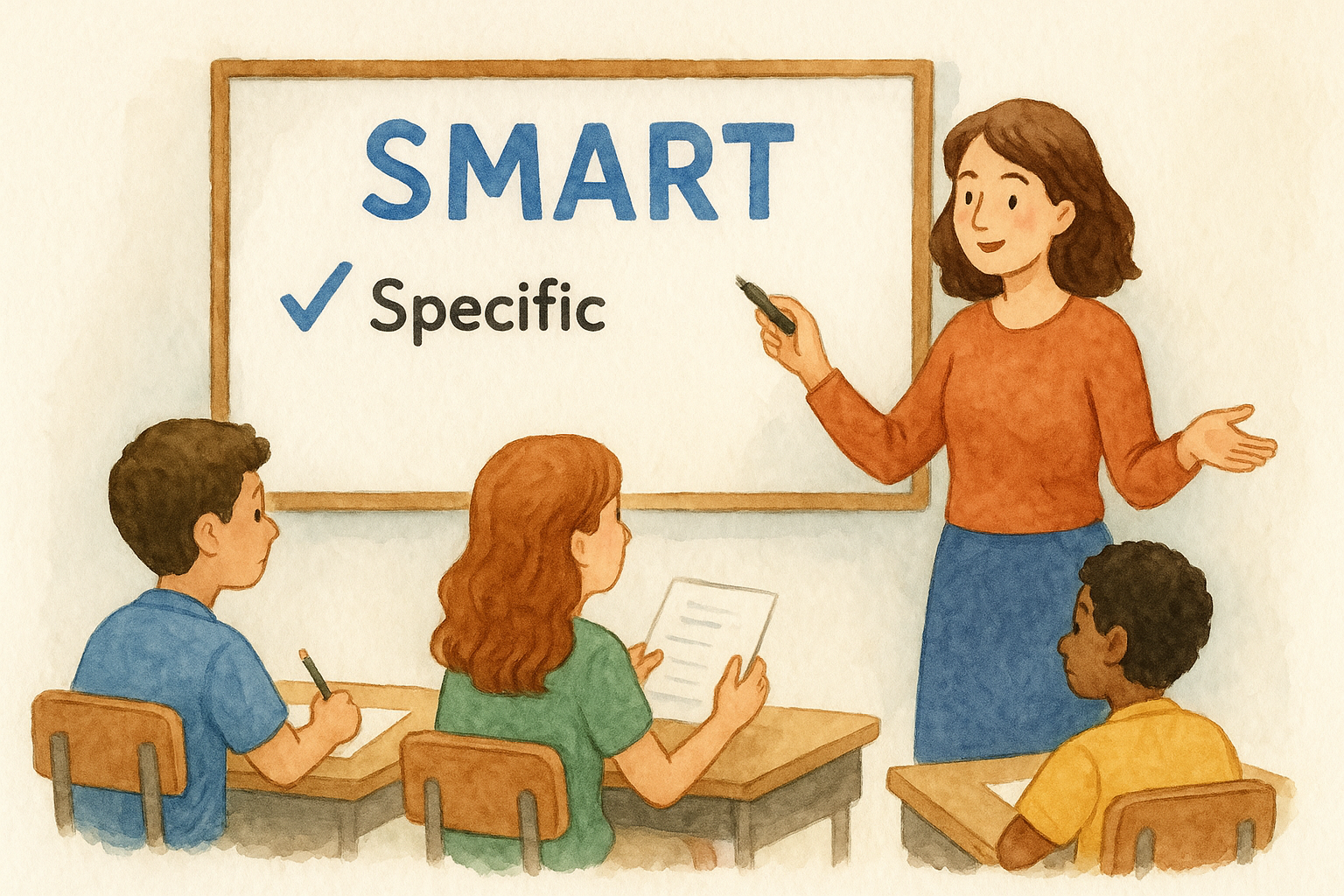
Handing a student a blank worksheet without teaching the framework first just produces more vague goals on nicer paper. Before anyone picks up a pencil, spend one class period on the SMART framework: Specific, Measurable, Achievable, Relevant, Time-bound. Write a bad goal on the board ("do better in science") and let students pick it apart together. Ask them what’s missing. They’ll spot the vagueness fast once you point them at it.
Walk through each letter with a quick example students can copy into their notes:
| Letter | Question to ask | Weak version | SMART version |
|---|---|---|---|
| Specific | What exactly will I do? | "Read more" | "Read 20 pages a night" |
| Measurable | How will I know I did it? | "Improve my writing" | "Score 85% or higher on my next essay" |
| Achievable | Can I realistically hit this? | "Get straight A’s" | "Raise my grade one letter" |
| Relevant | Does this matter to me? | "Do this because my teacher said so" | "Do this because I want to pass Algebra" |
| Time-bound | By when? | "Eventually" | "By the end of the quarter" |
A goal without a deadline is just a wish with better grammar.
Run a quick practice round before the real worksheet comes out. Give students three vague goals on an index card and have them rewrite each one using the SMART checklist, working in pairs so weaker writers hear stronger phrasing out loud. This ten-minute rehearsal saves you from collecting thirty worksheets full of "try harder" goals that need a full rewrite later.
Step 3. Have students complete their worksheets
Once students understand SMART goals, hand out the worksheet and give them uninterrupted time to write, not a rushed five minutes at the end of class. Quiet, focused time matters here because a rushed student writes whatever fills the box fastest, which usually means a vague goal disguised in SMART language. Fifteen minutes is enough for most students to draft a goal, list action steps, and note one obstacle.
Circulate while they work instead of grading papers at your desk. Read over shoulders and ask quick clarifying questions: "How will you measure that?" or "What’s your deadline?" A student who wrote "get better at essays" needs a nudge toward "score 85% or higher on my next essay by October 15." Catching vague language now saves you a stack of unusable worksheets later.
A worksheet filled out in silence, without feedback, is just a form. A worksheet filled out with a teacher checking in is a coaching session.
For students who freeze staring at a blank goal box, offer sentence starters they can build from:
- "I want to improve my ___ from ___ to ___ by ___."
- "I will practice ___ for ___ minutes, ___ times a week."
- "By [date], I will be able to ___ without help."
Collect the completed worksheets, but don’t file them away in a drawer. Photograph each one or scan it before returning the original to the student. That copy becomes your reference point during Step 4, when you’re checking progress without relying on a student’s memory of what they wrote three weeks ago.
Step 4. Review and follow up on student progress
A goal that never gets revisited dies the same way a New Year’s resolution does. Schedule check-in dates the moment students finish their worksheets, not weeks later when you finally remember. Five minutes every Friday or every other Monday is enough to keep a goal alive in a student’s mind without eating into instruction time.
Build your check-ins around three quick questions instead of a long conference:
- What progress have you made toward your goal since last time?
- What got in the way, if anything?
- What’s one small adjustment for next week?
Students can answer these in the check-in grid on their worksheet in under two minutes, either during a morning meeting or as an entry task while you take attendance. Keep the tone conversational, not evaluative. You’re not grading effort, you’re tracking a pattern of progress the student can see for themselves.
Progress a student can see on paper is progress a student believes in.
When a goal is clearly off track by the halfway point, don’t wait for the deadline to arrive and fail on its own. Sit down with the student and rewrite the timeline or the action steps together, using the same worksheet rather than starting over. That mid-course correction teaches something more valuable than hitting the original target: goals can flex without being abandoned. Save every completed check-in, whether scanned or photographed, so you have a running record for parent conferences and report card comments backed by the student’s own words.
Building a classroom culture of goal setting
A single worksheet won’t change how your students think about effort, but a repeated routine will. When goal setting becomes as normal as taking attendance, students stop treating it like an assignment and start treating it like a habit they own. Consistency, not the fanciest template, is what turns a stack of papers into a real shift in mindset.
Give students the language, the time, and the follow-through, and a student goal setting worksheet becomes proof of growth they can point to themselves, not just another form for you to grade. Start small: pick one class period this week, teach the SMART framework, and schedule your first check-in before you even hand out the page.
If you want a template ready to go instead of building one from scratch, browse the goal-tracking resources at The Cautiously Optimistic Teacher and get one in front of your students tomorrow.