
Student Goal Setting Template: What It Is and How to Use It
You know the moment: a student sets a goal like "get better grades" and has no idea what to do next. Without structure, goal setting turns into a wish list instead of a plan. A student goal setting template fixes that by giving kids a concrete format to name a target, break it into steps, and track their progress week by week.
So what exactly is this template? It’s a simple, reusable document, usually one page, that walks a student through defining a specific goal, listing the actions needed to reach it, setting a timeline, and reflecting on what worked. Think of it as a structured worksheet rather than a vague journaling prompt. It works for academic goals, behavior goals, or personal habits, and it gives you an easy way to check in without turning goal setting into another lecture.
In this article, you’ll get a clear breakdown of what belongs in a strong template, how to introduce it to your class, and how to use it for ongoing progress tracking and reflection instead of a one-time assignment you file away and forget.
Why student goal setting templates matter in the classroom
Teachers who skip formal goal setting often rely on gut feeling to gauge student motivation, and that approach falls apart fast in a room of thirty kids. A student goal setting template gives every student, from the one who’s coasting to the one who’s overwhelmed, the same starting point: name the goal, plan the steps, check the progress. That consistency matters more than most teachers expect, because it turns an abstract idea like "try harder" into something you can actually observe and coach.
Building real self-regulation skills
Research on self-regulated learning consistently shows that students who plan, monitor, and evaluate their own progress outperform those who don’t, and a template is the scaffold that makes those habits stick. Without it, most students default to reacting to grades after the fact instead of steering toward them. The National Center for Education Statistics has tracked achievement gaps tied to executive function skills like planning and self-monitoring, which is exactly what a written goal plan trains.
A goal without a written plan is just a hope, and hope doesn’t show up on a report card.
Creating accountability without nagging
Parents ask about progress, administrators ask about data, and students themselves ask "am I doing okay?" A shared template answers all three at once. Instead of chasing students down for updates, you point to the document and ask them to walk you through it. This shifts the conversation from you monitoring them to them owning the progress tracking themselves.
Supporting differentiation with one tool
Every student’s goal looks different, whether it’s raising a grade, finishing homework on time, or speaking up in class discussions once a week. A single template flexes to fit all of these because the structure, not the content, is what stays fixed. That’s why templates work so well for differentiated instruction, letting you meet each student where they are without designing thirty separate systems.
How to use a student goal setting template step by step
Rolling out a student goal setting template works best when you treat it as a weekly routine, not a one-time worksheet you hand out and forget. Start small, model the process yourself with a real example, and give students time in class to fill out the first draft instead of sending it home.
Introducing the template
Walk students through the format before asking them to use it solo. A short in-class demo removes the guesswork and shows them what a strong goal actually looks like.
- Pick one goal together as a class example, like raising a quiz average by 10 points.
- Break it into three or four concrete action steps.
- Set a realistic deadline, usually two to four weeks.
- Have students copy the format onto their own sheet with their own goal.
Building in check-ins
Once goals are set, schedule short check-ins, five minutes at the start of class works fine, where students update their progress tracking section and note what’s working. Skipping this step is where most goal setting plans quietly die.
A template only works if someone actually looks at it more than once.
Finally, close the cycle with a reflection: did the student hit the goal, and what would they change next time? That reflection step, more than the goal itself, is what teaches kids to plan better the next round.
Key elements every effective template should include
Not every worksheet labeled "goal setting" actually helps a student improve. A student goal setting template needs specific components, not just a blank box that says "my goal." Skip any of these pieces and the document turns back into a wish list.
The must-have fields
Every version, whether it’s for a third grader or a high school junior, needs the same backbone. These fields turn a vague wish into a plan you can actually track.
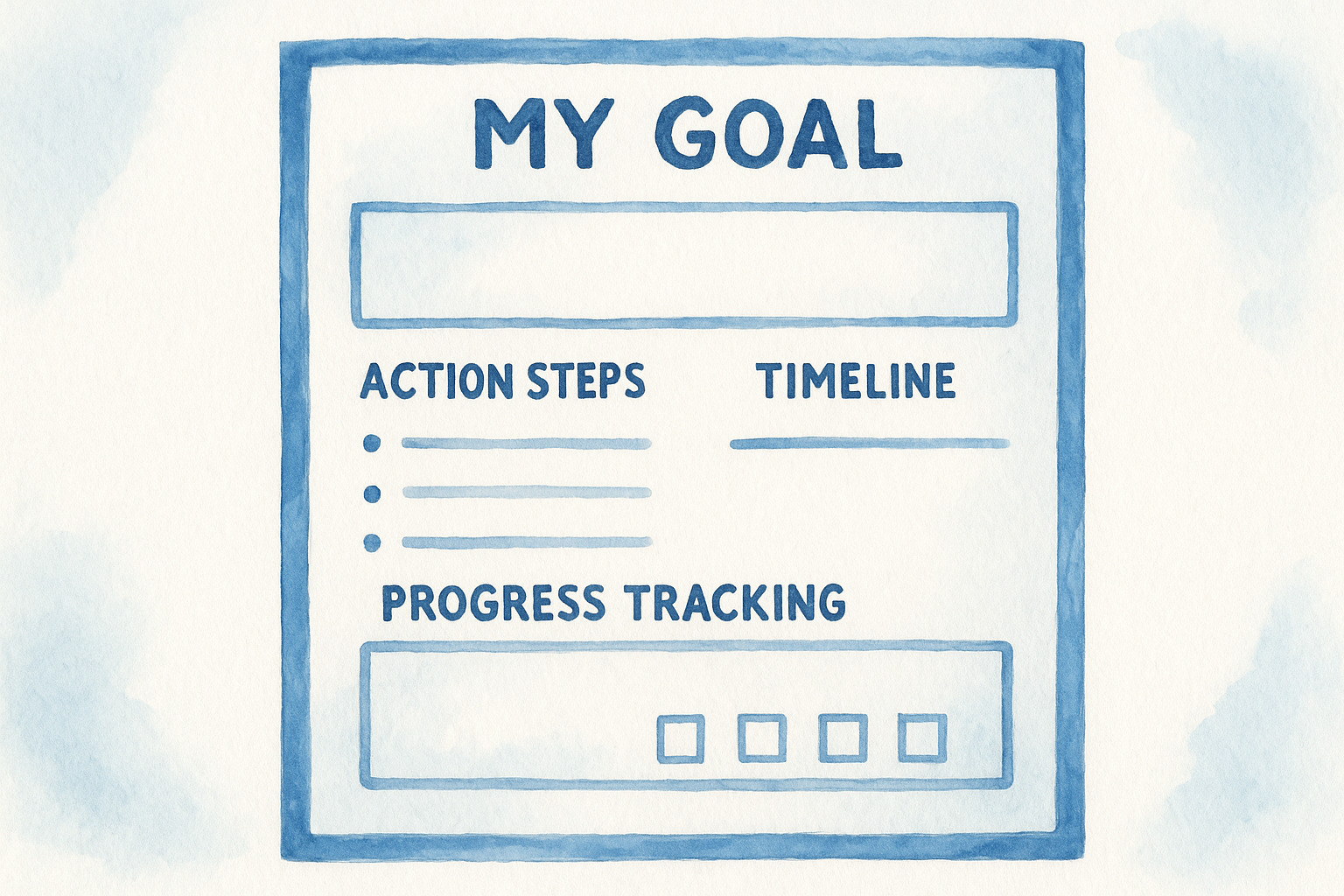
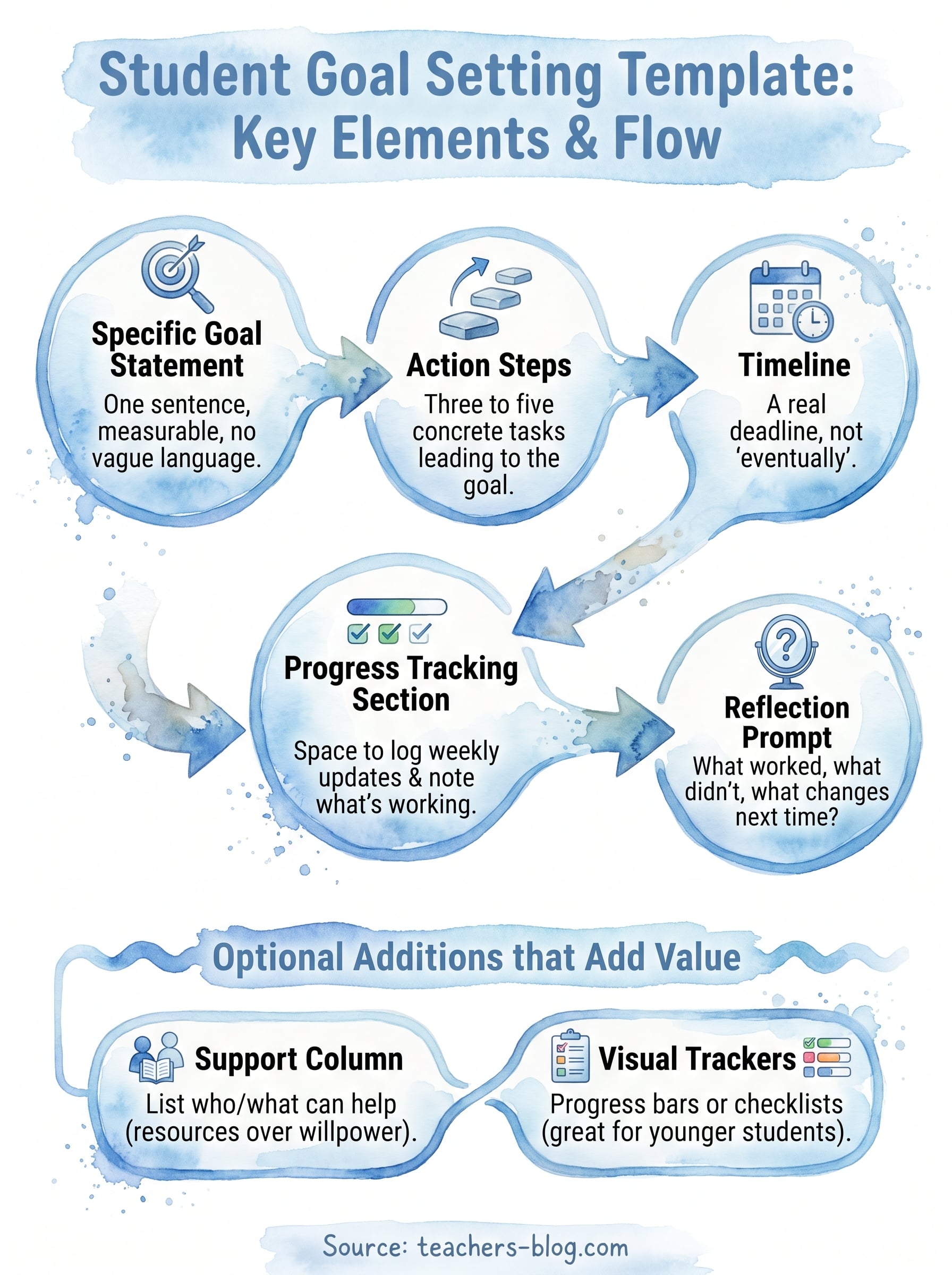
- Specific goal statement: one sentence, measurable, no vague language like "do better"
- Action steps: three to five concrete tasks that lead to the goal
- Timeline: a real deadline, not "eventually"
- Progress tracking section: space to log updates weekly, not just at the end
- Reflection prompt: what worked, what didn’t, what changes next time
If a template doesn’t have a place to write down what happened, it’s not a goal tracker, it’s a form.
Optional additions that add value
Some teachers add extras that make the template stronger without complicating it. A support column, where students list who or what can help them (a tutor, a study group, extra practice time), gets students thinking about resources instead of just willpower. Visual trackers, like a simple progress bar or checklist, work especially well with younger students who respond better to something they can color in than a paragraph of text.
Examples for different grade levels and goal types
A student goal setting template should flex with the age and maturity of the student sitting in front of you. An elementary kid needs pictures and short phrases, while a high schooler can handle a full written reflection. Zooming in on real examples makes the format click faster than any explanation.
Elementary and middle school goals
Younger students do best with concrete, short-term goals paired with visual tracking. Try formats like these:
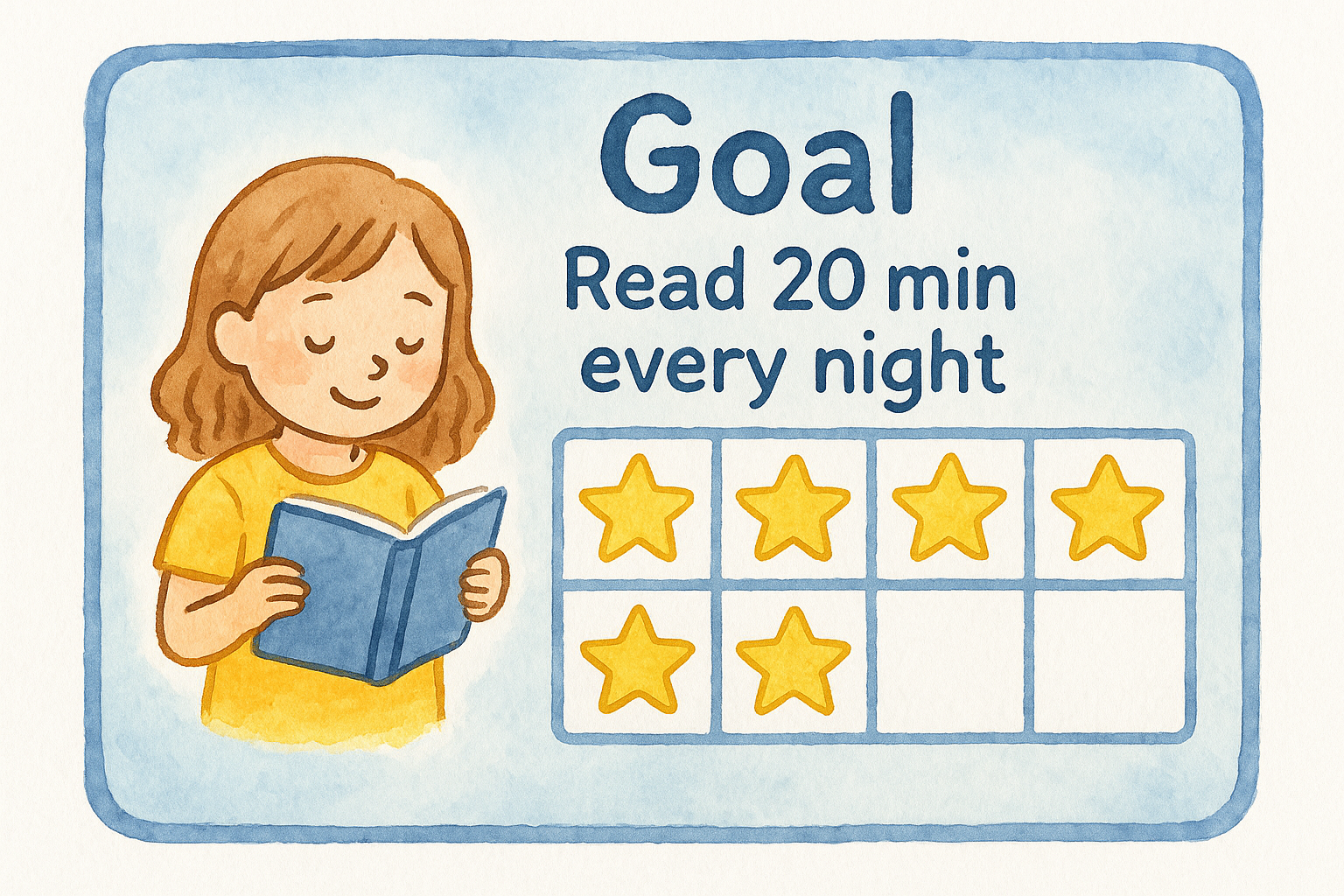
- Reading goal: "Read 20 minutes every night for two weeks," tracked with a sticker chart
- Behavior goal: "Raise my hand instead of calling out, three days this week," checked off daily
- Math fact goal: "Master multiplication facts 1 through 5 by Friday," with a simple progress bar
The younger the student, the shorter the goal window needs to be.
High school academic and personal goals
Older students can manage longer timelines and more abstract targets, especially once they’ve practiced the format a few times. A junior working toward college readiness might set a specific goal statement like "raise my chemistry grade from a C to a B by the midterm," with action steps covering tutoring sessions, redone homework, and weekly quiz reviews. Others use the same template for personal goals, like managing test anxiety or improving attendance, proving the structure works well beyond academics alone.
Common mistakes that undermine student goal setting
Even with a solid student goal setting template in hand, a few habits can quietly wreck the whole process. Watching for these mistakes early saves you from redoing the exercise mid-semester.
Setting goals that are too vague or too big
Goals like "do better in math" or "be a good student" give students nothing to act on. Nobody can track progress toward a feeling. The fix is forcing specificity every time: a number, a deadline, a visible action.
Vague goals produce vague effort, and vague effort produces nothing you can measure.
- Skip phrases like "try harder" or "improve" without a number attached
- Avoid goals that span an entire semester with no checkpoints
- Reject goals a student can’t influence, like "get an easier teacher"
Treating it as a one-time worksheet
Handing out the template once, collecting it, and never mentioning it again teaches students that goal setting is busywork, not a real tool. That single mistake undoes everything a good progress tracking section is designed to do.
Letting adults write the goals
When a teacher or parent fills in the goal for a student, ownership disappears along with the motivation. Students stick with plans they helped write, even imperfect ones, far more than plans handed to them fully formed. Guide the wording, but let the student choose the target.
Putting goal setting into everyday practice
A student goal setting template only earns its place in your classroom if you actually use it week after week, not just during the first month of school when motivation runs high. Start with one class, one goal type, and one simple check-in routine, then expand once it feels automatic for both you and your students. Remember that the format matters less than the habit it builds: naming a target, breaking it into steps, and reflecting honestly on what happened.
Give students ownership of the process, keep the check-ins short, and resist the urge to make the template perfect before you try it. Real progress tracking beats a polished worksheet that never leaves the folder. If you’re ready for more ready-to-use classroom resources like this one, browse the full collection at The Cautiously Optimistic Teacher and find your next tool to try this week.