
Edutopia Student Engagement: 5 Classroom Strategies That Work
If you’ve ever searched for Edutopia student engagement resources, you already know the site is a goldmine of research-backed teaching strategies. But with thousands of articles, videos, and guides across the platform, finding the ones that actually move the needle in your classroom can feel like a part-time job you didn’t sign up for.
That’s where this article comes in. Here at The Cautiously Optimistic Teacher, we spend our time digging through educational research and resources so you can spend yours doing what matters, teaching. We’ve pulled together five concrete classroom strategies highlighted by Edutopia that consistently improve student engagement, and we’ve paired them with practical ways to put each one into action.
Whether you’re battling glazed-over eyes during third period or looking to sharpen lessons that already work, these strategies give you a clear starting point backed by real evidence.
1. Use AI to create student-led choices fast
When students feel like they have a say in what or how they learn, their investment in the work rises noticeably. AI tools give you a fast, practical way to build choice into your lessons without spending hours designing menus, tiered tasks, or differentiated prompts from scratch.
What this strategy looks like in a real lesson
A straightforward version: you give students a shared text or topic, then use AI to generate three different entry points based on learning style or interest. Students pick the one that fits them best, then share findings with the group. The task stays unified while the path to get there varies, which cuts resistance and raises buy-in across the class.
How to do it with The Cautiously Optimistic Teacher tools
The Differentiated Instruction Helper on this site lets you enter a topic and instantly receive tiered tasks you can hand to students the same day. You can also use the Worksheet Maker to build parallel versions of the same activity at different complexity levels. Both tools reduce prep time so you can focus on facilitating student choices rather than just designing them.
Giving students a real choice, even a small one, shifts their role from passive recipient to active participant.
Where it fits best in the Edutopia engagement lens
Edutopia student engagement research consistently points to student agency as one of the strongest predictors of sustained focus and motivation. AI-generated choice boards fit naturally into project launches, independent reading tasks, and differentiated writing prompts. They work especially well when you pair them with a short reflection where students explain why they chose their path.
Common mistakes that make AI tasks less engaging
The biggest issue teachers run into is generating tasks that all look and feel identical. If your three AI-generated options are just reworded versions of each other, students notice quickly and disengage immediately. Make sure each option involves a different skill, format, or audience so the choice feels genuine and worth thinking about.
2. Build relational engagement with weekly rituals
Students engage with teachers they trust and classrooms where they feel seen. Consistent, low-effort rituals build that trust gradually, and Edutopia student engagement research backs this up: relational connection is a foundational driver of sustained student motivation across all grade levels.
Quick relationship builders that don’t feel forced
Start with two-minute check-ins at the door, a simple "how are you actually doing" on a sticky note, or a weekly question on the board students answer as they settle in. These moves signal care without eating your lesson time, and they compound over weeks into genuine classroom trust.
The smallest consistent gesture often does more for student-teacher connection than any one-time activity.
A simple "origin wall" routine students can sustain
Give students a dedicated space on your classroom wall where they post something that represents where they come from, a photo, a word, a symbol. Refresh it each month so it stays current and students stay invested in it.

Using artifacts and storytelling without losing class time
Ask students to bring one object or image that matters to them and share it in 90 seconds or less. This builds peer connection and cultural awareness without turning into a time sink.
How to include quiet students and new students
Give written or visual options alongside spoken ones so quieter students can participate on their own terms. When a new student arrives, assign a peer anchor who helps them contribute to the origin wall on day one.
3. Teach and norm active learning structures
Active learning only works when students know exactly what it looks like in your room. Without clear expectations, group work becomes noise and discussions produce silence instead of thinking.
Why engagement falls apart without structure
When you skip the norming phase, the loudest voices dominate and quieter students check out completely. Edutopia student engagement frameworks consistently flag unstructured collaboration as a driver of participation gaps, not a solution to them.
Second, structure is not the opposite of engagement. It is the foundation that makes genuine engagement possible for every student in the room.
How to norm turn-and-talk, group work, and seminars
Model each structure explicitly before you use it with real content. Show students what a strong turn-and-talk looks like versus a weak one, then name the difference together so the class shares a common standard.
Students can only meet your expectations when they know what those expectations actually look like in practice.
Sentence stems that lift the level of discourse
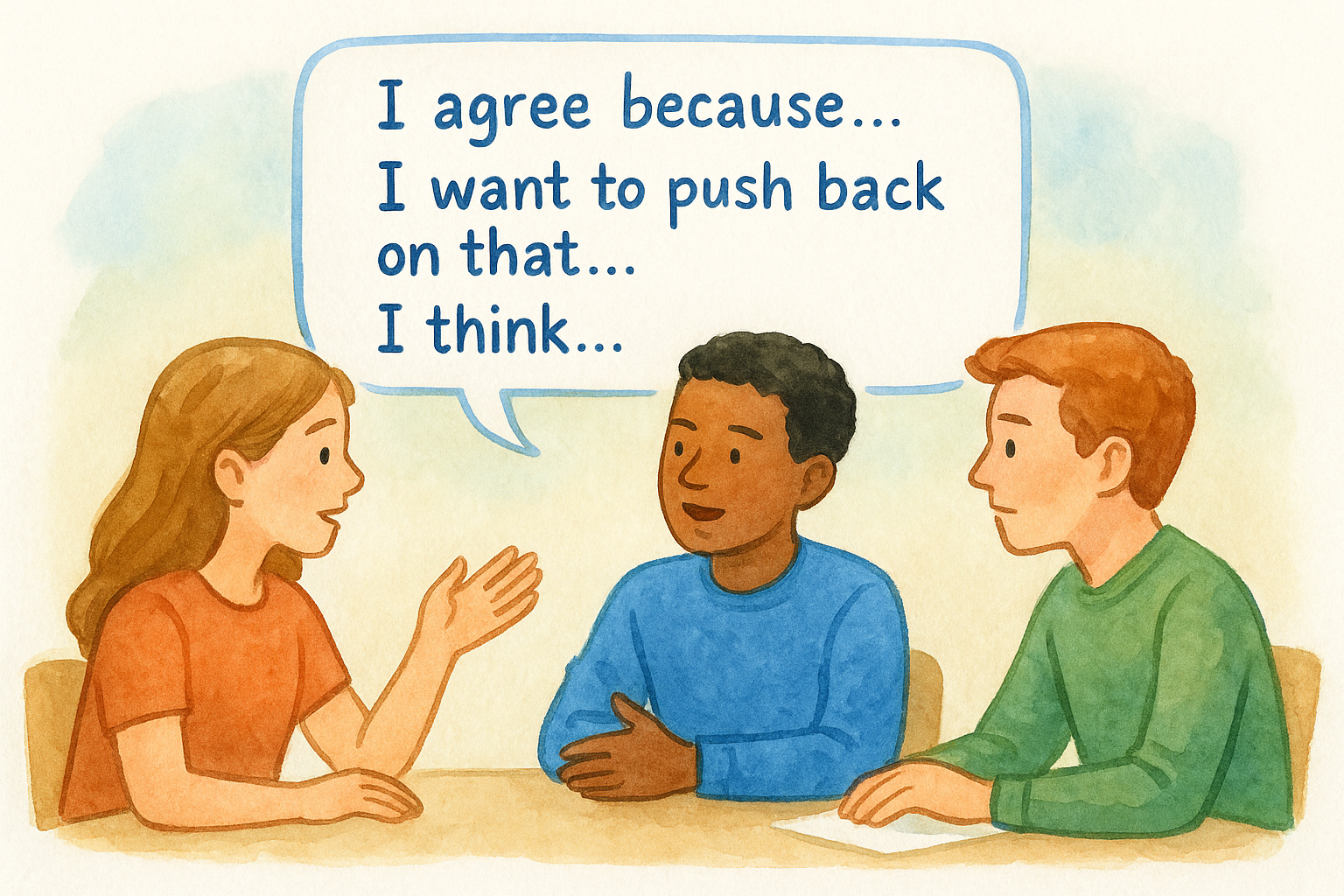
Post three or four sentence frames where students can see them at all times. Frames like "I agree because…" or "I want to push back on that…" reduce anxiety and raise the academic quality of student responses fast.
Feedback moves that keep discussions on track
When a discussion drifts, redirect with specific, neutral prompts rather than corrections. Asking "can someone add evidence to that?" keeps student ownership of the conversation intact while nudging the thinking in a more rigorous direction.
4. Start with low-stakes hooks before rigor
Students who feel overwhelmed before they start often shut down before you reach the lesson’s core. Opening with a low-stakes entry point lowers resistance and gets thinking moving before the harder work begins.
The "candy before vegetables" approach
Give students something genuinely interesting to react to first, a short clip, a strange statistic, or a provocative question, before you introduce the main task. Edutopia student engagement research supports this sequencing because early success builds the confidence students need to push through difficult material later.
High-interest prompts that still build academic skills
A meme analysis or a sports debate can teach inference, argument structure, and evidence selection just as effectively as a textbook prompt. Pair your fun hook with a clear skill target so the activity earns its place in the lesson plan.
Bridging from fun topics to heavy content
Once students are warmed up, name the connection explicitly. Tell them the skill they just practiced on the fun topic is the exact same skill the harder content requires, and watch resistance drop.
How to keep relevance from turning into fluff
Relevance works when the hook connects to a real skill, not just when it grabs attention.
Every hook needs a visible academic payoff students can identify on their own. If they cannot name what they practiced, rework the activity before you use it again.
5. Design for emotional safety and student voice
Students who don’t feel safe in your classroom won’t engage, no matter how well-designed your lesson is. Emotional safety and student voice are preconditions for everything else on this list, and Edutopia student engagement research treats them as non-negotiable foundations for sustained learning.
Engagement signals teachers often misread
Silence isn’t always disengagement, and compliance isn’t always engagement. A student copying notes without contributing may be overwhelmed rather than focused. Watch for avoidance behaviors and reluctance to take risks as the real warning signs worth addressing.
Student-designed expectations that reduce power struggles
Invite students to co-create classroom norms at the start of the year. When students own the expectations, they hold each other accountable far more reliably than any rule posted on the wall.
Ownership of norms shifts student behavior more sustainably than enforcement ever will.
Entry routines and warm-ups that settle the room fast
A predictable opening routine gives students a calm transition into learning. Even a two-minute journal prompt lowers anxiety and signals that your space is safe before the harder work begins.
Trauma-sensitive moves that keep learning possible
Offer opt-out options on high-emotion topics and give students choice in how they respond. Small flexibility moves reduce the stakes enough for students carrying stress into your room to stay present and keep learning.
Next steps for your classroom
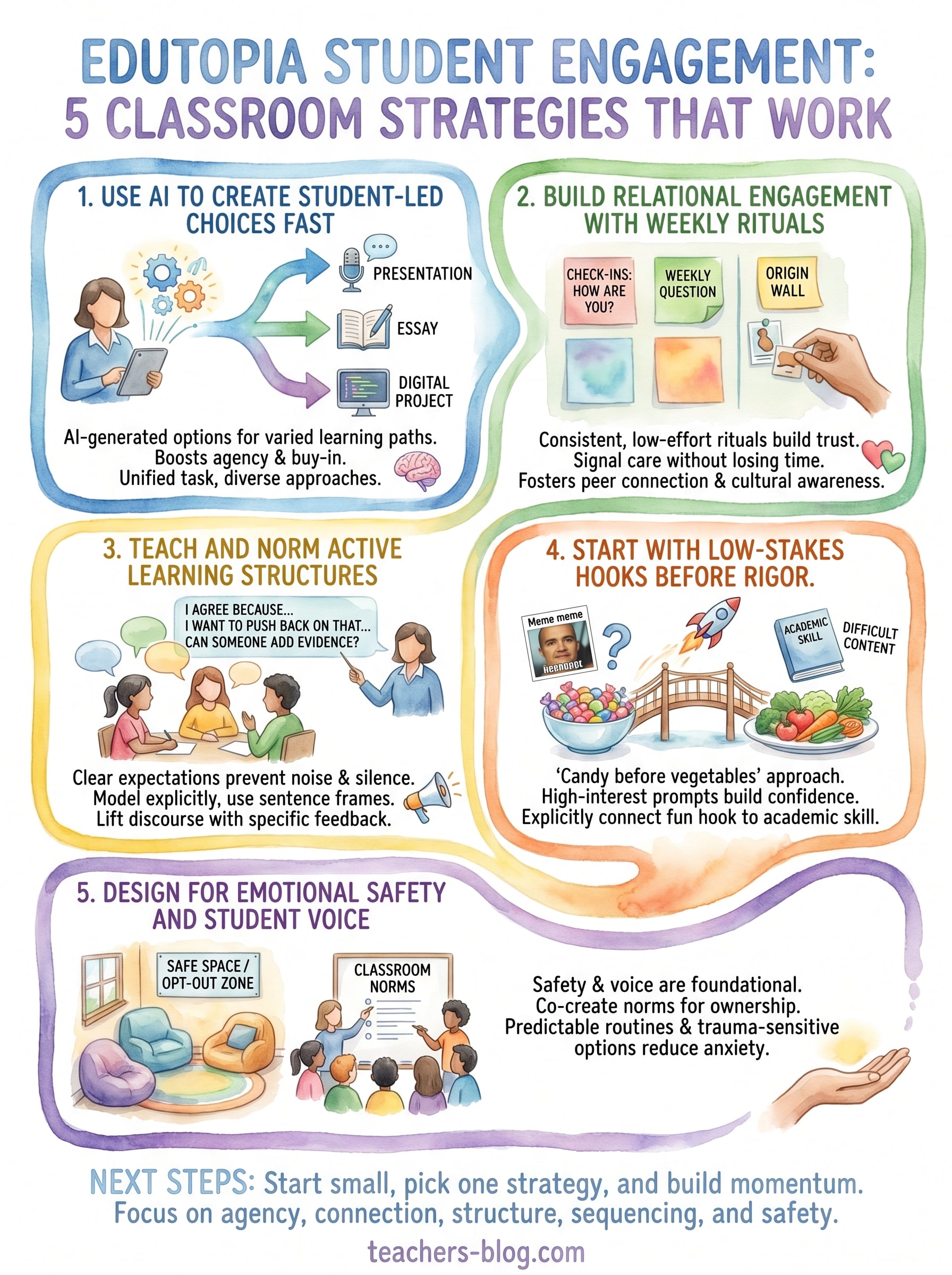
These five strategies cover the core of what Edutopia student engagement research points to again and again: agency, connection, structure, sequencing, and safety. You don’t need to implement all five at once. Pick one strategy that addresses the specific gap you notice most in your classroom right now, get it running consistently, then add the next.
Start small and stay intentional. A weekly check-in ritual or a single AI-generated choice board can shift the dynamic in your room faster than a full unit redesign. The goal is momentum, not perfection.
When you’re ready to build on these strategies with tools that save you real prep time, explore the teaching resources at The Cautiously Optimistic Teacher. You’ll find AI-powered tools for differentiation, worksheet creation, and more, all designed to help you spend less time preparing and more time actually teaching the students in front of you.