
ASCD Standards Based Grading: Principles, Reasons, Tips
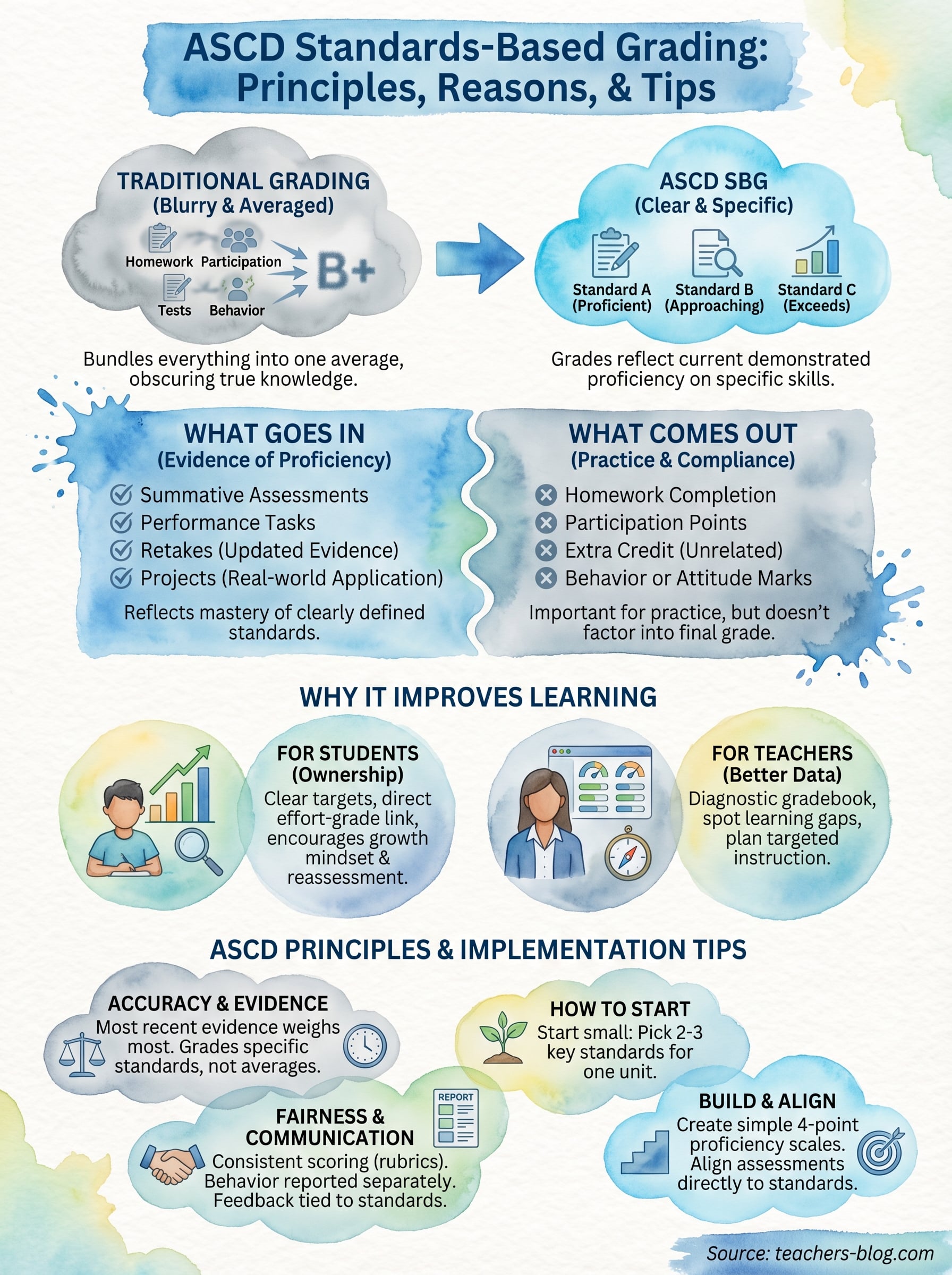
A student earns a B+ in English. What does that actually tell you about what they know or can do? If you’re being honest, not much. That single letter grade bundles together homework completion, participation, test scores, and sometimes even behavior, making it nearly impossible to pinpoint where a student truly stands. This frustration is exactly why ASCD standards based grading has gained serious traction among educators who want grading to mean something.
Standards-based grading (SBG) strips away the noise and focuses on one question: has the student demonstrated proficiency in a specific skill or standard? ASCD, one of the most respected voices in education, has published extensive work on why this shift matters and how teachers can make it happen without losing their minds in the process.
At The Cautiously Optimistic Teacher, we spend our time building practical resources that help educators work smarter, from AI-powered differentiation tools to ready-to-use unit plans. Grading reform fits right into that mission because how you assess students shapes everything else in your classroom. This article breaks down the core principles behind ASCD’s approach to standards-based grading, explains why it leads to better learning outcomes, and offers concrete tips for making the transition in your own practice.
What ASCD means by standards-based grading
ASCD defines standards-based grading as a system where grades reflect what a student knows and can do against a clearly defined set of learning standards, nothing more and nothing less. Rather than blending effort, attitude, attendance, and test performance into a single number, each grade communicates specific information about a student’s progress toward mastery of a particular skill. When you look at ASCD standards based grading through this lens, you’re looking at a fundamentally different relationship between assessment and instruction, one built on accuracy rather than approximation.
A grade should answer one question clearly: has this student demonstrated proficiency in this specific skill?
The core shift in thinking
Traditional grading averages everything together, which means a student who struggled through three early quizzes but later mastered the material still walks away with a lower grade than the learning warrants. ASCD’s framework rejects that logic entirely. What matters is where the student lands at the end, not every stumble along the way. This model treats learning as a process with a destination, so a grade reflects current understanding rather than a statistical average of the whole journey.
That shift changes how you think about retakes, late work, and formative assessment. When a student retakes a quiz and demonstrates mastery, that updated evidence replaces the earlier score because it more accurately represents what the student now knows. You stop punishing growth and start documenting it instead.
What goes in and what comes out
Understanding what counts as grade-worthy evidence sits at the center of the ASCD model. Grades should reflect demonstrated proficiency on clearly stated standards, which means some things teachers traditionally score need to come out of the gradebook entirely. This is often the hardest part for teachers to accept because it requires rethinking tools you may have used for years to motivate students.
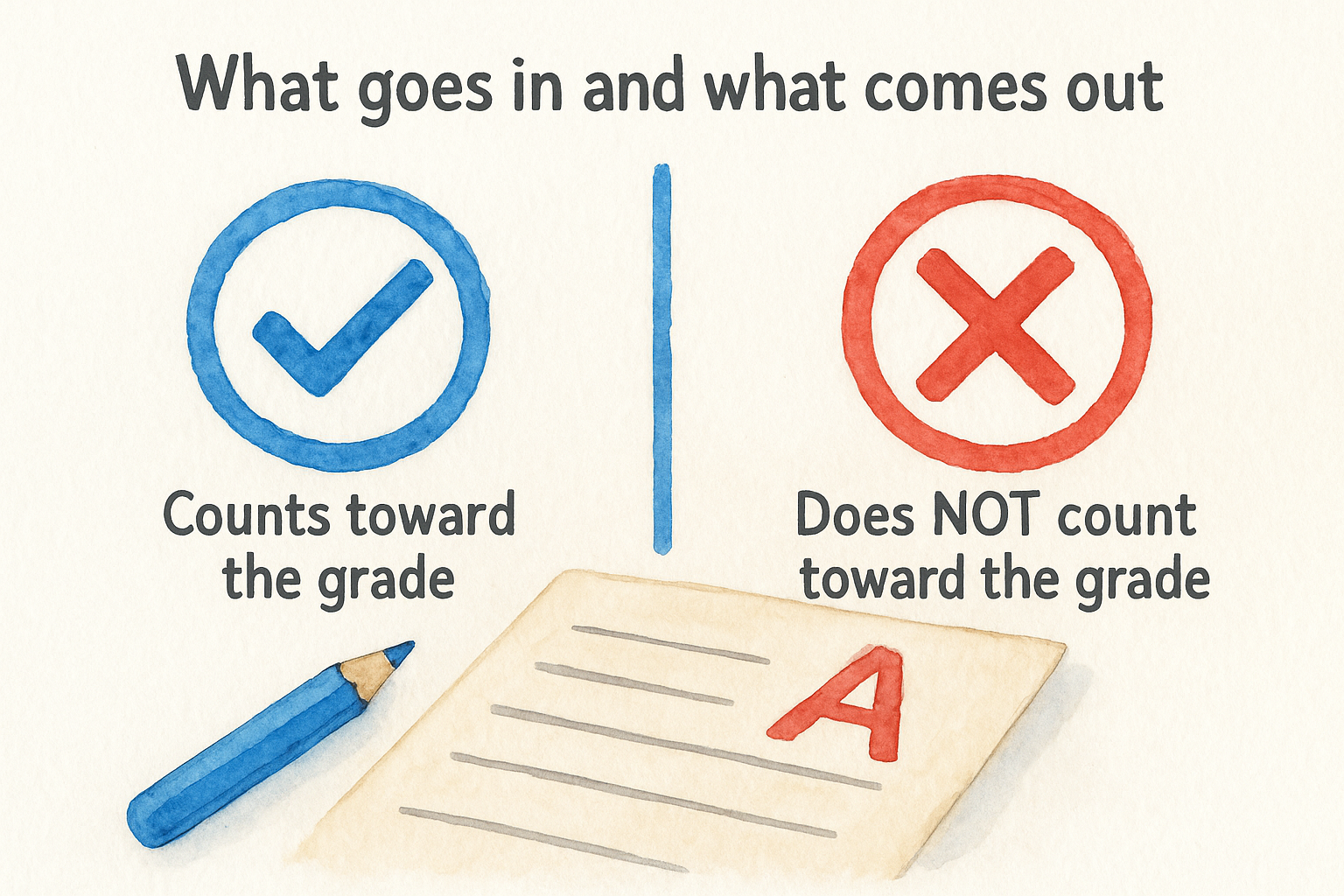
Here is a clear breakdown of what belongs in an SBG gradebook and what does not:
| Counts toward the grade | Does NOT count toward the grade |
|---|---|
| Summative assessments tied to specific standards | Homework completion |
| Performance tasks graded against a standards-aligned rubric | Participation points |
| Retakes that demonstrate updated proficiency | Extra credit unrelated to standards |
| Projects showing real-world application of a standard | Behavior or attitude marks |
This separation is not about lowering expectations. Homework still plays a vital role as practice and formative feedback, but folding it into a final grade distorts the picture of what a student actually understands. ASCD’s core position is that grades should function as honest, accurate signals rather than motivational levers or compliance tools.
Why standards-based grading improves learning
When students understand exactly what they need to demonstrate, they direct their energy far more effectively. Vague grades leave students guessing about what to fix, while a standards-based system tells them precisely where the gap is and what to do about it. That clarity alone produces measurable changes in how students approach their work.
Students take ownership of their progress
With traditional grading, a low score often feels permanent because the average drags everything down. ASCD standards based grading breaks that pattern by making it possible for students to improve a specific skill and see that improvement reflected in their grade immediately. When students know their current score represents their current understanding, they treat reassessment as a real opportunity rather than a lost cause.
Students who see a direct connection between effort on a specific skill and a change in their grade are far more likely to act on feedback.
That shift in mindset matters more than most teachers expect. Students who feel in control of their outcomes engage with feedback, ask targeted questions, and keep working after an initial failure. You end up spending less time managing disengagement and more time teaching the content that matters.
Teachers get better data for instruction
Your gradebook becomes a diagnostic tool rather than just a record of past performance. Each score maps to a specific standard, so when you look across a class, you can immediately spot which skills need reteaching and which students need support. That level of precision simply does not exist when scores from multiple skills blend into a single grade.
Better data leads to stronger instruction decisions, whether you are planning a re-teaching lesson, forming small groups, or adjusting your pacing. The gradebook starts working for you instead of just recording history.
The eight essential principles ASCD emphasizes
ASCD’s work on grading reform does not leave you guessing about what good practice looks like. The organization has identified eight specific principles that form the backbone of any legitimate standards-based system, and together they address the most common ways traditional grading distorts what student achievement data actually tells you.
Principles focused on accuracy and evidence
The first four principles center on making grades accurate and honest reflections of learning. Earlier scores should lose their grip on a student’s final mark as stronger, more recent evidence arrives. Practice work stays separate from summative grades, and extra-credit tasks that do not connect to a standard stay out of the gradebook entirely. These four principles work as a unit:
- Grades reflect specific learning standards, not course averages
- The most recent evidence of learning carries the most weight
- Practice work and homework do not factor into final grades
- Extra credit only counts when it connects directly to a standard
Your gradebook is only useful if it tells the truth about where each student stands right now.
Principles focused on fairness and communication
These final four principles shift toward how you communicate grades and treat students equitably. Scores should stay consistent across teachers assessing the same standard, which requires shared rubrics and regular calibration conversations among your team. Behavior, attitude, and effort belong in a clearly labeled separate category so they never inflate or drag down an academic score. Students need specific, standard-connected feedback rather than vague numbers. The full ascd standards based grading framework also expects you to communicate grade meanings clearly to students and families so everyone understands what proficiency looks like in practice:
- Consistent scoring across teachers using shared rubrics
- Behavior and effort reported separately from academic achievement
- Feedback tied directly to specific standards
- Grade meanings communicated clearly to students and families
How to implement SBG in your classroom
Transitioning to ascd standards based grading does not require a complete overhaul on day one. The most effective approach is a deliberate, staged rollout that lets you test the system in real conditions before committing every course to the new structure.
Start with your standards
Before you touch your gradebook, identify the specific standards you will actually assess in your course. Pull your state or district standards and narrow the list to the ones that genuinely matter for the unit you are teaching next. You do not need to assess every standard with equal depth, so prioritize the skills that students will use most frequently or that serve as foundations for later learning.
Trying to track every standard at once will sink the system before it gets off the ground, so start with a focused, manageable set.
Build a clear proficiency scale
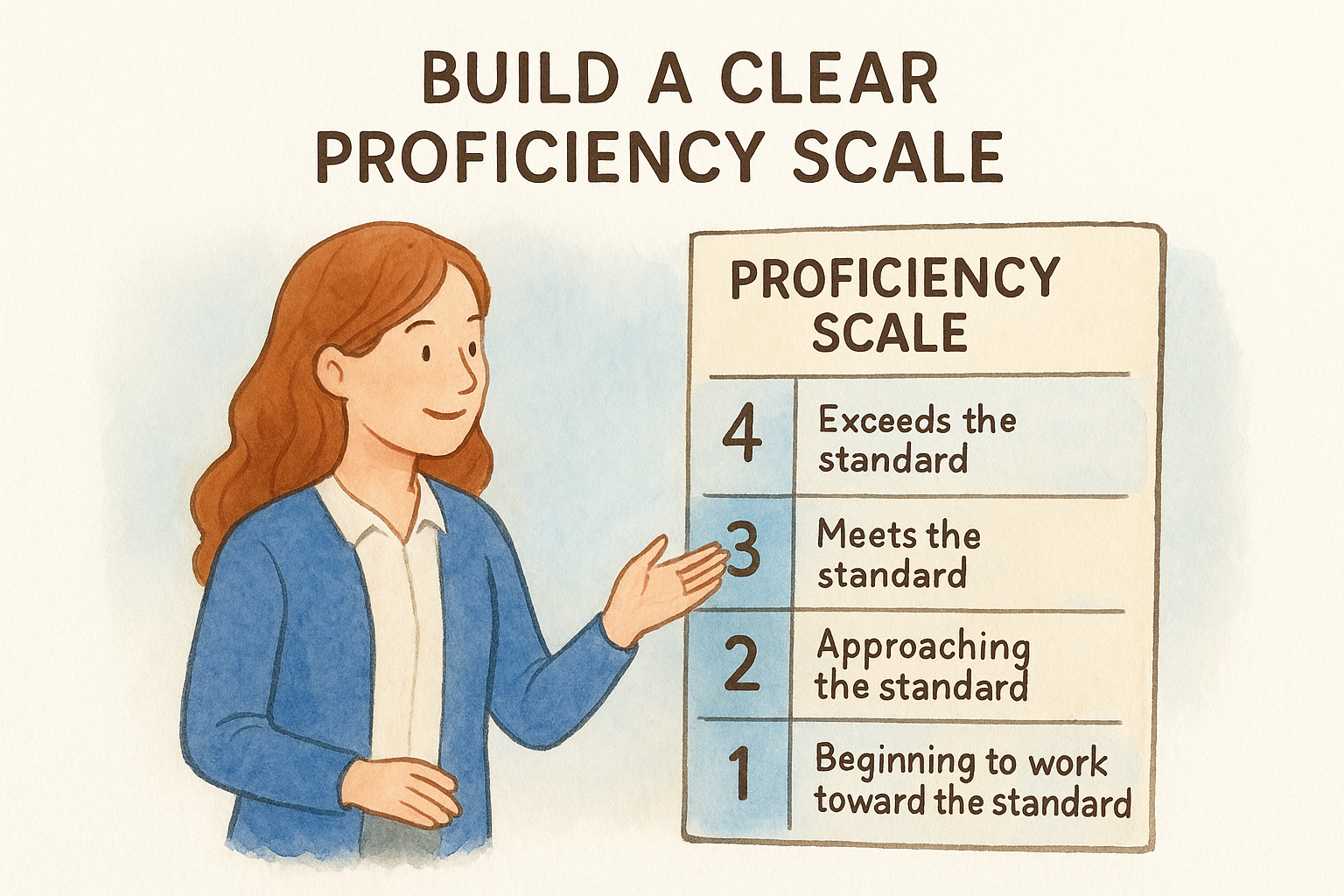
Once you have your priority standards, create a simple four-point proficiency scale for each one so students and families know exactly what each level means. A basic scale works like this:
| Score | What it means |
|---|---|
| 4 | Exceeds the standard with extended application |
| 3 | Meets the standard consistently |
| 2 | Approaching the standard with some support |
| 1 | Beginning to work toward the standard |
Sharing this scale with students before the unit starts removes ambiguity and gives them a concrete target to aim for rather than a mysterious letter grade at the end.
Align your assessments to specific standards
Each assessment you design should connect directly to one or two specific standards, not the entire unit at once. When you score that assessment, record the result under the matching standard in your gradebook rather than folding it into a course average.
Common sticking points and how to handle them
Every teacher who moves toward ascd standards based grading runs into resistance, and most of it comes from the same predictable places. Knowing where pushback typically originates lets you prepare a clear response before the conversation gets uncomfortable.
Parents question why homework doesn’t count
Parents often interpret "homework doesn’t count toward the grade" as teachers lowering expectations, when the reality is the opposite. Your job is to explain that homework still drives learning as practice, the same way an athlete drills before a game, but the final grade reflects game-day performance rather than the practice sessions. A brief, plain-language handout sent home at the start of the year resolves most of this confusion before families see a report card and panic.
- Explain the practice-versus-performance distinction in writing
- Show parents a sample proficiency scale so the scoring feels concrete
- Invite questions early rather than waiting for concerns to build
Students worry about GPA and transcripts
Older students, especially those approaching college applications, get anxious about how proficiency scores translate to letter grades. Most schools that use SBG build a clear conversion scale so proficiency levels map to familiar letter grades on transcripts. Talk to your administration early so you give students accurate answers instead of guesses.
Silence on the GPA question creates more anxiety than the system itself ever would, so address it directly before students assume the worst.
Colleagues resist adopting shared rubrics
Consistent scoring across a team requires calibration conversations that take real time, and not every colleague will prioritize them. Start small by selecting one shared assessment and scoring five student samples together before recording any grades. That single session builds more confidence in the process than any amount of professional development ever will, and it gives hesitant colleagues something concrete to evaluate.
A simple way to start this week
Pick one unit you are teaching right now and write down the two or three standards that matter most in it. Then draft a four-point proficiency scale for each one using the format from earlier in this article. That is your entire starting point. You do not need a new gradebook system, administrative approval, or a department-wide policy shift to begin testing the core logic of ascd standards based grading in your own classroom this week.
Share those proficiency scales with your students before the next assessment and watch how they respond when they see a concrete, specific target instead of a vague percentage. Most teachers who try this report that students start asking sharper questions almost immediately because they finally understand exactly what proficiency looks like. For more tools and strategies that help you work smarter in the classroom, visit The Cautiously Optimistic Teacher and see what is there for you.