Reading Rockets Differentiation: What It Is and How To Apply
Not every student reads at the same level, processes text the same way, or needs the same kind of support, and yet, many literacy lessons still treat the whole class as one. That’s exactly the problem Reading Rockets differentiation addresses. Reading Rockets, a national literacy initiative built on decades of research, offers teachers a practical framework for adjusting instruction so it actually meets students where they are.
Here at The Cautiously Optimistic Teacher, differentiation is central to what we do, from our AI-powered Differentiated Instruction Helper to our tiered unit plans. But understanding the research behind it matters just as much as having the right tools. That’s why we’re breaking down Reading Rockets’ approach to differentiation: what it means, what the research says, and how you can apply it in your own classroom to better reach every reader in front of you.
This article walks you through Reading Rockets’ core principles, specific strategies for literacy instruction, and concrete steps for putting differentiation into practice, whether you’re teaching struggling readers, advanced learners, or everyone in between.
What Reading Rockets means by differentiation
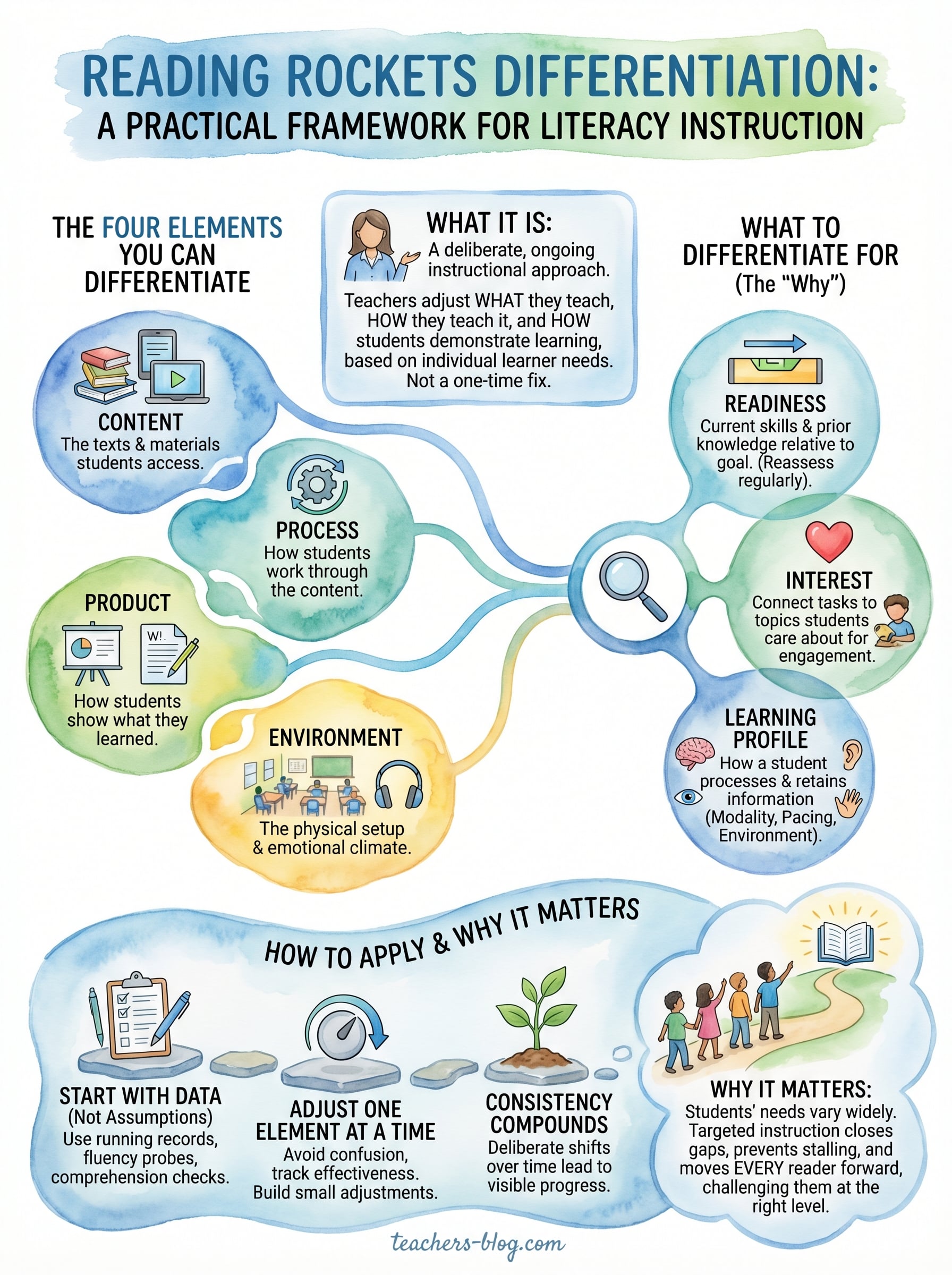
Reading Rockets defines differentiation as a deliberate, ongoing instructional approach where teachers adjust what they teach, how they teach it, and how students demonstrate learning, all based on the individual needs of each learner. It is not a single strategy or a one-time accommodation. It is a responsive teaching model grounded in the idea that students come to you with different backgrounds, reading abilities, and learning profiles, and your instruction needs to respond to that reality rather than ignore it.
Differentiation is not about giving some students less work and others more. It is about giving every student the right kind of work at the right level of challenge.
More than just reading groups
Many teachers associate differentiation with pulling a low group while the rest of the class reads independently. Reading Rockets takes a broader view. According to their research-based framework, true differentiation touches every part of your lesson, from the texts you select to the questions you ask to the way you structure student responses. You can differentiate even during whole-class instruction by varying your questioning, offering strategic prompts, or adjusting the complexity of a follow-up task.
A framework built on what research says about literacy
The reading rockets differentiation framework draws heavily from the science of reading and from decades of classroom research. It recognizes that skills like phonemic awareness, fluency, vocabulary, and comprehension do not develop at the same rate for every student. Teachers who understand where each student falls along those developmental continuums can make smarter instructional choices, ones that close gaps without watering down the learning experience. That foundation in research is what separates this framework from a general "do more for struggling kids" approach and makes it genuinely useful across grade levels and reading contexts.
Why differentiation matters in literacy
Literacy is the foundation for almost everything else students do in school. When students struggle to read or don’t get the right level of challenge, the effects compound quickly across every subject. Reading Rockets differentiation recognizes this reality and gives you a way to respond with intention rather than guesswork, so no student spends the year stuck or unchallenged.
The gap between your strongest and weakest readers often widens each year without targeted instruction, not because students aren’t trying, but because the instruction isn’t meeting them where they are.
Reading development is not a straight line
Students in the same grade can easily span four or more years in reading ability. One student might need help breaking words into syllables while another is ready to analyze an author’s craft. Teaching one fixed lesson to both of them wastes time for each. When you adjust instruction based on where each student actually is, you move everyone forward more efficiently.
The cost of one-size-fits-all instruction
Struggling readers who receive undifferentiated instruction often fall further behind each year, while advanced readers coast without building new skills. Your classroom holds a wide range of learners, and picking a middle ground and hoping it works is not a strategy. Differentiation gives you a concrete way to serve that full range at the same time.
The four elements you can differentiate
Reading Rockets differentiation centers on four adjustable elements you can apply to any literacy lesson. Rather than changing everything at once, targeting specific elements lets you respond precisely to what different students need at any given point in your instruction.
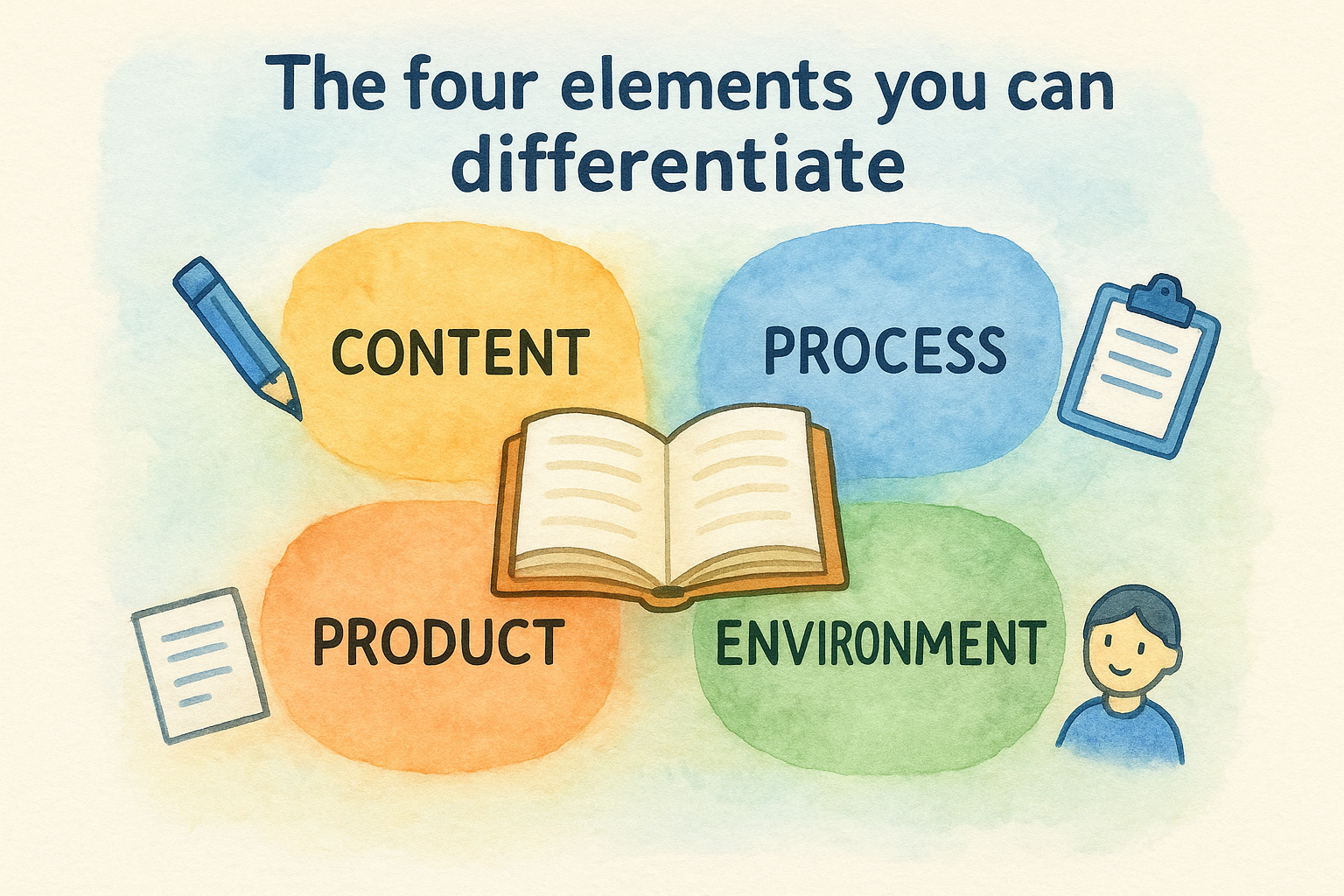
Knowing which element to adjust, and when, is what separates thoughtful differentiation from simply giving some students easier work.
| Element | What you adjust |
|---|---|
| Content | The texts and materials students access |
| Process | How students work through the content |
| Product | How students show what they learned |
| Environment | The physical setup and emotional climate |
How the elements work together
These four elements are not meant to be used in isolation. Content and process often pair naturally: a student reading a leveled text may also need a graphic organizer to guide their thinking. Product and environment adjustments can remove barriers that have nothing to do with reading ability and everything to do with how a student works best.
You do not need to differentiate all four in every lesson. Adjusting even one element intentionally can shift learning outcomes for a student who has been stuck, which is the real practical power this framework puts in your hands as a classroom teacher.
What to differentiate for: readiness, interest, profile
Reading Rockets differentiation asks you to look at three student characteristics before adjusting instruction: readiness, interest, and learning profile. Knowing each one helps you decide which element to change and why.
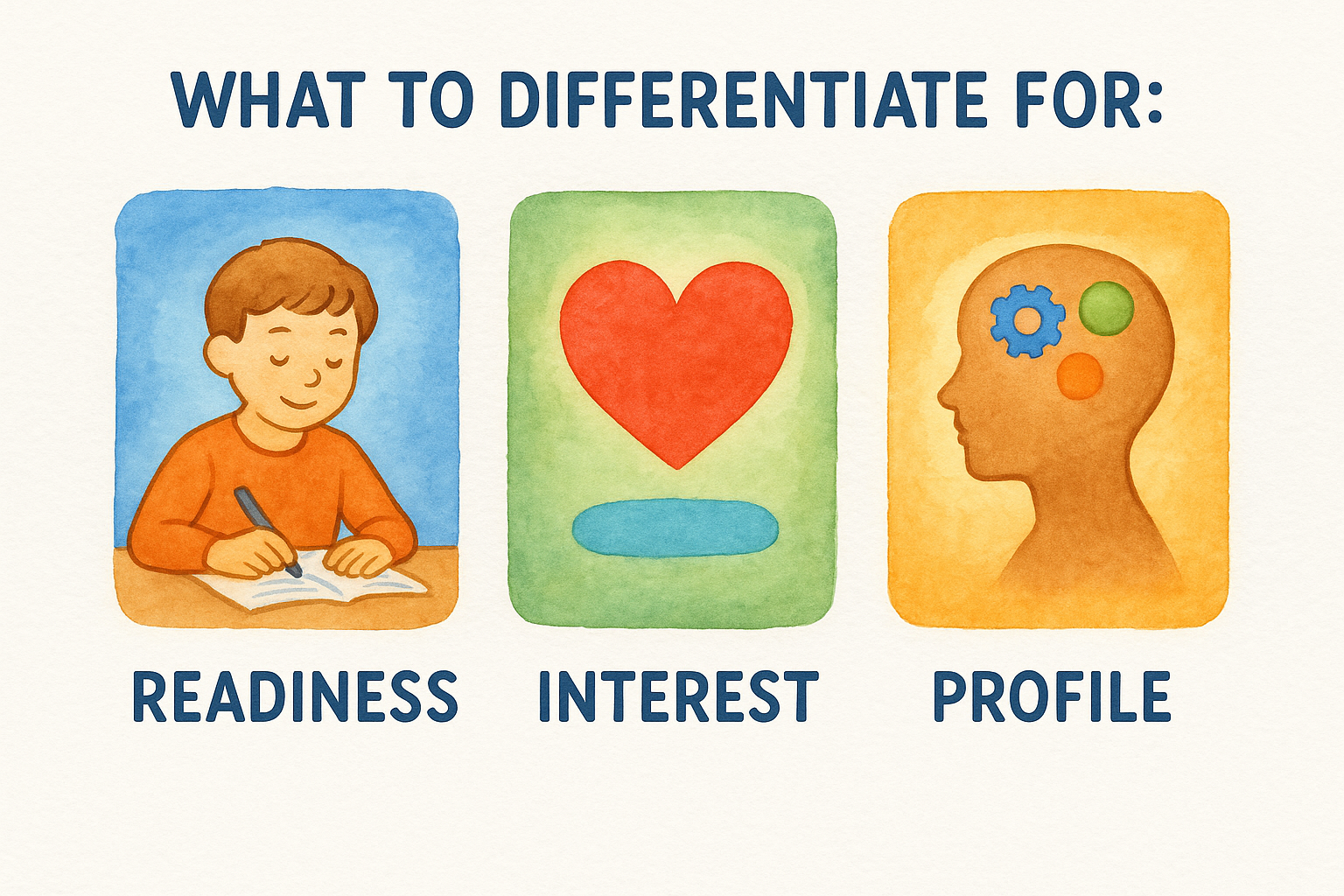
Adjusting instruction without knowing which student characteristic you’re responding to is like prescribing medicine without a diagnosis.
Readiness
Readiness describes where a student currently stands in skills and prior knowledge relative to your learning goal. Reassess it regularly using exit tickets or quick oral checks, since it shifts faster than most teachers expect.
Track readiness at two levels: what a student already knows and what they need next with the right support behind them.
Interest
Student interest drives engagement more than many teachers expect. When you connect reading tasks to topics students care about, comprehension and effort both increase. Differentiating for interest does not mean dropping your curriculum goals; it means routing those goals through content students actually want to engage with.
Learning Profile
Learning profile describes how a student processes and retains information most effectively. Adjusting for profile removes barriers that have nothing to do with reading ability.
- Modality: visual, auditory, or kinesthetic input preferences
- Pacing: how quickly a student moves through new material
- Environment: noise level, seating arrangement, or grouping needs
How to apply it in reading instruction
Putting reading rockets differentiation into practice starts before you ever write a lesson plan. You need current, specific data on what your students can and cannot do in literacy before you can make any useful instructional adjustments.
Your assessment data is the map. Without it, differentiation is just guessing with extra steps.
Start with data, not assumptions
Running records, fluency probes, and quick comprehension checks give you the clearest picture of where each student stands right now. Review that data by skill area, not just by overall reading level, so you know exactly which gap to address first.
- Check phonics and decoding for students reading below grade level
- Check fluency rates to identify pacing barriers
- Check vocabulary knowledge before introducing complex texts
Adjust one element at a time
Once you have your data, pick one element from the four to adjust for your next lesson. Changing everything at once creates confusion for students and makes it harder to track what is actually working.
Your goal is to build a pattern of small, targeted adjustments over time. That consistency compounds, and students who previously felt invisible in your lessons start making visible progress.
A simple plan you can use tomorrow
The reading rockets differentiation framework does not require you to overhaul your entire curriculum overnight. Start with one reading lesson this week and identify which of the four elements you will adjust based on your most recent student data.
Pick two or three students whose data already tells you something specific, such as a fluency gap or vocabulary deficit. Adjust content or process for those students in your next lesson. Track whether the adjustment changes their engagement or output.
From there, build one small adjustment per week until differentiation becomes part of how you plan by default. Every deliberate shift you make toward meeting students where they are adds up over a school year into real, measurable gains.
For more tools to help you act on this framework right away, explore the differentiated instruction resources at The Cautiously Optimistic Teacher. You will find practical, ready-to-use tools that make this easier to put into practice starting tomorrow.