
8 Questions To Ask During A Teacher Interview (And Why)
You prepared your answers. You rehearsed your demo lesson. You picked out the right outfit. Then the interviewer asks, "Do you have any questions to ask during a teacher interview?", and suddenly, your mind goes blank.
That moment matters more than most candidates realize. The questions you ask reveal just as much about you as the answers you gave throughout the entire interview. They signal whether you’ve done your homework, whether you’re genuinely interested in the school, and whether you’re thinking beyond just landing the job.
But here’s what often gets overlooked: this is also your chance to interview them. You’re about to spend 40+ hours a week in this building. You deserve to know what you’re walking into, the culture, the support systems, the expectations. At The Cautiously Optimistic Teacher, helping educators navigate every stage of their career is core to what we do, and that includes making sure you walk into interviews fully prepared on both sides of the conversation.
Below, you’ll find eight specific questions worth asking, and more importantly, why each one matters. These aren’t generic filler questions. They’re designed to help you stand out as a thoughtful candidate and make a genuinely informed decision about your next school.
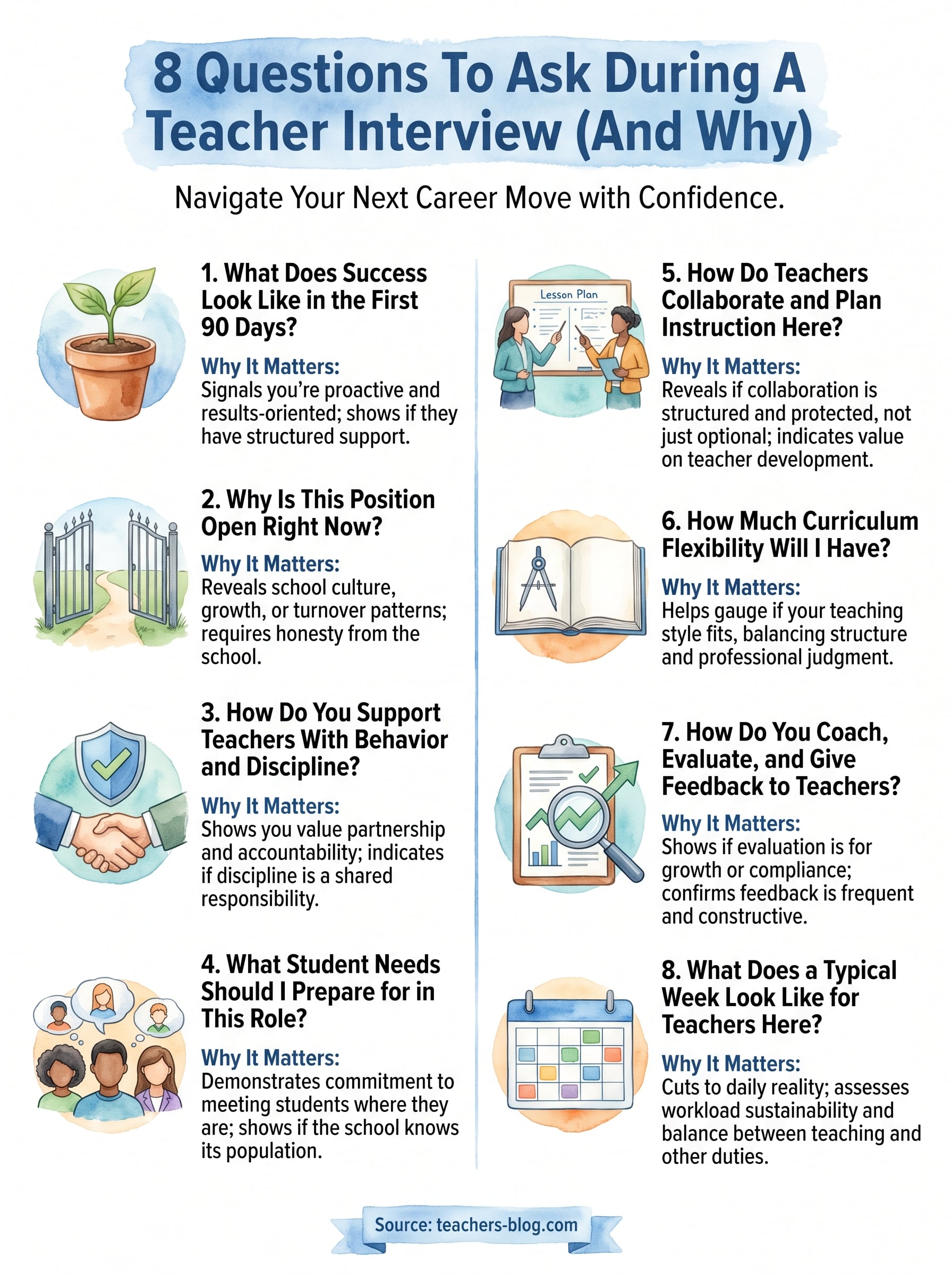
1. What Does Success Look Like in the First 90 Days?
Asking about the first 90 days is one of the most strategic questions to ask during a teacher interview. It immediately shifts the conversation from hypothetical to practical, showing the hiring team that you’re already thinking about how you’ll contribute from day one, not just whether you’ll get the job.
Why This Question Works
This question does two things at once. It signals that you’re results-oriented and proactive, and it gives you real information about what the school actually prioritizes. A school that values teacher growth will have a clear, thoughtful answer. One that doesn’t often struggles to articulate expectations beyond "get to know your students," which tells you something important about the level of structure and support you can expect.
The clearer a school can describe its expectations for new teachers, the more likely it is to have the systems in place to actually support you.
What a Helpful Answer Includes
A strong answer will typically cover specific benchmarks like building relationships with students and families, learning the school’s routines and procedures, and understanding the curriculum pacing for your grade or subject. You want to hear language about onboarding support, such as a mentor teacher, an orientation process, or regular check-ins with an instructional coach or department head. These details tell you the school has thought carefully about how to bring new staff into the community.
Red Flags to Listen For
Be cautious if the interviewer seems surprised by the question or gives a vague answer like "just get settled in." That kind of response suggests little structured support for new hires. You should also pay attention if the answer focuses entirely on paperwork, compliance, or test scores without any mention of relationship-building or professional development. Schools that skip the human side of onboarding often have higher turnover, and you deserve to know that before you accept an offer.
Smart Follow-Ups to Ask
If the answer feels solid, you can push a little deeper. Try asking "Who will I go to with questions during those first few weeks?" or "Is there a formal mentoring program for new teachers?" These follow-ups help you understand whether the support they’re describing is structured and consistent or informal and dependent on whoever happens to be nearby.
2. Why Is This Position Open Right Now?
This is one of the most direct questions to ask during a teacher interview, and it often catches hiring teams off guard. The reason a position is open tells you a lot about what you’re stepping into, whether that’s a growing school, a healthy retirement, or a revolving door of frustrated staff.
Why This Question Works
Asking this question shows you’re thinking critically about the role rather than just chasing any available opening. It also puts the school in a position to be transparent with you, which is exactly what you need before making a major career decision.
A school’s willingness to answer this question honestly is itself a signal about how openly they communicate with staff.
What a Helpful Answer Includes
A good answer is specific and straightforward. You want to hear things like a teacher retired, the school added a new section, or enrollment grew. These are healthy, natural reasons. You should also hear the hiring team speak positively about the previous teacher or acknowledge the growth that created the need.
Red Flags to Listen For
Be cautious if the interviewer deflects, gets vague, or says something like "it just didn’t work out." High turnover in a single role is worth paying attention to. If a position has been filled and refilled in two or three years, that pattern usually points to a management or culture issue, not bad luck.
Smart Follow-Ups to Ask
Try asking "How long was the previous teacher in this role?" or "How many people have held this position in the last five years?" Both questions give you concrete data to evaluate.
3. How Do You Support Teachers With Behavior and Discipline?
Classroom behavior is one of the biggest challenges new teachers face, and the level of administrative backup you get can make or break your first year. Including this among your questions to ask during a teacher interview shows you’re realistic about what teaching involves and that you’re looking for a school that takes shared responsibility seriously.

Why This Question Works
This question shifts the conversation toward partnership and accountability. Schools that have strong behavior support systems are usually willing to describe them in detail, while schools that leave teachers to handle everything alone tend to respond with vague generalizations about classroom management.
The way an administrator talks about discipline reveals whether they see behavior as a teacher problem or a school-wide responsibility.
What a Helpful Answer Includes
A strong answer will reference clear, school-wide behavior expectations and a consistent system that all staff follow. You want to hear about specific supports like a student support team, a restorative practices framework, or an administrator who responds quickly when a classroom situation escalates beyond what you can manage alone.
Red Flags to Listen For
Watch out for answers that put all the responsibility back on you, such as "great teachers don’t really have behavior issues." That kind of response signals a culture where teachers are blamed rather than supported. Be equally cautious if there’s no clear process for escalating serious situations.
Smart Follow-Ups to Ask
Try asking one of these to push past policy and into practice:
- "What happens when a student’s behavior is disrupting the learning environment?"
- "Who do I contact when I need immediate backup in my classroom?"
4. What Student Needs Should I Prepare for in This Role?
Understanding your incoming students before you start is one of the most practical questions to ask during a teacher interview. Schools that know their student population well will answer this confidently, and the details they share help you hit the ground running rather than spending weeks figuring out the landscape on your own.
Why This Question Works
This question shows interviewers that you’re thinking beyond lesson plans and already considering the real people in your classroom. It also signals that you understand teaching means meeting students where they are, not just delivering content and hoping it lands.
The more specific a school’s answer, the better prepared you’ll be to actually serve those students from day one.
What a Helpful Answer Includes
A strong answer gives you concrete details about the student population, including the percentage of students with IEPs or 504 plans, English language learners, students experiencing poverty, or those with trauma histories. You also want to hear about existing support staff like special education co-teachers, reading specialists, or school counselors who will work alongside you in the classroom.
Red Flags to Listen For
Be cautious if the answer is overly generic, such as "we have all kinds of kids." That response suggests the school hasn’t given much thought to differentiation or structured support. Watch out too if no support staff are mentioned at all, because that often means you’ll be navigating complex student needs largely on your own.
Smart Follow-Ups to Ask
Push deeper with these targeted questions:
- "What percentage of students in this role have IEPs or 504s?"
- "Will I have co-teaching or push-in support for students with disabilities?"
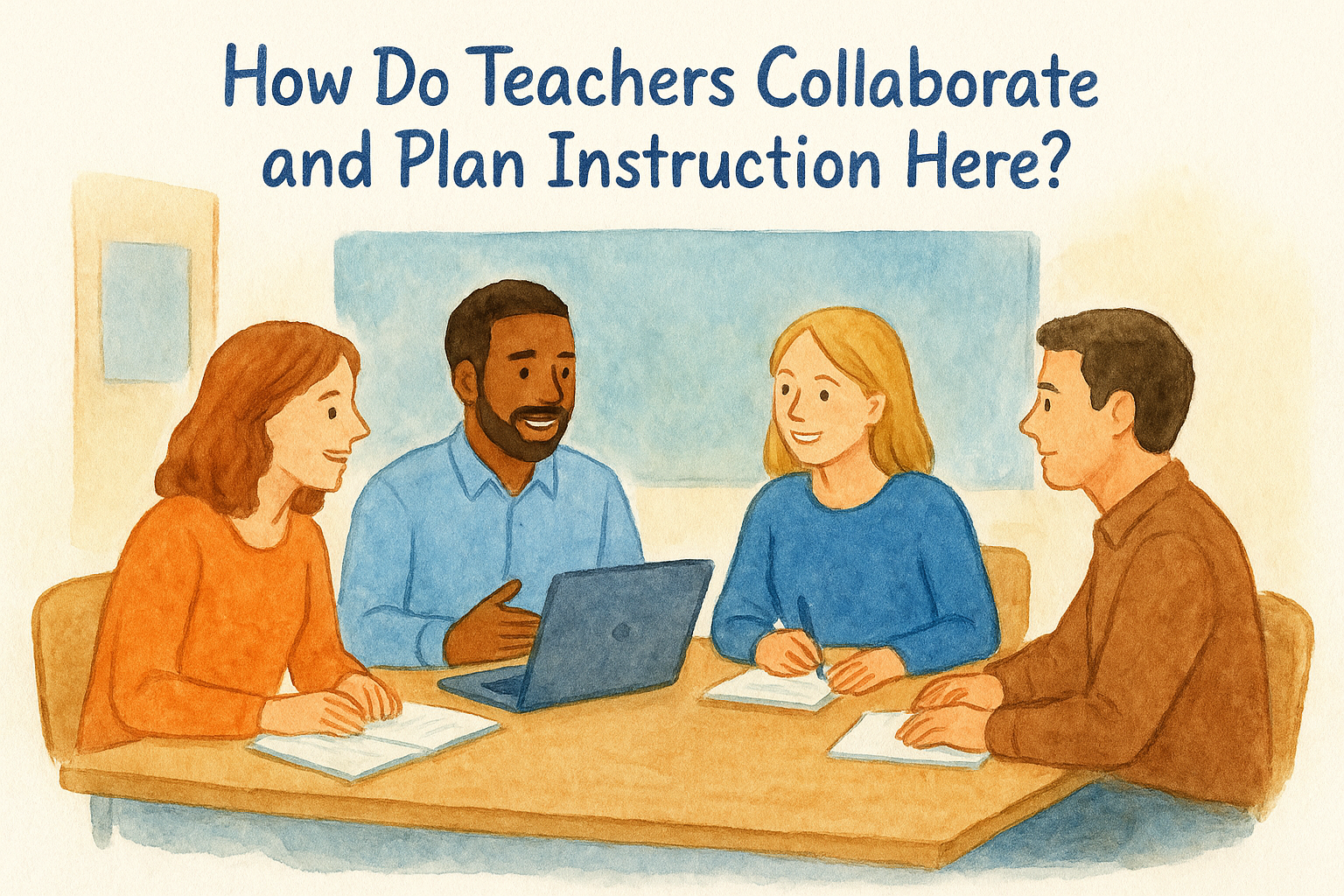
5. How Do Teachers Collaborate and Plan Instruction Here?
Teaching doesn’t happen in isolation, and how a school structures teacher collaboration tells you a lot about its culture. This is one of the most telling questions to ask during a teacher interview because it reveals whether teachers are treated as professionals with shared goals or as isolated workers expected to figure everything out on their own.
Why This Question Works
This question reveals whether the school invests time and structure into professional collaboration or leaves teachers to coordinate between classes on their own. Schools that take instruction seriously build dedicated planning time into the schedule, and they’ll describe it clearly when you ask.
What a Helpful Answer Includes
A strong answer will describe specific structures like weekly common planning periods, professional learning communities, or regular department meetings with a clear instructional focus. You want to hear that collaboration time is protected, meaning it isn’t routinely pulled for testing, coverage duty, or administrative announcements.
Scheduled, protected collaboration time is one of the clearest signs that a school treats teacher development as a real priority.
Red Flags to Listen For
Watch out for answers that describe collaboration as informal or optional, such as "teachers touch base when they can." That usually means you’re on your own. Be equally cautious if the answer focuses entirely on data review meetings without mentioning shared lesson planning or instructional strategy work.
Smart Follow-Ups to Ask
Use these to understand the day-to-day reality beyond what the interview script offers:
- "How often do grade-level or department teams meet to plan together?"
- "Is planning time built into the school day, or does it happen before and after school?"
6. How Much Curriculum Flexibility Will I Have?
Understanding how much autonomy you’ll have over your curriculum is one of the more practical questions to ask during a teacher interview. Some schools hand you a scripted program and expect you to follow it page by page, while others give you standards and expect you to build units from scratch. Knowing where this school falls on that spectrum helps you gauge whether your teaching style will fit the environment.
Why This Question Works
This question tells you whether you’ll be treated as a professional making instructional decisions or a technician executing someone else’s plan. Teachers who thrive with structure will want to hear about a clear, supported curriculum. Teachers who prefer to design their own materials need to know that creative freedom is actually available before they accept an offer.
The honest answer to this question will save you from a mismatch that drains your energy all year.
What a Helpful Answer Includes
A strong answer describes what’s required versus what’s flexible, including whether you follow a purchased program, how closely pacing guides are enforced, and whether you can supplement with your own materials. You want to hear that student needs and teacher judgment play a role in how instruction gets adjusted.
Red Flags to Listen For
Be cautious if the answer swings to either extreme: complete rigidity with no room for professional judgment, or so little structure that you’d have no support or shared resources at all.
Smart Follow-Ups to Ask
- "Are teachers expected to follow a scripted curriculum?"
- "How much time do teachers spend creating their own materials versus using provided resources?"
7. How Do You Coach, Evaluate, and Give Feedback to Teachers?
Knowing how you’ll be observed and evaluated before you step into the building is one of the most overlooked questions to ask during a teacher interview. The feedback process shapes your professional growth more than almost anything else in a school, and you deserve to know what that system actually looks like.
Why This Question Works
This question reveals whether the school treats evaluation as a growth tool or a compliance exercise. Schools with strong instructional leadership can describe their observation and feedback process with confidence, because they use it consistently and purposefully.
A school that struggles to explain how it supports teacher growth will also struggle to help you improve once you’re there.
What a Helpful Answer Includes
A strong answer covers both formal and informal feedback cycles, including how often you’ll be observed, who conducts evaluations, and how post-observation conversations are structured. You want to hear that feedback is specific and timely, not just a checklist delivered weeks after someone spent 10 minutes in your room.
Red Flags to Listen For
Watch out for answers that describe evaluation as a once-a-year event with little ongoing coaching in between. Be equally cautious if the answer focuses entirely on compliance and ratings without any mention of professional development conversations or instructional coaching.
Smart Follow-Ups to Ask
Push the conversation further with these targeted questions:
- "How often will I be formally observed?"
- "Is there an instructional coach on staff who works directly with classroom teachers?"
8. What Does a Typical Week Look Like for Teachers Here?
This is one of the most grounding questions to ask during a teacher interview because it cuts through the polished pitch and gets to daily reality. How a school describes a typical week reveals whether the workload is sustainable, whether non-instructional demands are reasonable, and whether teachers have enough time to actually teach.
Why This Question Works
Most interviews focus on vision and values, but this question pulls the conversation into concrete, practical territory. It shows you’re thinking seriously about fit and sustainability, not just whether you can get the job.
A school that can describe a typical teacher week in specific terms is a school that pays attention to what it asks of its staff.
What a Helpful Answer Includes
A strong answer covers how instructional time, prep periods, meetings, and duties are distributed across the week. You want to hear that planning time is protected, that meetings have a clear purpose, and that after-school commitments are reasonable and predictable rather than piled on without notice.
Red Flags to Listen For
Watch out for answers that normalize excessive workload as a sign of dedication, such as "our teachers are really committed, so they put in the extra hours." Be equally cautious if the answer includes a long list of standing duties, mandatory evening events, or meetings that eat into prep time on a regular basis.
Smart Follow-Ups to Ask
- "How many non-instructional duties are typically assigned per week?"
- "How often do teachers have evening or weekend school commitments?"
Go Into Your Interview Ready
The questions to ask during a teacher interview you bring to that final moment matter. They signal that you’ve thought critically about the role, that you value your own working conditions, and that you’re approaching this as a two-way decision, not just a performance. Every question in this list gives you real information while reinforcing your credibility as a candidate worth hiring.
Walking in prepared also means walking in confident. When you know what to ask and why each question matters, you stop dreading that final moment and start using it to your advantage. Schools that are worth working for will welcome the conversation.
For more strategies to strengthen your teaching career at every stage, from landing the right job to growing inside the classroom, visit The Cautiously Optimistic Teacher. You’ll find resources built specifically for educators who take their professional development seriously.