
13 Critical Thinking Activities for Students That Work
You can spot the students who default to "I don’t know" the second a question requires more than recall. They wait for you to hand them the answer instead of working through it themselves. That’s the gap critical thinking activities for students are built to close, and it’s one most curriculum guides gloss over in favor of content coverage, no matter which subject you teach, as these classroom activities for critical thinking in any subject show.
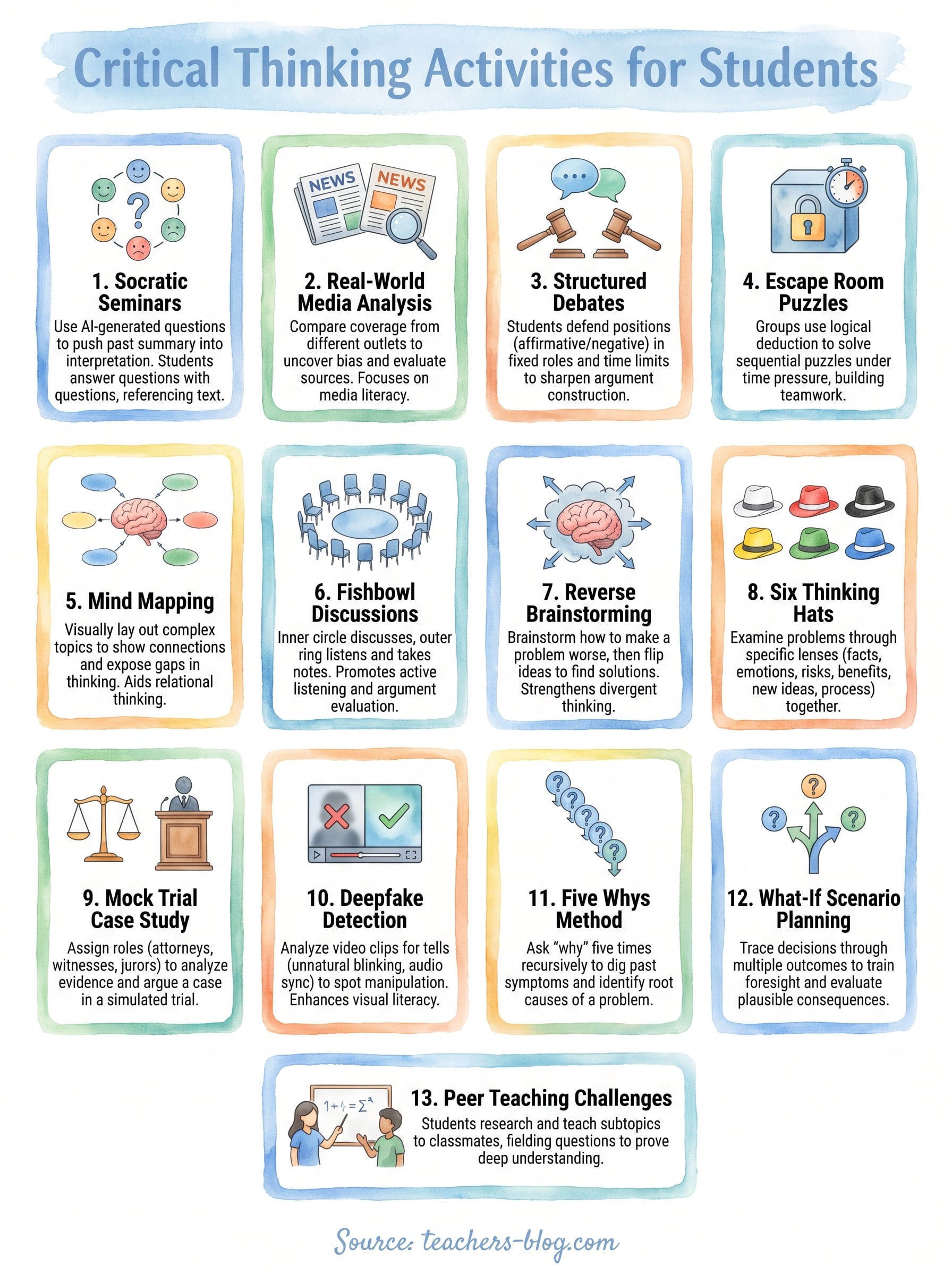
This list skips the theory and gets straight to what you can run in class tomorrow. You’ll find structured debates, evidence-based arguments, and puzzle-style exercises that force students to justify their reasoning instead of guessing. Each activity below works with minimal prep and fits into a normal 45 to 50 minute period, whether you teach middle school or high school.
Below you’ll get 13 classroom-tested activities, from Socratic seminars to case-study analysis, each with a quick rundown of how to set it up and what skill it targets. If you’re also working on getting students to think independently outside of these activities, pair them with our Brain Builders Workshop resources on teaching growth mindset, since critical thinking sticks best when students already believe their effort can improve their reasoning.
1. Turn any lesson into a Socratic seminar with AI-generated questions
A Socratic seminar works because students answer questions with more questions, not with a single correct fact. The trouble is that writing genuinely open-ended, layered questions for every unit takes real time, and most teachers default to the same three prompts they used last year. That’s where an AI tool that generates critical thinking questions earns its keep. Feed it a reading passage, a primary source, or even a paragraph from a textbook, and it produces a tiered set of questions that push past summary and into interpretation and evaluation.
How it works
Start by uploading or pasting the text your class just read into a question generator tool built for classroom use, like our classroom question generator. Ask it for questions across three levels: clarifying, probing, and challenge questions that require students to defend a position. Print or project six to eight of the strongest ones, then arrange desks in a circle so every student can see every other student. Open with the lowest-stakes question, let the discussion run without you jumping in to correct wrong turns, and only redirect if the conversation stalls completely.
The best Socratic seminars feel like the teacher has left the room, because the questions are doing the work instead of you.
Critical thinking skills it builds
Students practice evidence-based reasoning because a Socratic seminar has one hard rule: you can’t just state an opinion, you have to point back to the text. They also build active listening, since a good response references what a classmate said two turns earlier, not just the original prompt. Over several sessions, students get noticeably faster at spotting when a peer’s argument doesn’t actually match the evidence they cited.
Best grade levels
This format works from 6th grade through 12th, though the question complexity should shift. Middle schoolers do best with concrete clarifying questions and one challenge question. High schoolers can handle a seminar built almost entirely around probing and challenge-level prompts.
Time and materials needed
Plan for a full 45 to 50 minute period once questions are ready. Generating the questions themselves takes under ten minutes with an AI tool, versus 30 or more writing them by hand. You’ll need the reading material, a printed question set, and a room where you can form a circle.
2. Uncover bias with real-world media analysis
Students scroll past dozens of headlines a day without ever asking who wrote them or why. This activity forces that pause. You hand students two or three news articles covering the same event from different outlets, and they hunt for the gaps: what’s included, what’s left out, and what word choices tilt the story one way. It’s one of the more practical critical thinking exercises for students because it uses material they already consume, not a textbook excerpt written for a classroom.
How it works
Pick a recent, low-stakes news event and pull coverage from three outlets with different editorial slants. Give students a simple comparison chart with rows for headline tone, sources quoted, facts included, and facts omitted. Let them fill it out in pairs, then bring the class together to argue which version felt most balanced and why.
A student who can name the bias in a news article stops accepting the first version of any story as the whole story.
Critical thinking skills it builds
This activity sharpens media literacy and source evaluation, two skills students rarely practice deliberately outside of a research paper or a lesson on evaluating web sources. They also learn to separate factual claims from framing, which carries directly into how they read anything, including their own textbooks.
Best grade levels
Works well from 7th grade up. Younger students need simpler articles and more scaffolding on the comparison chart; high schoolers can handle denser political or economic coverage.
Time and materials needed
Budget one class period, roughly 40 minutes. You need printed or linked articles and the comparison chart, nothing else.
3. Run structured debates on controversial topics
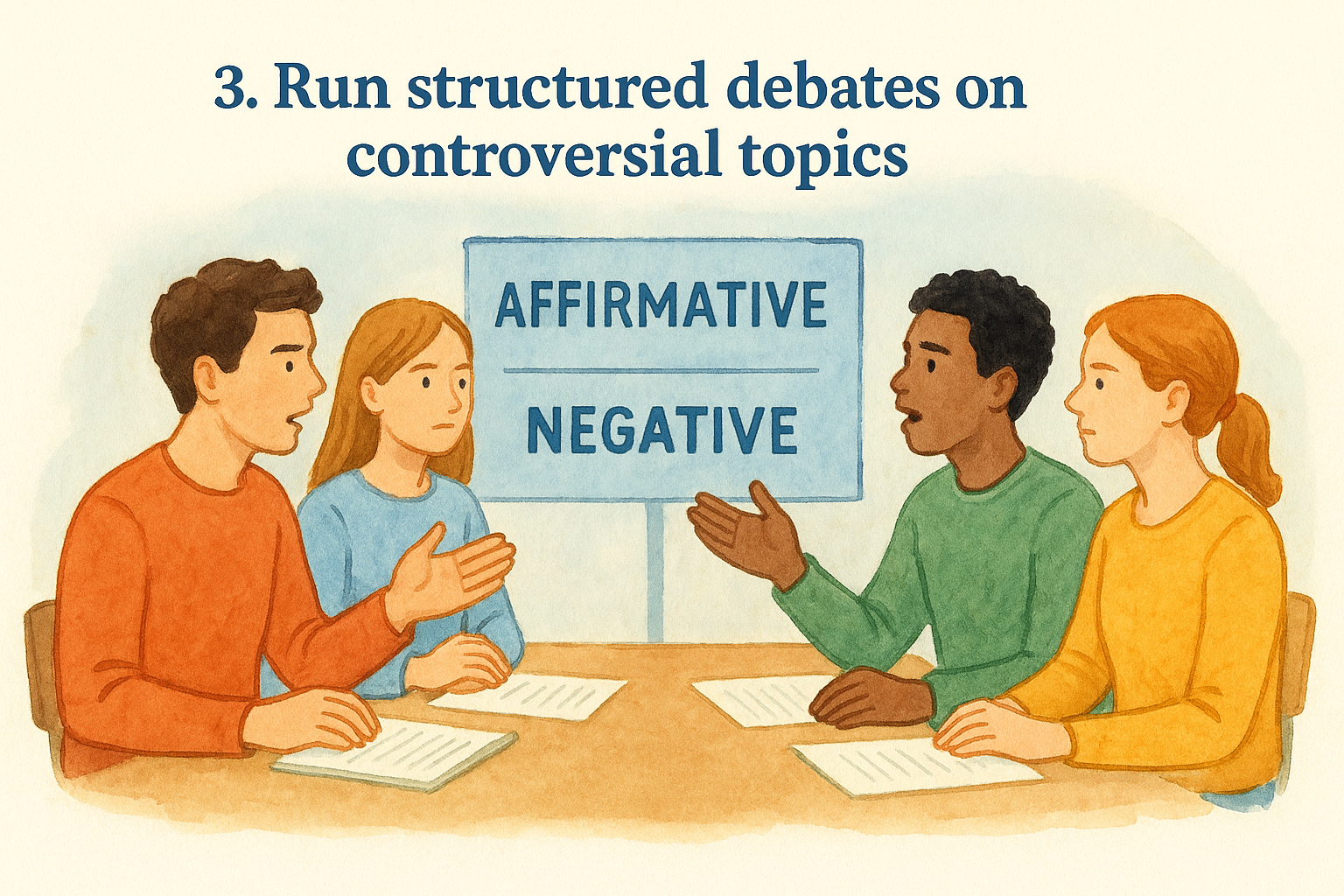
Nothing forces a student to organize their thinking faster than knowing they have to defend it in front of peers who disagree. Structured debates work because they remove the option of a vague middle ground; students pick a side, build a case, and answer a rebuttal in real time. Unlike open class discussion, the format itself does the discipline for you, since every speaker gets a fixed role and a time limit.
How it works
Assign a debatable, age-appropriate topic (school uniforms, social media age limits, a historical decision) and split the class into affirmative and negative teams. Give each side 15 minutes to build three arguments with supporting evidence, then run a simple format: opening statement, one rebuttal round, closing statement, two minutes per speaker. Rotate roles each round so quieter students also get a turn presenting.
A student who has to argue a position they don’t personally hold learns to separate a good argument from a comfortable opinion.
Critical thinking skills it builds
Debate sharpens argument construction and counterargument analysis, since students must anticipate what the other side will say before they say it. It also builds composure under pressure, a skill that transfers directly to argumentative essay writing and standardized test responses that ask students to defend a claim.
Best grade levels
This works from 6th grade through 12th grade. Younger students need a simpler topic and a strict script; high schoolers can handle open cross-examination rounds.
Time and materials needed
Plan for one full period, roughly 45 minutes, plus 10 minutes of prep time before class if you assign topics in advance. You need a topic list, a timer, and a printed format sheet for each team.
4. Build logic and teamwork with escape room puzzles
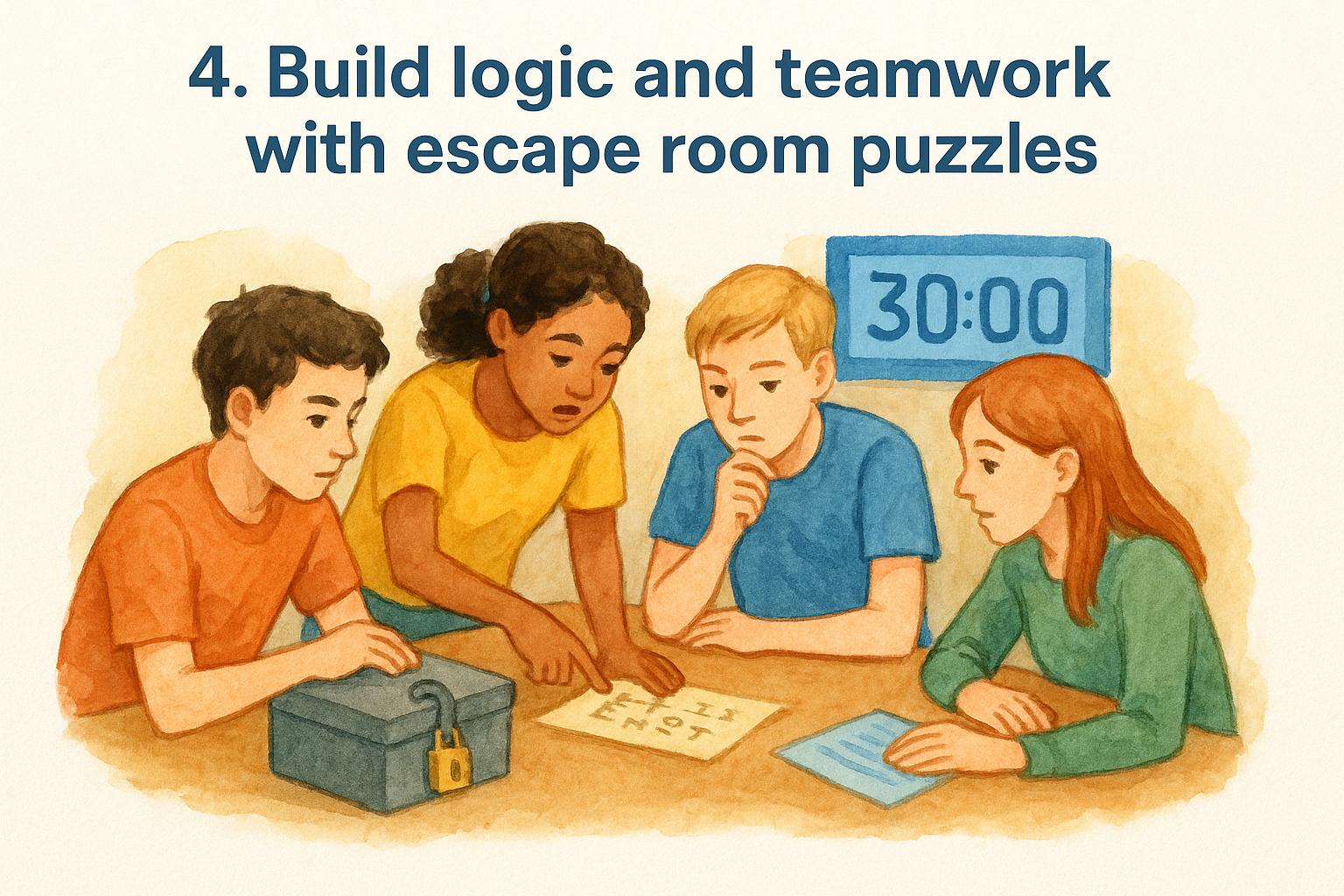
Give a group of students a locked box and a countdown clock, and watch how fast they stop guessing and start reasoning. Classroom escape rooms work because the puzzles only yield to logical deduction, not luck, and the time pressure keeps students from checking out. This is one of the more memorable critical thinking activities for students because nobody wants to be the group that didn’t crack the final lock.
How it works
Build a chain of three or four puzzles around your current unit, a cipher tied to vocabulary, a riddle that needs a math calculation, a hidden note that only makes sense after solving the previous clue. Groups of four work best. Each solved puzzle unlocks the next clue, either physically with a padlock or digitally through a form that reveals the next step. Set a 30 minute timer and let groups fail without hints for the first ten minutes.
The group that argues the most before touching a single clue usually finishes first, because they’ve already agreed on a strategy.
Critical thinking skills it builds
Students practice sequential logic and collaborative problem solving, since no single student usually holds every piece needed to solve a puzzle. They also learn to test a hypothesis quickly, discard it if it fails, and move to the next idea instead of getting stuck defending a wrong guess.
Best grade levels
This fits 5th grade through 10th grade well. Younger students need simpler ciphers; middle and early high school groups can handle multi-step puzzles that combine subjects.
Time and materials needed
Plan one class period for the puzzle itself, plus an hour of setup the first time you build one. You’ll need:
- Padlocks or a free digital lock tool
- Printed clue cards
- A prop box or hidden envelope
- A countdown timer visible to all groups
5. Map out complex problems with mind mapping
Some problems are too tangled for a straight list. Mind mapping gives students a way to lay out every piece of a complex topic on one page, then draw the connections that a linear outline hides, the same approach behind our career exploration mind map lesson. It’s one of the simpler critical thinking exercises for students to introduce, since most students already doodle connections between ideas without realizing that’s what they’re doing.
How it works
Put a central question or concept in the middle of the board or a blank page, something like "causes of the French Revolution" or "themes in the novel." Students branch out with related ideas, then branch again from those ideas with supporting details, examples, or contradictions. Color coding helps: one color for causes, another for effects, another for open questions they still can’t answer. Give them 20 minutes to build the map individually, then pair up to compare and add branches they missed.
A mind map exposes the gaps in a student’s thinking faster than any quiz, because a missing branch is impossible to hide.
Critical thinking skills it builds
This activity strengthens relational thinking, the skill of seeing how ideas connect rather than treating them as isolated facts. Students also practice categorization, since sorting details into causes, effects, and open questions forces them to evaluate what kind of claim each detail actually is.
Best grade levels
Mind mapping works from 4th grade all the way through high school. Younger students need a simpler central question and fewer branch levels; older students can map genuinely multi-layered topics like economic systems or literary themes.
Time and materials needed
Budget 30 to 35 minutes total. You need blank paper or a whiteboard, colored markers, and nothing else.
6. Deepen listening skills with a fishbowl discussion
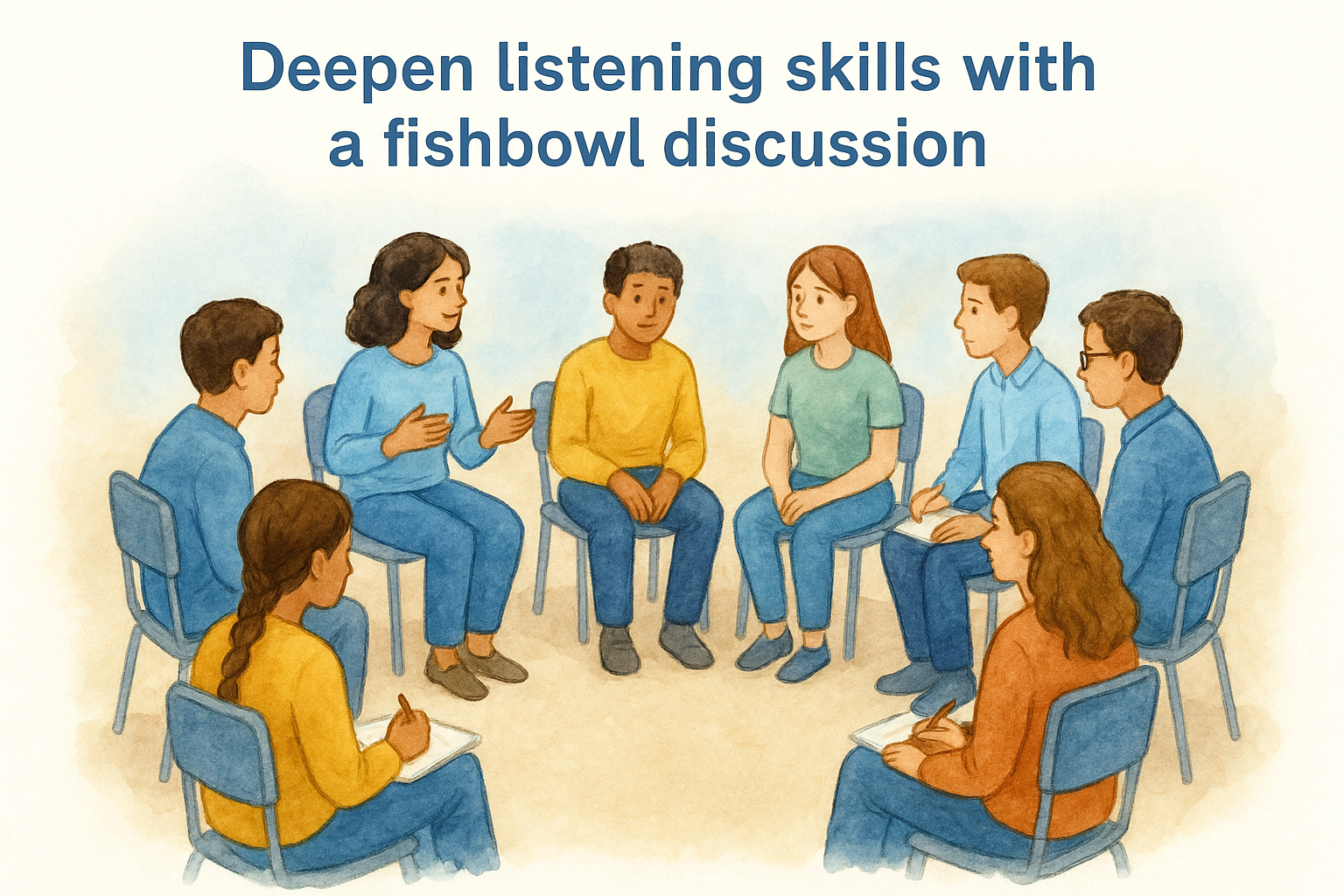
Most class discussions collapse into the same five students talking while everyone else waits for the bell. A fishbowl discussion fixes that by physically separating who’s speaking from who’s listening, then swapping the roles partway through. It’s one of the more reliable critical thinking activities for students when your goal is genuine listening, not just louder participation.
How it works
Arrange five or six chairs in a small inner circle, surrounded by the rest of the class in an outer ring. The inner group discusses a text or question while the outer ring stays silent, taking notes on the argument’s strengths and gaps. After ten minutes, rotate a new set of students into the inner circle, including at least one outer-ring student who has to respond directly to a point they just heard.
A student who has to wait to speak learns to actually listen instead of just planning their next comment.
Critical thinking skills it builds
This format sharpens active listening and argument evaluation, since outer-ring students must judge the quality of reasoning they can’t interrupt. Rotating roles also builds patience and forces students to build on a peer’s point rather than restart the conversation with their own.
Best grade levels
Fishbowl discussions work well from 7th grade through 12th grade. Middle schoolers need a simpler prompt and shorter rotations; high schoolers can sustain a full 15-minute inner circle without losing focus.
Time and materials needed
Plan for one full period, about 45 minutes, to allow at least two full rotations. You need chairs arranged in two circles, a discussion prompt, and a note-taking sheet for the outer ring.
7. Flip the problem with reverse brainstorming
Students freeze on open-ended questions because "solve this problem" feels too big to grab onto. Reverse brainstorming sidesteps that freeze by asking the opposite question first: instead of how do we fix this, how would we make it worse? Flipping the direction loosens up thinking fast, and it’s one of the more surprising critical thinking activities for students because the silly answers often point straight at the real solution.
How it works
Pose a real classroom or community problem, like low participation in group projects or litter in the cafeteria. Ask students to brainstorm every possible way to make the problem worse, no idea too absurd, using the same loose rules as any brainstorming classroom activity. Let them fill a whiteboard for five minutes, then flip each "worse" idea into its opposite. "Never assign roles in a group" becomes "assign clear roles up front." The reversal does most of the analytical work for them.
Asking how to make a problem worse gets students past the blank stare that a straight "how do we fix this" question always produces.
Critical thinking skills it builds
This activity strengthens divergent thinking, since generating bad ideas removes the fear of being wrong that blocks most brainstorms. Students also practice inversion reasoning, the skill of examining a problem from its opposite angle, which shows up again in math proofs, debugging code, and revising a weak essay argument.
Best grade levels
Reverse brainstorming works from 5th grade through 12th grade. Younger students need a concrete, familiar problem; older students can apply it to abstract issues like a flawed historical policy or an ethical dilemma from a novel.
Time and materials needed
Budget 20 to 25 minutes total. You need a whiteboard or shared document and a single problem statement, nothing else.
8. Explore every angle with the Six Thinking Hats method
Group discussions usually collapse into one mode of thinking, either everyone criticizes an idea or everyone gets stuck on feelings without ever testing the facts. Edward de Bono’s Six Thinking Hats fixes that by assigning a different lens to each colored hat: white for facts, red for emotions, black for risks, yellow for benefits, green for new ideas, and blue for managing the process. Students switch hats together, which means the whole class examines a problem from the same angle at the same time instead of talking past each other.
How it works
Present a real dilemma, like whether the school should ban phones in the hallway. Walk the class through each hat for three to five minutes: facts only under white, gut reactions under red, risks under black, upsides under yellow, alternatives under green, and a wrap-up under blue. Write key points on the board under each color so students see the full picture build in real time.
Separating fact from feeling from risk stops students from defending one weak opinion for an entire discussion.
Critical thinking skills it builds
This method builds perspective-taking and structured evaluation, since students can’t dismiss an idea outright when it’s not yet the black hat’s turn, and it runs like other interactive discussion activities with clear roles. It also trains students to notice when they’re arguing from emotion rather than evidence.
Best grade levels
Six Thinking Hats works well from 6th grade through 12th grade. Younger students need one hat introduced at a time across several sessions; older students can run the full sequence in one sitting.
Time and materials needed
Plan for 30 to 40 minutes. You need six colored papers or hats, a whiteboard, and one debatable topic.
9. Analyze evidence with a mock trial case study
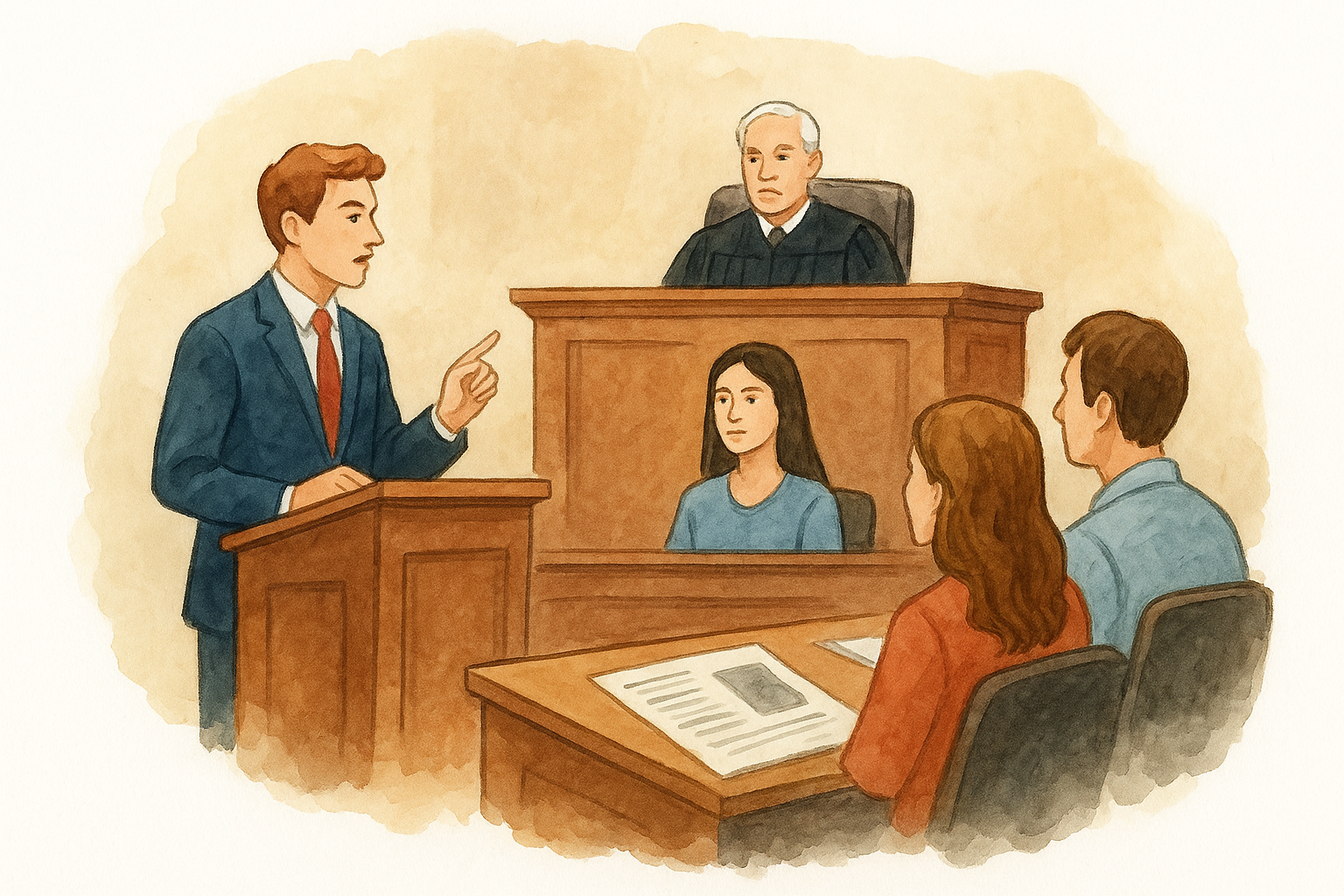
Nothing teaches students to weigh evidence like case-based learning that puts them in a courtroom and makes them argue with it. A mock trial takes a case, real or fictional, and assigns roles: attorneys, witnesses, jurors, and a judge. Every claim needs proof, and every piece of proof can get challenged, which is exactly the discipline most classroom debates skip.
How it works
Give students a simple case file with a short scenario, witness statements, and a handful of pieces of evidence, some solid, some shaky. Assign roles a day ahead so attorneys can prep questions and witnesses can rehearse their testimony. Run the trial with opening statements, witness examination, cross-examination, and a closing argument, then let the jury deliberate out loud so the rest of the class hears their reasoning.
A student who has to prove a claim in front of a jury stops treating "I think" as the same thing as "I can show."
Critical thinking skills it builds
Mock trials sharpen evidence evaluation and logical argumentation, since attorneys must build a case from facts alone and jurors must decide based on what was actually proven, not what sounded most confident. Cross-examination also teaches students to spot a weak claim by asking the right follow-up question instead of accepting a statement at face value.
Best grade levels
This activity works best from 8th grade through 12th grade, since it requires enough reading stamina to process a case file and enough patience to sit through witness testimony. Younger students can try a simplified version with a shorter case and fewer roles.
Time and materials needed
Plan for one class period to run the trial, plus a full period beforehand for role prep. You need a written case file, witness statements, and simple evidence props like a document or photo the attorneys can reference.
10. Teach media literacy through deepfake detection
Students already trust video more than text, which makes them especially vulnerable to a manipulated clip that looks real. Deepfake detection activities put a handful of authentic and altered videos or images in front of students and ask them to find the tells: unnatural blinking, mismatched lighting, audio that doesn’t quite sync. It’s become one of the more urgent critical thinking activities for students, since the tools to fake convincing footage keep getting cheaper and easier to use.
How it works
Curate four or five short clips, some real, some AI-generated or edited, pulled from reputable sources like a university media lab or a fact-checking organization such as the Reuters Fact Check archive. Students watch each clip in pairs and log what feels off using a simple checklist: lighting consistency, lip-sync accuracy, background detail, and source credibility. Reveal the answers at the end and walk through what gave each fake away.
Once a student catches one convincing fake, they never watch an unverified video the same way again.
Critical thinking skills it builds
This activity trains visual literacy and source verification, core elements of digital citizenship in schools, since students learn to check where a clip originated before trusting what it shows. It also builds healthy skepticism without tipping into cynicism, because they see how real journalism verifies footage before publishing it.
Best grade levels
This works best from 8th grade through 12th grade, since younger students may struggle to spot subtle visual artifacts. High schoolers with some tech familiarity get the most out of it.
Time and materials needed
Plan for one 40-minute period. You need curated video clips, a checklist handout, and a screen for group viewing.
11. Dig into root causes with the Five Whys method
Students love to name a surface symptom and stop there: "the project failed because we ran out of time." The Five Whys method refuses to let them stop there. Originally built for factory floors, this technique asks "why" five times in a row, each answer digging one layer past the last, until students hit an actual root cause instead of a convenient excuse.
How it works
Pick a problem students already care about, a group project that fell apart, a historical failure, or a science experiment that gave unexpected results. Write the problem at the top of the board and ask why it happened. Take that answer and ask why again, and repeat until you’ve asked five times total. Most groups hit a real root cause by the third or fourth why, not the fifth, and that’s fine.
Asking why five times turns a vague complaint into a specific, fixable cause.
Critical thinking skills it builds
This method sharpens causal reasoning, the skill of separating a trigger from a true root cause. Students also practice resisting the urge to settle for the first plausible answer, since the second and third whys usually reveal something they hadn’t considered. It pairs well with root-cause analysis in science labs and other inquiry-driven investigations, where a single wrong measurement often traces back to a setup error nobody noticed at the time.
Best grade levels
Five Whys works from 6th grade through 12th grade. Younger students need a concrete, familiar problem; older students can apply it to abstract failures like a failed policy or a flawed argument in a text.
Time and materials needed
Budget 15 to 20 minutes. You need a whiteboard or shared document and one clearly stated problem.
12. Practice foresight with what-if scenario planning
Most students only think one step ahead, if that. What-if scenario planning forces them to trace a decision or event forward through multiple possible outcomes, then defend which outcome seems most likely and why. It’s one of the sharper critical thinking activities for students because it trains foresight, a skill textbooks rarely test directly but employers and colleges expect constantly.
How it works
Present a branching question tied to your unit: what if the printing press had never been invented, what if a character in the novel made a different choice at a key moment, what if a scientific discovery had happened a century earlier. Give small groups 15 minutes to map out three plausible consequences, then rank them by likelihood and explain their reasoning to the class. Push back on any group that only names one outcome; the value comes from comparing several.
A student who can defend which of three futures is most likely has learned to reason under uncertainty, not just recall facts.
Critical thinking skills it builds
This activity strengthens hypothetical reasoning and probability judgment, since students must weigh which consequences are plausible against which are just dramatic. It also builds comfort with ambiguity, because there’s rarely one correct answer to defend.
Best grade levels
Scenario planning works from 6th grade through 12th grade. Younger students need a concrete, familiar scenario; older students can handle abstract historical or ethical what-ifs with multiple competing outcomes.
Time and materials needed
Budget 25 to 30 minutes. You need a written scenario prompt and a whiteboard or shared document for mapping outcomes.
13. Deepen understanding through peer teaching challenges
Nothing exposes a shaky understanding faster than having to explain it to someone else. Peer teaching challenges flip the usual setup: instead of you delivering content, students research a subtopic and then teach it to classmates, fielding questions they can’t dodge with a vague answer. It’s one of the most demanding critical thinking exercises for students because teaching forces a level of clarity that simply reading or highlighting never does.
How it works
Split a unit into four or five subtopics and assign each to a small group. Give them a full class period to research using approved sources, then require them to build a five-minute lesson complete with one question that checks the class for understanding. Groups present on a scheduled day, and you sit in the back taking notes on gaps, not answers.
If a student can’t answer a classmate’s question about their topic, they haven’t actually learned it yet.
Critical thinking skills it builds
This activity sharpens explanatory reasoning, the skill of breaking a complex idea into steps someone else can follow. Presenters also practice handling unexpected questions on the spot, which reveals whether they memorized facts or actually understood the material.
Best grade levels
Peer teaching works well from 6th grade through 12th grade. Younger students need a narrower subtopic and a script template; high schoolers can handle open subtopics with minimal guardrails.
Time and materials needed
Plan for one period of research and prep, then a second period for presentations. You need reference materials, a simple presentation rubric, and a timer to keep each group on track.
Making critical thinking part of every lesson
You don’t need all 13 activities running by Friday. Pick one that fits your next unit, whether that’s a Socratic seminar for a novel discussion or reverse brainstorming for a stuck group project, and run it once before judging whether it works for your students. The format matters less than the habit you’re building: students who have to justify an answer instead of just stating one, week after week.
What separates classrooms where critical thinking activities for students actually stick from ones where they fizzle after a single try is repetition. Run a fishbowl discussion once a month, not once a semester, and students stop treating it as a novelty and start treating it as how your class works. Repetition beats variety here.
Start small, stay consistent, and grab our critical thinking lesson plans with free PDFs by grade when you want the whole lesson already built for you.