
How to Read a Ski Snow Report
A ski resort snow report can look simple at first: a few inches of new snow, a base depth, and a short phrase describing the surface. But terms such as machine groomed, variable conditions, frozen granular, and loose granular can tell an experienced skier much more about what the mountain will actually feel like.
Understanding these descriptions is especially useful in the Northeast, where changing temperatures, snowmaking, grooming, rain, and freeze-thaw cycles can dramatically change the surface within 24 hours.
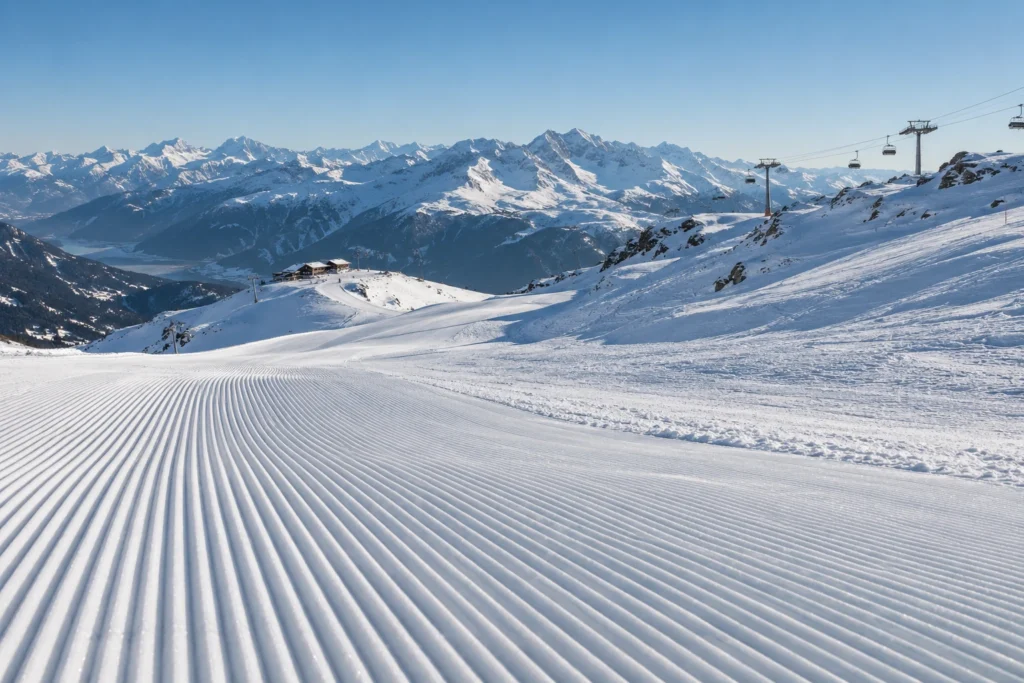
What Does Machine Groomed Mean in a Snow Report?
Machine groomed, often abbreviated as MG, means grooming equipment such as a snowcat has worked the trail surface. Groomers use blades, tillers, and other equipment to break up, redistribute, compact, and smooth the snow.
Industry definitions describe machine-groomed terrain as snow that has been mechanically conditioned or manicured.
The result is often the familiar ribbed surface known as corduroy.
“Machine groomed” describes how the snow was prepared, not necessarily how soft the snow is.
This distinction matters. A freshly groomed trail after several inches of snow may feel soft and forgiving. A groomed trail after rain followed by an overnight freeze can still be firm and fast.
For most recreational skiers, machine-groomed terrain usually offers:
- a smoother and more predictable surface
- fewer bumps and irregularities
- easier turning than ungroomed terrain
- particularly pleasant skiing early in the morning
My practical recommendation is to pay attention to both the grooming status and the reported surface type. “Machine groomed packed powder” is very different from machine grooming performed over previously frozen granular snow.
What Does Variable Conditions Mean?
Variable conditions, commonly shortened to VC, means that one surface description does not adequately represent the mountain.
Snow Country reporting terminology defines variable conditions as a situation in which no single primary surface accounts for roughly 70 percent or more of the skiable terrain. Different parts of the mountain may therefore have loose granular, packed powder, frozen granular, wet snow, or other surfaces.
For example, you might find:
- Firm snow near the summit where temperatures stayed colder.
- Machine-groomed snow on major intermediate runs.
- Loose granular snow on heavily traveled lower slopes.
- Harder patches on exposed terrain.
- Softer snow on sunny sections during the afternoon.
Variable conditions are not automatically bad conditions. They simply mean you should expect the snow to change as you move around the resort.
Think of “variable conditions” as a warning to expect several different snow surfaces during the same ski day.
For beginners, that means controlling speed and paying particular attention when moving from soft snow onto firmer terrain. Intermediate and advanced skiers may actually enjoy the variety, but should not assume that the next trail will feel like the previous one.
What Is Frozen Granular Snow?
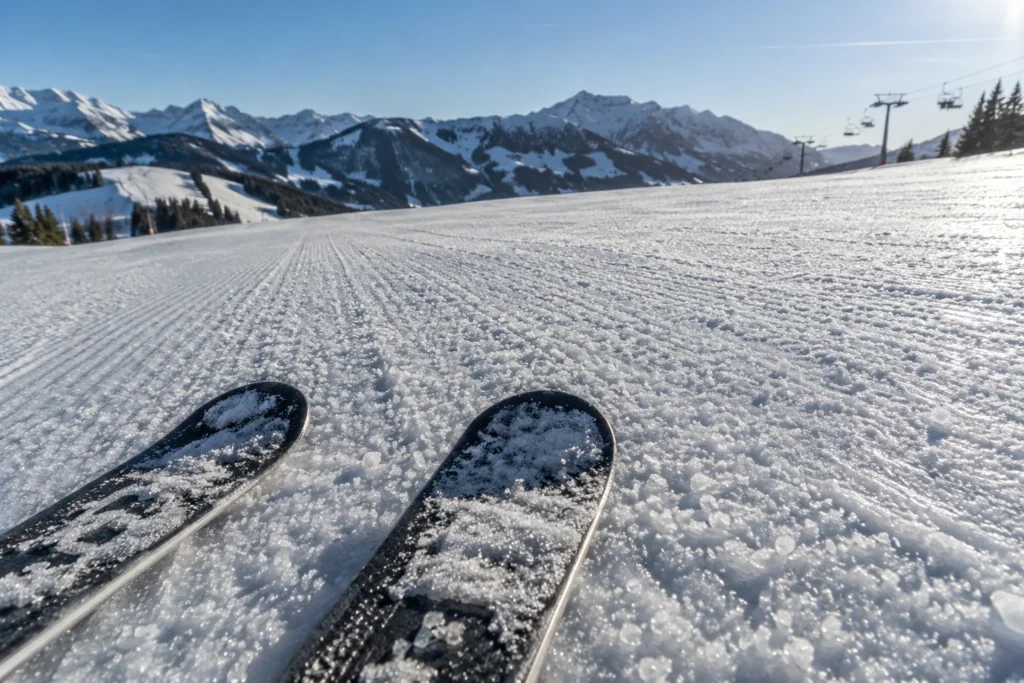
Frozen granular, often shown as FG, is granular snow that was previously wet and then froze together into a relatively solid, crusty surface. This definition is also used by ski areas following New York ski-industry terminology.
Frozen granular commonly develops after this sequence:
- temperatures rise above freezing
- existing snow becomes wet or partially melts
- temperatures fall below freezing
- the wet grains freeze together
The resulting surface can be firm and sometimes noisy under your skis.
Frozen granular should not automatically be interpreted as pure ice. Ski-industry descriptions distinguish granular snow that has frozen together from a smooth glazed ice surface.
In my view, this is one of the most important snow-report terms for less experienced skiers. If you see frozen granular after an overnight freeze, expect stronger edge control to be important, especially early in the morning.
Conditions may improve later if sunshine and warmer temperatures soften the upper layer.
What Does Loose Granular Snow Mean?
Loose granular, abbreviated LG or LSGR, consists of loose snow grains that often resemble coarse salt.
According to Ski Areas of New York, loose granular can form when snow thaws, refreezes and recrystallizes. It can also result when grooming equipment breaks up frozen granular or icy surfaces.
That second point is important because loose granular is frequently part of the normal recovery process after a freeze.
Instead of skiing on one solid frozen layer, you may be skiing through thousands of small, movable snow particles sitting over a firmer base.
Loose granular can therefore feel:
- relatively soft under the skis
- somewhat movable during turns
- less smooth than packed powder
- deeper along trail edges or in areas where skier traffic pushes the grains together
Loose granular is not fresh powder. It is usually older snow that has been transformed by weather, traffic, or grooming.
For many recreational skiers, well-groomed loose granular can still provide perfectly enjoyable skiing. The main difference is that skis may move through the grains differently than they would through packed powder.
Frozen Granular vs. Loose Granular
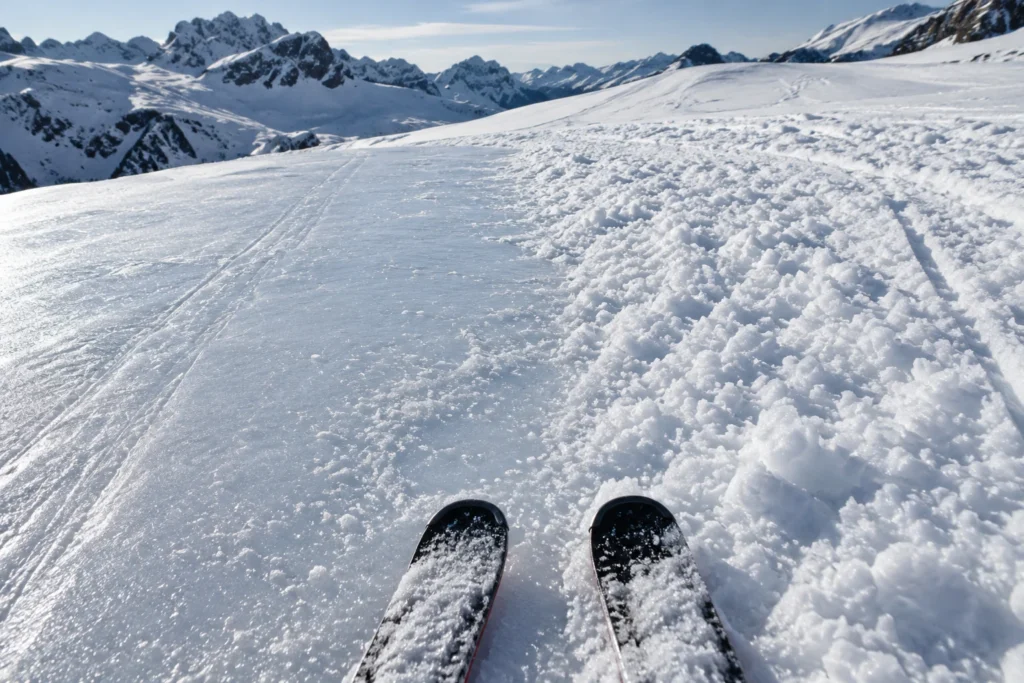
The easiest way to understand the difference is to think about whether the grains are bonded together or separated.
| Snow condition | What it means | Typical feel |
|---|---|---|
| Frozen granular | Snow grains frozen together | Firm, hard, fast |
| Loose granular | Individual grains are loose | Softer, movable, textured |
| Machine groomed | Snow mechanically prepared | Usually smooth and predictable |
| Variable conditions | Several surfaces exist | Changes across the mountain |
A groomer can sometimes turn a frozen granular surface into loose granular by breaking up the hardened layer. That does not turn it into fresh snow, but it can substantially improve skiing conditions.
What Does Base Depth 24 Inches Mean?
If a snow report says base depth: 24 inches, it generally means the resort is reporting approximately 24 inches of accumulated snowpack at its designated measurement location or elevation.
Snow depth is different from recent snowfall. The National Weather Service defines snow depth as the total depth of snow and ice already present on the ground, while resort snow-report systems can publish separate base, mid-mountain, and summit measurements.
So:
24-inch base depth does not mean 24 inches of fresh snow fell.
A resort might have:
- Base depth: 24 inches
- New snow in 24 hours: 2 inches
- New snow in 48 hours: 5 inches
The 24 inches represents accumulated coverage, while the other numbers describe recent snowfall.
Base depth is particularly useful for estimating how well the underlying terrain is covered. However, it should not be used alone to judge snow quality.
A mountain with a 24-inch base and 6 inches of fresh powder may ski very differently from a mountain with the same 24-inch base following rain and a hard freeze.
How I Would Read a Snow Report Before a Ski Trip

Instead of looking at one number, read several pieces of information together.
- Check new snowfall first. Fresh snow can dramatically change the skiing surface.
- Look at the surface description. Packed powder, loose granular, frozen granular, and variable conditions tell you what your skis are likely to encounter.
- Check grooming. Grooming can make a major difference after difficult weather.
- Look at base depth. This gives context about overall snow coverage.
- Check open trails and lifts. A deep base is less useful if large parts of the mountain are closed.
- Consider temperature changes. A thaw followed by an overnight freeze can completely transform yesterday’s soft snow.
For additional ski-trip questions and practical information, you can also visit https://comfort-ski.com/faq/.
The Bottom Line
Snow-report terminology becomes much easier once you understand that every number describes a different part of the mountain’s condition.
Machine groomed tells you the snow has been mechanically prepared. Variable conditions means several different surfaces are present. Frozen granular describes grains that have frozen together, while loose granular describes separated snow grains that can move beneath your skis.
And a 24-inch base primarily tells you how much established snow coverage exists, not how much fresh snow you will ski that morning.
For planning a ski day, I would never judge conditions from base depth alone. The most useful picture comes from combining recent snowfall + surface type + grooming + temperature + open terrain. Together, those details tell you far more about the skiing experience than any single number in the report.